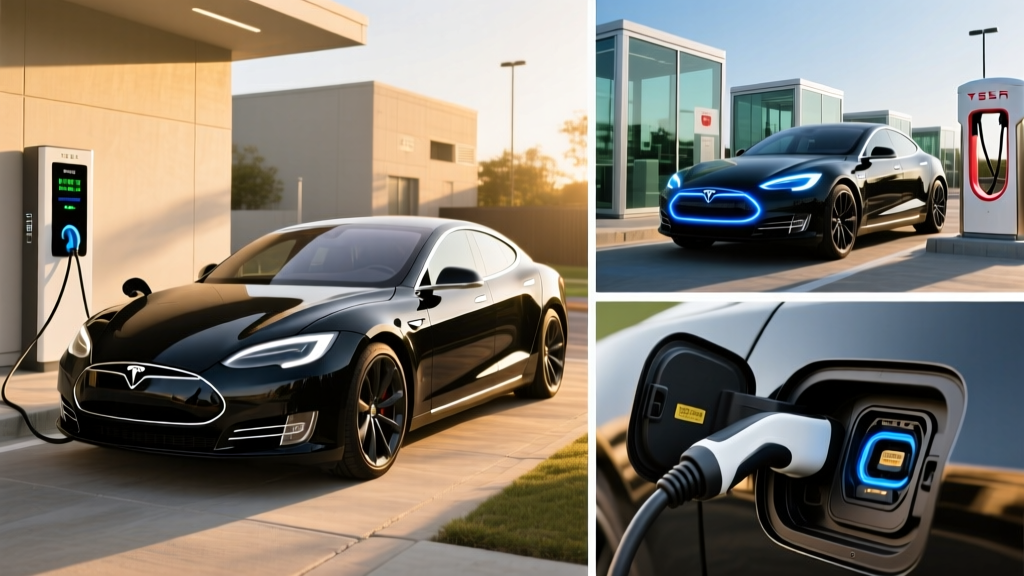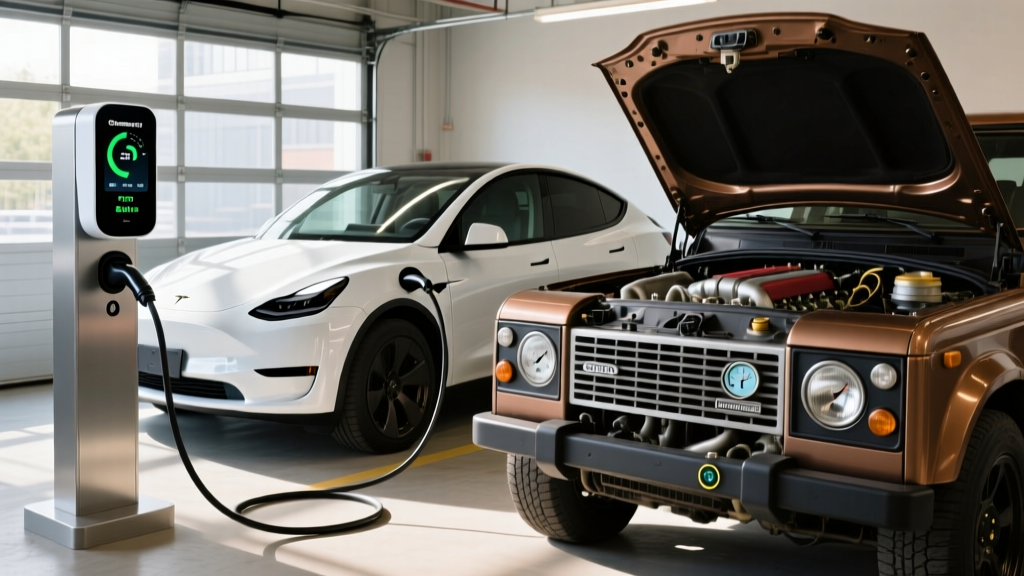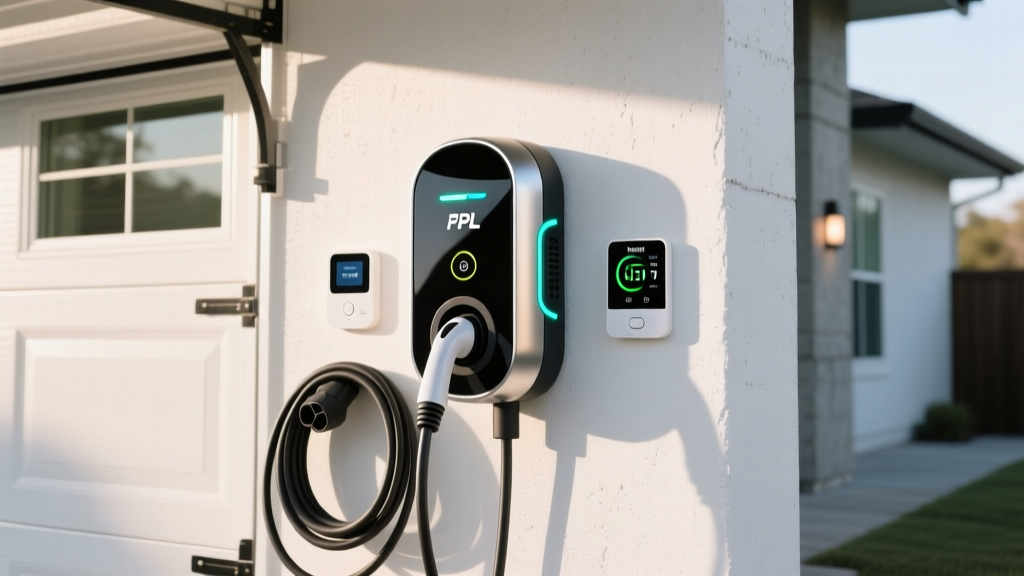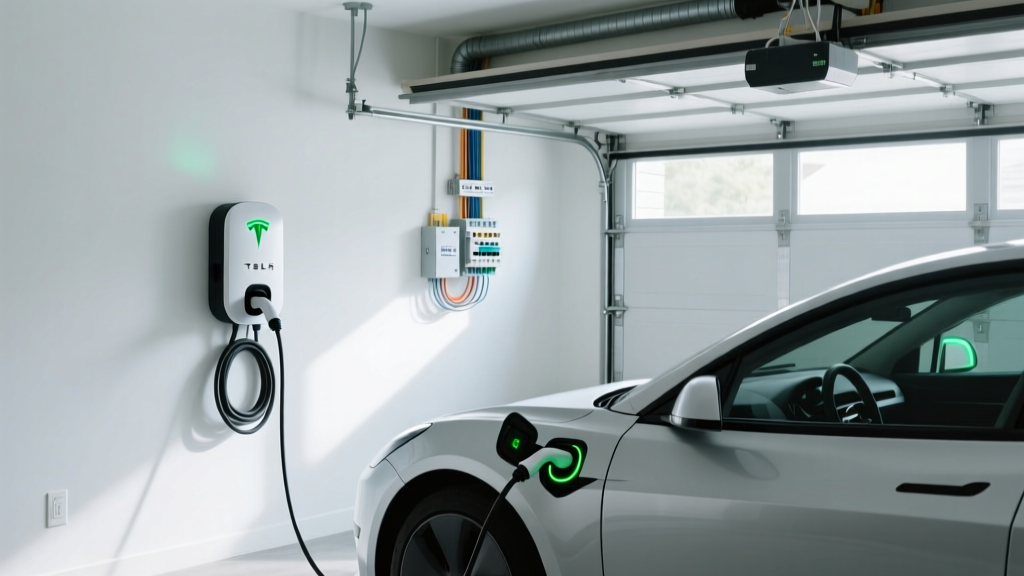
Whether you’re trading in a classic supercharged sedan like a ’98 Buick Riviera or upgrading from your first EV to a newer long-range model, one truth holds: home charging is the backbone of practical electric-vehicle ownership. More than 80% of EV charging happens at home, and a properly installed Level 2 station turns your garage into a personal fueling depot. This guide breaks down exactly what a 2026 home EV charger installation costs, what electrical work is involved, which connector your car needs, and which chargers deliver the best value.
Charging Levels Explained: How Fast Does Each One Add Range?
Before buying equipment, you need to understand the three charging tiers. The critical distinction: kW (kilowatts) measures power — the rate of energy flow, while kWh (kilowatt-hours) measures energy — the total amount stored in your battery. Think of kW as the size of the hose and kWh as the size of the bucket.
| Level | Voltage | Typical Power (kW) | Miles of Range Added per Hour | Best Use Case |
|---|---|---|---|---|
| Level 1 | 120V AC | 1.0–1.4 kW | 3–5 mi/hr | Overnight top-ups, PHEVs, low daily mileage |
| Level 2 | 240V AC | 3.3–19.2 kW | 12–70 mi/hr | Daily home charging, most BEVs |
| DC Fast (Level 3) | 400–900V DC | 50–350+ kW | 150–1,000+ mi/hr (peak) | Road trips, quick top-ups away from home |
For most EV owners, a 40-amp (9.6 kW) or 48-amp (11.5 kW) Level 2 home charger is the sweet spot. A 75 kWh battery charged from 10% to 80% on a 9.6 kW unit takes roughly 9 hours — ideal for overnight replenishment. On a 50 kW DC fast charger, that same 10–80% session takes about 60–75 minutes; on a 150 kW unit, it drops to 25–35 minutes depending on the vehicle’s charge curve. Remember: peak kW is rarely sustained — most EVs taper charge rate significantly above 80% State of Charge (SoC) to protect battery health.
Home EV Charger Installation: Electrical Requirements & Cost Breakdown
A Level 2 charger requires a dedicated 240-volt circuit, similar to what powers an electric dryer or oven. Most installations involve a NEMA 14-50 outlet (50-amp circuit) or a hardwired connection on a 60-amp circuit. Here’s where many homeowners encounter surprises — particularly those with older electrical panels.
Key Electrical Specifications
- Circuit amperage: 40A (for a 32A charger), 50A (for a 40A charger), or 60A (for a 48A charger) — NEC requires the circuit rated at 125% of continuous load
- Voltage: 240V single-phase (split-phase residential service)
- Wire gauge: 6 AWG copper for 50A circuits; 4 AWG for 60A circuits (varies by run length and local code)
- Panel capacity: Your main panel must have sufficient spare amperage — typically 200A total service is recommended for homes adding EV charging
- GFCI protection: Required by NEC 2020+ for outlets in garages; hardwired units may bypass this requirement in some jurisdictions
Do You Need a Panel Upgrade?
If your home has a 100-amp main panel — common in houses built before the 1990s — adding a 50-amp EV circuit may exceed your panel’s capacity. An electrician will perform a load calculation (NEC Article 220) to determine if an upgrade to 200A service is necessary. Panel upgrades are the single largest variable in installation cost.
| Component | Typical Cost Range | Notes |
|---|---|---|
| Level 2 Charger (Equipment) | $300 – $750 | Smart Wi-Fi chargers at higher end; basic units lower |
| Electrician Labor | $500 – $2,000 | Depends on run length, conduit, wall/ceiling routing |
| Materials (Wire, Conduit, Breaker) | $150 – $500 | Longer runs and larger gauge wire cost more |
| Permit & Inspection | $50 – $300 | Required in most jurisdictions; varies by municipality |
| Panel Upgrade (if needed) | $1,500 – $4,000 | 100A → 200A upgrade; not always required |
| Total (No Panel Upgrade) | $1,000 – $3,550 | Most typical installations fall in $1,200–$2,500 |
| Total (With Panel Upgrade) | $2,500 – $7,550 | Older homes with 100A service |
According to data compiled by the U.S. Department of Energy, the average Level 2 home installation costs between $1,200 and $2,500 when no panel upgrade is required. Always hire a licensed electrician and pull a permit — unpermitted work can void home insurance coverage and create fire risk.
Connector Compatibility: NACS, CCS1, and CHAdeMO in 2026
The connector landscape has consolidated significantly. As of 2026, the North American Charging Standard (NACS) — originally developed by Tesla — is the dominant connector for new vehicles. Most major automakers (Ford, GM, Rivian, Volvo, Hyundai, Kia) have transitioned to NACS for their 2025–2026 model-year EVs. The CCS1 connector remains on many 2020–2024 models, and CHAdeMO is essentially legacy (Nissan Leaf being the primary holdout).
| Connector | Brands Using It (2026 Models) | Home Charging Note |
|---|---|---|
| NACS (J3400) | Tesla (all), Ford, GM, Rivian, Volvo, Polestar, Hyundai, Kia (newer models) | Compact connector; growing charger network access; native Tesla Supercharger compatibility |
| CCS1 | VW ID.4 (2020–2024), BMW i4/iX (pre-2025), older Hyundai/Kia, Lucid, some legacy models | Larger connector; widely supported at Electrify America, EVgo, ChargePoint DC stations |
| CHAdeMO | Nissan Leaf (legacy), Mitsubishi Outlander PHEV (older) | Declining infrastructure; few new installations |
Adapter solutions: If you own a CCS1-equipped EV but want to use Tesla Superchargers or NACS home chargers, CCS-to-NACS adapters are available from Tesla and third-party manufacturers (typically $200–$300). Verify adapter compatibility with your specific model year before purchasing. For home Level 2 charging, most chargers now ship with either a NACS or universal J1772 connector (with J1772-to-NACS adapters included for Tesla vehicles).
Cost to Charge: Home vs. Public vs. Gas per Mile
One of the strongest economic arguments for EV ownership is the per-mile fueling cost. But the numbers vary dramatically depending on where and when you charge.
| Charging Scenario | Avg Cost per kWh | Cost per Mile (at 3 mi/kWh efficiency) | Annual Cost (12,000 mi) |
|---|---|---|---|
| Home (Off-Peak / Time-of-Use Rate) | $0.08 – $0.14 | $0.027 – $0.047 | $320 – $560 |
| Home (Standard Residential Avg) | $0.16 – $0.22 | $0.053 – $0.073 | $640 – $880 |
| Public Level 2 (ChargePoint, etc.) | $0.25 – $0.49 | $0.083 – $0.163 | $1,000 – $1,960 |
| DC Fast Charging (Electrify America, EVgo) | $0.35 – $0.65 | $0.117 – $0.217 | $1,400 – $2,600 |
| Gasoline Vehicle (25 MPG avg, $3.40/gal) | — | $0.136 | $1,632 |
The takeaway: home off-peak charging delivers 3–5x lower per-mile cost than gasoline. Even standard-rate home charging undercuts gas by roughly 50%. However, exclusive reliance on DC fast charging can approach or exceed gasoline costs — which is why home Level 2 access remains critical for EV economics. According to fueleconomy.gov, most current EVs achieve between 2.5 and 4.0 miles per kWh, with efficiency varying by driving style, temperature, and terrain.
Top Home EV Chargers for 2026: Equipment Picks
Here are widely recommended Level 2 home chargers based on reliability, smart features, and value. All units listed are Wi-Fi-enabled with app-based scheduling for off-peak charging optimization.
ChargePoint Home Flex (NACS or J1772)
- Power Output: Up to 12 kW (50A circuit) — adjustable via dip switches down to 16A
- Cable Length: 23 feet
- Smart Features: Wi-Fi, Alexa integration, scheduled charging, energy tracking via app
- Connector Options: NACS (native) or J1772 (with included adapter for NACS vehicles)
- Price: ~$599 (NACS version)
- Best For: Flexibility across amperages; strong app ecosystem
Tesla Wall Connector (Gen 3 / NACS Native)
- Power Output: Up to 11.5 kW (48A / 60A circuit)
- Cable Length: 24 feet
- Smart Features: Wi-Fi, OTA firmware updates, power sharing (pair two units on one circuit), load management
- Connector: NACS native — no adapter needed for Tesla or NACS-equipped vehicles
- Price: ~$420
- Best For: Tesla owners and NACS-adopters wanting clean, native integration
Emporia Level 2 Smart Charger (J1772)
- Power Output: Up to 11.5 kW (48A) or 9.6 kW (40A)
- Cable Length: 24 feet
- Smart Features: Wi-Fi, real-time energy monitoring, solar integration, EV + home energy dashboard, scheduled charging
- Connector: J1772 (use included adapter for NACS vehicles)
- Price: ~$399
- Best For: Budget-conscious buyers wanting detailed energy analytics and solar pairing
Grizzl-E Smart (J1772 or NACS)
- Power Output: Up to 10 kW (40A circuit)
- Cable Length: 24 feet
- Smart Features: Wi-Fi, OCPP compatibility, adjustable amperage, rugged outdoor-rated build
- Connector: Available in J1772 or NACS
- Price: ~$449
- Best For: Outdoor installations, cold climates (rated to -40°F), durability-focused buyers
Charging Time Examples: What to Expect with Common Battery Sizes
Charge time depends on battery capacity (kWh), charger power (kW), and the vehicle’s onboard charger limit. Most EVs accept between 7.2 kW and 19.2 kW on Level 2 AC charging. Below are approximate 10–80% charge times for common battery sizes:
- 40 kWh battery (e.g., Nissan Leaf, base Bolt): ~4 hours on 9.6 kW; ~6 hours on 6.6 kW
- 65 kWh battery (e.g., Hyundai Ioniq 5 Std Range): ~6.5 hours on 9.6 kW; ~9 hours on 6.6 kW
- 75–82 kWh battery (e.g., Tesla Model Y, Ford Mustang Mach-E Extended): ~8–9 hours on 9.6 kW; ~11–12 hours on 7.2 kW
- 100+ kWh battery (e.g., GMC Hummer EV, Rivian R1T Max Pack): ~11–12 hours on 9.6 kW; ~15+ hours on 7.2 kW
On DC fast charging, expect 10–80% in roughly 18–25 minutes for vehicles with 800V architecture (Hyundai Ioniq 5/6, Kia EV6, Porsche Taycan) on 250+ kW chargers, and 30–45 minutes for 400V vehicles on 150 kW chargers. Always precondition your battery before DC fast charging — most EVs do this automatically when you navigate to a charger — to maximize charge speed, especially in cold weather.
Safety, Code Compliance & Practical Considerations
A safe installation protects your home and ensures insurance compliance. Key requirements include:
- Dedicated circuit: Your EV charger must be on its own dedicated breaker — never shared with other appliances
- GFCI protection: NEC 2020 and later requires Ground Fault Circuit Interrupter protection for 240V receptacles in garages (NEMA 14-50 outlets). Hardwired chargers may be exempt in some jurisdictions
- Outdoor rating: If installing outside, ensure the charger carries a NEMA 4 or IP65 rating for weather resistance
- Permit and inspection: Most municipalities require an electrical permit and post-installation inspection. This protects you legally and ensures code compliance
- Cable management: Use a holster or cable organizer to prevent tripping hazards and protect the connector from ground contact
- Load management: If your panel is near capacity, consider a smart charger with load-sensing capability (e.g., Emporia with smart panel monitoring) that dynamically adjusts charge rate to prevent breaker trips
Frequently Asked Questions
How much does it cost to install a home EV charger?
Most Level 2 home charger installations cost between $1,200 and $2,500 when your existing electrical panel has sufficient capacity. This includes the charger ($300–$750), electrician labor ($500–$2,000), materials ($150–$500), and permit ($50–$300). If your home needs a panel upgrade from 100A to 200A service, add $1,500–$4,000 to the total. Always obtain a detailed quote from a licensed electrician before proceeding.
How fast will each charging level add range?
Level 1 (120V) adds approximately 3–5 miles of range per hour — adequate for PHEVs with small batteries but impractical for most BEVs. Level 2 (240V) at 9.6 kW adds roughly 30–35 miles per hour, fully replenishing most EVs overnight. DC fast charging can add 150–1,000+ miles per hour at peak power, though real-world sessions average 25–45 minutes for a 10–80% charge depending on the vehicle and charger.
Which connector/charger is compatible with my EV?
Check your vehicle’s charge port. For 2025–2026 models, most new EVs use NACS (Tesla, Ford, GM, Rivian, Hyundai, Kia). Vehicles from 2020–2024 may have CCS1. The Nissan Leaf uses CHAdeMO. For home Level 2 charging, a J1772 connector works with all non-Tesla EVs (and Teslas via adapter), while NACS connectors work natively with Tesla and newer NACS-adopting brands. Adapters are available for cross-compatibility.
How much does charging cost per mile vs. gas?
Home charging on off-peak electricity rates costs approximately $0.03–$0.05 per mile — roughly 70–80% less than gasoline at $3.40/gallon and 25 MPG ($0.14/mile). Standard-rate home charging runs $0.05–$0.07 per mile. Public DC fast charging at $0.35–$0.65/kWh costs $0.12–$0.22 per mile, which can approach or exceed gasoline costs. The economic case for EVs is strongest with consistent home charging access.
What electrical upgrades might I need?
The most common upgrade is a panel capacity increase from 100A to 200A service, required when your existing panel lacks spare capacity for a dedicated 40–60A EV circuit. An electrician performs a NEC Article 220 load calculation to determine this. Other potential upgrades include adding a sub-panel closer to the garage (to reduce wire run length), upgrading service entrance conductors, or installing a smart load-management system that shares capacity between the EV charger and other high-draw appliances.
For the latest federal incentives that may offset home charging installation costs, consult the IRS Alternative Fuel Vehicle Refueling Property Credit (Form 8911), which can cover up to 30% of home charger equipment and installation costs (capped at $1,000) for eligible taxpayers in qualifying census tracts. Eligibility rules are specific — consult a tax professional for your situation.
Whether you’ve just parked your last combustion car for good or you’re optimizing your third EV setup, a well-planned home charging installation pays dividends in convenience, cost savings, and battery longevity. Get multiple electrician quotes, pull the permit, and choose a charger that matches both your vehicle’s connector and your home’s electrical capacity — the daily payoff is immediate.