If you're buying an EV or plug-in hybrid, home electric car charging is the single biggest quality-of-life upgrade you'll make. Over 80% of EV charging happens at home, according to the U.S. Department of Energy, and for good reason: waking up to a full battery every morning eliminates the gas station ritual entirely. But setting up a proper home charging station involves electrical decisions, equipment choices, and cost variables that catch many new EV owners off guard.
This guide walks through exactly what's required — from the electrical panel to the charger on your wall — with real numbers for installation costs, charging speeds, and per-mile economics.
Charging Levels Explained: Speeds, Power, and Range Added
Before evaluating equipment, you need to understand the three charging levels available to EV owners. The critical distinction: kW (kilowatts) measures power — how fast energy flows into your car. kWh (kilowatt-hours) measures energy — how much your battery holds. Think of kW as the width of a hose and kWh as the size of the bucket.
| Level | Voltage | Power (kW) | Miles of Range Added Per Hour | Best For |
|---|---|---|---|---|
| Level 1 | 120V AC | 1.0–1.4 kW | 3–5 miles | PHEVs, overnight top-ups, renters |
| Level 2 | 240V AC | 3.3–19.2 kW | 12–75 miles | Most BEV owners, daily home charging |
| DC Fast Charge | 400–800V DC | 50–350 kW | 150–1,000+ miles (equivalent) | Road trips, rapid top-ups away from home |
For a typical 75 kWh battery (like the Tesla Model Y Long Range or Hyundai Ioniq 5), here's what real charging times look like:
- Level 1 (1.4 kW): 0–100% in roughly 54 hours — impractical for BEVs but workable for PHEVs with 15–20 kWh batteries.
- Level 2 (11.5 kW / 48A): 10–80% in approximately 4.5 hours; 0–100% in about 6.5 hours. This is the sweet spot for most homes.
- Level 2 (7.7 kW / 32A): 10–80% in approximately 6.5 hours. Adequate if your panel can't support a 60A circuit.
- DC Fast Charge (150–250 kW peak): 10–80% in 18–25 minutes on capable vehicles, though charge speed tapers significantly above 80% SoC to protect the battery.
Electrical Requirements for Home Level 2 Charging
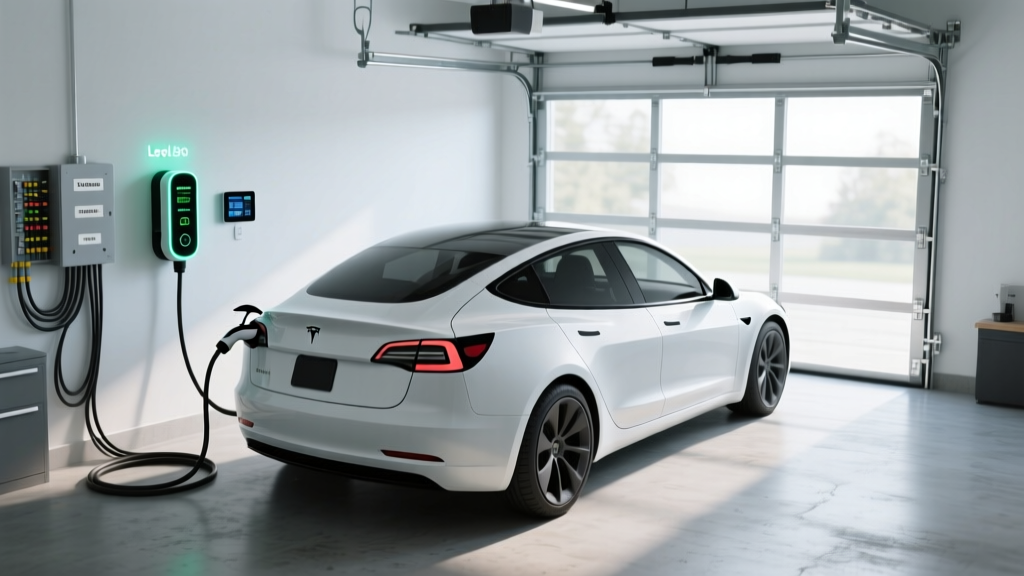
A Level 2 home charger requires a 240-volt circuit — the same type of outlet your electric dryer or oven uses. The specific amperage determines your charging speed and whether your existing electrical panel can handle it.
Circuit Sizing Basics
National Electrical Code (NEC) requires that continuous loads (anything running 3+ hours, which includes EV charging) use only 80% of a circuit's rated capacity. This means:
- 40A circuit → 32A continuous → 7.7 kW charging
- 50A circuit → 40A continuous → 9.6 kW charging
- 60A circuit → 48A continuous → 11.5 kW charging
- 100A circuit → 80A continuous → 19.2 kW charging (requires a 200A+ panel)
Most homes built after 1990 have a 200-amp main panel, which can typically accommodate a 60A EV circuit if there's sufficient spare capacity. Older homes with 100A or 150A service may need a panel upgrade — a significant cost factor.
Do You Need a Panel Upgrade?
Your electrician will perform a load calculation to determine if your panel has enough headroom. This adds up the amperage of all existing circuits and compares it to your panel's total capacity. If you're already running central A/C, an electric oven, and an electric dryer on a 150A panel, adding a 60A EV circuit will likely exceed capacity.
Options if your panel is maxed out:
- Panel upgrade to 200A: $1,500–$3,500 depending on utility requirements and local labor rates.
- Smart load management device: Products like the Emporia Smart Load Management Center (~$300–$500 installed) dynamically share capacity between your EV charger and other large loads, potentially avoiding a panel upgrade entirely.
- Downsize the charger circuit: A 30A or 40A circuit draws less from the panel while still providing 20–30 miles of range per hour — enough for most daily driving.
Home EV Charger Installation Cost Breakdown
Installation costs vary widely based on your home's electrical infrastructure, the distance from panel to charger location, and local permit fees. Here's a realistic breakdown based on 2025–2026 pricing data from licensed electricians across multiple U.S. markets:
| Component | Low-End | Typical | High-End |
|---|---|---|---|
| Level 2 charger hardware | $250 | $450 | $700 |
| Electrician labor (2–6 hours) | $300 | $700 | $1,500 |
| Materials (conduit, wire, breaker) | $100 | $250 | $600 |
| Permit & inspection | $50 | $150 | $400 |
| Panel upgrade (if needed) | $0 | $0 | $3,500 |
| Total (no panel upgrade) | $700 | $1,550 | $3,200 |
| Total (with panel upgrade) | $2,200 | $3,500 | $6,700 |
Federal & Local Incentives for Charger Installation
The IRS §30C Alternative Fuel Vehicle Refueling Property Credit covers 30% of home charger hardware and installation costs, up to $1,000. However, this credit has census-tract eligibility requirements — the home must be in a qualifying non-urban or low-income census tract. Check the IRS tool for your address before counting on this credit.
Many utilities also offer rebates of $200–$500 for Level 2 charger installations, and some provide off-peak electricity rates that dramatically reduce your per-mile charging cost. Contact your local utility before installing.
Connector Compatibility: NACS, CCS, and CHAdeMO
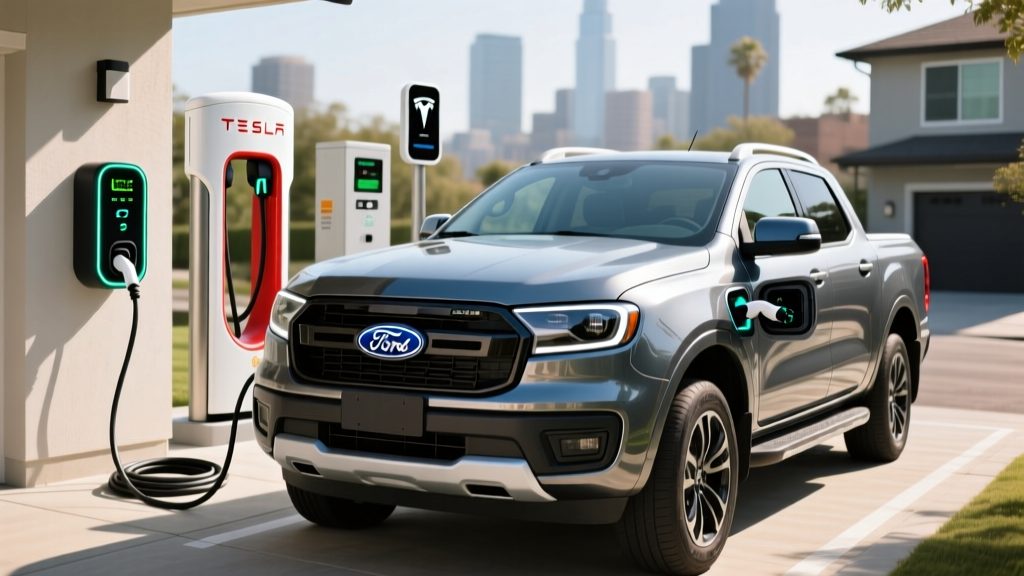
As of 2026, the North American charging connector landscape has largely consolidated around NACS (North American Charging Standard), originally developed by Tesla. Nearly every major automaker — Ford, GM, Hyundai/Kia, Rivian, BMW, and others — has transitioned to NACS for new vehicles starting with 2025–2026 model years.
| Connector | Brands Using It | Notes |
|---|---|---|
| NACS (Tesla-style) | Tesla, Ford, GM, Rivian, Hyundai, Kia, BMW, Volvo, Polestar, others | Standard on most 2025+ models; CCS vehicles can use adapters |
| CCS1 | Remaining 2024–2025 models (legacy), VW ID.4 (prior years), some commercial fleets | Being phased out for new consumer vehicles |
| CHAdeMO | Nissan Leaf (discontinued), Mitsubishi Outlander PHEV (older models) | Essentially legacy; not used on new vehicles |
What This Means for Your Home Charger Purchase
If you're buying a 2025 or 2026 model-year EV, it almost certainly uses NACS. Purchase a NACS-terminated home charger. If you own an older CCS-equipped vehicle (like a 2023 Hyundai Ioniq 5 or VW ID.4), you can either:
- Buy a CCS-terminated charger and use a CCS-to-NACS adapter when using Tesla Superchargers.
- Buy a NACS charger and use a NACS-to-CCS adapter at home (Tesla sells one for ~$200, and third-party options from brands like Lectron are available for ~$150).
For future-proofing, NACS is the clear choice for any new charger purchase in 2026.
Cost to Charge: Home vs. Public vs. Gas
One of the strongest arguments for home electric car charging is the per-mile cost advantage. Here's how different scenarios compare using a 2026 Tesla Model Y Long Range (approximately 3.5 miles/kWh efficiency) as a baseline:
| Scenario | Rate | Cost per kWh | Cost per Mile | Annual Cost (12,000 mi) |
|---|---|---|---|---|
| Home off-peak (utility rate) | $0.09–$0.14/kWh | $0.12 avg | $0.034 | $411 |
| Home standard rate | $0.15–$0.25/kWh | $0.20 avg | $0.057 | $686 |
| Public Level 2 (ChargePoint, etc.) | $0.25–$0.49/kWh | $0.35 avg | $0.100 | $1,200 |
| DC Fast Charge (Electrify America, EVgo) | $0.35–$0.60/kWh | $0.48 avg | $0.137 | $1,646 |
| Gas car (30 MPG avg, $3.40/gal) | — | — | $0.113 | $1,360 |
Home off-peak charging delivers fuel costs at roughly one-quarter the price of gasoline on a per-mile basis. Even at standard residential rates, home charging undercuts gas. The economics flip if you rely exclusively on DC fast charging — at $0.48/kWh average, public fast charging can cost more than gasoline. This is why home charging infrastructure is so financially important.
To maximize savings, enroll in your utility's time-of-use (TOU) plan if available. Many utilities offer rates as low as $0.06–$0.09/kWh between 11 PM and 6 AM. Set your charger's scheduling feature to charge only during those windows.
Best Home EV Chargers for 2026: Equipment Picks
We evaluated Level 2 chargers based on power output, cable length, smart features, build quality, connector options, and price. All picks below are UL-listed (critical for safety and insurance) and available with NACS connectors.
Emporia Vue EV Charger
- Power: 48A / 11.5 kW (60A circuit)
- Connector: NACS
- Cable: 24 ft
- Smart features: Wi-Fi, app scheduling, solar integration, energy monitoring via Emporia Vue panel
- Price: ~$399
- Best for: Budget-conscious buyers who want full smart features and solar integration
ChargePoint Home Flex
- Power: Up to 50A / 12 kW (configurable 16A–50A)
- Connector: NACS (also available in J1772 with adapter)
- Cable: 23 ft
- Smart features: Wi-Fi, app scheduling, Alexa/Google integration, flexible amperage
- Price: ~$549
- Best for: Homes with limited panel capacity — amperage is adjustable to match your circuit
Tesla Wall Connector
- Power: 48A / 11.5 kW (60A circuit)
- Connector: NACS (built-in; also includes J1772 adapter in box for 2026 model)
- Cable: 24 ft
- Smart features: Wi-Fi, over-the-air updates, power sharing (link multiple units on one circuit), Tesla app integration
- Price: ~$475
- Best for: Tesla owners and multi-Tesla households; power sharing avoids panel upgrades
Grizzl-E Smart
- Power: 40A / 9.6 kW (50A circuit)
- Connector: NACS or J1772
- Cable: 24 ft
- Smart features: Wi-Fi, OCPP protocol (open standard), app scheduling, DIP-switch amperage adjustment
- Price: ~$449
- Best for: Outdoor installations — rated to -40°F, rugged aluminum enclosure, built in Canada
Safety, Code, and Installation Best Practices
EV charging involves sustained high-current draw — more like running your oven for 8 hours straight than plugging in a phone. Proper installation protects your home, your car, and your insurance coverage.
Non-Negotiable Safety Requirements
- Dedicated circuit: Your EV charger must have its own breaker — never share a circuit with other appliances. A 60A charger needs a dedicated 60A breaker.
- GFCI protection: NEC 2020 and later requires GFCI protection for all EV charging outlets. Hardwired units typically have built-in ground-fault protection; outlet-plugged units need a GFCI breaker.
- UL listing: Only purchase UL-listed (or ETL-listed to UL standards) chargers. Non-listed units may not be covered by homeowner's insurance in the event of a fire, and most jurisdictions won't pass inspection without certification marks.
- Outdoor rating: If your charger is mounted outside, it must carry at minimum a NEMA 4 (weatherproof) rating. All picks above meet this standard.
- Wire gauge: A 60A circuit requires 6 AWG copper wire (or 4 AWG aluminum). Your electrician will spec this correctly, but verify — undersized wire on a high-amperage circuit is a fire hazard.
Hardwired vs. Plug-In: Which to Choose?
Hardwired chargers are directly connected to your electrical panel with no plug. Advantages: no GFCI breaker required (saves $100–$200), slightly cleaner installation, and no risk of the plug loosening over time. Plug-in (NEMA 14-50 outlet) chargers offer portability — you can take the charger when you move or swap it without calling an electrician. For most homeowners who plan to stay put, hardwired is the cleaner choice.
Reference the National Electrical Code (NEC) Article 625 for the full code requirements governing EV charging installations, and always pull a permit. Unpermitted work can void insurance claims and create problems at resale.
Frequently Asked Questions
How much does it cost to install a home EV charger?
A typical Level 2 home charger installation costs $1,200–$2,500 including hardware, electrician labor, materials, and permits — assuming your panel has sufficient capacity. If a panel upgrade is required (common in pre-1990 homes with 100A service), total costs can reach $3,500–$6,700. Always get multiple quotes from licensed electricians with EV charger experience.
How fast will each charging level add range?
Level 1 (120V) adds 3–5 miles per hour. Level 2 (240V, 48A) adds 35–45 miles per hour for most EVs. DC fast charging adds 150+ miles in 15–20 minutes at peak power. For daily driving needs of 30–50 miles, Level 2 replenishes your daily usage in 1–2 hours overnight.
Which connector is compatible with my EV?
For 2025–2026 model-year vehicles, nearly all new EVs use the NACS connector. Older CCS vehicles (2021–2024 models from Hyundai, Kia, VW, Ford, GM) use CCS1 but can charge at NACS stations with an adapter. Check your vehicle's charge port or the fueleconomy.gov listing for your specific model.
How much does charging cost per mile vs. gas?
Home off-peak charging costs approximately $0.03–$0.04 per mile for a typical EV — roughly 70% less than a 30 MPG gas car at $3.40/gallon ($0.113/mile). Even at standard residential rates ($0.20/kWh), EV charging costs about $0.06/mile. The savings are most dramatic when you charge at home on a time-of-use plan.
What electrical upgrades might I need?
If your home has a 200A panel with available capacity, you likely need nothing beyond a new breaker and wire run. Homes with 100A or 150A panels, or those already near capacity with electric HVAC, dryers, and ovens, may need a panel upgrade ($1,500–$3,500) or a smart load management system ($300–$500) to safely add EV charging. Your electrician's load calculation will determine this.
Can I use a regular 120V outlet for EV charging?
Yes, but only as Level 1 charging. At 1.4 kW, you'll add roughly 4 miles of range per hour — adequate for PHEVs with small batteries or BEVs driven fewer than 25 miles per day. For a 75 kWh BEV, a full Level 1 charge takes over 50 hours. Most BEV owners find Level 1 insufficient as a primary charging method.
Is it safe to charge an EV in the rain or snow?
Yes. All UL-listed EV chargers with a NEMA 4 or higher rating are designed for outdoor use in all weather. The connector and vehicle charge port are engineered to be weather-sealed when mated. Do not charge with a damaged cable or in standing water that submerges the connector.