The Ford Ranger has been a midsize truck staple for decades, and with electrification accelerating across the pickup segment, the electric Ranger — widely expected as a next-generation battery-electric midsize truck built on Ford's evolving EV architecture — is generating serious interest among buyers who want truck capability without the fuel pump. Whether Ford brands it as the "Electric Ranger," an "e-Ranger," or folds it into a new nameplate, the charging questions remain the same: how fast does it charge, what does a home setup cost, and how does the per-mile cost stack up against a gas Ranger?
This guide breaks down every charging variable you'll need to plan for, using projected battery sizes and charge rates consistent with Ford's current EV platforms (the 2026 F-150 Lightning and Mustang Mach-E) and the broader midsize electric truck segment. We'll cover home installation, public networks, connector standards, and real ownership costs.
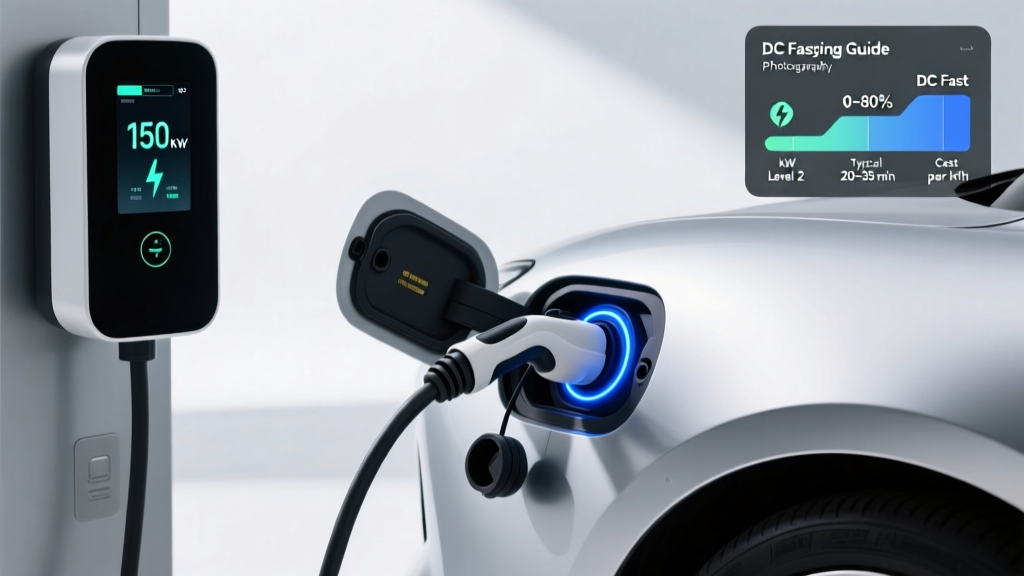
Charging Levels Explained: Level 1, Level 2, and DC Fast Charging
Before evaluating any charger, you need to understand the three charging tiers. The critical distinction in EV charging is between kW (kilowatts — the rate of power delivery, like water pressure) and kWh (kilowatt-hours — the total energy stored in the battery, like gallons in a tank). A 10 kW charger delivering power for one hour adds 10 kWh of energy to the battery.
| Level | Voltage | Power (kW) | Miles of Range Added Per Hour | Typical Use Case |
|---|---|---|---|---|
| Level 1 | 120V AC | 1.0–1.4 kW | 3–5 miles/hr | Overnight trickle, emergency top-up |
| Level 2 | 240V AC | 7.2–19.2 kW | 20–60 miles/hr | Daily home/workplace charging |
| DC Fast Charge (DCFC) | 400–800V DC | 50–350 kW | 150–800+ miles/hr (peak) | Road trips, quick public top-ups |
For a midsize electric truck with a projected usable battery capacity of 75–95 kWh, Level 1 charging is impractical as a primary method — fully replenishing the pack would take 60–90 hours. Level 2 is the workhorse for daily ownership, while DC fast charging handles road-trip replenishment, typically measured in 10–80% session times rather than full fills.
Home Level 2 Charger Installation: Electrical Requirements and Real Costs
Most electric Ranger buyers will want a Level 2 home charger for daily use. This requires a dedicated 240V circuit — the same voltage your electric dryer or oven uses — installed by a licensed electrician. The most common setup is a 40-amp or 48-amp circuit paired with a charger rated for 32A or 40A continuous draw (EV chargers should only load a circuit to 80% of its rated capacity per the National Electrical Code).
What Your Electrician Will Evaluate
- Panel capacity: Most modern homes have a 200-amp main panel. A 40A–48A EV circuit draws significant load. If your panel is already near capacity (common in older homes with electric heat, A/C, and appliances), you may need a panel upgrade to 200A or even 400A, or install a load-management device.
- Wiring run distance: The farther the charger is from your panel, the thicker (and more expensive) the wire gauge required. A 50-foot run costs notably more than a 10-foot run in the same garage.
- Permit requirements: Nearly all jurisdictions require an electrical permit for a new 240V circuit. This typically adds $50–$200 in permit fees and ensures the work passes inspection.
- Outlet vs. hardwired: A NEMA 14-50 outlet gives you portability (unplug and take the charger when you move), while hardwired installations can support higher amperage and avoid the GFCI breaker requirement that some outlets trigger.
| Cost Component | Simple Install (Near Panel) | Moderate Install (50+ ft Run) | Complex Install (Panel Upgrade) |
|---|---|---|---|
| Level 2 Charger Equipment | $350–$700 | $350–$700 | $350–$700 |
| Electrician Labor | $300–$600 | $600–$1,200 | $1,500–$3,000+ |
| Electrical Permit | $50–$150 | $50–$200 | $100–$300 |
| Panel Upgrade (if needed) | — | — | $1,500–$4,000 |
| Total Estimated Cost | $700–$1,450 | $1,000–$2,100 | $3,450–$8,000 |
The wide cost range is real, not marketing. A homeowner with a modern 200A panel and a garage adjacent to the electrical room might pay under $1,000 all-in. A 1970s home with a 100A panel needing an upgrade to support both central A/C and an EV charger could easily approach $5,000–$8,000. Get at least two quotes from licensed electricians and ask specifically about panel headroom before committing.
Connector Compatibility: NACS, CCS, and What the Electric Ranger Will Use
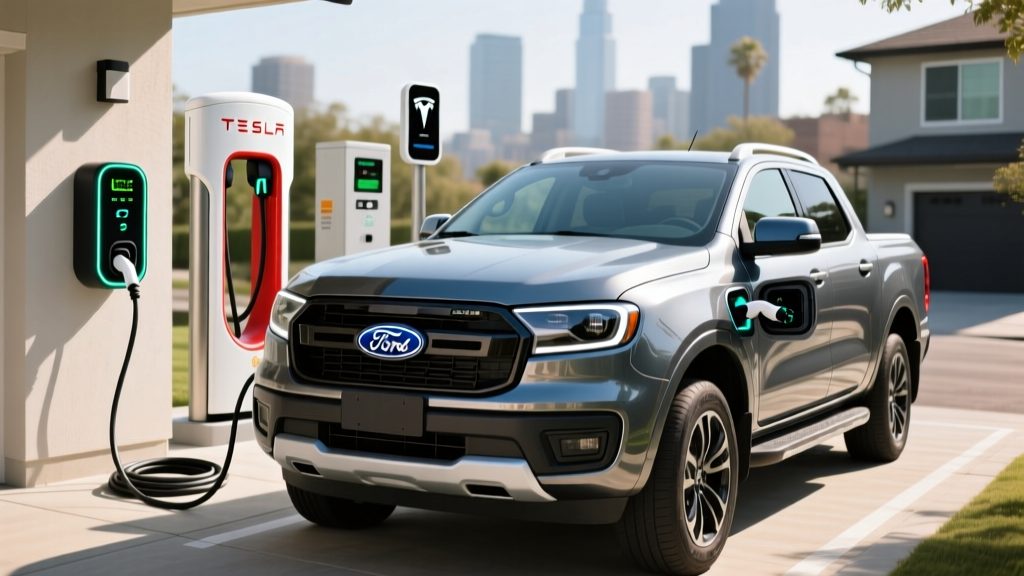
As of 2026, the North American charging connector landscape has consolidated heavily around NACS (North American Charging Standard, originally Tesla's proprietary connector). Ford was among the first legacy automakers to adopt NACS, beginning with the 2025 model year F-150 Lightning and Mustang Mach-E. It is all but certain that the electric Ranger, when it reaches production, will ship with a native NACS charge port — eliminating the need for adapters at Tesla Superchargers.
| Connector | AC Level 2 Charging | DC Fast Charging | Network Access | Status |
|---|---|---|---|---|
| NACS (J3400) | Yes | Yes | Tesla Supercharger, Electrify America, EVgo, ChargePoint (growing) | Industry standard for new vehicles |
| CCS1 (Combo) | Yes (J1772 + DC pins) | Yes | Electrify America, EVgo, ChargePoint, public networks | Legacy; phased out on new models by most OEMs |
| CHAdeMO | No (separate J1772 for AC) | Yes | Limited and shrinking | Discontinued on new vehicles; Nissan Leaf legacy only |
If you purchase an electric Ranger with a native NACS port, you'll have direct access to the Tesla Supercharger network — over 25,000 stalls in North America — without an adapter. For older CCS-equipped public chargers that haven't been retrofitted with NACS cables, Ford provides or sells a CCS-to-NACS adapter. If you currently own a CCS-equipped EV and plan to transition, note that most public charging networks are actively adding NACS cables to their stations through 2026 and 2027.
Projected Charging Times for the Electric Ranger
While Ford has not released final battery specifications for an electric Ranger as of early 2026, we can project charging performance based on the F-150 Lightning's architecture and the midsize truck segment's competitive benchmarks (Chevrolet Silverado EV, Rivian R2, and the Hyundai Ioniq 5-based truck concepts). A reasonable estimate places the electric Ranger's usable battery at approximately 80–90 kWh (NMC chemistry), with a peak DC fast-charge rate of 150–180 kW on a 400V architecture, or potentially higher if Ford adopts an 800V system.
| Charging Method | Power | 10–80% Session Time | Notes |
|---|---|---|---|
| Level 1 (120V, 12A) | 1.4 kW | ~42–45 hours | Emergency/trickle only; adds ~4 mi/hr |
| Level 2 (240V, 32A) | 7.7 kW | ~8–9 hours | Overnight fill; standard home setup |
| Level 2 (240V, 48A) | 11.5 kW | ~5.5–6.5 hours | Faster home charging; requires 60A circuit |
| DC Fast Charge (peak) | 150–180 kW | ~28–35 minutes | Peak rate not sustained; tapers above 80% |
| DC Fast Charge (350 kW stall, if 800V capable) | 250+ kW | ~18–22 minutes | Requires 800V architecture; unconfirmed for Ranger |
Understanding the charge curve: DC fast charging does not deliver peak kW for the entire session. A charger rated at 180 kW may deliver that rate only between 10–40% State of Charge (SoC), then taper to 120 kW, then 80 kW, then 40 kW as the battery approaches full. This is why 10–80% times are the standard metric — charging above 80% slows dramatically to protect battery health and is best reserved for destination arrival. Always precondition your battery (most EVs do this automatically when you navigate to a charger) to achieve peak charge rates; a cold battery can cut peak charging speed by 30–50%.
Cost to Charge: Home vs. Public vs. Gas
The per-mile fuel cost is where electric trucks make a compelling ownership argument — but the savings vary enormously depending on where and when you charge. Here's a realistic breakdown using a projected electric Ranger efficiency of 2.0–2.3 kWh/mile (consistent with the F-150 Lightning's real-world consumption and the midsize truck form factor) versus a gas Ranger at approximately 22 MPG combined (source: fueleconomy.gov).
| Scenario | Energy Cost | Cost Per Mile (EV) | Cost Per Mile (Gas, $3.40/gal, 22 MPG) |
|---|---|---|---|
| Home, off-peak utility rate | $0.09/kWh | $0.19 | $0.15 |
| Home, average U.S. rate | $0.16/kWh | $0.34 | $0.15 |
| Home, high-cost state (CA, HI) | $0.30/kWh | $0.64 | $0.15 |
| Public Level 2 (network pricing) | $0.25–$0.40/kWh | $0.53–$0.85 | $0.15 |
| DC Fast Charging (public) | $0.35–$0.55/kWh | $0.74–$1.17 | $0.15 |
The takeaway: home charging at off-peak rates is where EVs win decisively on operating cost. At $0.09/kWh (common in the Midwest and parts of the South with time-of-use plans), the electric Ranger costs roughly $0.19/mile — competitive with or cheaper than gas. But at public DC fast-charger rates of $0.45–$0.55/kWh, the per-mile cost can exceed gas. Buyers who cannot charge at home should carefully model their costs before committing to an electric truck.
Recommended Level 2 Home Chargers for the Electric Ranger
The following chargers are well-suited for a NACS-equipped electric Ranger, offering reliable hardware, smart features, and appropriate power output for a large truck battery.
| Charger Model | Max Power Output | Connector | Cable Length | Smart Features | Approx. Price |
|---|---|---|---|---|---|
| Tesla Wall Connector (Gen 4) | 11.5 kW (48A) | NACS (native) | 24 ft | Wi-Fi, OTA updates, load sharing, power sharing between units | $420–$475 |
| ChargePoint Home Flex (NACS) | 12 kW (50A adjustable) | NACS | 23 ft | App scheduling, Alexa, utility demand-response, energy tracking | $550–$650 |
| Emporia Vue Level 2 | 11.5 kW (48A) | NACS / J1772 options | 24 ft | Solar integration, energy monitoring, load management | $400–$500 |
| Grizzl-E Smart | 10 kW (40A) | NACS adapter available | 24 ft | Wi-Fi, OCPP compatible, extreme-cold rated (-40°F) | $450–$550 |
For most electric Ranger owners, the Tesla Wall Connector at 11.5 kW offers the best value: native NACS, reliable firmware, and a sub-$500 price. If you have solar panels and want granular energy monitoring, the Emporia Vue pairs well with home energy systems. For cold-climate garages (unheated, sub-zero winters), the Grizzl-E is built and tested for extreme temperatures where other chargers can fault.
Safety, Code Compliance, and Installation Best Practices
EV charging involves sustained high-current draw over many hours — a fundamentally different load profile than most household appliances. Cutting corners on installation invites fire risk, insurance complications, and failed inspections.
- Dedicated circuit: Your Level 2 charger must be on its own dedicated breaker — not shared with other outlets or appliances. A 40A charger needs a 50A breaker; a 48A charger needs a 60A breaker.
- GFCI protection: The 2023 NEC (National Electrical Code) and subsequent 2026 adoptions require GFCI (Ground Fault Circuit Interrupter) protection for all EV charging outlets. Hardwired chargers are generally exempt from this requirement, which is one reason many electricians recommend hardwiring.
- Outdoor rating: If your charger is mounted outside (driveway, carport), both the charger enclosure and the connector holster must carry an outdoor/NEMA 4 rating. Most quality chargers are rated for outdoor use, but verify the specific model.
- Wire gauge: For a 50A circuit (supporting 40A continuous), 6 AWG copper wire is typically required. For a 60A circuit (48A continuous), 4 AWG copper is standard. Longer runs may require upsizing to compensate for voltage drop.
- Permit and inspection: Always pull a permit. An unpermitted EV charger installation can void homeowner's insurance claims related to electrical fires and may need to be removed or redone when you sell the home.
Frequently Asked Questions: Electric Ranger Charging
How much does it cost to install a home EV charger for the electric Ranger?
Expect $700–$1,450 for a straightforward installation (short wire run, adequate panel capacity), $1,000–$2,100 for a moderate install with longer wire runs, and $3,450–$8,000 if your home needs a panel upgrade from 100A to 200A service. The charger itself costs $400–$650; the rest is electrician labor, wire, conduit, and permit fees.
How fast will each charging level add range to the electric Ranger?
Level 1 (120V) adds roughly 3–5 miles of range per hour — impractical for daily use on a truck with an 80+ kWh battery. Level 2 (240V, 48A) adds approximately 35–45 miles per hour, enough to fully replenish overnight. DC fast charging at 150–180 kW can add 150–200 miles in a 20-minute session, though the rate tapers significantly above 80% SoC.
Which connector will the electric Ranger use?
Based on Ford's 2025+ transition to NACS across its EV lineup, the electric Ranger is expected to ship with a native NACS (J3400) charge port. This provides direct access to Tesla Superchargers and a growing number of NACS-equipped public stations. CCS adapters will be available for legacy public chargers still equipped with CCS1 cables.
Is charging an electric Ranger cheaper than gas?
At home on an off-peak utility rate of $0.09–$0.12/kWh, the electric Ranger costs approximately $0.19–$0.25 per mile to "fuel" — comparable to or cheaper than a gas Ranger at $3.40/gallon and 22 MPG ($0.15/mile). However, at public DC fast-charging rates of $0.40–$0.55/kWh, the cost rises to $0.85–$1.17 per mile — significantly more than gas. Home charging access is the key variable.
What electrical upgrades might my home need for an EV charger?
The most common upgrade is a panel capacity increase from 100A to 200A, which costs $1,500–$4,000 depending on your utility and local labor rates. Homes with older wiring (aluminum branch circuits, knob-and-tube) may need additional remediation. Some utilities offer load-management devices that allow EV charging without a panel upgrade by temporarily reducing charger power when other high-draw appliances are running. Ask your electrician about this option before committing to a panel upgrade.
Does the federal tax credit cover home charger installation?
The IRS §30C Alternative Fuel Vehicle Refueling Property Credit covers 30% of home EV charger equipment and installation costs, up to a maximum credit of $1,000. This credit has income limits and is subject to prevailing-wage and census-tract eligibility requirements. Consult a tax professional for your specific situation, as rules are current for 2026 and subject to legislative changes.