The Hummer EV's Massive Battery: What 200+ kWh Means for Range and Charging
The GMC Hummer EV is an exercise in extremes. With a curb weight exceeding 9,000 pounds and a battery pack that dwarfs nearly every other production EV on the road, understanding ev hummer range and charging logistics requires looking past the marketing headlines. The 2025 GMC Hummer EV Pickup (3X trim) carries an EPA-estimated 314 miles of range from its ~212 kWh usable Ultium battery pack (double-stacked, NMC chemistry). The 2X trim pushes that to an EPA 381 miles thanks to slightly different tuning and configuration. The SUV variant sits at EPA 313 miles for the 3X.
| Trim / Body | EPA Range | Battery (Usable kWh) | Chemistry | Efficiency (MPGe) |
|---|---|---|---|---|
| Pickup 2X | 381 mi | ~212 kWh | NMC (Ultium) | 47 MPGe |
| Pickup 3X | 314 mi | ~212 kWh | NMC (Ultium) | 47 MPGe |
| SUV 3X | 313 mi | ~212 kWh | NMC (Ultium) | 45 MPGe |
For context, 47 MPGe translates to roughly 2.1 kWh per mile — more than double the consumption of a Tesla Model Y. That consumption figure is the single most important number for understanding your charging costs and times.
Charging Levels Explained: How Fast Can You Replenish a 212 kWh Battery?
Filling a battery this large is a fundamentally different proposition than charging a 75 kWh crossover. Here's how each charging level performs, measured in both kilowatts (kW — the rate of power delivery) and practical miles added per hour.
| Level | Power (kW) | Miles of Range / Hour | 10–80% Time (Hummer EV) | Best Use Case |
|---|---|---|---|---|
| Level 1 (120V) | ~1.4 kW | ~0.7 mi/hr | ~100+ hours (impractical) | Emergency trickle only |
| Level 2 (240V, 48A) | ~11.5 kW | ~5.5 mi/hr | ~12–14 hours | Overnight home charging |
| Level 2 (240V, 80A) | ~19.2 kW | ~9 mi/hr | ~7–8 hours | High-power home (requires 100A circuit) |
| DC Fast (350 kW peak) | Up to 350 kW | ~100+ mi in 12 min | ~30–35 min (10–80%) | Road trips, highway corridors |
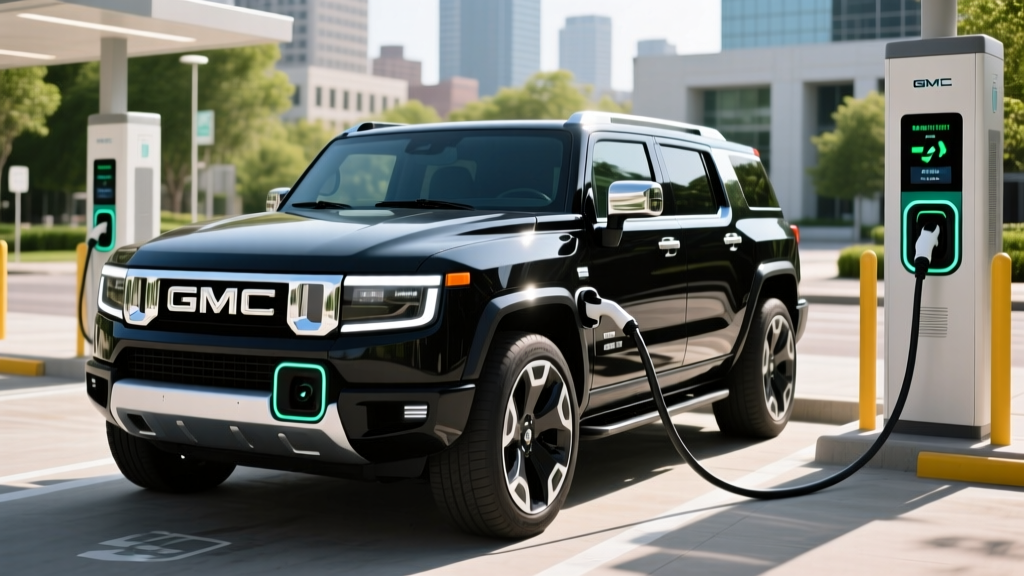
The Hummer EV supports DC fast charging at up to 350 kW on 800V-capable infrastructure. GM quotes roughly 100 miles of range in about 12 minutes under ideal conditions. However, the charge curve matters enormously: peak 350 kW is sustained only in the lower portion of the battery (roughly 10–40% SoC). Above 60%, the rate tapers significantly — you'll see 150 kW dropping to under 50 kW as you approach 80%. A realistic 10–80% session on a 350 kW charger takes approximately 30–35 minutes.
Home Charger Installation: Electrical Requirements and Real Costs
Charging a 212 kWh battery at home demands serious electrical infrastructure. A standard 40-amp Level 2 circuit (delivering ~9.6 kW) will need 14+ hours to go from 10% to 80% — workable if you drive less than 60 miles daily and charge overnight, but tight for heavier use. Most Hummer EV owners will want a 48A or 80A charger on a dedicated 60A or 100A circuit.
Electrical Requirements by Charger Amperage
- 48A charger: Requires a dedicated 60A, 240V circuit. Uses 6-gauge copper wire (or 4-gauge aluminum). This is the most common high-power residential setup.
- 80A charger: Requires a dedicated 100A, 240V circuit. Uses 3-gauge copper wire. Not all panels can support this — your electrician will verify available capacity.
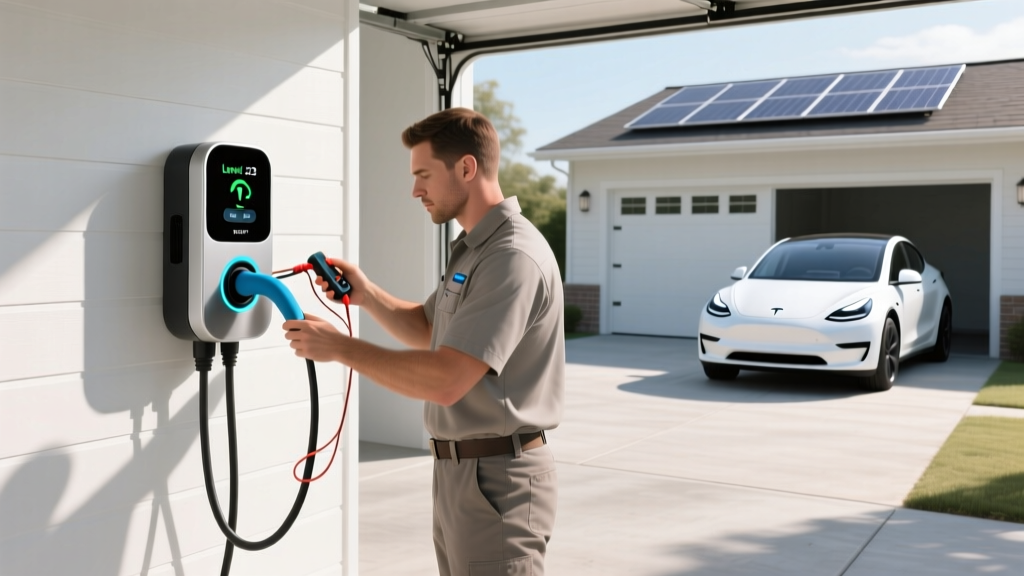
- Hardwired vs. plug: Chargers above 40A must be hardwired per NEC code (no NEMA 14-50 plug). The Hummer EV's large battery makes hardwired 48A or 80A the practical choice.
Panel Upgrade Reality
Many homes built before 2000 have 100A or 150A main service panels. Adding a 60A dedicated circuit for a 48A charger may consume most of the panel's spare capacity — especially if you already run electric heat, an electric dryer, and an electric oven. A panel upgrade to 200A (or even 400A with a sub-panel) is common for Hummer EV owners and can add $2,000–$5,000 to your project. Homes with 200A service and gas appliances often have sufficient headroom without an upgrade.
| Component | 48A Setup (60A Circuit) | 80A Setup (100A Circuit) |
|---|---|---|
| Level 2 Charger Equipment | $500–$750 | $600–$1,200 |
| Electrician Labor (wire run, breaker, hardwire) | $600–$1,500 | $900–$2,500 |
| Permit & Inspection | $100–$300 | $100–$300 |
| Panel Upgrade (if needed) | $2,000–$4,000 | $2,500–$5,000 |
| Total (no panel upgrade) | $1,200–$2,550 | $1,600–$4,000 |
| Total (with panel upgrade) | $3,200–$6,550 | $4,100–$9,000 |
The IRS Residential Clean Energy Credit (§25D) covers 30% of home charger equipment and installation costs up to $1,000 — a modest offset against the totals above. Check your state and utility for additional rebates; many offer $250–$1,000 for Level 2 installations or managed-charging programs.
Connector Compatibility: NACS, CCS1, and What the Hummer EV Uses
The 2025 GMC Hummer EV ships with a CCS1 (Combined Charging System) inlet for both Level 2 AC and DC fast charging. However, GM has committed to transitioning its EV lineup to the NACS (North American Charging Standard / Tesla) connector, and the Hummer EV is included in that transition. Model-year timing for the native NACS switchover varies — check your specific build sheet.
| Connector | Hummer EV Native? | Adapter Available? | Network Access |
|---|---|---|---|
| CCS1 | Yes (2022–current builds) | N/A — native | Electrify America, EVgo, ChargePoint, Ionity |
| NACS (Tesla) | Upcoming (later model years) | GM-approved CCS-to-NACS adapter (~$225–$300) | Tesla Supercharger network (15,000+ stalls) |
| CHAdeMO | No | Not available | Legacy network (being phased out) |
If your Hummer EV has CCS1, purchasing GM's official CCS-to-NACS adapter unlocks the Tesla Supercharger network — a significant advantage for road trips given Supercharger reliability and coverage. Always use the manufacturer-approved adapter to maintain warranty coverage and ensure proper communication between the vehicle and charger.
Cost to Charge: Home vs. Public vs. Gas Equivalent
At ~2.1 kWh per mile, the Hummer EV is one of the least efficient EVs sold — but electricity still beats gasoline for a vehicle of this mass. Here's how the economics break down across common charging scenarios.
| Scenario | Rate | Cost / Mile | Cost for 300 mi |
|---|---|---|---|
| Home (off-peak utility rate) | $0.12/kWh | $0.25 | $75.60 |
| Home (average US residential) | $0.17/kWh | $0.36 | $107.10 |
| Public Level 2 (ChargePoint, etc.) | $0.30/kWh | $0.63 | $189.00 |
| DC Fast (Electrify America) | $0.48/kWh | $1.01 | $302.40 |
| Gas truck (15 MPG, $3.60/gal) | $3.60/gal | $0.24/mi | $72.00 |
The math reveals a nuance many Hummer EV buyers overlook: at home off-peak rates, you save modestly versus a comparable gas truck (think Ford F-150 at 15–17 MPG). At average residential rates, the Hummer EV is slightly more expensive per mile than a gas truck. On DC fast chargers, it's dramatically more expensive — $1.01/mile is luxury-SUV-gas territory. The economic case for the Hummer EV hinges on cheap home charging. If your utility offers time-of-use rates below $0.12/kWh overnight, the savings compound. If you rely primarily on public DC fast charging, you'll spend more on "fuel" than a gas truck owner.
Recommended Home Chargers for the Hummer EV
Given the Hummer EV's massive battery, we recommend chargers that maximize Level 2 throughput. Here are three proven options, ranked by suitability.
Emporia Vue + Level 2 EV Charger (48A)
- Power: 11.5 kW (48A, hardwired on 60A circuit)
- Connector: J1772 (CCS-compatible for AC)
- Cable length: 24 ft
- Smart features: Wi-Fi, scheduling, solar integration, energy monitoring via Emporia Vue panel
- Price: ~$550 (charger) + Emporia Vue monitor (~$100)
- Why it works: Best value for 48A. Solar-aware scheduling is ideal if you have rooftop panels.
ChargePoint Home Flex (up to 50A)
- Power: Up to 12 kW (50A, hardwired on 60A circuit; NEMA 14-50 plug option at 40A)
- Connector: J1772
- Cable length: 23 ft
- Smart features: Wi-Fi, app scheduling, Alexa integration, amperage adjustable via dip switches
- Price: ~$650
- Why it works: Flexible amperage lets you match your circuit exactly. Strong app and reliability track record.
Grizzl-E Smart (80A capable)
- Power: Up to 19.2 kW (80A, hardwired on 100A circuit)
- Connector: J1772 (NACS version available)
- Cable length: 24 ft
- Smart features: Wi-Fi, OCPP support, adjustable amperage (16A–80A), outdoor-rated (NEMA 4)
- Price: ~$750–$900
- Why it works: The only mainstream 80A residential charger. Cuts Hummer EV 10–80% time to ~7–8 hours. Built in Canada, extreme-weather tested.
For Hummer EV owners who regularly deplete the battery (off-road use, towing, long commutes), the 80A Grizzl-E is the strongest recommendation — provided your electrical panel supports a 100A dedicated circuit. For lighter daily use with overnight top-ups, the 48A Emporia or ChargePoint units are sufficient and far easier on your panel.
Safety, Code, and Installation Best Practices
The National Electrical Code (NEC) and your local jurisdiction set non-negotiable requirements for EV charger installation. Key considerations for a Hummer EV setup:
- Dedicated circuit: Your EV charger must be on its own dedicated breaker — no sharing with other appliances. For 48A continuous load, NEC requires a breaker rated at 125% of the load, hence a 60A breaker.
- GFCI protection: NEC 2020 and later requires GFCI protection for outdoor receptacles. Hardwired installations are generally exempt from GFCI breaker requirements, but your local inspector may require it. Budget an extra $50–$100 for a GFCI breaker if needed.
- Outdoor rating: If your charger is installed outside (garage-adjacent or driveway), ensure it carries a NEMA 4 or IP65 rating for weather resistance. All three chargers above meet this standard.
- Wire gauge: Undersized wire causes voltage drop and fire risk. Your electrician will pull 6 AWG copper for 60A circuits and 3 AWG copper for 100A circuits. Aluminum wire is cheaper but requires larger gauge.
- Permit and inspection: Every jurisdiction requires a permit for new dedicated circuits. The inspection verifies wire gauge, breaker sizing, grounding, and connector integrity. Skipping the permit risks insurance denial in the event of an electrical fire.
- Load calculation: A licensed electrician will perform a NEC Article 220 load calculation to confirm your panel can handle the new circuit. This is mandatory and protects you from overloading the service.
Frequently Asked Questions
How much does it cost to install a home EV charger for the Hummer EV?
Expect $1,200–$2,550 for a 48A hardwired installation if your panel has capacity, or $3,200–$6,550 if you need a panel upgrade. An 80A setup runs $1,600–$4,000 without a panel upgrade, or up to $9,000 with one. Get at least two quotes from licensed electricians — prices vary significantly by region and wire-run distance.
How fast will each charging level add range to the Hummer EV?
Level 1 (120V) adds roughly 0.7 miles per hour — essentially unusable for this vehicle. Level 2 at 48A adds ~5.5 miles per hour, enough to recover a 60-mile daily commute in about 11 hours overnight. Level 2 at 80A adds ~9 miles per hour. DC fast charging at 350 kW adds approximately 100 miles in 12 minutes under ideal conditions, tapering significantly above 60% SoC.
Which connector and charger is compatible with the Hummer EV?
Current Hummer EV models use CCS1. A GM-approved CCS-to-NACS adapter (~$225–$300) unlocks Tesla Supercharger access. For home Level 2 charging, any J1772-connector charger works natively (J1772 is the AC portion of CCS1). Future model years will switch to native NACS.
How much does charging the Hummer EV cost per mile versus gas?
At home off-peak rates ($0.12/kWh), the Hummer EV costs ~$0.25/mile — comparable to or slightly cheaper than a 15 MPG gas truck at $3.60/gallon ($0.24/mile). At average residential rates ($0.17/kWh), it costs ~$0.36/mile, slightly more than gas. DC fast charging at $0.48/kWh costs ~$1.01/mile — far more expensive than gas. Home charging economics are essential to the ownership equation.
What electrical upgrades might I need for a Hummer EV charger?
Homes with 100A or 150A main panels often need a panel upgrade to 200A (or a 400A service with sub-panel) to support a 60A or 100A dedicated EV circuit. Homes with existing 200A service and gas appliances (gas range, gas dryer, gas heat) usually have sufficient headroom. Your electrician will perform a load calculation to determine this — budget $2,000–$5,000 if an upgrade is required.
The GMC Hummer EV's battery is a marvel of engineering, but it demands infrastructure to match. Invest in proper home charging from day one, understand your real-world range envelope, and plan road trips around DC fast-charger availability — and this 9,000-pound electric truck will reward you with surprisingly practical daily usability.