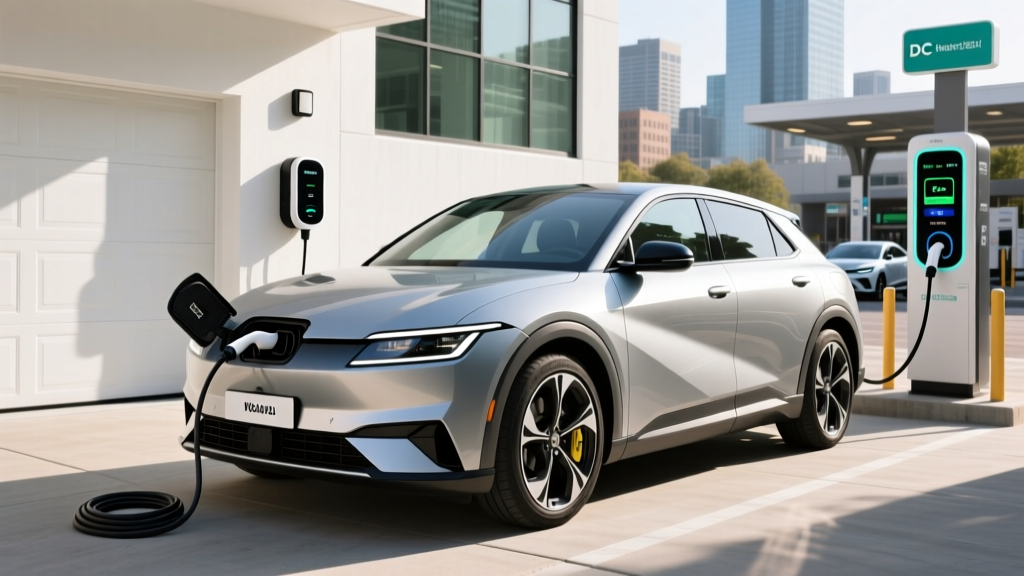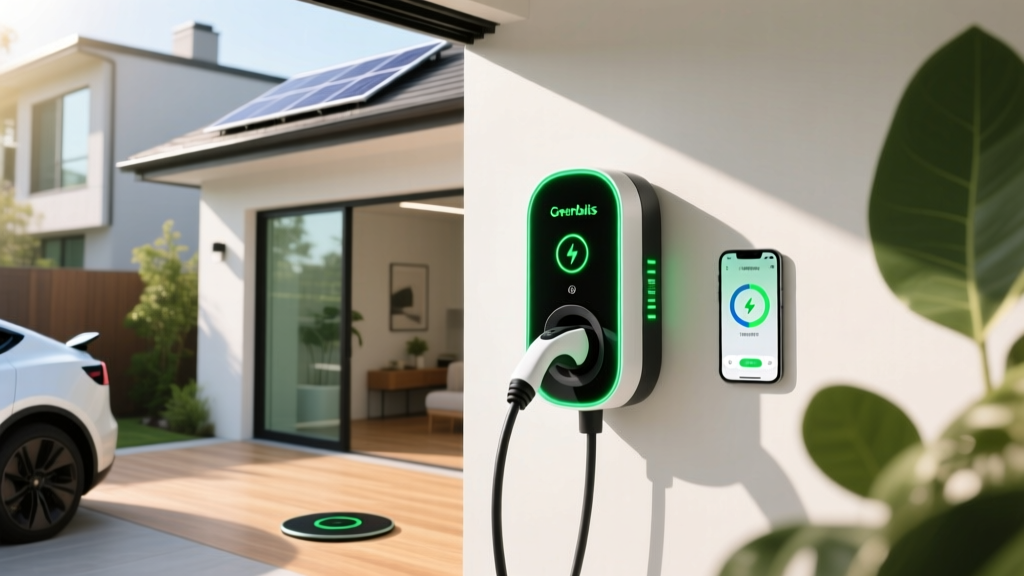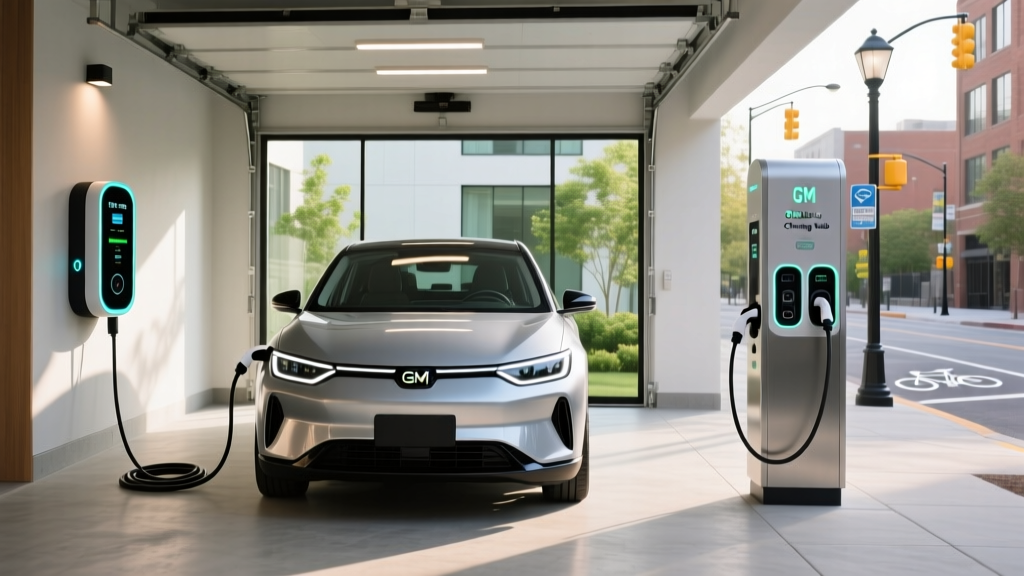
If you own or are considering a Chevrolet, Cadillac, GMC, or Buick electric vehicle, understanding the charging ecosystem General Motors has built is essential to a smooth ownership experience. GM has invested heavily in a multi-layered charging strategy that spans home equipment, public network partnerships, and DC fast-charging infrastructure through a joint venture. This guide breaks down exactly what EV charging solutions GM provides, what equipment you need, how much installation costs, and how to maximize your daily and road-trip charging.
GM's Three-Pillar Charging Ecosystem
General Motors structures its EV charging approach around three pillars: home charging (Level 2 equipment and installation support), public destination and retail charging (through partnerships and its own dealer network), and DC fast charging (via the IONNA joint venture). Each pillar addresses a different use case — overnight replenishment, opportunistic top-ups, and highway travel.
For 2026 model-year vehicles like the Chevrolet Equinox EV, Blazer EV, Silverado EV, Cadillac Lyriq, Optiq, Escalade IQ, and GMC Sierra EV, GM equips all new EVs with the North American Charging Standard (NACS) port natively. This is a significant shift from earlier Ultium vehicles that shipped with CCS1 ports and required adapters. If you're buying a 2025 or earlier GM EV, you may still need a CCS-to-NACS adapter for Tesla Supercharger access.
Charging Levels Explained: Speeds in kW and Miles Per Hour
Every GM EV owner needs to understand the three charging tiers. The table below maps power levels to real-world range recovery rates for typical GM Ultium-based vehicles (averaging 2.5–3.0 miles per kWh depending on model and conditions).
| Level | Voltage / Power | Miles of Range Per Hour | Best Use Case |
|---|---|---|---|
| Level 1 | 120V / 1.4–1.9 kW | 3–5 mi/hr | Overnight trickle; emergency top-up |
| Level 2 | 240V / 7.7–19.2 kW | 25–55 mi/hr | Daily home charging; workplace |
| DC Fast Charging | 400–800V / 50–350+ kW | 150–600+ mi/hr (peak) | Road trips; rapid replenishment |
Real-world context: A Chevrolet Equinox EV with an 85 kWh (usable) battery and EPA-estimated 319-mile range will gain roughly 37 miles of range per hour on an 11.5 kW Level 2 home charger. A full 10–80% charge at that rate takes approximately 5.2 hours. On a 350 kW DC fast charger, that same 10–80% session takes roughly 20–24 minutes, though charging speed tapers significantly above 80% State of Charge (SoC) to protect battery health.
GM Home Charging Equipment: What's Available
GM offers two primary home charging hardware solutions through its dealer network and the myChevrolet app:
Chevrolet/GM Dual Level Charge Cord
This portable cord comes standard with many new GM EVs and includes interchangeable plugs for both 120V (Level 1) and 240V (Level 2) outlets. On a NEMA 14-50 240V outlet, it delivers up to 7.7 kW — adequate for overnight charging on most daily commutes. It's not a permanent wall unit, but it's a flexible stopgap.
GM Ultium Home Charger (Wall-Mounted)
GM's branded Level 2 wall charger delivers up to 11.5 kW (48 amps on a 60-amp dedicated circuit). It features a NACS connector on 2026 units, Wi-Fi connectivity for scheduling and energy monitoring via the myChevrolet or Energy Assist app, and a 25-foot cable. Expect to pay approximately $600–$750 for the unit itself through a GM dealer.
Energy Assist and Utility Integration
GM's Energy Assist feature (available through the vehicle's infotainment system and mobile app) helps owners locate public chargers, plan routes with charging stops, and in some utility regions, schedule charging during off-peak hours when electricity rates drop to $0.06–$0.10/kWh. This can cut home charging costs by 40–60% compared to peak-rate charging.
How Much Does It Cost to Install a Home EV Charger?
This is the question every prospective EV owner asks, and the answer depends heavily on your home's existing electrical infrastructure. Below is a realistic breakdown based on 2026 national averages for a 240V/48A Level 2 installation.
| Component | Simple Install (Panel Adjacent) | Complex Install (Long Run / Panel Upgrade) |
|---|---|---|
| Level 2 Charger Unit (GM or third-party) | $500–$750 | $500–$750 |
| Licensed Electrician Labor | $400–$800 | $1,500–$3,500 |
| Permit & Inspection | $50–$200 | $100–$300 |
| Electrical Panel Upgrade (100A → 200A) | Not needed | $1,500–$4,000 |
| Total Estimated Cost | $950–$1,750 | $3,600–$8,550 |
Panel upgrade reality check: Homes built before 1990 often have 100-amp electrical panels that are already near capacity. Adding a 48-amp continuous load (which requires a 60-amp breaker per National Electrical Code) may necessitate a panel upgrade to 200 amps. This is the single largest variable in installation cost. Always have a licensed electrician perform a load calculation before committing to equipment.
Recommended Third-Party Chargers for GM EVs
You are not limited to GM-branded equipment. Any NACS-connector Level 2 charger will work with 2025+ GM EVs. Here are proven options:
Power: Up to 12 kW (50A)
Connector: NACS (2025+ units)
Cable: 23 ft
Smart features: Wi-Fi, app scheduling, utility integration
Price: ~$550–$650
Power: Up to 11.5 kW (48A)
Connector: NACS
Cable: 24 ft
Smart features: Energy monitoring, solar integration, app control
Price: ~$400–$500
Power: Up to 11.5 kW (48A)
Connector: NACS (adapter available)
Cable: 25 ft
Smart features: Wi-Fi, Bluetooth, load balancing
Price: ~$500–$600
Power: Up to 10 kW (40A)
Connector: NACS
Cable: 24 ft
Smart features: OCPP, app control, extreme cold rating (-40°F)
Price: ~$450–$550
GM's Public Charging Network: Partnerships and IONNA
GM does not operate its own standalone public charging network the way Tesla operates Superchargers. Instead, GM has built access through strategic partnerships and a joint venture:
IONNA Joint Venture (DC Fast Charging)
In 2024, GM partnered with EVgo, Pilot Company, and other automakers to form IONNA, a joint venture tasked with deploying at least 30,000 DC fast chargers across North America by 2028. As of early 2026, IONNA stations are appearing along major highway corridors with chargers capable of 350 kW peak output. GM EV owners may receive preferential pricing or priority access through the myChevrolet/Energy Assist app at IONNA stations, though specific loyalty pricing varies by market.
Tesla Supercharger Access
Since 2024, GM EVs with native NACS ports have had direct access to the Tesla Supercharger network — over 25,000 stalls in North America — without adapters. This dramatically expanded GM's effective fast-charging footprint. Supercharger V3 stalls deliver up to 250 kW; V4 stalls reaching 350 kW are rolling out progressively. Pricing averages $0.25–$0.40/kWh depending on region and time of day.
GM Dealer Destination Charging
GM has committed to installing Level 2 destination chargers at its approximately 4,000 U.S. dealerships. These are typically 19.2 kW units available for customer use during business hours and sometimes after hours. While not a road-trip solution, they serve as a reliable backup and pre-delivery preparation resource.
Connector Compatibility: NACS, CCS1, and Adapter Needs
Connector compatibility is a moving target during this industry transition period. Here's where GM vehicles stand in 2026:
| GM Vehicle (Model Year) | Native Port | Tesla Supercharger Access | CCS Station Access |
|---|---|---|---|
| 2025–2026 Equinox EV, Blazer EV, Silverado EV, Lyriq, Optiq, Escalade IQ, Sierra EV | NACS | Native — no adapter needed | NACS-to-CCS adapter required (GM provides or ~$200 aftermarket) |
| 2022–2024 Lyriq, 2024 Blazer EV (early build) | CCS1 | CCS-to-NACS adapter required (GM provided to original owners) | Native — no adapter needed |
| 2024 Bolt EV / EUV (final model year) | CCS1 | CCS-to-NACS adapter required | Native — no adapter needed |
Practical tip: If you own a 2025+ NACS-equipped GM EV, carry a NACS-to-CCS adapter (~$150–$250 from reputable brands like Lectron or A2Z) for the transitional period while Electrify America, EVgo, and ChargePoint retrofit CCS stations with NACS cables. By 2027–2028, most major networks will have native NACS connectors, making adapters largely unnecessary.
Charging Cost Per Mile: EV vs. Gasoline
One of the strongest economic arguments for a GM EV is the per-mile fueling cost. Here's a realistic comparison using a 2026 Chevrolet Equinox EV (319 mi EPA range, ~85 kWh usable battery, 3.4 mi/kWh efficiency) versus a comparable gasoline Chevrolet Equinox AWD (28 MPG combined).
| Scenario | Rate | Cost Per Mile | Annual Cost (12,000 mi) |
|---|---|---|---|
| Home charging (off-peak utility rate) | $0.08/kWh | $0.024 | $288 |
| Home charging (average U.S. rate) | $0.16/kWh | $0.047 | $564 |
| Public DC fast charging (average) | $0.35/kWh | $0.103 | $1,236 |
| Gasoline Equinox AWD | $3.30/gal, 28 MPG | $0.118 | $1,416 |
The takeaway: Home-charging an Equinox EV at off-peak rates costs roughly 80% less per mile than fueling a gas Equinox. Even at average residential electricity rates, the EV saves $850+ annually. However, if you rely exclusively on public DC fast charging, the cost advantage shrinks to roughly 13% — making home charging access a critical economic variable.
Safety, Electrical Code, and Installation Best Practices
EV charging places a sustained high-amperage load on your home's electrical system — unlike an oven or dryer that cycles on and off, an EV charger can draw maximum current for 6–10 hours straight. This demands proper installation:
- Dedicated circuit: A Level 2 charger requires its own dedicated breaker — never share a circuit with other appliances. A 48A charger requires a 60A breaker per NEC Article 210.20 (continuous loads cannot exceed 80% of breaker rating).
- GFCI protection: NEC 2020 and later require GFCI (Ground Fault Circuit Interrupter) protection for all EV charging outlets. Hardwired chargers with built-in GFCI are acceptable.
- Outdoor rating: If your charger or outlet is outdoors, it must carry a NEMA 4 or NEMA 4X weather-resistance rating. The GM Ultium Home Charger and most recommended third-party units meet this standard.
- Wire gauge: A 60A circuit typically requires 6 AWG copper wire (THHN in conduit) or 4 AWG for longer runs to minimize voltage drop. Your electrician will calculate this based on run distance.
- Permit required: Virtually all jurisdictions require an electrical permit and post-installation inspection for EV charger installations. Skipping this can void homeowner's insurance claims related to electrical fires.
DC Fast Charging Times for Common GM EV Batteries
Charge speed on a DC fast charger is not constant — it follows a charge curve that peaks at low State of Charge and tapers as the battery fills. Here are realistic 10–80% charge times for current GM EVs on appropriate DC infrastructure:
| Vehicle | Battery (Usable kWh) | Peak DC Charge Rate | 10–80% Time (350 kW Station) |
|---|---|---|---|
| 2026 Chevrolet Equinox EV | 85 kWh (NMC) | ~150 kW | ~30 min |
| 2026 Chevrolet Blazer EV SS | 102 kWh (NMC) | ~190 kW | ~28 min |
| 2026 Cadillac Lyriq | 102 kWh (NMC) | ~190 kW | ~28 min |
| 2026 GMC Sierra EV Denali | 200+ kWh (NMC) | ~350 kW | ~35 min |
| 2026 Cadillac Escalade IQ | 200+ kWh (NMC) | ~350 kW | ~35 min |
Charge curve reality: A Blazer EV peaking at 190 kW will sustain that rate only between roughly 10–40% SoC. From 40–60%, it may taper to 130–150 kW; from 60–80%, expect 80–100 kW. This is why the 10–80% metric matters more than peak kW — it captures the full session behavior. For battery longevity, GM's battery management system (BMS) enforces these tapers automatically.
Frequently Asked Questions
Does GM provide a free home charger?
GM has periodically offered complimentary Level 2 home chargers or installation credits through promotional programs (such as the initial Ultium launch incentive). As of 2026, the standard offering includes a dual-level portable charge cord with most new EV purchases. Check with your local GM dealer for current promotional offers, as these change quarterly.
Can I use a Tesla Supercharger with my GM EV?
Yes. All 2025 and newer GM EVs feature a native NACS port and can charge at Tesla Superchargers without an adapter. For 2022–2024 GM EVs with CCS1 ports, GM has provided CCS-to-NACS adapters to original owners. Aftermarket adapters are available for approximately $150–$250.
What electrical upgrades might I need for a home charger?
The most common upgrade is a panel capacity increase from 100A to 200A, costing $1,500–$4,000. You may also need a new dedicated 60A breaker, appropriate wire gauge (6 AWG or 4 AWG copper), and a NEMA 14-50 outlet or hardwired connection. A licensed electrician should perform a load calculation per NEC Article 220 to determine if your panel can accommodate the additional continuous load.
How fast will each charging level add range to my GM EV?
Level 1 (120V) adds 3–5 miles per hour. Level 2 at 11.5 kW adds roughly 35–40 miles per hour. Level 2 at 19.2 kW adds up to 55 miles per hour. DC fast charging at 150+ kW can add 150–200 miles in 15–20 minutes during the peak portion of the charge curve. Actual rates vary by model, battery size, temperature, and State of Charge.
How much does charging cost per mile vs. gas?
Home charging at off-peak rates ($0.08/kWh) costs approximately $0.024/mile for an Equinox EV — about 80% less than a gasoline Equinox at $0.118/mile. At average U.S. electricity rates ($0.16/kWh), the EV costs $0.047/mile. Public DC fast charging at $0.35/kWh costs $0.103/mile, still roughly 13% cheaper than gasoline but significantly more expensive than home charging.
Is the GM Ultium Home Charger worth it over third-party options?
The GM Ultium Home Charger ($600–$750, 11.5 kW, NACS) offers seamless integration with GM's Energy Assist app and vehicle telematics. However, third-party chargers like the ChargePoint Home Flex ($550–$650, 12 kW) or Emporia Vue ($400–$500, 11.5 kW) offer comparable or better smart features at similar or lower prices. Choose GM's unit if you prefer single-app integration; choose third-party for flexibility across vehicle brands or advanced energy monitoring.
Sources: EPA Fuel Economy for efficiency data; Chevrolet EV official specifications; IRS §30D Clean Vehicle Credit for incentive eligibility. Installation costs based on 2026 national electrician rate surveys. Always consult a licensed electrician for site-specific quotes.