What Florida EV Owners Need to Know About FPL Charging
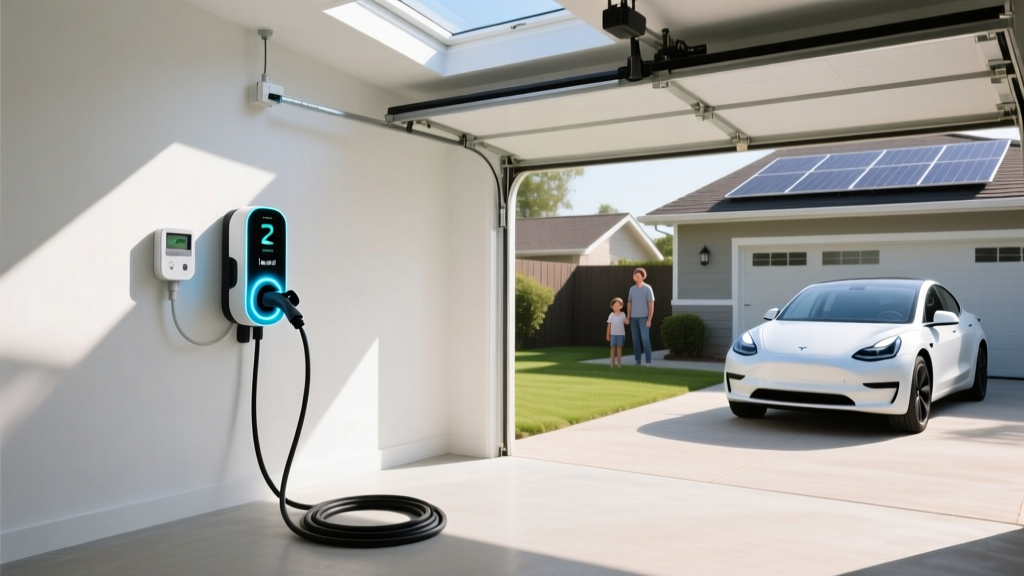
If you're driving an electric vehicle in Florida Power & Light territory — which covers most of the state from Miami to Jacksonville and west to Fort Myers — your charging experience hinges on three things: your home electrical setup, FPL's rate structure, and the equipment you choose. This guide breaks down exactly what FPL electric car charging looks like in 2026, from the cost of a Level 2 home installation to how Florida's EV-specific rates compare to gasoline.
Florida ranks among the top states for EV adoption, and FPL serves over 12 million people. That means a massive installed base of potential home chargers. But the utility's rate tiers, Florida's older housing stock, and the ongoing NACS/CCS connector transition all create decisions that aren't always obvious. Let's work through them with real numbers.
Charging Levels: Speed, Power, and What They Mean for Your EV
Before comparing costs, you need to understand the three charging levels. The critical distinction: kW (kilowatts) measures power — how fast energy flows into your car. kWh (kilowatt-hours) measures energy — how much your battery holds. A 75 kWh battery charged at 7.2 kW takes roughly 10 hours from empty. That same battery at a 150 kW DC fast charger can reach 80% in about 25–30 minutes, depending on the charge curve.
| Level | Voltage | Power (kW) | Miles of Range Added Per Hour | Typical Use Case |
|---|---|---|---|---|
| Level 1 | 120V (standard outlet) | 1.2–1.9 kW | 3–5 miles | Overnight top-up, PHEVs, low-mileage drivers |
| Level 2 | 240V (dryer-style outlet or hardwired) | 3.3–19.2 kW | 12–75 miles | Daily home charging — the standard for BEVs |
| DC Fast Charging | 400–800V DC | 50–350 kW | 150–1,000+ miles/hr equivalent | Road trips, rapid top-ups away from home |
For most FPL customers with a battery electric vehicle (BEV), a Level 2 home charger is the practical baseline. Level 1 works fine for plug-in hybrids with 25–45 kWh batteries or BEV owners who drive under 30 miles daily. DC fast charging is for road trips and emergencies — not daily use, as frequent DC sessions can accelerate battery degradation over time.
How Much Does a Home Level 2 Charger Installation Cost in FPL Territory?
This is where Florida's housing stock matters. Many homes in South Florida and the Tampa Bay area were built before 2000 with 100-amp or 150-amp electrical panels. A Level 2 charger drawing 40 amps (9.6 kW) typically requires a 50-amp dedicated circuit. If your panel has spare capacity, installation is straightforward. If it doesn't, you may need a panel upgrade — a significant added cost.
| Component | Typical Cost Range | Notes |
|---|---|---|
| Level 2 Charger (Equipment) | $300–$700 | Smart Wi-Fi chargers with NACS or J1772 connector; 32A–48A models |
| Electrician Labor | $500–$2,000 | Depends on run length from panel to garage/carport; Florida rates ~$85–$150/hr |
| Permit & Inspection | $50–$200 | Most Florida counties require an electrical permit for new 240V circuits |
| Panel Upgrade (if needed) | $1,500–$4,000 | Upgrading from 100A to 200A service; common in pre-1990s homes |
| Total (no panel upgrade) | $850–$2,900 | Most typical scenario for newer construction |
| Total (with panel upgrade) | $2,350–$6,900 | Older homes or those adding solar + EV simultaneously |
A few Florida-specific considerations: outdoor-rated (NEMA 4) chargers are essential if you park in a carport or driveway — summer humidity and salt air near the coast corrode indoor-rated units quickly. Also, FPL does not currently offer a dedicated EV-charging rebate for residential Level 2 equipment, though some Florida municipalities and the IRS §30D federal tax credit may offset vehicle purchase costs. Always consult a licensed electrician for your specific panel assessment.
FPL Rates and the Cost to Charge Your EV at Home
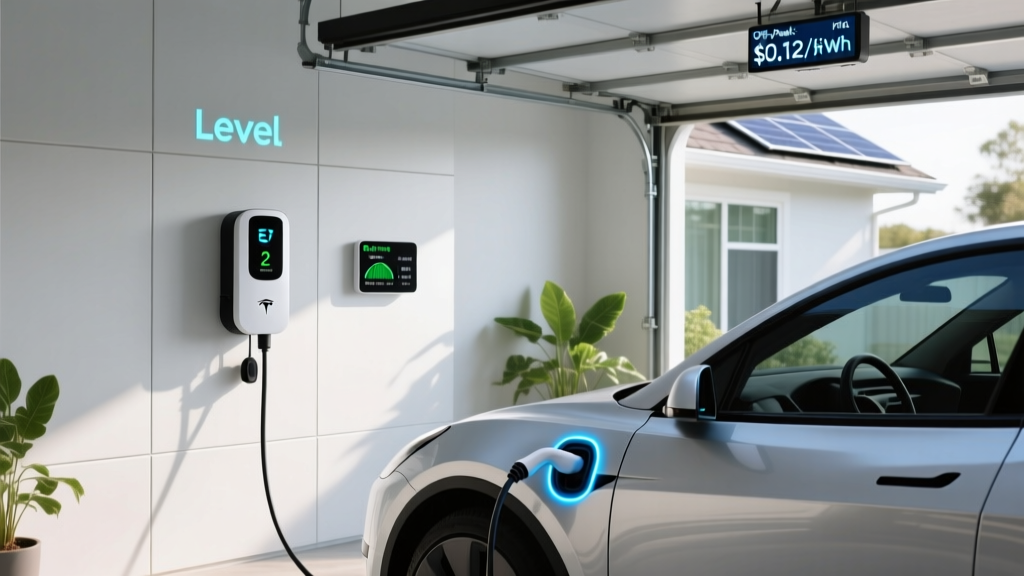
FPL's residential rates in 2026 average around $0.12–$0.14 per kWh for standard service, but time-of-use (TOU) plans can drop off-peak rates significantly. Florida's EV rate pilot programs have evolved, and the key advantage for home chargers is shifting consumption to overnight hours when grid demand is low.
Here's what charging actually costs across common scenarios:
| Scenario | Rate ($/kWh) | Full Charge Cost (75 kWh battery) | Cost Per Mile (at 3 mi/kWh) | Equivalent Gas Cost (at 28 MPG, $3.30/gal) |
|---|---|---|---|---|
| FPL Off-Peak (overnight, TOU plan) | ~$0.08–$0.10 | $6.00–$7.50 | $0.027–$0.033 | $0.118/mile |
| FPL Standard Residential Rate | ~$0.12–$0.14 | $9.00–$10.50 | $0.040–$0.047 | $0.118/mile |
| Public Level 2 (e.g., ChargePoint, FPL EVolution) | $0.20–$0.35 | $15.00–$26.25 | $0.067–$0.088 | $0.118/mile |
| DC Fast Charging (Electrify America, Tesla Supercharger) | $0.35–$0.52 | $26.25–$39.00 (for 10–80%) | $0.117–$0.173 | $0.118/mile |
The takeaway: home charging on a TOU plan is roughly 3–4x cheaper per mile than gasoline. Even at FPL's standard rate, you're paying less than half the per-mile cost of gas. Public DC fast charging narrows the gap — on some networks it can approach gas parity — which is why home charging remains the economic backbone of EV ownership.
Which Connector Does Your EV Use? NACS, CCS, and Adapter Realities
The connector landscape shifted dramatically in 2024–2025 when Ford, GM, Rivian, Volvo, and most major automakers adopted the North American Charging Standard (NACS), originally developed by Tesla. By 2026, most new EVs sold in the U.S. ship with NACS ports. Older EVs with CCS1 or CHAdeMO connectors require adapters for the growing NACS Supercharger network.
| Connector Type | Brands Using It (2026 Models) | Home Charger Compatibility | Public Network Access |
|---|---|---|---|
| NACS (Tesla standard) | Tesla (all), Ford, GM, Rivian, Volvo, Polestar, Hyundai/Kia (2025+), Toyota (bZ new models) | Tesla Wall Connector, or NACS-equipped aftermarket chargers | Tesla Supercharger network (largest); growing NACS stations on EA, EVgo |
| CCS1 (Combo) | VW ID.4 (pre-2025), older Hyundai/Kia, BMW i4/iX (pre-2025), Stellantis | J1772 home chargers (CCS is J1772 + DC pins) | Electrify America, EVgo, ChargePoint DC stations |
| CHAdeMO | Nissan Leaf (legacy only — no new models after 2025) | J1772 Level 2; CHAdeMO DC adapters rare | Declining availability; some EA and EVgo stations retain connectors |
If you own a CCS1-equipped EV, Tesla sells a CCS-to-NACS adapter (~$250) that unlocks Supercharger access. Ford and GM provide these adapters to owners at no cost or reduced cost through 2026. For home charging, the physical connector matters less — most Level 2 chargers use the J1772 standard (which NACS vehicles can use with a simple J1772-to-NACS adapter included with many new EVs), or you can buy a charger with a native NACS plug.
Recommended Level 2 Home Chargers for FPL Customers
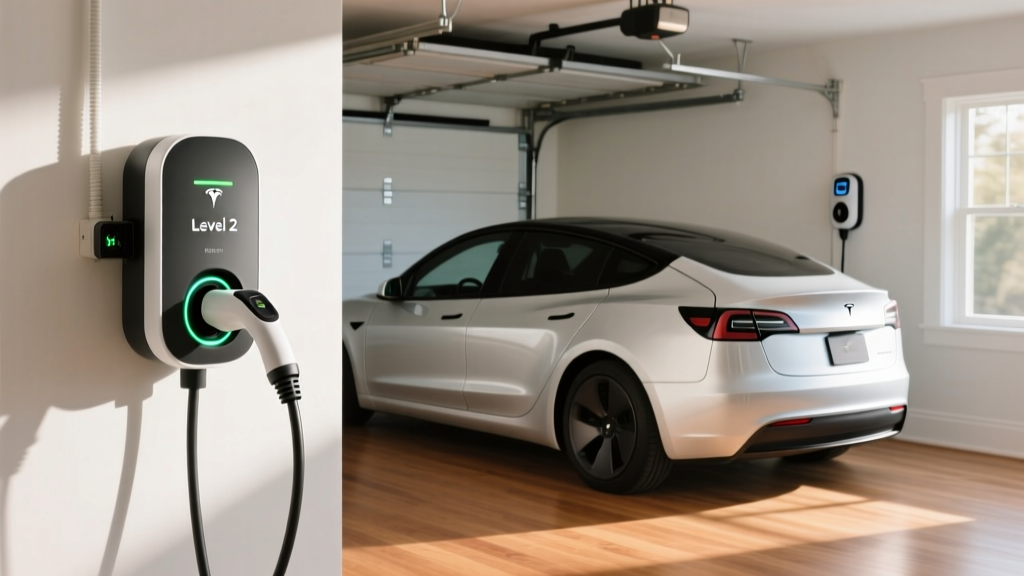
Based on reliability, smart features, and compatibility with Florida's climate, here are proven Level 2 options:
Tesla Wall Connector (Gen 4)
- Power Output: Up to 11.5 kW (48A on a 60A circuit)
- Connector: Native NACS; includes J1772 adapter in box
- Cable Length: 24 feet
- Smart Features: Wi-Fi, firmware updates, load sharing between two units, access control
- Outdoor Rating: NEMA 4 (suitable for Florida carports)
- Price: ~$475
- Best For: Tesla owners, Ford/GM NACS-vehicle owners, anyone wanting a clean native-NACS setup
ChargePoint Home Flex
- Power Output: Up to 12 kW (50A on a 60A circuit); adjustable down to 16A for smaller panels
- Connector: J1772 (NACS vehicles use included adapter); NACS version available
- Cable Length: 23 feet
- Smart Features: Wi-Fi, Alexa integration, scheduling for off-peak FPL rates, energy tracking
- Outdoor Rating: NEMA 4
- Price: ~$550–$650
- Best For: CCS1 vehicle owners, multi-EV households, those who want detailed app-based scheduling
Emporia Vue EV Charger
- Power Output: Up to 11.5 kW (48A)
- Connector: J1772 (NACS adapter available separately)
- Cable Length: 24 feet
- Smart Features: Integrates with Emporia home energy monitor, solar-aware charging, TOU scheduling
- Outdoor Rating: NEMA 4
- Price: ~$400–$500
- Best For: Solar-panel owners who want to charge exclusively on excess solar production
FPL EVolution Home Charger (Utility-Supplied)
- Power Output: Up to 9.6 kW (40A)
- Connector: J1772
- Cable Length: 20 feet
- Smart Features: Utility-managed demand response, integration with FPL account
- Outdoor Rating: NEMA 3R
- Price: Varies; check FPL's current EV programs for availability and incentives
- Best For: Customers who prefer utility-integrated solutions and potential demand-response credits
Charging Time Examples: What to Expect with Common EV Battery Sizes
Charge times depend on your vehicle's onboard charger capacity (which limits Level 2 speed) and battery size. Most 2026 EVs accept 11.5 kW on Level 2; some accept only 7.2 kW or 9.6 kW. DC fast charging times depend on peak kW capability and the charge curve — batteries accept power fastest between 10–50% SoC and taper significantly above 80%.
| Vehicle (2026) | Battery (kWh usable) | Level 2 at 11.5 kW (10–80%) | Level 2 at 7.2 kW (10–80%) | DC Fast (10–80%) |
|---|---|---|---|---|
| Tesla Model Y Long Range | 75 kWh (NMC) | ~4.5 hours | ~7.3 hours | ~18 min at 250 kW peak |
| Ford Mustang Mach-E Extended Range | 91 kWh (NMC) | ~5.5 hours | ~8.8 hours | ~28 min at 150 kW peak |
| Hyundai Ioniq 5 (Long Range) | 77.4 kWh (NMC) | ~4.7 hours | ~7.5 hours | ~18 min at 240 kW peak (800V) |
| Chevrolet Equinox EV | 85 kWh (NMC) | ~5.2 hours | ~8.2 hours | ~24 min at 190 kW peak |
| Toyota bZ4X | 64 kWh (NMC) | ~3.9 hours | ~6.2 hours | ~30 min at 150 kW peak |
Notice that even the largest batteries fully replenish overnight on Level 2. For a typical commute of 30–50 miles, you'll use roughly 10–18 kWh daily — easily replaced in 1–2 hours of Level 2 charging. This is why most EV owners charge at home and rarely think about it.
Safety, Electrical Code, and Florida-Specific Installation Requirements
A Level 2 charger installation is not a DIY project. Florida's electrical code (based on the NEC) requires:
- Dedicated circuit: Your charger must have its own breaker — no sharing with other appliances.
- Correct wire gauge: A 48A charger on a 60A circuit requires 6 AWG copper wire for runs up to 50 feet; longer runs may need 4 AWG to prevent voltage drop.
- GFCI protection: NEC 2023 (adopted in Florida) requires GFCI protection for all 240V EV charging outlets. Hardwired chargers typically have built-in ground-fault protection, avoiding the nuisance-tripping issues some owners report with GFCI breakers on receptacle-based setups.
- Outdoor rating: If installed outdoors or in an open carport, the charger must be rated NEMA 4 (weatherproof) or NEMA 3R (rain-resistant). Florida's summer thunderstorms and salt spray make NEMA 4 the safer choice.
- Permit and inspection: Most Florida counties (Miami-Dade, Broward, Palm Beach, Hillsborough, Orange, Duval) require an electrical permit. The inspection ensures proper grounding, wire sizing, and breaker rating. Unpermitted work can void homeowner's insurance coverage in the event of an electrical fire.
One often-overlooked issue in Florida: hardwired vs. plug-in (NEMA 14-50 outlet). A hardwired charger avoids the GFCI breaker requirement (and its associated cost and tripping risk), delivers full amperage without derating, and is generally the cleaner installation. The trade-off is that you can't easily swap chargers or take the unit with you if you move. For most homeowners planning to stay 5+ years, hardwired is the better call.
Public EV Charging in FPL Territory: Networks and Pricing
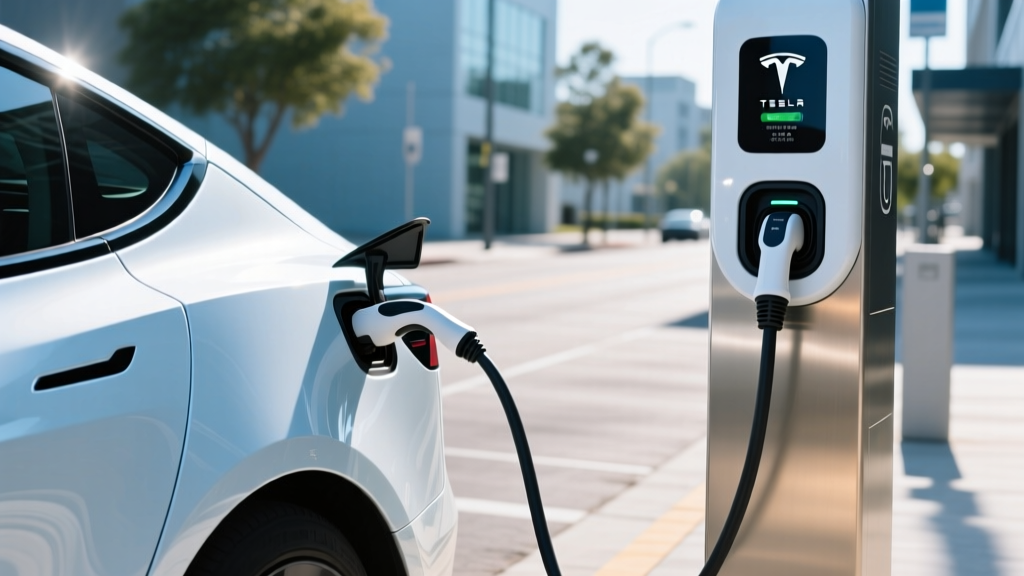
FPL operates its own FPL EVolution public charging network with Level 2 and DC fast chargers at select locations across Florida. Beyond that, the major networks available in FPL territory include:
- Tesla Superchargers: ~350+ stalls across Florida; now open to non-Tesla NACS vehicles via the Tesla app. Pricing: $0.28–$0.42/kWh depending on location and time.
- Electrify America: Major presence along I-95, I-75, and I-4 corridors. Pricing: $0.43–$0.52/kWh for guests; $0.36/kWh with Pass+ membership ($7/month).
- EVgo: Growing network in metro areas. Pricing: $0.36–$0.48/kWh; subscription plans available.
- ChargePoint: Primarily Level 2 at retail/hospitality locations. Pricing varies by host; many are free or $0.15–$0.30/kWh.
For road-trip planning, the U.S. Department of Energy's EV infrastructure data and apps like PlugShare or A Better Routeplanner show real-time station availability along Florida's major corridors. I-95 from Miami to Jacksonville and I-4 from Tampa to Orlando have dense DC fast-charging coverage. Rural routes in the Panhandle and inland remain thinner — plan accordingly.
Frequently Asked Questions About FPL Electric Car Charging
Does FPL offer a special EV charging rate?
FPL has explored time-of-use and EV-specific rate structures. As of 2026, residential customers can enroll in TOU plans that offer lower overnight rates, which benefits EV charging. Contact FPL directly or check their website for current program availability, as utility rate offerings update periodically.
Can I use a regular 120V outlet to charge my EV in Florida?
Yes, but it's slow. Level 1 charging at 120V delivers 1.2–1.9 kW, adding roughly 3–5 miles of range per hour. For a 75 kWh battery going from 20% to 80%, that's approximately 30+ hours. Level 1 works for PHEVs with smaller batteries (15–25 kWh) or BEV owners with very short commutes. For daily BEV use, Level 2 is strongly recommended.
Will installing an EV charger increase my FPL bill significantly?
Your electricity usage will increase, but your fuel cost drops dramatically. A driver covering 1,000 miles/month in an EV averaging 3 miles/kWh uses about 333 kWh monthly — roughly $33–$47 at FPL rates, compared to $118 in gasoline at $3.30/gal and 28 MPG. Net savings of $70–$85/month are typical, even with the added electricity.
Do I need a permit to install an EV charger in Florida?
Yes, in most jurisdictions. Miami-Dade, Broward, Palm Beach, Hillsborough, Orange, and Duval counties all require electrical permits for new 240V circuits. Permit fees range from $50–$200. Skipping the permit risks code violations, insurance claim denials, and complications during a home sale.
Is it better to hardwire my charger or install a NEMA 14-50 outlet?
Hardwiring is generally preferred in Florida. It eliminates the NEC-mandated GFCI breaker (which adds $100–$200 and can nuisance-trip), allows full 48A delivery without the 80% derating rule that applies to receptacles, and provides a more weather-sealed connection. A NEMA 14-50 outlet offers portability — useful if you rent or plan to move within a few years.
How do I know if my electrical panel can handle a Level 2 charger?
A licensed electrician will perform a load calculation per NEC Article 220. They sum your existing loads (HVAC, water heater, dryer, range) and compare against your panel's rated capacity. A 200A panel with gas appliances usually has ample room. A 100A or 150A panel with electric HVAC, water heater, dryer, and range may need an upgrade. Florida's heavy A/C usage makes this calculation particularly important — don't skip it.
What about solar panels and EV charging in Florida?
Florida's abundant sunshine makes solar + EV a powerful combination. If you have solar, you can offset your EV charging entirely during daylight hours. Smart chargers like the Emporia Vue can prioritize solar production, charging your car only when excess generation is available. With FPL's net metering policies, daytime solar can effectively make your EV charging free on a per-mile basis.
Sources: U.S. DOE / FuelEconomy.gov, IRS §30D Clean Vehicle Credits, FPL EVolution program documentation. Rates and program details reflect 2026 data and are subject to change. Consult a licensed electrician for installation specifics and a tax professional for credit eligibility.