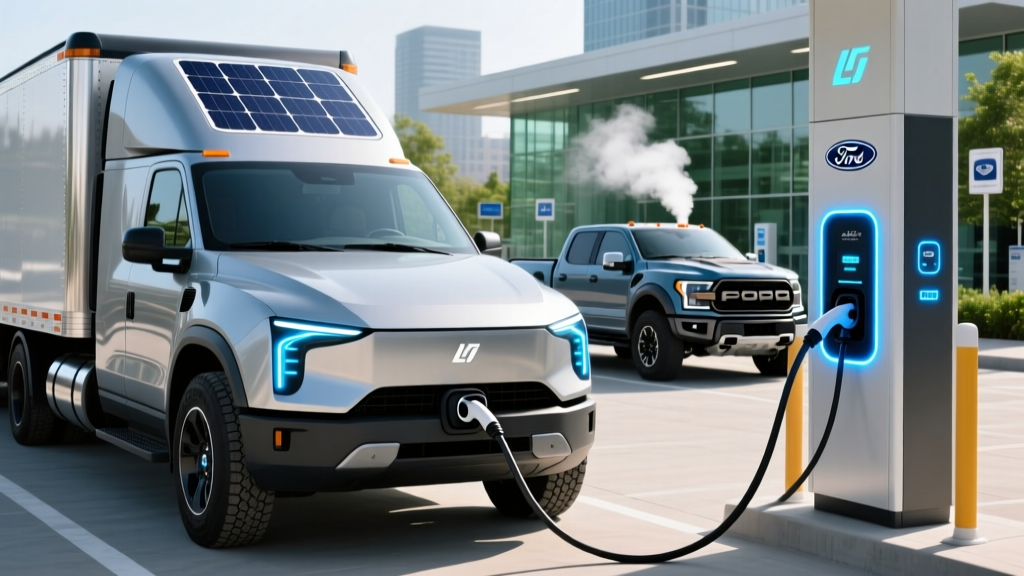
If you're cross-shopping a high-performance gas truck like the Ford Raptor supercharged (the 3.5L EcoBoost V6 Raptor or the 5.2L Predator V8 Raptor R) against a modern electric pickup such as the Ford F-150 Lightning or Rivian R1T, one of the biggest unknowns is what daily "refueling" actually looks like. A Ford Raptor supercharged fills its 26-gallon tank in five minutes at any gas station. An electric truck charges at home overnight or at a DC fast charger on road trips — different logistics, different costs, different infrastructure requirements.
This guide breaks down exactly what EV truck charging involves in 2026: speeds, home installation costs, connector compatibility, equipment picks, and the per-mile economics compared to premium fuel in a supercharged Raptor.
Charging Levels Explained: Level 1, Level 2, and DC Fast Charging
EV charging is measured in kW (kilowatts), which is the rate of power delivery — think of it like the flow rate of a gas pump nozzle. The battery capacity is measured in kWh (kilowatt-hours), which is the total energy stored — analogous to gallons in a fuel tank. Never confuse the two: kW is how fast energy flows; kWh is how much energy the battery holds.
Here's how each charging level translates to real-world range recovery, using a typical electric truck with a ~130 kWh usable battery and roughly 2.0–2.2 miles per kWh efficiency:
| Level | Voltage | Power (kW) | Miles of Range per Hour | Best For |
|---|---|---|---|---|
| Level 1 (120V outlet) | 120V AC | 1.2–1.9 kW | 3–5 mi/hr | Emergency top-ups, overnight for PHEVs |
| Level 2 (240V home/public) | 240V AC | 7.2–19.2 kW | 20–55 mi/hr | Daily home charging, workplace, destination |
| DC Fast Charging | 400–800V DC | 50–350 kW | 150–400+ mi/hr (peak) | Road trips, rapid top-ups |
For context, a Ford Raptor supercharged with the 450-hp 3.5L EcoBoost gets an EPA-estimated 16 MPG combined (fueleconomy.gov). A full 26-gallon tank gives roughly 416 miles of range and costs about $91 to fill at $3.50/gallon for premium. An electric truck "fills" its ~130 kWh battery at home for roughly $13–$17 on a typical utility rate — a massive cost difference covered below.
Home EV Charger Installation: Electrical Requirements and Costs
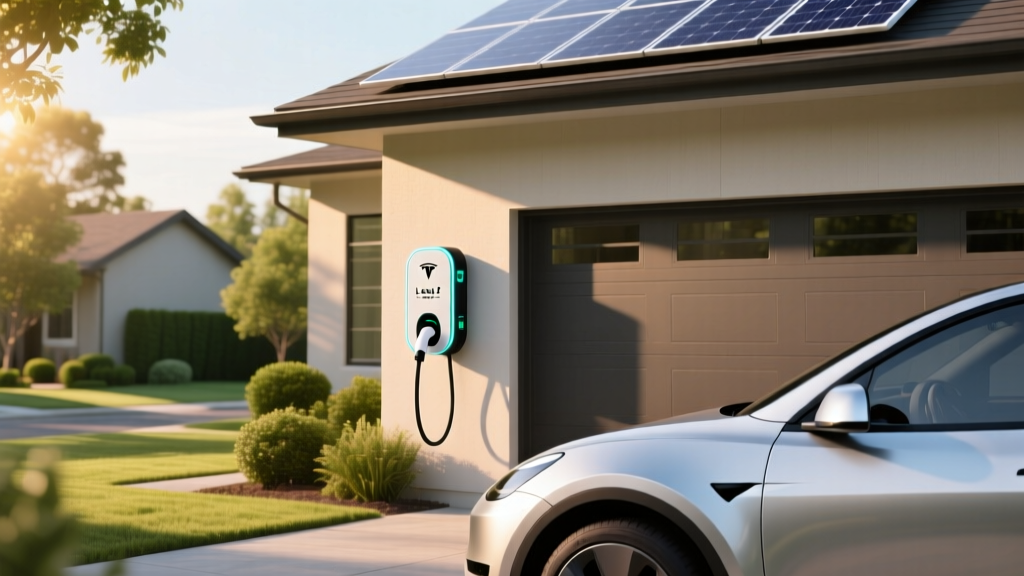
Most EV truck owners want a Level 2 home charger, which requires a dedicated 240V circuit — the same voltage your electric dryer or oven uses. Here's what that entails electrically:
- Circuit rating: A 40A or 60A dedicated breaker is standard for EV charging. A 48A charger requires a 60A circuit (National Electrical Code requires circuits to be rated 125% of continuous load).
- Wire gauge: 6 AWG copper for 40A circuits; 4 AWG for 60A circuits, depending on run length.
- Panel capacity: Your main service panel must have enough spare capacity. A 200A panel is typical for modern homes; older homes with 100A service may need a panel upgrade ($1,500–$3,500+) or a load-management device.
- Permit: Most jurisdictions require an electrical permit for a new 240V circuit, typically $50–$200.
- GFCI protection: NEC 2020 and later require GFCI protection for outdoor receptacles; hardwired chargers may not need a separate GFCI breaker (varies by jurisdiction).
Installation Cost Breakdown
| Item | Low End | High End | Notes |
|---|---|---|---|
| Level 2 charger (equipment) | $400 | $800 | 40A–48A smart charger, 24ft cable |
| Electrician labor | $500 | $2,000 | Depends on panel-to-charger distance, wall material |
| Electrical permit | $50 | $200 | Varies by municipality |
| Panel upgrade (if needed) | $1,500 | $4,000 | 100A→200A service; not always required |
| Total (no panel upgrade) | $950 | $3,000 | Most common scenario |
| Total (with panel upgrade) | $2,450 | $7,000 | Older homes, 100A service |
The single biggest variable is the distance from your electrical panel to the charger location. A charger mounted on the garage wall directly behind a panel with spare capacity might cost under $1,000 installed. Running conduit 80 feet through an attic and across a detached garage can push past $2,500 even without a panel upgrade.
Always hire a licensed electrician familiar with EV charger installations. Ask whether they'll pull a permit (they should), and get at least two quotes. Some utilities offer rebates of $250–$1,000 for Level 2 installations — check with your local provider.
Connector Compatibility: NACS, CCS1, and CHAdeMO in 2026
The connector landscape has shifted dramatically. As of 2026, the North American Charging Standard (NACS) — originally developed by Tesla — has become the dominant connector for new EVs sold in North America. Here's where major brands stand:
| Brand | Built-in Connector | Adapter Needed? | Notes |
|---|---|---|---|
| Tesla (all models) | NACS | None for Superchargers; CCS adapter included | Native Supercharger access |
| Ford (F-150 Lightning, etc.) | NACS (2025+) | CCS adapter for legacy stations | Earlier models had CCS1, adapter provided |
| Rivian (R1T, R1S) | NACS (2025+) | None for Tesla network | Native NACS on current production |
| GM (Silverado EV, etc.) | NACS (2025+) | CCS adapter for older public stations | Transitioned from CCS1 |
| Hyundai/Kia (Ioniq 5, EV9) | NACS (2025+) | CCS adapter for legacy networks | 800V architecture maintained |
| Nissan (Ariya, Leaf) | NACS (Ariya 2026); CHAdeMO (Leaf) | CHAdeMO→NACS adapter for Leaf | Leaf is legacy CHAdeMO |
| VW (ID.4, ID.Buzz) | NACS (2025+) | CCS adapter for older Electrify America stalls | Transitioned from CCS1 |
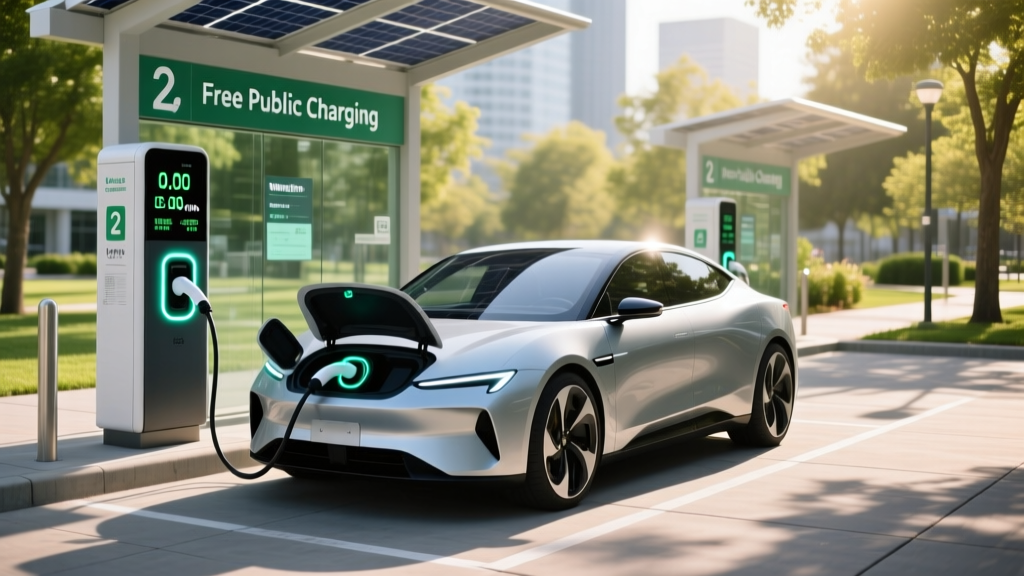
For DC fast charging on road trips, NACS-equipped trucks like the F-150 Lightning now access Tesla Supercharger stations (15,000+ locations in North America) using Ford's included adapter, plus non-Tesla networks like Electrify America and EVgo that are adding NACS cables to new installations. If you buy a 2022–2024 Lightning with a CCS1 port, Ford provides a NACS adapter for Supercharger access.
Cost to Charge: Home Electricity vs. Gas for a Supercharged Raptor
This is where electric trucks pull ahead decisively for daily use. A Ford Raptor supercharged (the 3.5L EcoBoost, 450 hp) requires premium 93-octane fuel and averages roughly 16 MPG combined per EPA data. The Raptor R with its 720-hp supercharged 5.2L Predator V8 drops to approximately 12 MPG combined.
| Scenario | Cost per kWh / Gallon | Cost per Mile | Annual Cost (12,000 mi) |
|---|---|---|---|
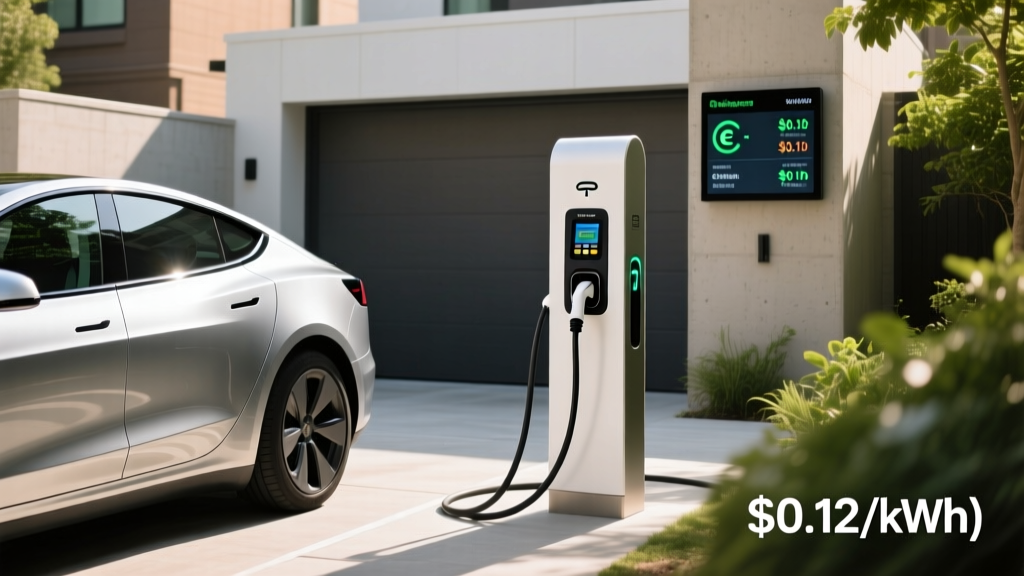
| Home charging (off-peak utility rate) | $0.12/kWh | $0.055 | $660 |
| Home charging (average US rate) | $0.17/kWh | $0.078 | $936 |
| Public Level 2 (ChargePoint, etc.) | $0.30/kWh | $0.14 | $1,680 |
| DC Fast Charging (EA, EVgo) | $0.45/kWh | $0.21 | $2,520 |
| Ford Raptor 3.5L (premium gas) | $4.00/gal (93 oct) | $0.25 | $3,000 |
| Ford Raptor R 5.2L SC (premium gas) | $4.00/gal (93 oct) | $0.33 | $3,960 |
At home on an off-peak rate, charging an electric truck costs roughly one-fifth what you'd spend fueling a supercharged Raptor on premium gas. Even exclusive DC fast charging — the most expensive EV scenario — still undercuts the Raptor's fuel cost per mile. The calculation assumes ~2.2 mi/kWh for the electric truck (based on the F-150 Lightning Extended Range's real-world highway efficiency of roughly 2.0 mi/kWh).
One caveat: if you live in an area with high electricity rates (California, Hawaii, parts of the Northeast at $0.30+/kWh residential), the home-charging advantage narrows. Time-of-use (TOU) plans that offer $0.08–$0.12/kWh overnight rates maximize savings.
Charging Time Examples: What to Expect with Large Truck Batteries
Electric trucks carry large battery packs — the F-150 Lightning Extended Range has ~131 kWh usable, and the Rivian R1T Max Pack offers ~149 kWh usable. Larger batteries mean longer charge times at any given power level. Here's what typical charging sessions look like:
- Level 1 (120V, 1.4 kW): Adding 10–15 kWh overnight (~8 hours) gives roughly 20–33 miles of range. Essentially useless for a depleted truck battery but adequate for a PHEV with a 30–40 mile electric range.
- Level 2 (240V, 48A / 11.5 kW): A full 0–100% charge on a 131 kWh battery takes roughly 11.5 hours. Most owners charge from 20–80% daily, which takes about 7 hours — perfect for overnight charging.
- Level 2 (240V, 80A / 19.2 kW): Available on the F-150 Lightning with the optional 80A Charge Station Pro. 20–80% in roughly 4 hours. Requires a 100A dedicated circuit and significant electrical work.
- DC Fast Charging (150 kW CCS/NACS): 10–80% in approximately 40–45 minutes on the Lightning. The charge curve tapers significantly above 80% SoC to protect battery longevity.
- DC Fast Charging (350 kW capable, e.g., Rivian R1T or Hyundai Ioniq 5): Vehicles with 800V architectures can achieve 10–80% in roughly 18–22 minutes at compatible stations. The Lightning's 400V architecture caps its peak at ~155 kW.
A critical detail many buyers miss: peak charge rate is not sustained charge rate. A truck that advertises "155 kW peak" will only hold that rate at low state-of-charge (typically 10–30% SoC). As the battery fills, the charge rate tapers — from 155 kW down to 80 kW by 60% SoC, and further to 40 kW by 80%. This is why manufacturers quote 10–80% times rather than 0–100%: the final 20% can take as long as the first 70%.
Recommended Home Chargers for Electric Trucks (2026)
ChargePoint Home Flex
- Power: Up to 12 kW (50A) on a 60A circuit; configurable down to 16A
- Connector: NACS (2025+ models) or CCS1/J1772
- Cable length: 24 ft
- Smart features: Wi-Fi, app scheduling, Alexa, energy tracking
- Price: ~$599
- Best for: Flexible amperage for older panels; reliable app
Tesla Wall Connector
- Power: Up to 11.5 kW (48A) on a 60A circuit
- Connector: NACS native
- Cable length: 24 ft
- Smart features: Wi-Fi, OTA updates, power sharing between units, load management
- Price: ~$475
- Best for: NACS-native trucks (F-150 Lightning 2025+, Rivian, Tesla); excellent value
Ford Charge Station Pro (80A)
- Power: Up to 19.2 kW (80A) on a 100A circuit
- Connector: NACS (2025+ production); CCS1 on earlier units
- Cable length: 25 ft
- Smart features: FordPass integration, Intelligent Backup Power (V2H with Home Integration System)
- Price: ~$1,295 (charger only; Home Integration System additional ~$3,895 installed)
- Best for: F-150 Lightning owners wanting fastest home charging + vehicle-to-home backup power
For most EV truck owners, a 48A charger on a 60A circuit is the sweet spot — it delivers roughly 30–35 miles of range per hour of charging, more than enough to replenish a daily commute overnight. The 80A option is worth the extra electrical work only if you regularly deplete the battery and need rapid home turnaround, or if you want vehicle-to-home backup power capability.
Safety, Code, and Installation Best Practices
EV charging draws sustained high current for hours — this is a continuous load under the National Electrical Code (NEC Article 625), which has stricter requirements than intermittent loads like a microwave. Key safety considerations:
- Dedicated circuit: Your Level 2 charger must have its own dedicated breaker — no sharing with other outlets or appliances.
- Hardwired vs. plug: Chargers above 40A are typically hardwired (no receptacle), which eliminates the plug as a failure point and may not require GFCI breaker protection. A 50A NEMA 14-50 receptacle is common for 40A plug-in chargers but must be installed with proper torque specs and a GFCI breaker in many jurisdictions.
- Outdoor rating: If your charger is mounted outside, ensure it carries a NEMA 4 or IP65 weather rating. All recommended chargers above meet this standard.
- Load management: If your panel is near capacity, devices like the Emporia Load Management Controller or Tesla's built-in power-sharing can dynamically reduce charger draw when other circuits are active, avoiding a costly panel upgrade.
- Cable management: A 24-foot cable is heavy. Plan for a wall-mounted cable organizer or holster to keep it off the garage floor.
Do not use extension cords with EV chargers, and avoid adapters that convert a dryer outlet to a charger plug unless they are UL-listed and rated for continuous duty. Cheap adapters are a leading cause of melted receptacles and house fires in EV charging setups.
Frequently Asked Questions
How much does it cost to install a home EV charger?
For a standard 48A Level 2 charger on a 60A circuit, expect $950–$3,000 total (equipment + electrician + permit) if your panel has sufficient capacity. If your home needs a panel upgrade from 100A to 200A service, add $1,500–$4,000. Homes with the panel adjacent to the garage can be on the low end; long conduit runs push costs higher.
How fast will each charging level add range?
Level 1 (120V) adds 3–5 miles per hour. Level 2 (240V, 48A) adds roughly 30–35 miles per hour for an electric truck. DC fast charging at 150 kW adds roughly 150–200 miles in 20 minutes at peak, but the rate tapers significantly as the battery fills past 60–80% SoC.
Which connector is compatible with my EV truck?
If you're buying a 2025+ Ford F-150 Lightning, Rivian R1T, Chevy Silverado EV, or Tesla Cybertruck, your truck has a NACS connector and can access Tesla Superchargers natively. Older (2022–2024) Lightnings and many imported EVs use CCS1 and require a NACS adapter for Supercharger access — most manufacturers include or sell this adapter. The Nissan Leaf is the last holdout using CHAdeMO.
How much does charging cost per mile vs. gas in a Ford Raptor supercharged?
Home charging at the US average rate of ~$0.17/kWh costs about $0.078/mile for an electric truck. A Ford Raptor supercharged 3.5L EcoBoost on premium 93-octane at $4.00/gallon costs roughly $0.25/mile at 16 MPG combined. That's a fuel cost difference of approximately $2,000 per year at 12,000 miles — and the gap is even wider versus the 720-hp Raptor R.
What electrical upgrades might I need for a home charger?
The most common upgrade is a panel capacity increase from 100A to 200A service, needed in older homes that lack spare breaker capacity. You may also need a new conduit run from the panel to the garage, a sub-panel installation for detached garages, or a smart load-management device if your panel is near its limit. A licensed electrician can perform a load calculation to determine whether your current panel can support a 60A EV circuit without upgrades.
Is a Ford Raptor supercharged better than an electric truck for daily driving?
It depends on your priorities. The Raptor's supercharged engine delivers thrilling off-road performance and instant refueling anywhere. An electric truck like the F-150 Lightning offers dramatically lower fuel costs (~$700–$950/year vs. ~$3,000+), instant torque, a front trunk (frunk), available vehicle-to-home backup power, and less routine maintenance. For towing-heavy or remote off-road use, the Raptor still has range and infrastructure advantages. For daily commuting and suburban use, the electric truck's cost savings and home-charging convenience are hard to beat.