Ford Ranger PHEV Charging Essentials: What Owners Need to Know
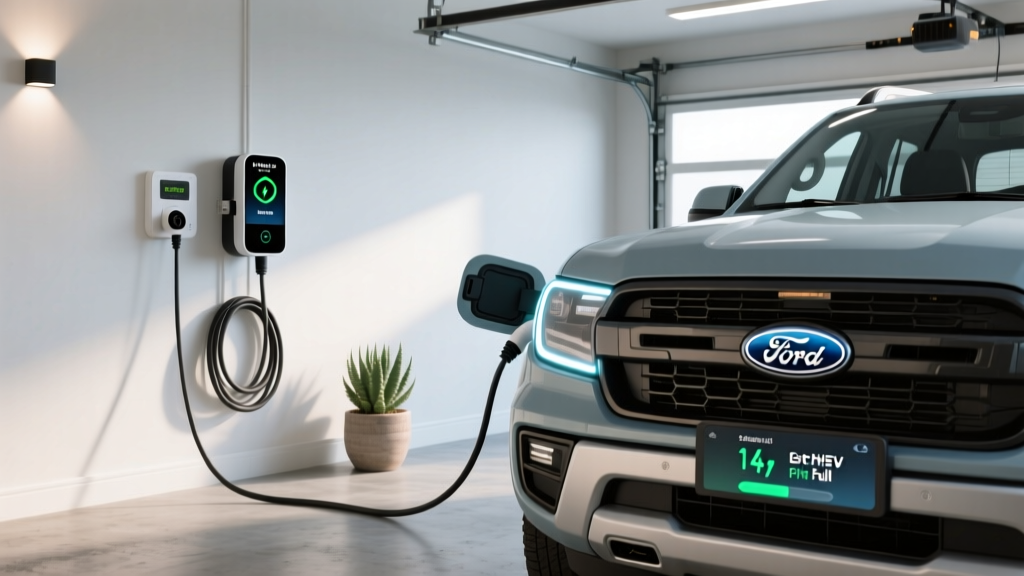
The Ford Ranger PHEV pairs a turbocharged gasoline engine with a plug-in hybrid powertrain, delivering roughly 30–40 miles of electric-only range on a modest battery pack (estimated 18–25 kWh usable, pending final EPA certification for the US market). Because the pack is smaller than a full BEV's, charging logistics are simpler — but getting the setup right still determines whether you actually drive on electrons or default to gasoline every morning.
This guide walks through every charging scenario Ranger PHEV owners will face: overnight home charging, public Level 2 top-ups, and the occasional DC fast-charge stop. We'll cover electrical requirements, real installation costs, connector compatibility, and the per-mile math that decides whether plugging in is worth the effort.
Estimated usable battery: 18–25 kWh (NMC chemistry)
EPA-estimated EV range: ~30–40 miles (preliminary, market-dependent)
Real-world expectation: 25–35 miles in mixed driving; 20–28 miles in cold weather or sustained highway use
Charge port: CCS1 (J1772 for AC, CCS Combo for DC) — NACS adapter may be required at Tesla Superchargers
Charging Levels Explained: kW Speeds and Miles Per Hour
Before plugging in anywhere, understand the three charging tiers. The critical distinction: kW (kilowatts) measures power — how fast energy flows into the battery. kWh (kilowatt-hours) measures energy — how much the battery stores. A 7.2 kW charger filling a 20 kWh battery from empty takes roughly 2.8 hours, not seconds.
| Level | Voltage | Power (kW) | Miles of EV Range Added Per Hour | 0–100% Time (est. 22 kWh pack) |
|---|---|---|---|---|
| Level 1 (120V household outlet) | 120V | 1.2–1.4 kW | 3–5 miles | ~16–18 hours |
| Level 2 (240V home/public) | 240V | 3.3–7.2 kW | 10–22 miles | ~3–7 hours |
| DC Fast Charge (CCS) | 400V+ | 50–80 kW (est. peak) | N/A (session-based) | 10–80% in ~25–35 min |
Real-world note: PHEVs accept lower DC fast-charge power than full BEVs because their smaller batteries can't absorb high sustained current without excessive heat. Expect the Ranger PHEV's charge curve to taper significantly above 80% state of charge (SoC), making the final 20% disproportionately slow. For daily use, Level 2 overnight charging is the sweet spot — you'll wake up to a full EV-range tank every morning.
Home Charger Installation: Electrical Requirements and Costs
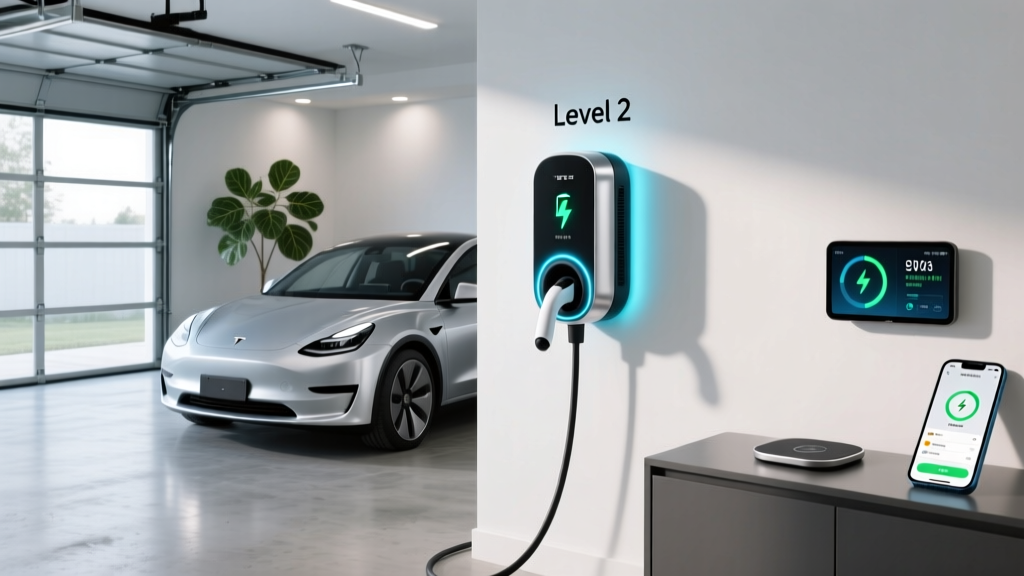
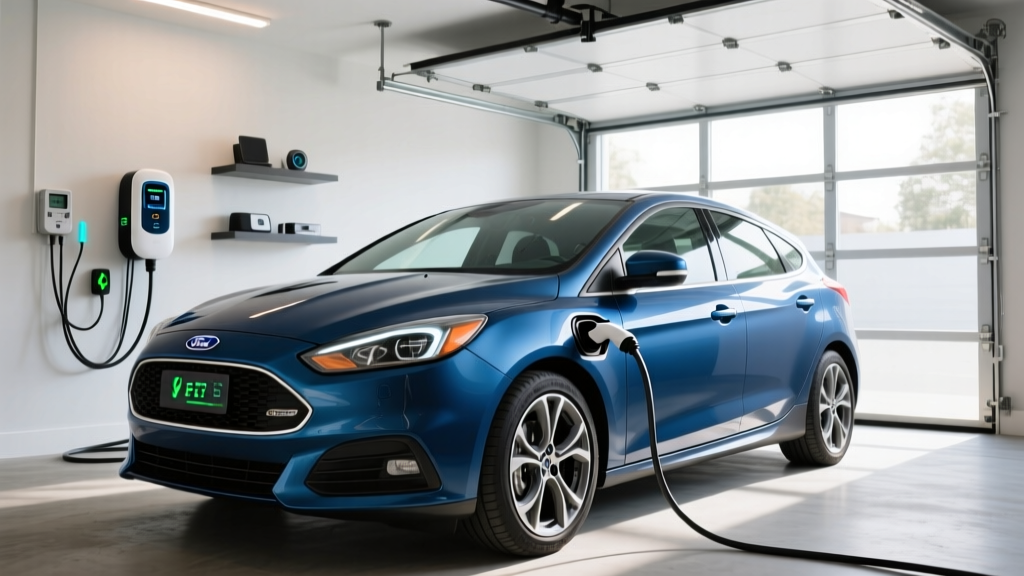
Most Ranger PHEV owners will install a 240V Level 2 wall connector in the garage or on an exterior wall. Here's what the electrical side actually requires.
Circuit and Panel Requirements
- Dedicated circuit: A 40-amp or 50-amp 240V breaker, dedicated solely to the EV charger (NEC Article 625 requires EVSE circuits be rated 125% of continuous load — a 32A charger needs a 40A breaker; a 40A charger needs a 50A breaker).
- Wire gauge: 6 AWG copper for 50A circuits; 8 AWG for 40A circuits. Longer runs (over 100 feet from panel) may require 4 AWG to prevent voltage drop.
- Panel capacity: Most modern 200A service panels can accommodate an EV charger. Homes with 100A service or panels already near capacity (electric heat, hot tubs, multiple large appliances) may need a panel upgrade to 200A — a $1,500–$3,500 job on its own.
- GFCI protection: NEC 2023/2026 requires GFCI protection on 240V receptacles used for EV charging in garages and outdoors. Hardwired EVSE units typically have built-in ground-fault protection and avoid this requirement.
- Outdoor rating: If mounting outside, the EVSE must carry a NEMA 4 or NEMA 4X weather rating. All recommended units below meet this standard.
| Cost Component | Typical Range | Notes |
|---|---|---|
| Level 2 EVSE hardware (charger unit) | $350–$700 | Smart Wi-Fi models at upper end |
| Electrician labor (standard install) | $500–$1,500 | Depends on run length, wall type, conduit |
| Electrical permit | $50–$250 | Varies by municipality |
| Panel upgrade (if needed) | $1,500–$3,500 | Only for 100A service or maxed-out panels |
| Utility rebate (if available) | -$100 to -$500 | Check local utility; some cover full hardware cost |
| Total (standard install, no panel upgrade) | $900–$2,450 | Most homes fall in this range |
| Total (with panel upgrade) | $2,400–$5,950 | Older homes with 100A service |
Pro tip: Get three quotes from licensed electricians who have specific EVSE installation experience. Ask whether they'll pull a permit (they should — unpermitted work can void home insurance claims). Some utilities, like PG&E and ConEdison, offer rebates that offset $250–$500 of installation cost. Always confirm with your utility before work begins.
Connector Compatibility: CCS, NACS, and Adapter Realities
The Ford Ranger PHEV is expected to use the CCS1 (Combo) charge port for the US market, consistent with Ford's current PHEV and BEV lineup (the Escape PHEV and F-150 Lightning both use CCS1 or NACS depending on model year). Ford announced in 2024 that future models would transition to the NACS (Tesla) connector, but the Ranger PHEV's exact port depends on production timing.
| Connector Type | Used By | Ranger PHEV Compatibility |
|---|---|---|
| J1772 (Level 1/2 AC) | All non-Tesla EVs/PHEVs | Native — standard for home and public AC charging |
| CCS1 Combo (DC fast) | Ford, GM, VW, Hyundai, most legacy EVs | Expected native DC port |
| NACS (Tesla) | Tesla Superchargers; Ford, GM, Rivian (2025+ models) | Adapter required if Ranger PHEV retains CCS1; may be native on later production |
| CHAdeMO | Nissan Leaf (legacy) | Not compatible — irrelevant for Ranger PHEV owners |
Adapter guidance: If your Ranger PHEV ships with CCS1, you'll need a CCS-to-NACS adapter (Ford sells an official unit, ~$200–$250) to access Tesla Supercharger stalls that now serve non-Tesla vehicles. For home Level 2 charging, any J1772 plug works natively — no adapter needed. Tesla Wall Connectors with the integrated J1772