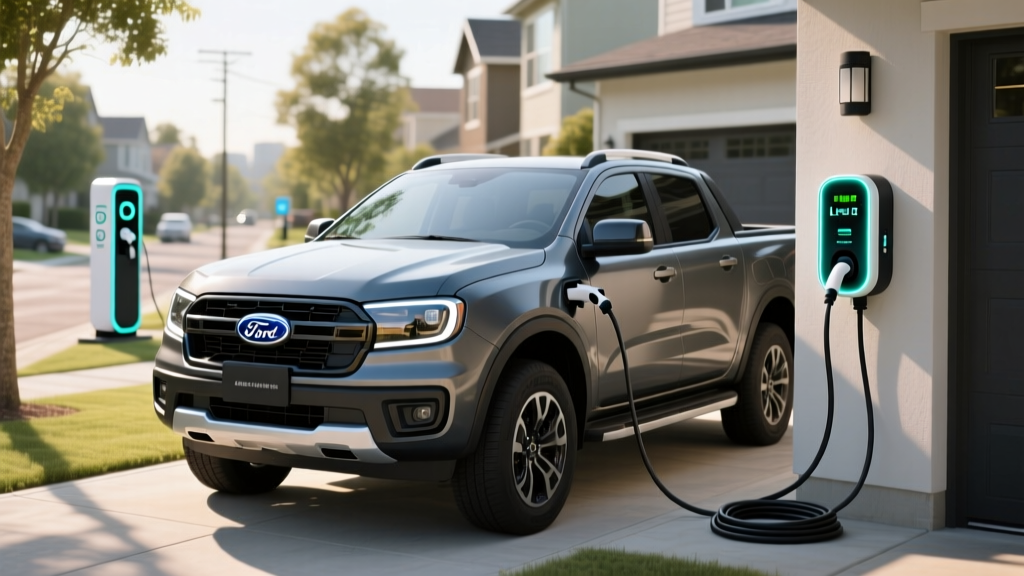
The upcoming Ford Ranger EV is poised to bring electric pickup capability to a midsize footprint, and for most buyers the biggest ownership question won't be range—it will be charging. Whether you're preparing your garage for a 240V Level 2 wallbox or mapping out public DC fast-charging stops for a road trip, getting the electrical and financial details right before delivery day saves time, money, and frustration.
This guide breaks down exactly what the Ranger EV's battery system demands, what your home's electrical panel can deliver, and how to calculate real charging costs versus a gas-powered Ranger. We'll cover the three charging levels, connector standards (including Ford's switch to NACS), installation cost realities, and specific hardware recommendations.
Understanding the Three EV Charging Levels
Before selecting equipment or hiring an electrician, you need to understand the three charging tiers available to any EV owner. The critical distinction: kW (kilowatts) measures power—how fast energy flows into the battery—while kWh (kilowatt-hours) measures energy—the total capacity stored in the battery pack. Think of kW as the width of a hose and kWh as the size of the tank you're filling.
| Level | Voltage | Power (kW) | Miles of Range Added per Hour | Best For |
|---|---|---|---|---|
| Level 1 | 120V (standard outlet) | 1.0–1.4 kW | 3–5 mi/hr | Overnight top-ups, low-mileage drivers, emergency backup |
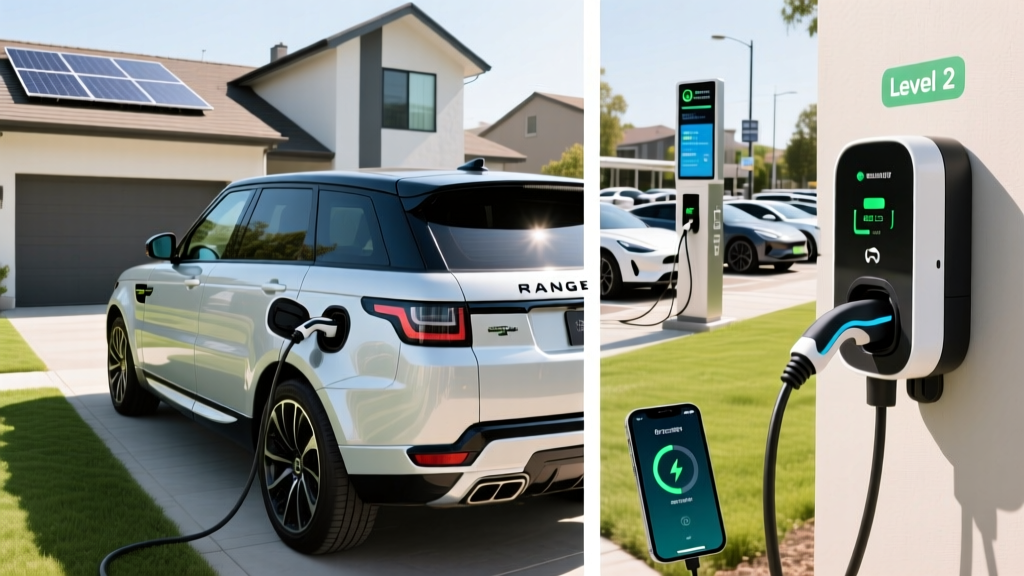
| Level 2 | 240V (dryer-style outlet or hardwired) | 7.2–19.2 kW | 20–60 mi/hr | Daily home charging, overnight full recharge |
| DC Fast Charge | 400V–800V (public stations) | 50–350 kW | 150–800+ mi/hr (peak) | Road trips, quick top-ups away from home |
For a midsize pickup like the Ranger EV with an estimated battery capacity in the range of 85–100 kWh (usable), Level 1 charging is realistically an emergency-only option—adding perhaps 30–40 miles overnight after 10 hours. Level 2 home charging is the practical daily solution, while DC fast charging handles highway travel.
Ford Ranger EV Connector Compatibility: NACS, CCS, and Adapters
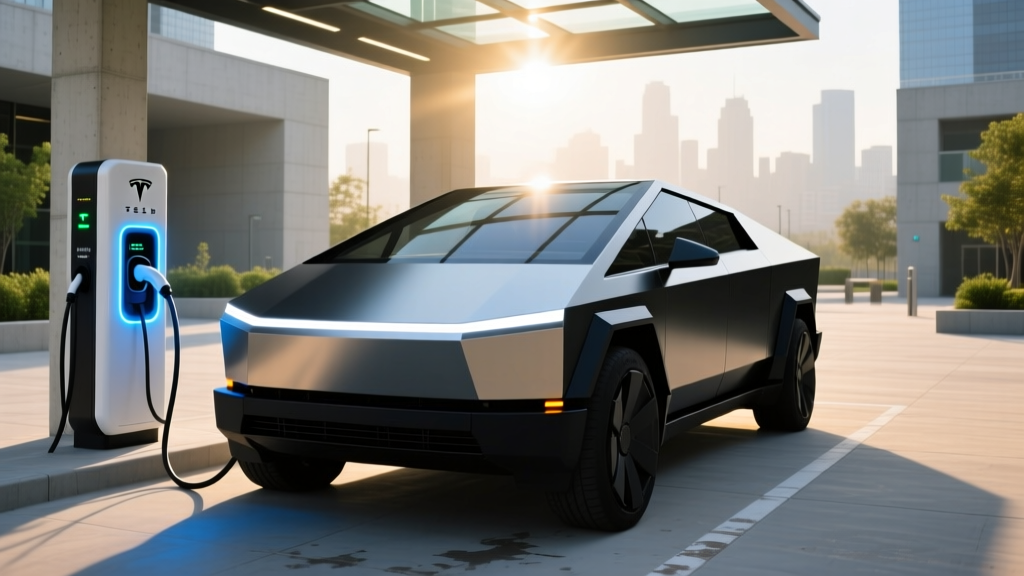
Ford made a decisive move beginning in 2025: all new Ford EVs are built with the North American Charging Standard (NACS) connector—the same plug used by Tesla's Supercharger network. This means the Ford Ranger EV will ship with a native NACS charge port, giving you direct access to Tesla Superchargers (now branded for broader use) without an adapter.
| Connector | Networks | Ranger EV Compatibility |
|---|---|---|
| NACS (native) | Tesla Supercharger, Electrify America (select), ChargePoint, EVgo (expanding) | ✅ Direct plug-in, no adapter needed |
| CCS1 | Electrify America, EVgo, ChargePoint, most non-Tesla networks | ⚡ Requires NACS-to-CCS adapter (Ford provides or sells one) |
| CHAdeMO | Limited legacy stations | ❌ Not supported; network being phased out |
For home Level 2 charging, most wallbox chargers now ship with either a NACS plug or a J1772 plug (the older North American standard). If you buy a J1772 charger, Ford includes a J1772-to-NACS adapter with the vehicle. However, buying a native NACS wallbox eliminates adapter clutter and reduces one potential point of connection resistance.
Adapter tip: When using any adapter, ensure the connection is fully seated before initiating a charge. Loose connections generate heat and can trigger thermal safety cutoffs mid-session.
Home Level 2 Installation: Electrical Requirements, Panel Upgrades, and Real Costs
Installing a Level 2 home charger is the single most impactful upgrade for daily EV ownership. For the Ranger EV, you'll want a 240V circuit capable of delivering at least 40 amps (9.6 kW) to replenish the battery overnight. Here's what that involves electrically and financially.
Electrical Requirements
- Circuit: Dedicated 50-amp breaker (to deliver a continuous 40A to the vehicle, per NEC 80% rule for continuous loads)
- Wire: 6 AWG copper (THHN in conduit or NM-B/Romex for indoor runs)
- Outlet option: NEMA 14-50 (240V/50A) for plug-in flexibility, or hardwired connection for higher-amperage chargers (48A+ requires hardwire on a 60A breaker)
- GFCI protection: Required by NEC 2020+ for outlets in garages; hardwired units have GFCI built into the charger
Panel Upgrade Reality
Many homes built before 2000 have 100-amp or 150-amp main electrical panels. Adding a 50-amp EV circuit may push total calculated load beyond your panel's capacity, requiring a panel upgrade to 200 amps. Your electrician will perform a load calculation (NEC Article 220) to determine this. If you already run electric heat, an electric dryer, and an electric oven on a 100A panel, an upgrade is likely.
| Component | Simple Install (panel has capacity, short run) | Complex Install (panel upgrade or long conduit run) |
|---|---|---|
| Level 2 Charger (equipment) | $400–$700 | $400–$700 |
| Electrician labor (2–4 hrs simple / 6–10 hrs complex) | $300–$600 | $800–$2,000 |
| Permit and inspection | $50–$150 | $50–$200 |
| Panel upgrade (if needed) | $0 | $1,500–$3,500 |
| Conduit, wire, misc. materials | $50–$150 | $200–$600 |
| Total Estimated Cost | $800–$1,600 | $2,950–$7,000 |
According to the U.S. Department of Energy, most straightforward home Level 2 installations fall in the $1,000–$2,000 range when no panel upgrade is required. Utility rebates in many states can offset $250–$500 of equipment or installation costs—check with your local provider.
DC Fast Charging the Ranger EV: Peak Power, Charge Curves, and 10–80% Times
On the road, the Ranger EV is expected to support DC fast charging at peak rates comparable to Ford's existing EV architecture—approximately 150–175 kW peak on NACS-equipped Superchargers and compatible CCS stations. Note that peak kW is not sustained kW: charging follows a charge curve where power tapers significantly as the battery approaches full capacity to protect cell longevity.
For an estimated ~90 kWh usable battery:
- 10–80% charge time: approximately 30–40 minutes at a 150+ kW station
- 80–100% charge time: an additional 25–35 minutes (heavy taper above 80%)
- Miles added in 15 minutes: roughly 100–130 miles of range at peak rate
Real-world range note: EPA range estimates for the Ranger EV have not been finalized as of this writing (the model remains in pre-production). For planning purposes, expect real-world highway range to run 10–15% below EPA sticker, and cold-weather range (below 30°F) to drop 20–30% due to battery thermal management demands and cabin heating. Preconditioning the battery while navigating to a DC fast charger is essential for achieving peak charge rates in cold conditions.
Cost to Charge: Home vs. Public vs. Gas Comparison
Charging economics depend heavily on where and when you plug in. Here's a realistic breakdown using the Ranger EV's estimated efficiency of roughly 2.0–2.5 kWh per mile (typical for a midsize electric pickup):
| Scenario | Rate ($/kWh) | Cost per Mile | Notes |
|---|---|---|---|
| Home off-peak (utility time-of-use rate) | $0.08–$0.12 | $0.016–$0.030 | Best case; schedule charging for overnight |
| Home standard rate | $0.14–$0.18 | $0.028–$0.045 | Without TOU plan |
| Public Level 2 (workplace, shopping) | $0.20–$0.35 | $0.040–$0.088 | Varies widely by network |
| DC Fast Charge (Electrify America, Supercharger) | $0.32–$0.52 | $0.064–$0.130 | Road-trip use; membership plans reduce cost |
| Gas Ranger (22 MPG combined, $3.40/gal) | $3.40/gal | $0.155 | EPA combined estimate per fueleconomy.gov |
Even at the most expensive DC fast-charging rates, the Ranger EV costs less per mile to fuel than a gas Ranger at current gas prices. But the real savings come from home charging on off-peak rates—roughly one-fifth the per-mile fuel cost of gasoline.
Recommended Level 2 Home Chargers for the Ranger EV
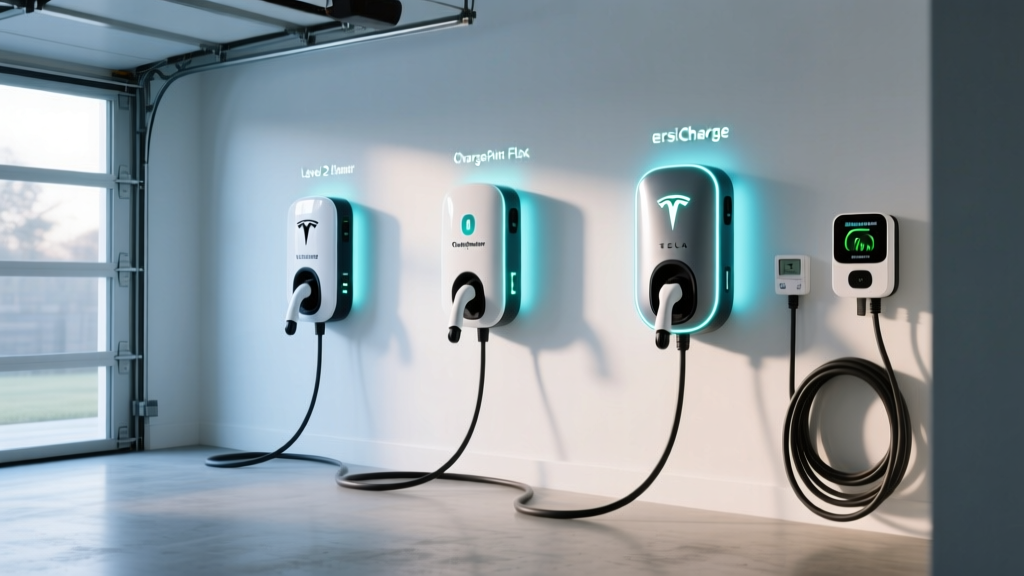
Based on power output, connector availability, build quality, and smart features, here are three chargers well-suited to the Ranger EV's NACS charge port and expected onboard charger capacity (likely 10.5–11.5 kW AC acceptance):
Tesla Wall Connector (NACS native)
- Power output: up to 11.5 kW (48A) on a 60A circuit
- Connector: NACS (no adapter needed for Ranger EV)
- Cable length: 24 feet
- Smart features: Wi-Fi, OTA updates, power-sharing between units, access control
- Price: ~$475
- Best for: Ford owners wanting native NACS without adapter hassle
ChargePoint Home Flex (NACS version)
- Power output: up to 12 kW (50A) on a 60A circuit; adjustable amperage
- Connector: NACS or J1772 (select at purchase)
- Cable length: 23 feet
- Smart features: Wi-Fi, app scheduling, Alexa integration, detailed energy tracking
- Price: ~$599
- Best for: Flexible amperage settings for older panels; robust app
Emporia Vue Level 2 Charger
- Power output: up to 11.5 kW (48A) on a 60A circuit
- Connector: J1772 (use Ford's included J1772-to-NACS adapter) or NACS version
- Cable length: 24 feet
- Smart features: Wi-Fi, solar integration, energy monitoring via Emporia Vue panel monitor
- Price: ~$399
- Best for: Budget-conscious buyers with solar panels; best value per kW
Any of these units will fully recharge the Ranger EV overnight (8–12 hours from near-empty). For most truck owners, the Tesla Wall Connector at 48A offers the best combination of native NACS compatibility, output, and price.
Safety, Code, and Installation Best Practices
EV charging is a high-draw, continuous electrical load—more like running a welder than plugging in a lamp. Following code and best practices protects your home and your vehicle:
- Dedicated circuit only: Never share the EV charger circuit with other appliances. The NEC requires a dedicated breaker for continuous loads.
- GFCI protection: If using a NEMA 14-50 outlet in a garage, NEC 2020+ requires a GFCI breaker. Hardwired chargers have internal ground-fault protection and don't require a GFCI breaker (which can also cause nuisance tripping).
- Outdoor-rated equipment: If your charger is mounted outside (driveway, exterior wall), ensure the unit carries a NEMA 4 or IP65 weather rating. All three chargers above are outdoor-rated.
- Permit and inspection: Most jurisdictions require an electrical permit for a new 240V circuit. The inspection ensures proper wire gauge, breaker sizing, and grounding. Skipping this can void homeowner's insurance coverage for electrical fires.
- Surge protection: Consider a Type 2 surge protective device (SPD) at the panel, especially in areas with frequent lightning. EV onboard chargers are expensive to replace if a surge reaches them.
Always hire a licensed electrician experienced with EV charger installations. Per the National Fire Protection Association (NFPA), improper EV charging installations are a growing category of residential electrical incidents.
Frequently Asked Questions
How much does it cost to install a home EV charger for the Ford Ranger EV?
A straightforward Level 2 installation (panel has capacity, short wire run, NEMA 14-50 outlet) typically costs $800–$1,600 including equipment, labor, and permit. If your home needs a 200-amp panel upgrade, expect $2,950–$7,000 total. Get at least two quotes from licensed electricians and check for utility rebates in your area.
How fast will each charging level add range to the Ranger EV?
Level 1 (120V) adds about 3–5 miles per hour—only practical for emergency top-ups. Level 2 (240V, 48A) adds approximately 30–40 miles per hour, enough for a full overnight recharge. DC fast charging at 150+ kW can add 100–130 miles in roughly 15 minutes at peak rate, though the charge curve tapers significantly above 80% state of charge.
Which connector and charger is compatible with the Ford Ranger EV?
The Ranger EV ships with a native NACS charge port. For home charging, a NACS-equipped wallbox (like the Tesla Wall Connector) plugs in directly. For public CCS1 stations, you'll need Ford's NACS-to-CCS adapter. CHAdeMO is not supported.
How much does charging cost per mile compared to gas?
Home off-peak charging costs roughly $0.02–$0.03 per mile. DC fast charging on road trips runs $0.06–$0.13 per mile. A gas Ranger at 22 MPG combined and $3.40/gallon costs about $0.155 per mile. Home charging delivers an 80–85% fuel cost reduction.
What electrical upgrades might I need before installing a Level 2 charger?
If your home has a 100A or 150A main panel with significant existing electric loads (heat, dryer, oven), a panel upgrade to 200A may be required—costing $1,500–$3,500. Your electrician will perform an NEC Article 220 load calculation. Homes with 200A panels and gas appliances rarely need an upgrade. Some utilities offer managed-charging programs that reduce the need for panel upgrades by limiting peak draw.
Can I use a Tesla Supercharger with the Ford Ranger EV?
Yes. Ford EVs with native NACS ports have full access to the Tesla Supercharger network. Use the FordPass app or the vehicle's built-in navigation to locate and activate Superchargers—no Tesla account required.
Do I need a smart charger, or will a basic unit work?
A basic (non-connected) Level 2 charger works perfectly for charging. Smart features—scheduling, energy tracking, solar integration, remote start/stop—add convenience and can help you take advantage of off-peak utility rates. If your utility offers time-of-use pricing, a smart charger's scheduling feature will pay for itself in electricity savings.