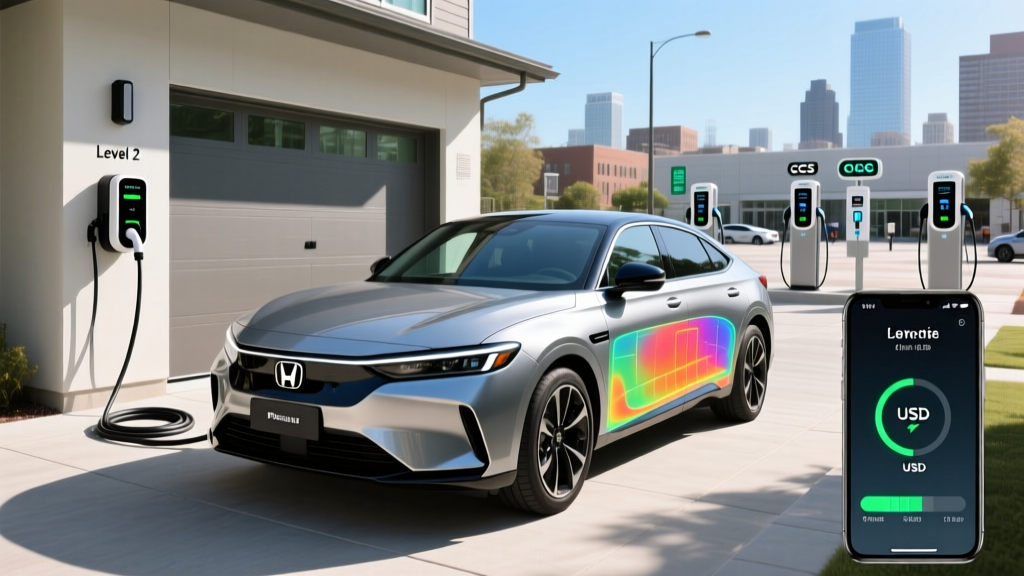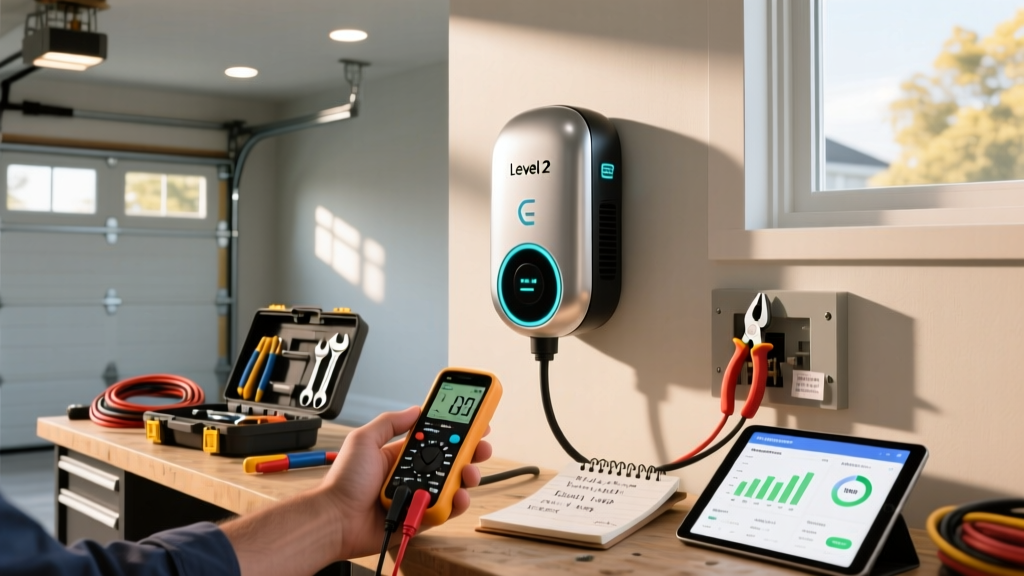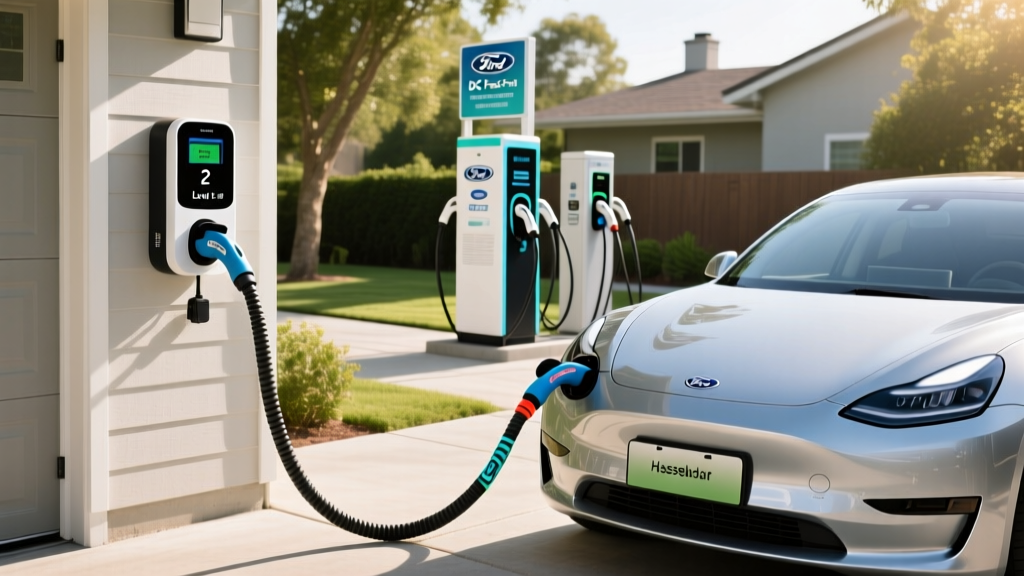
Whether you drive a Ford Mustang Mach-E, an F-150 Lightning, or are shopping for the upcoming Explorer EV, understanding your Ford electric charger options is the difference between seamless daily driving and frustrating range management. Ford offers two primary home charging solutions — the Mobile Power Cord and the Ford Charge Station Pro — plus access to an ever-growing network of public DC fast chargers. This guide breaks down exactly what each delivers in kilowatts (kW), what your home's electrical panel needs to support, and how much you will actually spend per mile.
How Fast Will Each Charging Level Add Range?
Charging speed depends on the level of charger you use, your vehicle's onboard charger capacity, and your battery size. Here is a precise breakdown of what Ford EV owners can expect across all three charging levels:
| Level | Voltage / Amps | Max Power (kW) | Miles of Range / Hour | Full Charge Time (91 kWh Battery) |
|---|---|---|---|---|
| Level 1 | 120V / 12A | 1.4 kW | ~3–5 mi/hr | ~65+ hours |
| Level 2 (Ford Mobile Power Cord, 240V adapter) | 240V / 30A | ~6.6 kW (30A NEMA 14-50) | ~21–25 mi/hr | ~14 hours |
| Level 2 (Ford Charge Station Pro) | 240V / 48A hardwired | 11.5 kW | ~30–37 mi/hr | ~8 hours |
| DC Fast Charging | 400–800V DC | Peak 150 kW (Mach-E) / 120 kW (Lightning) | ~150–250+ mi in 20 min | 10–80% in ~45 min (Lightning) |
Ford's Home Charger Options: Mobile Power Cord vs. Charge Station Pro
Ford provides two tiers of home charging hardware. Choosing between them depends on your daily mileage, electrical panel capacity, and budget.
Ford Mobile Power Cord
- Power Output: 120V (1.4 kW) standard; ~6.6 kW with optional 240V NEMA 14-50 adapter
- Connector: J1772 (CCS1 compatible); NACS adapter available for newer model-year vehicles
- Cable Length: ~20 feet
- Smart Features: FordPass app scheduling, charge status monitoring
- Price: Included with most new Ford EVs; replacement ~$300
- Best For: Low daily mileage (<30 mi/day), renters, backup charging
Ford Charge Station Pro (48A)
- Power Output: 11.5 kW (240V / 48A hardwired)
- Connector: NACS (Tesla-style) on 2025+ models; CCS1 on older model years
- Cable Length: 25 feet
- Smart Features: Wi-Fi connected, FordPass integration, scheduled charging, Intelligent Backup Power (F-150 Lightning V2H capable)
- Price: ~$799 (hardware); eligible for up to $1,000 federal tax credit under §30D alternative fuel refueling property credit
- Best For: Daily drivers, F-150 Lightning owners wanting home backup power
For Mustang Mach-E owners driving 40+ miles daily, the Charge Station Pro adds enough range overnight to cover virtually any commute. F-150 Lightning owners benefit doubly: the 11.5 kW rate charges the massive 131 kWh Extended Range battery in roughly 11.5 hours, and the station supports Ford's Intelligent Backup Power system to run select home circuits during outages.
How Much Does It Cost to Install a Ford Electric Charger at Home?
The hardware is only part of the equation. A proper Level 2 installation requires a dedicated circuit, potentially a panel upgrade, and a permit. Here is what Ford EV owners should budget:
| Component | Scenario A: Simple Install | Scenario B: Moderate | Scenario C: Panel Upgrade Needed |
|---|---|---|---|
| Charger hardware | $0 (included cord) – $799 | $500 – $799 | $500 – $799 |
| Electrician labor (240V/50A circuit run) | $300 – $600 | $600 – $1,500 | $800 – $1,500 |
| NEMA 14-50 outlet or hardwire | $100 – $200 | $150 – $300 | $150 – $300 |
| Electrical panel upgrade (100A → 200A) | Not needed | Not needed | $1,500 – $3,500 |
| Permit & inspection | $50 – $150 | $50 – $200 | $100 – $300 |
| TOTAL ESTIMATE | $450 – $1,750 | $1,300 – $2,800 | $3,050 – $6,400 |
What electrical upgrades might I need? Most homes built after 2000 have 200-amp panels with room for a 50-amp breaker. Older homes (pre-1990) often have 100-amp or even 60-amp service. A 48-amp hardwired charger requires a 60-amp dedicated circuit (NEC code requires the circuit to be rated at 125% of continuous load: 48A × 1.25 = 60A). If your panel lacks two adjacent open slots or is already near capacity, you will need a panel upgrade or a load-management device like the Emporia Load Shed (~$200) that throttles the charger when other appliances draw heavily.
Which Connector Is Compatible with My Ford EV?
Ford made a pivotal transition starting with 2025 model-year vehicles: the North American Charging Standard (NACS) — the Tesla connector — replaced CCS1 on new Ford EVs. This matters enormously for public charging access and home hardware selection.
| Vehicle | Model Year | Built-in Connector | Adapter Needed For |
|---|---|---|---|
| Mustang Mach-E (2021–2024) | 2021–2024 | CCS1 (J1772 combo) | NACS adapter (~$200) for Tesla Superchargers |
| Mustang Mach-E (2025+) | 2025–2026 | NACS | CCS1 adapter for legacy Electrify America stations |
| F-150 Lightning (2022–2024) | 2022–2024 | CCS1 | NACS adapter for Tesla Supercharger access |
| F-150 Lightning (2025+) | 2025–2026 | NACS | CCS1 adapter for older public chargers |
Practical implication: If you own a 2022–2024 Mach-E or Lightning, purchasing Ford's official NACS adapter unlocks access to over 20,000 Tesla Supercharger stalls nationwide — the most reliable public DC fast-charging network in the U.S. by a wide margin, according to J.D. Power dependability data. The FordPass app supports routing to both CCS1 and NACS chargers.
How Much Does Charging a Ford EV Cost Per Mile vs. Gas?
The economic argument for a Ford electric charger at home hinges on electricity rates. Here is a realistic cost comparison using the Mustang Mach-E Select (EPA combined efficiency: ~99 MPGe, or roughly 34 kWh/100 miles) and the F-150 Lightning (EPA combined: ~70 MPGe, roughly 48 kWh/100 miles).
| Scenario | Rate ($/kWh) | Mach-E ¢/mile | Lightning ¢/mile |
|---|---|---|---|
| Home off-peak (utility TOU rate) | $0.08–$0.12 | 2.7¢ – 4.1¢ | 3.8¢ – 5.8¢ |
| Home standard rate (national avg.) | $0.16 | 5.4¢ | 7.7¢ |
| Public Level 2 (ChargePoint, etc.) | $0.25–$0.39 | 8.5¢ – 13.3¢ | 12.0¢ – 18.7¢ |
| DC Fast Charging (Electrify America, Tesla) | $0.35–$0.56 | 11.9¢ – 19.0¢ | 16.8¢ – 26.9¢ |
| Gasoline equivalent (25 MPG combined, $3.40/gal) | — | 13.6¢ | ~18.0¢ (F-150 gas, 19 MPG) |
At home off-peak rates, charging a Mach-E costs roughly one-quarter of fueling a comparable gas SUV. Even at public DC fast-charging rates, EVs break even or save money versus gas — but habitual reliance on expensive public chargers erodes the advantage. Home Level 2 charging is where the economics work best, which is why investing in a proper Ford electric charger installation pays for itself within 12–18 months for most drivers.
For federal incentive details on home charger installation, consult the IRS §30C Alternative Fuel Vehicle Refueling Property Credit, which covers up to 30% of equipment and installation costs (max $1,000 for residential), subject to census-tract eligibility requirements.
Third-Party Charger Recommendations for Ford EVs
Ford's own hardware is solid, but the aftermarket offers compelling alternatives — particularly for owners of 2021–2024 CCS1-equipped vehicles who want more flexibility.
Emporia Vue EV Charger
- Power: 48A / 11.5 kW (hardwired) or 40A / 9.6 kW (NEMA 14-50)
- Connector: J1772 (CCS1); NACS version available
- Cable: 24 ft
- Smart Features: Wi-Fi, energy monitoring via Emporia app, solar integration, TOU scheduling
- Price: ~$399
ChargePoint Home Flex
- Power: Up to 50A / 12 kW (adjustable via DIP switches to match circuit)
- Connector: J1772 (CCS1); NACS model available for 2025+
- Cable: 23 ft
- Smart Features: Wi-Fi, Alexa, ChargePoint app scheduling, amperage flexibility
- Price: ~$549–$699
Tesla Wall Connector
- Power: 48A / 11.5 kW (hardwired, 60A circuit)
- Connector: NACS (native for 2025+ Ford EVs; CCS1 vehicles need adapter)
- Cable: 24 ft
- Smart Features: Wi-Fi, OTA updates, power sharing between multiple units, load management
- Price: ~$420
For 2025+ NACS-equipped Ford vehicles, the Tesla Wall Connector is an excellent, affordable choice — it charges at the same 11.5 kW as the Ford Charge Station Pro at a lower hardware cost. For 2021–2024 CCS1 models, the ChargePoint Home Flex's adjustable amperage is valuable: you can set it to 32A on a 40A circuit today and upgrade to 48A later if you expand your panel.
Public DC Fast Charging for Ford EVs
When road-tripping, Ford EV owners access three primary networks:
- Tesla Supercharger Network (NACS): Over 20,000 stalls; 150–250 kW peak. 2025+ Ford EVs plug in directly. 2021–2024 models require the Ford-approved NACS adapter. Superchargers consistently deliver the highest uptime rates in the industry.
- Electrify America (CCS1): ~3,500+ stations; up to 350 kW peak (though Ford EVs cap at 120–150 kW). Included complimentary charging plans with some new Ford EV purchases (check your specific vehicle's included charging offer).
- BlueOval Charge Network: Ford's aggregated network accessible via the FordPass app, pulling in chargers from multiple providers. Useful for route planning but relies on third-party hardware reliability.
The Mustang Mach-E with its 91 kWh usable battery (Standard Range: 70 kWh) charges from 10–80% in approximately 41 minutes at a 150 kW DC fast charger, according to EPA EV charging data. The F-150 Lightning Extended Range (131 kWh usable) takes approximately 45 minutes from 10–80% at a 120 kW peak. Cold weather (below 32°F) can add 10–20 minutes to these times due to battery preconditioning demands — always enable navigation-to-charger in FordPass so the vehicle begins warming the battery en route.
Safety, Electrical Code & Installation Best Practices
A Level 2 charger is a continuous high-amperage load — more like an electric oven than a phone charger. Proper installation is non-negotiable for safety and code compliance:
- Dedicated circuit: Your charger must have its own breaker — never share a circuit with other appliances. A 48A charger requires a 60A breaker per NEC Article 210.20(A) (continuous load = 125% of rated current).
- GFCI protection: NEC 2020 and later require GFCI protection for all outdoor receptacles (NEMA 14-50). Hardwired installations avoid this requirement and reduce nuisance trips — most electricians recommend hardwiring for this reason.
- Outdoor rating: If installing outdoors, ensure the charger carries a NEMA 4 (weatherproof) rating. All recommended chargers above meet this standard.
- Wire gauge: 6 AWG copper wire is standard for 50A circuits; 4 AWG for 60A circuits. Your electrician will size appropriately based on run length — longer runs may require larger gauge to minimize voltage drop.
- Permit: Virtually all jurisdictions require an electrical permit for a new 240V circuit. Costs range from $50 to $300. Skipping the permit risks insurance denial if an electrical fire occurs.
Always hire a licensed electrician — not a general handyman — for EV charger installation. Ask for a load calculation on your panel before work begins. The National Electrical Code (NFPA 70) governs all residential EV charging installations.
Frequently Asked Questions
Can I charge my Ford EV with a standard 120V outlet?
Yes, but slowly. The Ford Mobile Power Cord plugged into a standard 120V/15A outlet delivers roughly 1.4 kW, adding about 3–5 miles of range per hour. This works for plug-in hybrid Fords (like the Escape PHEV) or for EV owners driving fewer than 25 miles daily, but it is impractical as a primary charging method for the Mach-E or Lightning. Expect a full charge to take 3+ days on Level 1.
Do I need the Ford Charge Station Pro, or can I use a third-party charger?
You can absolutely use a third-party charger. The Ford Charge Station Pro is required only if you want Intelligent Backup Power (V2H) functionality with the F-150 Lightning. For pure charging, any quality Level 2 station with the correct connector (NACS for 2025+ models, J1772/CCS1 for older) will work. Third-party options like the ChargePoint Home Flex or Tesla Wall Connector often cost less and offer comparable or superior smart features.
Will charging at home increase my electric bill significantly?
Adding a Ford EV charged entirely at home typically increases a household electricity bill by $40–$80 per month, depending on mileage and local rates. At the national average of $0.16/kWh and 1,000 miles/month, a Mach-E adds roughly $54/month — far less than the $136/month that same driving would cost in gasoline at $3.40/gallon and 25 MPG. Enrolling in your utility's time-of-use (TOU) plan and scheduling charging for off-peak hours (typically 10 PM – 6 AM) can reduce costs by 30–50%.
How long does the Ford Charge Station Pro installation take?
The physical installation typically takes 2–4 hours for a straightforward setup (panel in garage, charger on adjacent wall). If the electrician must run conduit across the house or through an attic, plan for 4–8 hours. A panel upgrade adds a full day. Factor in 1–3 weeks for permit approval and scheduling with a licensed electrician, especially during peak demand seasons.
Does Ford offer free public charging?
Ford has periodically included complimentary public charging credits with new EV purchases — for example, 250 kWh of complimentary Electrify America charging with certain model-year Mach-E and Lightning purchases. These offers change frequently and vary by model year, trim, and region. Check your specific vehicle's purchase agreement or the FordPass app for any active credits. As of 2026, most complimentary charging offers have shifted toward Tesla Supercharger credits for NACS-equipped models.