What "Fastest EV Charger" Actually Means: kW vs kWh
Before chasing peak numbers, clarify the single most common EV confusion: kW (kilowatts) measures power — the rate at which electricity flows into your car. kWh (kilowatt-hours) measures energy — the total capacity of your battery. A 350 kW charger doesn't deliver 350 kWh; it pushes energy at a rate of 350 kilojoules per second. The larger the battery (say, 100 kWh), the longer even a fast charger takes to fill it.
Peak kW ratings also mislead. A charger advertised at 350 kW rarely sustains that rate for more than a few minutes. Most EVs taper charging speed above 50–60% state of charge (SoC) to protect battery chemistry. The number that matters for trip planning is the 10–80% charge time, which accounts for the real-world charge curve.
Charging Levels Explained: Speed, Power, and Miles Per Hour
Every EV owner deals with three charging tiers. Here's how they stack up in 2026:
| Level | Voltage | Typical Power (kW) | Miles of Range Added per Hour | Best Use Case |
|---|---|---|---|---|
| Level 1 | 120V AC | 1.2–1.9 kW | 3–5 mi/hr | Overnight top-ups, PHEVs, emergencies |
| Level 2 | 240V AC | 7.2–19.2 kW | 20–60 mi/hr | Daily home charging, workplace, hotels |
| DC Fast (Level 3) | 400–800V DC | 50–350 kW | 150–1,200+ mi/hr (peak) | Road trips, quick stops, fleet depots |
Level 1 uses a standard household outlet — fine for plug-in hybrids with small batteries (15–40 kWh) but painfully slow for a 80–100 kWh BEV. Level 2 is the home-charging sweet spot. DC fast charging bypasses the car's onboard AC-to-DC converter and feeds high-voltage DC straight to the battery pack, which is why it's dramatically faster but also more expensive per kWh.
The Fastest Public DC Chargers Available Today
As of 2026, the fastest publicly accessible chargers in the U.S. fall into three tiers:
- 350 kW ultra-fast: Electrify America Hyper chargers, Tesla V4 Superchargers (NACS), and IONITY-style CCS stations along major interstates. Vehicles with 800V architectures — Hyundai Ioniq 5/6, Kia EV6/EV9, Porsche Taycan, Audi e-tron GT, Lucid Air — can accept 250–320 kW and add 10–80% in roughly 18 minutes.
- 250 kW mainstream fast: Tesla V3 Superchargers (now open to NACS-equipped Fords, Rivians, and others via the North American Charging Standard rollout), Electrify America 250 kW CCS stalls. Most 400V EVs (Model Y, Mustang Mach-E, Chevy Equinox EV) peak here, hitting 10–80% in 25–35 minutes.
- 150 kW and 50 kW legacy: Still common in rural corridors and older CHAdeMO networks. Expect 40–60 minutes for 10–80% on a 75 kWh battery.
Fastest Home Level 2 Chargers: Equipment Picks for 2026
Home charging speed is limited by your onboard charger (most EVs accept 11.5–19.2 kW AC) and your electrical panel. Here are the top-rated hardwired Level 2 units in 2026:
ChargePoint Home Flex (NACS/CCS)
- Power: up to 19.2 kW (80A circuit)
- Cable: 23 ft
- Smart features: Wi-Fi, app scheduling, utility TOU integration, Alexa
- Price: ~$699
- Best for: future-proofing with NACS and high-amperage panels
Wall Connector (Tesla, NACS native)
- Power: up to 11.5 kW (60A circuit) or 19.2 kW (100A, Gen 3 update)
- Cable: 24 ft
- Smart features: Wi-Fi, OTA updates, Power-Sharing with second unit
- Price: ~$475–$599
- Best for: Tesla and NACS-equipped owners
Emporia Vue Level 2 Smart Charger
- Power: up to 11.5 kW (48A/60A circuit)
- Cable: 24 ft
- Smart features: solar integration, energy monitoring, load management
- Price: ~$449
- Best for: solar homes and budget-conscious installs
Grizzl-E Smart (United Chargers)
- Power: up to 10 kW (40A/50A circuit)
- Cable: 24 ft
- Smart features: OCPP-compatible, rugged outdoor housing, -40°C rating
- Price: ~$549
- Best for: cold climates and outdoor mounting
For maximum Level 2 speed, choose a hardwired unit on a dedicated 60A or 80A circuit. Plug-in NEMA 14-50 outlets are convenient but cap at 40A continuous (9.6 kW) due to NEC 80% duty-cycle rules.
How Much Does It Cost to Install a Home EV Charger?
Installation costs swing wildly based on your home's existing electrical infrastructure. Here's a realistic 2026 breakdown for a typical 60A hardwired Level 2 install:
| Component | Typical Range | Notes |
|---|---|---|
| Charger equipment | $450–$750 | Hardwired smart charger, 40A–80A |
| Electrician labor | $600–$2,000 | Depends on run length from panel to garage |
| Permit & inspection | $100–$400 | Required in most jurisdictions |
| Panel upgrade (if needed) | $1,500–$4,000 | Common in pre-1990 homes with 100A service |
| Total (no panel upgrade) | $1,150–$3,150 | Most modern 200A-panel homes |
| Total (with panel upgrade) | $2,650–$7,150 | Older homes or added HVAC/EV load |
Panel-upgrade gotcha: A 100A main panel in a 1970s home often cannot support a 60A EV circuit plus existing loads. An electrician will run a load calculation per NEC Article 220. If you're near capacity, budget for a 200A upgrade — or consider a smart load-management device (like Emporia's Smart Load Center) that throttles the charger when other appliances draw heavily.
Connector Compatibility: NACS, CCS1, and CHAdeMO in 2026
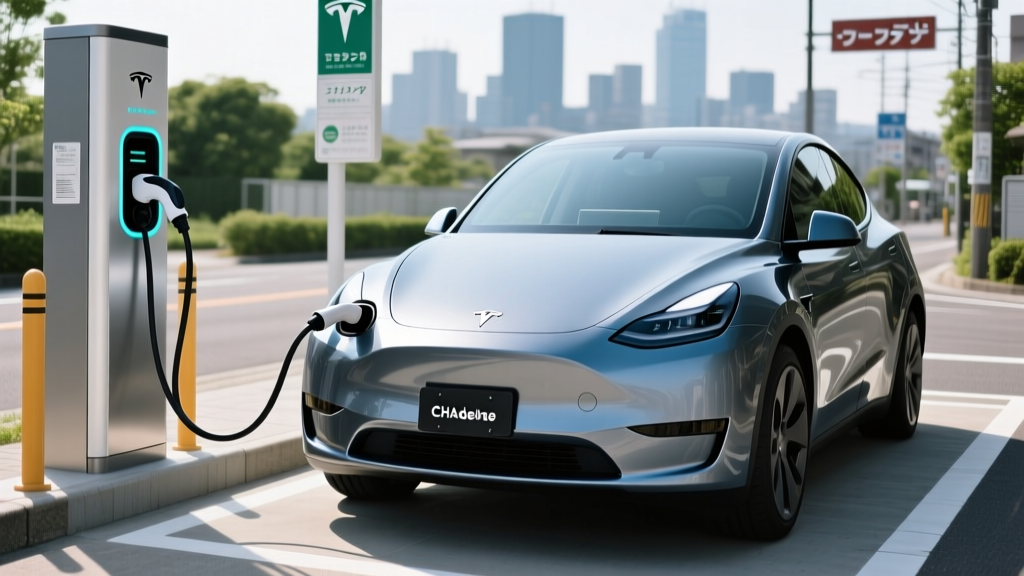
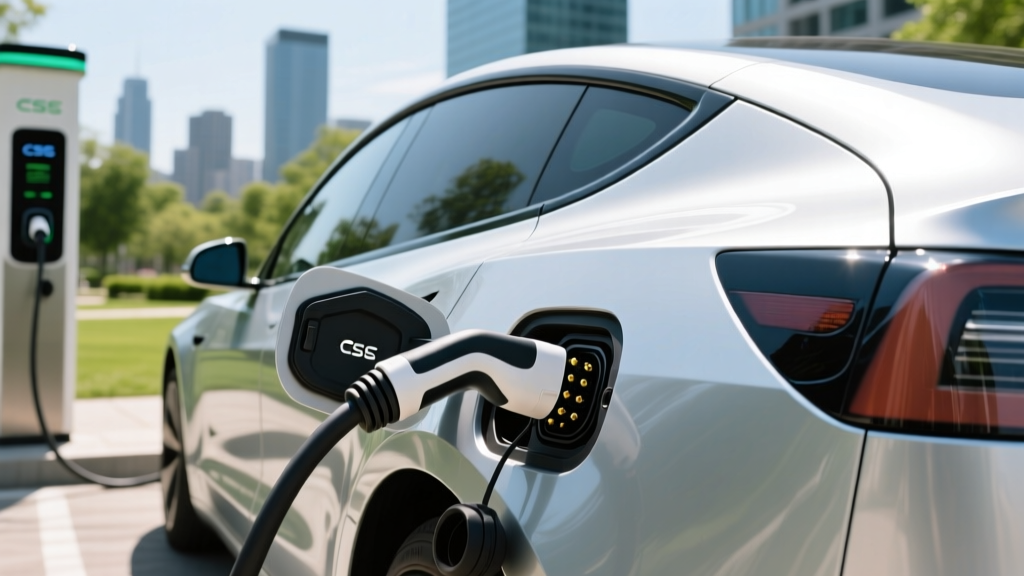
The connector landscape has consolidated dramatically. Tesla's NACS (North American Charging Standard, SAE J3400) is now the dominant North American plug, with Ford, GM, Rivian, Volvo, Polestar, Mercedes, BMW, and most legacy OEMs adopting it for 2025–2026 models. CCS1 (Combined Charging System) remains on many 2022–2024 models. CHAdeMO is effectively legacy — only the Nissan Leaf still uses it, and Nissan has signaled a transition.
| Connector | Brands Using It (2026) | Adapter Needed? |
|---|---|---|
| NACS (J3400) | Tesla, Ford, GM, Rivian, Volvo, Polestar, Hyundai/Kia (new), Mercedes, BMW, Lucid | None for native NACS; CCS→NACS adapters (~$200–$300) for older CCS cars |
| CCS1 | VW ID.4 (pre-2025), Hyundai/Kia (2022–2024), Stellantis, older BMW i4/iX | NACS→CCS adapter required for Tesla Superchargers |
| CHAdeMO | Nissan Leaf (discontinued in US after 2025 model year) | Limited public network; plan for CCS/NACS via adapter or replacement |
For a future-proof home install in 2026, buy a NACS-native charger or a dual-connector unit. The SAE J3400 standard formalized NACS, so third-party chargers now ship with it natively.
Cost to Charge: Per-Mile Economics vs Gasoline
Charging cost depends entirely on where and when you plug in. Here's a realistic per-mile comparison using a 3.0 mi/kWh efficient EV (typical for a Tesla Model Y or Hyundai Ioniq 5) versus a 28 MPG gas sedan at $3.40/gallon:
| Scenario | Price per kWh | Cost per Mile (3 mi/kWh) | vs 28 MPG Gas @ $3.40/gal |
|---|---|---|---|
| Home off-peak (utility TOU) | $0.09–$0.14 | $0.03–$0.05 | 74% cheaper |
| Home flat rate (national avg) | $0.17 | $0.057 | 53% cheaper |
| Public Level 2 (ChargePoint, EVgo) | $0.25–$0.45 | $0.08–$0.15 | ~equal to gas |
| DC fast (Electrify America, Tesla) | $0.35–$0.55 | $0.12–$0.18 | ~equal or 50% more |
| Gas sedan (28 MPG) | — | $0.12/mi | baseline |
The takeaway: Home charging is the economic win. Public DC fast charging on road trips costs roughly the same as gasoline per mile — you're paying for convenience and speed, not savings. Time-of-use (TOU) utility plans can push home costs below $0.10/kWh overnight.
Safety, Electrical Code, and Installation Requirements
EV chargers draw sustained high current for hours — this is not a DIY extension-cord situation. Key code and safety requirements per the National Electrical Code (NEC):
- Dedicated circuit: The charger must be on its own breaker, not shared with other outlets or appliances.
- 80% continuous-load rule: A 60A breaker supports only 48A continuous draw. Size the breaker 25% above the charger's rated amperage.
- GFCI protection: Required for outdoor installations and many indoor garage setups per NEC 2023/2026 updates.
- Wire gauge: 6 AWG copper for 60A circuits; 4 AWG or 3 AWG for 80A. Aluminum SER cable is cheaper but requires larger gauge.
- Outdoor rating: Any charger mounted outside must carry a NEMA 3R or NEMA 4 rating for weather resistance.
- Permit & inspection: Most municipalities require an electrical permit and post-install inspection. Skipping this can void homeowner insurance coverage in the event of a fire.
Charging Time Examples: 10–80% by Battery Size and Charger
Real-world charge times depend on battery chemistry, thermal preconditioning, and ambient temperature. Here are approximate 10–80% times for common 2026 EVs:
| Vehicle | Usable Battery (kWh) | Max DC kW | 10–80% Time (350 kW stall) | 10–80% on Home Level 2 (11.5 kW) |
|---|---|---|---|---|
| Hyundai Ioniq 5 (800V) | 77.4 | 240 kW | ~18 min | ~5.0 hr |
| Tesla Model Y Long Range | 75 | 250 kW | ~27 min | ~6.5 hr |
| Ford F-150 Lightning Ext. | 131 | 150 kW | ~55 min | ~11.4 hr |
| Chevy Silverado EV 4WT | 200 | 350 kW | ~45 min | ~17 hr |
| BMW iX xDrive50 | 105.2 | 200 kW | ~35 min | ~9.1 hr |
Cold weather (below 32°F) can add 20–40% to these times unless the vehicle preconditioned its battery while navigating to the charger. Always use the car's built-in charger-routing feature in winter.
Frequently Asked Questions
How fast will each charging level add range?
Level 1 adds 3–5 miles per hour. Level 2 adds 20–60 miles per hour depending on amperage and your car's onboard charger. DC fast charging can add 150–1,200 miles of range per hour at peak — but only for short bursts before tapering.
Which connector or charger is compatible with my EV?
Check your vehicle's charge port. 2025–2026 models from Tesla, Ford, GM, Rivian, Hyundai/Kia, Volvo, and others use NACS. Older CCS1 vehicles need an adapter for Tesla Superchargers. The Nissan Leaf uses CHAdeMO. Home chargers sold in 2026 typically ship with NACS or offer CCS/NACS swap cables.
How much does charging cost per mile versus gas?
Home charging at $0.12–$0.17/kWh costs roughly $0.04–$0.06 per mile — about 50–70% cheaper than a 28 MPG gas car at $3.40/gallon. Public DC fast charging at $0.40–$0.55/kWh is comparable to or slightly more expensive than gas per mile.
What electrical upgrades might I need?
Homes with 100A main panels, older wiring, or full breaker boxes may need a 200A service upgrade ($1,500–$4,000). A licensed electrician will perform a NEC Article 220 load calculation to determine whether your panel can handle a 40A, 60A, or 80A EV circuit.
Is the fastest home charger always the best choice?
Not necessarily. A 19.2 kW (80A) charger requires a 100A breaker and heavy-gauge wire — overkill if your EV's onboard charger maxes out at 11.5 kW (like most Teslas and Rivians). Match the charger's output to your car's AC acceptance rate to avoid overspending on electrical work you can't use.
Do I qualify for a home charger tax credit?
The federal Residential Clean Energy Credit (IRC §25D) covers 30% of home EV charger equipment and installation costs up to $1,000 through 2032. Eligibility depends on your tax liability and whether the equipment meets IRS criteria — consult a tax professional for your specific situation.