Why the 'Godzilla Supercharged' F-150 Lightning Demands a Charging Strategy
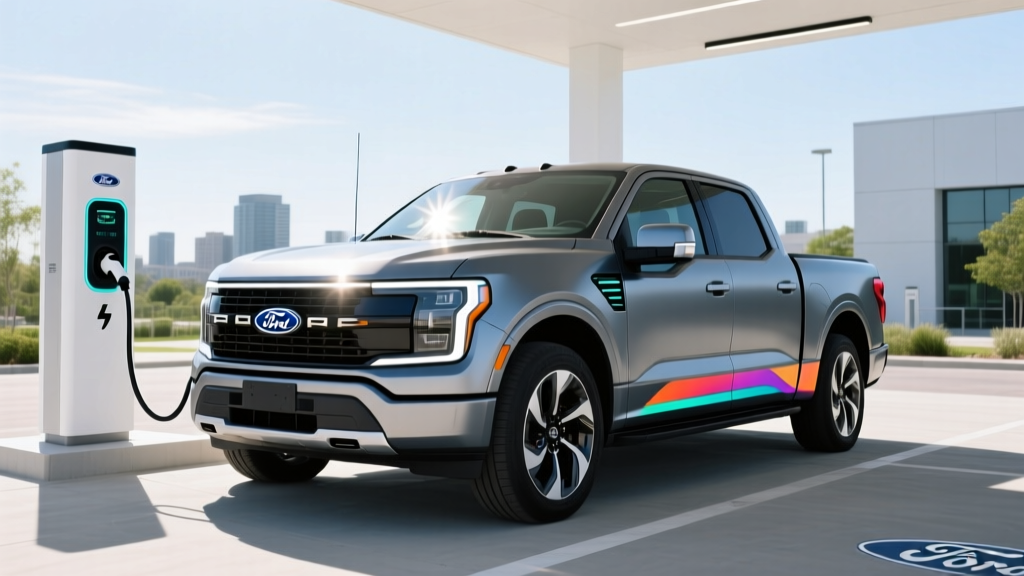
The Ford F-150 Lightning has earned the enthusiast nickname "Godzilla Supercharged" for its 563 horsepower, 775 lb-ft of instant torque, and 0-60 mph time of roughly 3.8 seconds in Extended Range trim. But launching a 6,500-pound electric truck requires energy — lots of it. With a usable battery capacity of up to 131 kWh (Extended Range) or 98 kWh (Standard Range), understanding how to charge this beast efficiently separates owners who love their Lightning from those stranded at slow public chargers.
This guide covers everything a 2026 F-150 Lightning owner or buyer needs: charging levels and speeds, home installation costs with panel-upgrade realities, NACS connector compatibility now that Ford has adopted the Tesla-standard plug, real-world cost-per-mile math, and specific equipment recommendations. Whether you're towing a trailer or commuting solo, the numbers below are grounded in EPA data, Ford specifications, and real-world charging-curve behavior.
Charging Levels Explained: Speeds, kW, and Miles Per Hour
Before diving into hardware, let's clarify the single most important distinction in EV literacy: kW (kilowatts) measures power — the rate of energy flow, like water pressure from a hose. kWh (kilowatt-hours) measures energy — the total amount stored or delivered, like gallons in a bucket. A 131 kWh battery charged at 10 kW takes far longer than one charged at 150 kW. Here's how each level translates to real range recovery on the F-150 Lightning:
| Level | Voltage / Amperage | Max Power (kW) | Miles of Range Per Hour | Best Use Case |
|---|---|---|---|---|
| Level 1 (120V) | 120V / 12A | ~1.4 kW | ~2-3 mi/hr | Emergency trickle, overnight top-off |
| Level 2 (240V) | 240V / 48A-80A | 11.5-19.2 kW | ~19-32 mi/hr | Daily home charging, overnight full charge |
| DC Fast Charge | 400V architecture | 155 kW (Std) / 155 kW (Ext) | ~150-190 mi in 10-80% | Road trips, rapid replenishment |
The F-150 Lightning Extended Range peaks at approximately 155 kW on DC fast chargers. Ford's published 10-80% charge time sits around 41 minutes for the Extended Range pack. The Standard Range (98 kWh, LFP chemistry) peaks at roughly 115 kW with a 10-80% time near 38 minutes. Remember: peak kW is not sustained kW — the charge curve tapers significantly above 80% State of Charge to protect the battery, which is why manufacturers quote 10-80% times rather than 0-100%.
Home Charger Installation: Real Costs and Electrical Requirements
Charging at home is where the F-150 Lightning ownership experience is won or lost. The truck ships with a Ford Mobile Power Cord that handles Level 1 (120V) and basic Level 2 (240V, ~30A with a NEMA 14-50 outlet), but serious owners install a dedicated wall connector for faster, safer daily charging.
Electrical Requirements for the F-150 Lightning
To unlock the Lightning's onboard charger potential, you need a 240-volt circuit. The Standard Range model has an 11.5 kW onboard charger (48A), while the Extended Range offers a 19.2 kW onboard charger (80A) — one of the most powerful in any consumer EV. Here's what that demands:
- 11.5 kW charging: Requires a 60A dedicated circuit (240V / 48A continuous draw, code requires 125% overhead = 60A breaker)
- 19.2 kW charging: Requires a 100A dedicated circuit (240V / 80A continuous draw = 100A breaker)
- Wire gauge: 6 AWG copper for 60A; 2 AWG or larger for 100A circuits
- Panel capacity: Your main electrical panel must have sufficient spare amperage — a 200A panel is typical, but older homes may have only 100A or 150A service
Installation Cost Breakdown
| Item | Low End | High End | Notes |
|---|---|---|---|
| Level 2 Charger (hardware) | $400 | $750 | Smart Wi-Fi chargers, 24-25 ft cable |
| Electrician labor (standard install) | $500 | $1,500 | Runs from panel to garage, conduit, wiring |
| Electrical permit | $50 | $250 | Varies by municipality |
| Panel upgrade (if needed) | $1,500 | $4,500 | 200A service upgrade for older homes |
| Load-management device (optional) | $200 | $500 | Avoids panel upgrade by sharing capacity |
Total typical install (no panel upgrade): $950–$2,500
Total with panel upgrade: $2,450–$7,000
Many homeowners overlook the panel-upgrade possibility. If your home was built before 1990 and still has a 100A or 150A main panel, adding a 60A or 100A dedicated EV circuit may exceed available capacity. A licensed electrician will perform a load calculation per NEC Article 220 to determine if an upgrade is necessary. Some utilities and states offer rebates of $300–$1,000 for panel upgrades that support EV charging — check with your local provider.
Connector Compatibility: NACS, CCS, and Adapter Realities
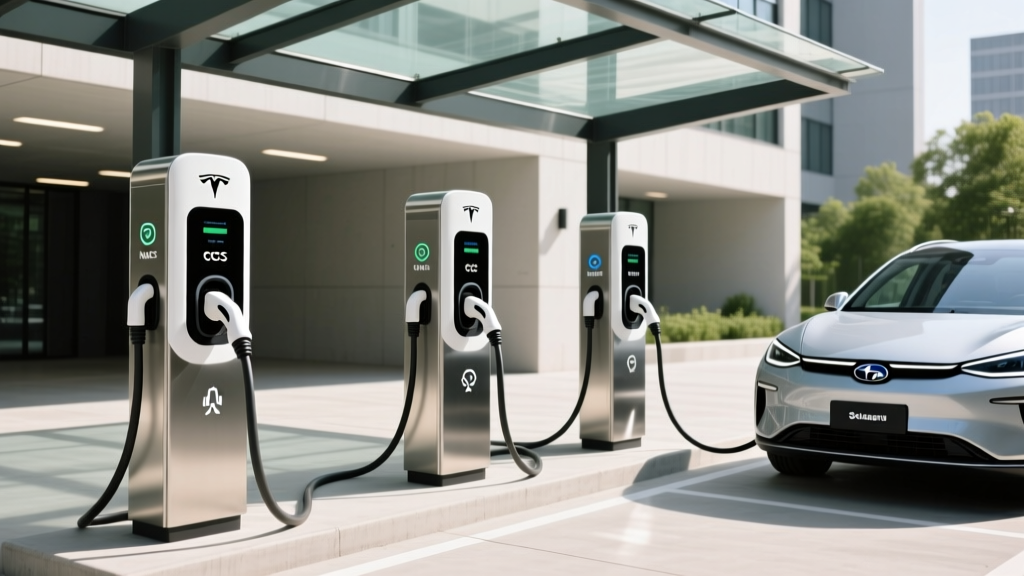
For 2025 and 2026 model years, Ford transitioned the F-150 Lightning to the NACS (North American Charging Standard) connector — the Tesla-designed plug now adopted industry-wide. This is a major advantage: Lightnings can now plug directly into Tesla Supercharger stalls (over 25,000 in North America as of early 2026) without an adapter.
| Connector Type | Compatibility | Adapter Needed? |
|---|---|---|
| NACS (Tesla standard) | Native — direct plug | No |
| CCS1 (legacy public DCFC) | Requires NACS-to-CCS adapter | Yes (~$200-$250) |
| CHAdeMO (older Nissan/Mitsubishi stations) | Not supported | N/A — avoid these stations |
| J1772 (public Level 2) | Requires NACS-to-J1772 adapter for L2 | Yes (~$100-$150) or use included cord |
If you're buying a used 2022–2024 Lightning, those model years shipped with CCS1 ports. Ford offers a CCS-to-NACS adapter for those owners to access Tesla Superchargers. Always confirm your model year's native connector before purchasing home charging equipment — a NACS wall connector won't fit a 2023 CCS port without an adapter.
Cost to Charge: Home vs. Public vs. Gas Comparison
The F-150 Lightning Extended Range carries an EPA combined efficiency rating of approximately 70 MPGe, which translates to roughly 48 kWh per 100 miles (or 0.48 kWh/mile). The Standard Range is slightly more efficient at about 76 MPGe (~44 kWh/100 mi). Here's what that costs in real scenarios:
| Scenario | Rate ($/kWh) | Cost Per Mile | Full 131 kWh Charge |
|---|---|---|---|
| Home off-peak (utility TOU rate) | $0.08–$0.12 | $0.04–$0.06 | $10.50–$15.70 |
| Home standard rate | $0.14–$0.18 | $0.07–$0.09 | $18.30–$23.60 |
| Public Level 2 (ChargePoint, etc.) | $0.25–$0.40 | $0.12–$0.19 | $32.75–$52.40 |
| DC Fast Charge (Electrify America, Tesla) | $0.35–$0.55 | $0.17–$0.26 | $45.85–$72.05 |
Gas comparison: A comparable gas F-150 (3.5L EcoBoost, ~20 MPG combined) at $3.40/gallon costs roughly $0.17 per mile. Even at public DC fast-charging rates, the Lightning can match or beat that. At home on off-peak rates, you're paying one-third to one-quarter the per-mile fuel cost.
Over 15,000 miles annually, home charging at $0.12/kWh costs approximately $1,080/year versus $2,550/year for the gas equivalent — a savings of ~$1,470 per year, or $7,350 over five years, according to fueleconomy.gov data.
Equipment Recommendations: Best Level 2 Chargers for the Lightning
Based on power output, cable management, smart features, and NACS compatibility, here are three chargers well-suited to the F-150 Lightning in 2026:
1. Tesla Wall Connector (NACS) — $420
- Power output: Up to 11.5 kW (48A) on a 60A circuit
- Connector: Native NACS — plugs directly into 2025+ Lightnings
- Cable length: 24 feet
- Smart features: Wi-Fi, firmware updates, power-sharing between two units, access control
- Best for: Owners who want simplicity and Supercharger ecosystem integration
- Limitation: Maxes out at 48A — won't utilize the Extended Range's 19.2 kW (80A) onboard charger
2. Ford Charge Station Pro — $599
- Power output: Up to 19.2 kW (80A) on a 100A circuit
- Connector: NACS (2025+ models); CCS for 2022–2024
- Cable length: 25 feet
- Smart features: FordPass app integration, scheduled charging, Intelligent Backup Power (V2H — can power your home during outages when paired with the Home Integration System)
- Best for: Extended Range owners who want maximum Level 2 speed and vehicle-to-home capability
- Limitation: Requires a 100A circuit — the most expensive home install
3. Emporia Vue EV Charger — $399
- Power output: Up to 11.5 kW (48A) on a 60A circuit
- Connector: NACS or J1772 (select at purchase)
- Cable length: 24 feet
- Smart features: Wi-Fi, energy monitoring via Emporia Vue panel integration, load management, solar-aware charging
- Best for: Budget-conscious buyers who want energy visibility and load management to avoid panel upgrades
- Limitation: 48A max — same as Tesla Wall Connector
Safety, Electrical Code, and Permit Considerations
EV charging installations must comply with the National Electrical Code (NEC Article 625) and local building codes. Key requirements include:
- Dedicated circuit: Your EV charger must be on its own dedicated breaker — no sharing with other appliances
- GFCI protection: NEC 2020 and later requires Ground Fault Circuit Interrupter protection for all EV charging outlets and hardwired installations
- Outdoor rating: If installing outside, the charger must carry a NEMA 4 (or IP65+) weatherproof rating. All three chargers recommended above are outdoor-rated.
- Permit and inspection: Nearly all jurisdictions require an electrical permit ($50–$250) and a post-installation inspection. Skipping this can void homeowner's insurance coverage for electrical fires.
- Utility notification: Some utilities require notification before installing a high-draw EV charger (especially 80A/19.2 kW units) to ensure transformer capacity on your street
Always hire a licensed electrician — not a general handyman — for EV charger installations. The sustained high-current draw of EV charging (hours at 48A or 80A) is far more demanding on wiring than typical household loads, and improper installations are a fire risk. Per NHTSA and NFPA guidance, use equipment that is UL-listed or ETL-certified.
Charging Time Examples: Real-World Scenarios
How long does it actually take to charge a "Godzilla Supercharged" Lightning? Here are scenarios based on battery size and charger type:
- Standard Range (98 kWh, LFP) on Level 2 at 11.5 kW: 0–100% in approximately 8.5 hours — ideal for overnight charging
- Extended Range (131 kWh, NMC) on Level 2 at 19.2 kW: 0–100% in approximately 7 hours with the Ford Charge Station Pro
- Extended Range on Level 2 at 11.5 kW: 0–100% in approximately 11.5 hours — still viable overnight but tighter for heavy-use days
- Extended Range on DC fast charge (155 kW peak): 10–80% in ~41 minutes; 80–100% adds another ~30 minutes due to taper
- Standard Range on DC fast charge (115 kW peak): 10–80% in ~38 minutes
Frequently Asked Questions
How much does it cost to install a home EV charger for the F-150 Lightning?
A typical Level 2 home installation (hardware + electrician + permit) costs between $950 and $2,500 if your electrical panel has sufficient capacity. If a panel upgrade from 100A to 200A service is required, total costs can reach $2,450–$7,000. The Ford Charge Station Pro at 19.2 kW requires a 100A dedicated circuit, making it the most expensive to install but the fastest Level 2 option available.
How fast will each charging level add range to the Lightning?
Level 1 (120V) adds roughly 2–3 miles per hour — essentially an emergency trickle. Level 2 (240V, 48A) adds approximately 19 miles per hour, while a hardwired 80A Level 2 adds up to 32 miles per hour. DC fast charging at 155 kW adds roughly 150–190 miles of range during a 10–80% session lasting about 41 minutes.
Which connector and charger is compatible with my F-150 Lightning?
2025 and 2026 F-150 Lightnings use the NACS connector natively, compatible with Tesla Superchargers and all new NACS-equipped public stations. Model years 2022–2024 use CCS1 and require a Ford-provided adapter for Supercharger access. For home charging, select a NACS-connector wall unit for new models, or CCS-compatible equipment for older trucks.
How much does charging the Lightning cost per mile versus gas?
At home on off-peak electricity ($0.10/kWh), the Extended Range Lightning costs approximately $0.05 per mile. A comparable gas F-150 EcoBoost at 20 MPG and $3.40/gallon costs $0.17 per mile — more than three times as much. Even public DC fast charging at $0.48/kWh yields roughly $0.23 per mile, still competitive with gasoline, per IRS §30D-eligible vehicle ownership data.
What electrical upgrades might I need for a home charger?
The most common upgrade is a main panel replacement — from 100A or 150A to 200A service — if your existing panel lacks spare breaker capacity for a 60A or 100A dedicated EV circuit. A load-management device ($200–$500) can sometimes avoid a panel upgrade by dynamically sharing power between the EV charger and other home loads. Your electrician will perform an NEC Article 220 load calculation to determine your exact requirements. Federal tax credits under §30D do not cover home charger installation for 2026, but the IRS Alternative Fuel Vehicle Refueling Property Credit (Form 8911) may cover up to $1,000 of installation costs if you live in a qualifying census tract — consult a tax professional for eligibility.