Why F-150 Buyers Are Cross-Shopping a Supercharged V8 and the Lightning EV
The Ford F-150 lineup in 2026 spans from the raw, analog punch of a single cab 5.0L Coyote V8 with an aftermarket supercharger to the all-electric Lightning with its 131 kWh extended-range pack. One is a hot-rod work truck that drinks premium fuel at 12-14 mpg; the other is a 7,000-pound battery hauler that can power your house during an outage. If you're weighing an f150 single cab 5.0 supercharged build against the Lightning, the real decision isn't just horsepower — it's what it costs to keep either truck moving, mile after mile.
This guide breaks down the Lightning's charging ecosystem in exact numbers: kilowatts, kilowatt-hours, dollars per mile, and the real cost of a home Level 2 installation. We'll stack those figures against what a supercharged 5.0L single cab costs at the pump so you can decide with a calculator, not a gut feeling.
Lightning Battery, Range, and Real-World Expectations
The 2026 F-150 Lightning extended-range model carries a 131 kWh usable lithium-ion NMC pack (gross capacity ~140 kWh). The standard-range truck uses a 98 kWh pack. Here's what the EPA says versus what you'll actually see:
| Trim / Pack | EPA Range | Real-World Highway (70 mph) | Cold Weather (20°F) |
|---|---|---|---|
| Standard Range (98 kWh) | 240 mi | ~200-215 mi | ~165-185 mi |
| Extended Range (131 kWh) | 320 mi | ~265-285 mi | ~215-240 mi |
The Lightning's boxy aerodynamics and 6,500+ lb curb weight hit efficiency hard above 65 mph. Expect combined efficiency around 2.0-2.2 kWh/mile (roughly 70 MPGe combined per fueleconomy.gov). If you tow, cut real-world range by 40-55%.
kW (kilowatt) = rate of power flow, like water pressure in a hose. A 150 kW DC fast charger delivers energy quickly.
kWh (kilowatt-hour) = total energy stored or delivered, like gallons in a tank. The Lightning's 131 kWh battery holds 131 kW worth of energy for one hour, or 1 kW for 131 hours.
You pay per kWh. Your charger is rated in kW.
Charging Levels Explained: Speeds, Power, and Miles Per Hour
Every F-150 Lightning owner will use some combination of three charging levels. Here's how fast each one actually adds range to the extended-range 131 kWh pack:
| Level | Voltage / Amps | Power (kW) | Miles of Range Per Hour | Best Use Case |
|---|---|---|---|---|
| Level 1 (120V) | 120V / 12A | ~1.4 kW | ~2-3 mi/hr | Emergency top-off only |
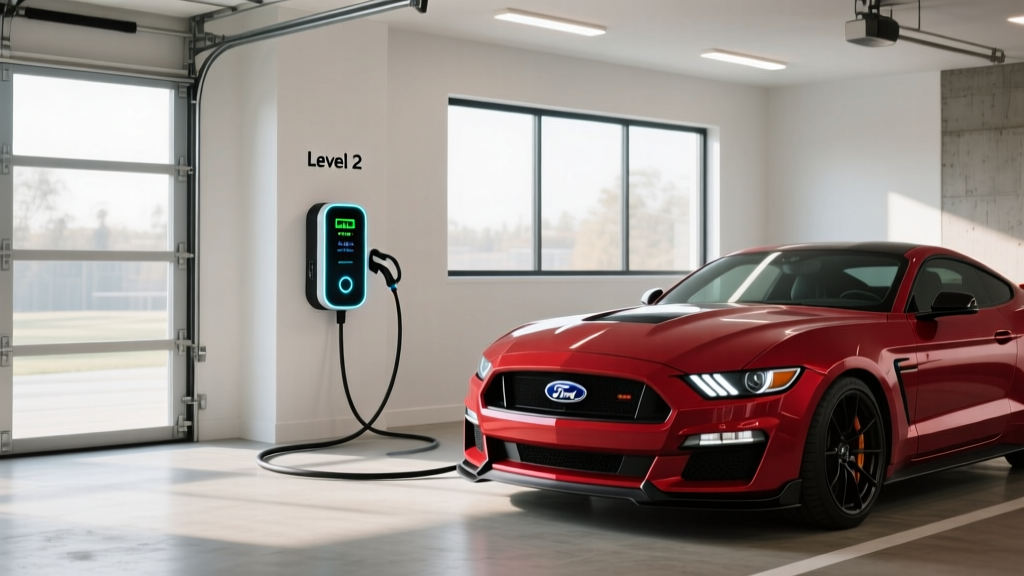
| Level 2 (240V Home) | 240V / 48A | 11.5 kW | ~22-25 mi/hr | Daily home charging |
| Level 2 (240V Max) | 240V / 80A | 19.2 kW | ~37-40 mi/hr | Fast home / depot charging |
| DC Fast Charge | 400V+ architecture | Up to 150 kW peak | ~250+ mi/hr (to 80%) | Road trips, highway corridors |
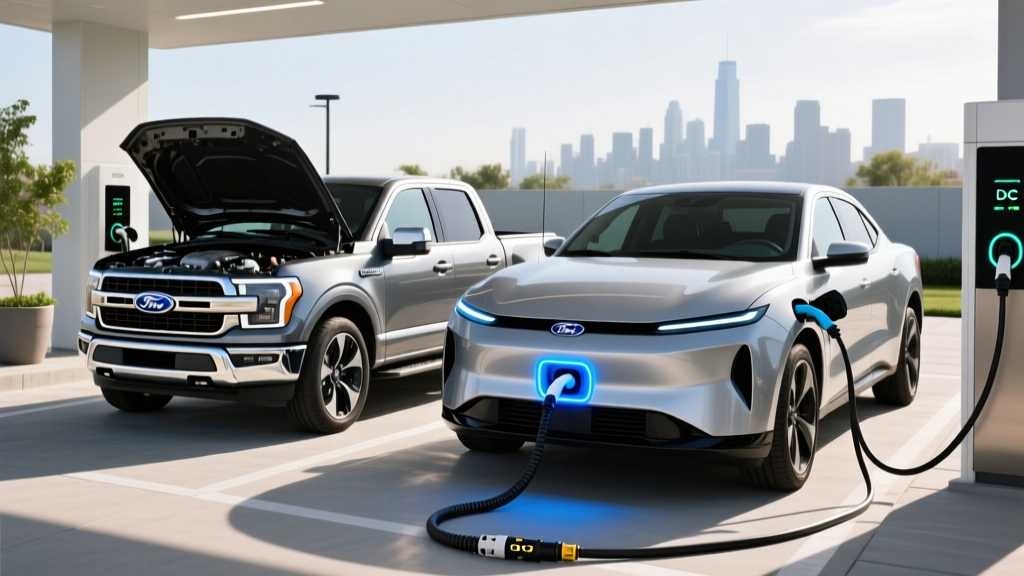
The Lightning's onboard charger accepts up to 19.2 kW AC on extended-range trims (80A) and 11.5 kW on standard-range (48A). For DC fast charging, Ford rates the extended-range pack at a 150 kW peak, though sustained rates taper significantly above 80% state of charge. Expect a 15-80% DC fast charge in approximately 40-45 minutes at a properly rated 150+ kW station — not the 10-80% in 20 minutes that lighter crossovers manage. The Lightning's massive battery simply takes longer to fill.
Home Level 2 Installation: Electrical Requirements, Panel Upgrades, and Real Costs
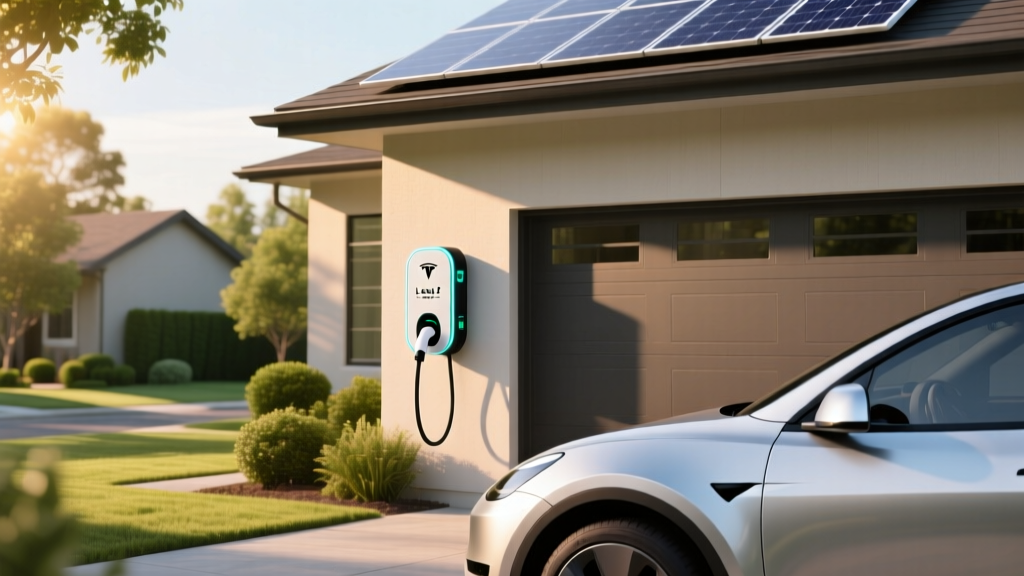
Charging a 131 kWh battery on a standard 120V outlet is a non-starter — you'd need nearly 4 days for a full charge. A Level 2 home charger is essentially mandatory for Lightning ownership. Here's what the installation actually requires:
Electrical Requirements
- Circuit: Dedicated 60A breaker (for a 48A continuous charger) or 100A breaker (for 80A continuous charging)
- Wire: 6 AWG copper for 60A; 3 AWG copper or 1 AWG aluminum for 100A
- Outlet: NEMA 14-50 (50A) or hardwired connection (recommended for 60A+)
- Panel capacity: Your main service panel must have physical breaker slots AND amperage headroom. A 200A panel running a 60A EV circuit while powering electric range, dryer, HVAC, and water heater may need a load calculation or upgrade to 300-400A service
Installation Cost Breakdown
| Component | Low End | Typical | High End |
|---|---|---|---|
| Level 2 Charger (hardware) | $350 | $550 | $750 |
| Electrician labor (run + mount) | $600 | $1,200 | $2,500 |
| Permit & inspection | $50 | $150 | $350 |
| Panel upgrade (if needed) | $1,500 | $3,000 | $5,500 |
| Total (no panel upgrade) | $1,000 | $1,900 | $3,600 |
| Total (with panel upgrade) | $2,500 | $4,900 | $9,100 |
Homes built before 1990 frequently have 100A or 150A main panels. A full 200-400A service upgrade involves the utility company, new meter base, and significant labor — budget $3,000-$5,500 for this alone. Always get a licensed electrician to perform a load calculation before committing to a charger amperage. The National Electrical Contractors Association recommends never sizing an EV circuit above 80% of breaker rating for continuous loads, per NEC Article 625.
Federal Tax Credit for Home Charging Equipment
Under IRS §30C, the Alternative Fuel Vehicle Refueling Property Credit covers 30% of home charger hardware and installation costs, up to $1,000. Eligibility depends on census-tract income and location requirements that vary by year. Confirm current rules at irs.gov before assuming the credit applies to your project.
Connector Compatibility: NACS, CCS, and Adapter Realities
The F-150 Lightning originally shipped with a CCS1 charge port. Starting with the 2025 model year, Ford transitioned to the NACS (North American Charging Standard) connector — the Tesla-designed plug now adopted across the industry. Here's what that means for your charging options:
| Connector | Model Years | Networks Available | Adapter Needed? |
|---|---|---|---|
| CCS1 | 2022-2024 Lightning | Electrify America, EVgo, ChargePoint, Ionity | NACS-to-CCS adapter for Tesla Superchargers |
| NACS (native) | 2025-2026 Lightning | Tesla Supercharger, EA (new stalls), EVgo (new stalls) | NACS-to-CCS adapter for legacy CCS stations |
| CHAdeMO | N/A (not supported) | Legacy Nissan Leaf network | No adapter available; not compatible |
If you own a 2022-2024 Lightning with CCS, Ford provides a NACS adapter that enables access to Tesla Supercharger V3/V4 stalls (150-250 kW capable). This adapter is included with new purchases or available as a retrofit. Conversely, if you buy a 2025+ NACS-equipped Lightning, you'll want a CCS adapter ($200-$250 aftermarket) for Electrify America and older public stations still using CCS1. The adapter situation is temporary — by 2027, most public networks will have transitioned to NACS.
Cost to Charge: $/kWh Scenarios and Cost Per Mile vs. the Supercharged 5.0L
This is where the comparison gets stark. Let's model real operating costs for both trucks using 2026 average energy and fuel prices:
| Scenario | Rate | Lightning Ext. Range (2.1 kWh/mi) | Supercharged 5.0L SC (13 mpg avg) |
|---|---|---|---|
| Home off-peak (utility TOU) | $0.09/kWh | $0.19/mi | — |
| Home standard rate | $0.16/kWh | $0.34/mi | — |
| Public Level 2 | $0.30/kWh | $0.63/mi | — |
| DC Fast Charge (EA/evgo) | $0.48/kWh | $1.01/mi | — |
| Premium gasoline (93 octane) | $4.40/gal | — | $0.34/mi (combined) / $0.48/mi (towing) |
A supercharged 5.0L Coyote V8 in a single cab F-150 — think Whipple, Roush, or VMP Stage 2 — typically produces 650-750 hp at the crank and returns 10-14 mpg combined depending on driving style. On premium fuel at $4.40/gallon, that's $0.31-$0.44 per mile. If you drive 15,000 miles/year, fuel costs land between $4,650 and $6,600 annually.
The Lightning extended-range, charged primarily at home on a time-of-use plan at $0.09/kWh, costs roughly $2,835 per year for 15,000 miles — about half the supercharged V8's fuel bill. However, if you rely entirely on DC fast charging at $0.48/kWh, the Lightning's cost per mile ($1.01) exceeds the supercharged truck. Home charging access is the make-or-break economics for Lightning ownership.
Recommended Home Charging Equipment for the F-150 Lightning
Given the Lightning's large battery and available 19.2 kW onboard charger, you want hardware that can deliver maximum AC charging speed. Here are three proven units:
Ford Charge Station Pro
- Power: 80A / 19.2 kW (hardwired, 240V)
- Connector: NACS (2025+) or CCS (2022-2024)
- Cable: 25 ft
- Smart features: FordPass integration, scheduled charging, Intelligent Backup Power (V2H capable — powers your home during outages with extended-range pack)
- Price: ~$1,300 (hardware only)
WallConnector (Tesla)
- Power: 48A / 11.5 kW (NEMA 14-50) or 60A / 14.4 kW (hardwired)
- Connector: NACS native
- Cable: 24 ft
- Smart features: Wi-Fi updates, load sharing (pair two units on one circuit), Tesla app scheduling
- Price: ~$425
ChargePoint Home Flex
- Power: Configurable 16A-50A (up to 12 kW)
- Connector: NACS or CCS (configurable)
- Cable: 23 ft
- Smart features: Alexa integration, detailed session logging, utility demand-response programs
- Price: ~$550
For the Lightning specifically, the Ford Charge Station Pro is the only option that unlocks Intelligent Backup Power — using the truck's 131 kWh battery to run essential home circuits for up to 3 days during an outage. This requires the Ford Home Integration System (~$3,900 installed) and is a genuine differentiator if you live in an area with unreliable grid power. If backup power isn't a priority, the Tesla WallConnector at $425 offers the best value-per-kW on the market.
Safety, Code, and Installation Best Practices
EV charging circuits draw sustained high current for hours — this is fundamentally different from a dryer or oven that cycles on and off. Key safety requirements per NEC 2023/2026:
- Dedicated circuit: Your EV charger must be on its own breaker — never shared with other appliances
- Continuous load derating: A 48A charger requires a 60A breaker (80% rule). Do not install a 48A charger on a 50A breaker
- GFCI protection: Required for outdoor receptacles (NEMA 14-50). Hardwired installations may be exempt depending on jurisdiction — check local code
- Outdoor rating: If your charger is mounted outside, it must carry a NEMA 3R or NEMA 4 weatherproof rating. All three units above qualify
- Wire sizing: Undersized wire causes voltage drop and fire risk. Always follow NEC Table 310.16 for ampacity, and consider upsizing one gauge for runs over 50 feet
- Permit and inspection: Required in virtually all US jurisdictions for new 240V circuits. Unpermitted work can void homeowner's insurance coverage in the event of a fire
Frequently Asked Questions
How much does it cost to install a home EV charger for the F-150 Lightning?
Typically $1,000-$3,600 for a standard installation (charger + electrician + permit) if your electrical panel has capacity. If a panel upgrade to 200A-400A is needed, total costs can reach $4,900-$9,100. Get a load calculation from a licensed electrician before purchasing equipment.
How fast will each charging level add range to the Lightning?
Level 1 (120V): ~2-3 miles per hour. Level 2 at 48A (11.5 kW): ~22-25 miles per hour. Level 2 at 80A (19.2 kW): ~37-40 miles per hour. DC fast charging at 150 kW: approximately 15-80% in 40-45 minutes for the extended-range pack.
Which connector is compatible with my F-150 Lightning?
2022-2024 models use CCS1. 2025-2026 models use NACS. Ford provides a NACS adapter for CCS-equipped trucks to access Tesla Superchargers. CHAdeMO is not supported on any Lightning model year.
How much does charging the Lightning cost per mile versus fueling a supercharged 5.0L?
At home off-peak rates ($0.09/kWh), the Lightning costs ~$0.19/mile. A supercharged 5.0L single cab getting 12 mpg on $4.40/gallon premium costs ~$0.37/mile. However, DC fast charging the Lightning at $0.48/kWh jumps to ~$1.01/mile — more expensive than the V8. Home charging is essential for cost savings.
What electrical upgrades might I need for a Lightning home charger?
Homes with 100A or 150A main service panels likely need an upgrade to 200A-400A, especially if you have electric HVAC, range, and dryer. Even 200A panels may need a load calculation to confirm headroom for a 60A-100A EV circuit. Older homes (pre-1990) with knob-and-tube or aluminum branch wiring may need partial rewiring. Budget $1,500-$5,500 for a panel upgrade if required.