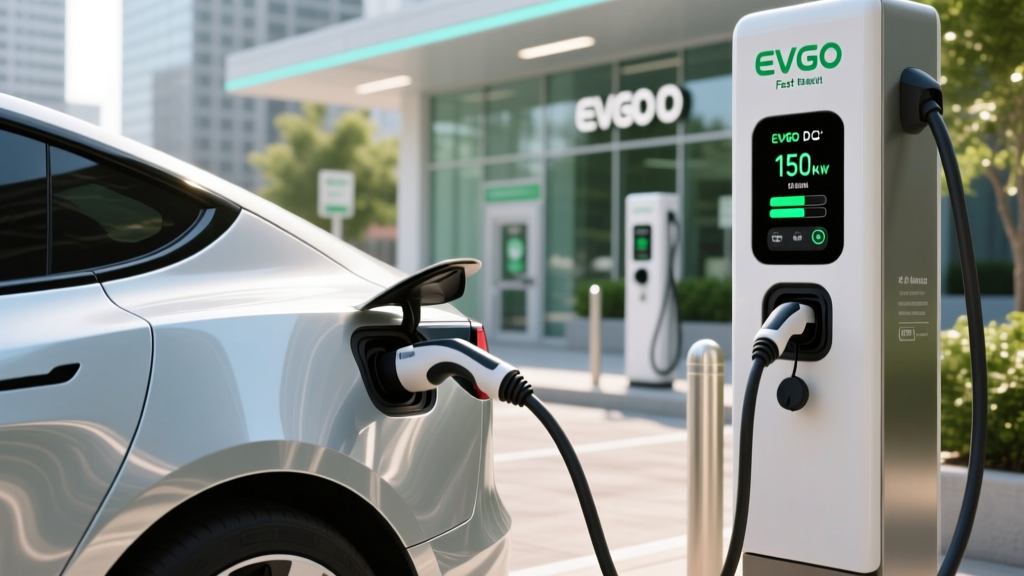
If you've pulled into an EVgo station and wondered what you'd actually get from an EVgo DC fast charge session—how many miles, how many minutes, how many dollars—you're not alone. EVgo operates one of the largest public fast-charging networks in the U.S., with over 1,100 stations and more than 3,500 individual chargers as of early 2026. But public DC fast charging is only one piece of the ownership puzzle. Understanding how EVgo's speeds and pricing stack up against home Level 1 and Level 2 charging is essential for building a practical charging strategy.
This guide breaks down every charging level with exact kW figures, real-world charging times, connector compatibility, home installation costs, and a detailed cost-per-mile comparison. We'll also recommend specific home charging equipment so you can minimize your reliance on paid public networks.
Charging Levels Explained: Level 1, Level 2, and DC Fast
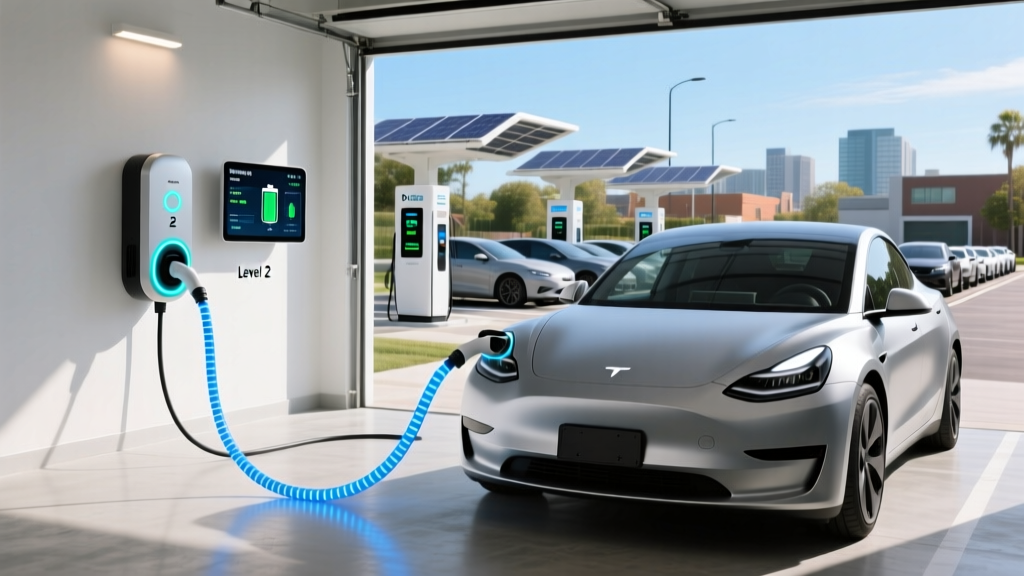
Before evaluating EVgo specifically, you need a clear picture of the three charging tiers available to EV owners. The critical distinction: kW (kilowatts) measures power—the rate at which energy flows into your battery. kWh (kilowatt-hours) measures energy—the total capacity of your battery. Think of kW as the width of a hose and kWh as the size of the bucket.
| Level | Voltage | Typical Power (kW) | Miles of Range Added per Hour | Best Use Case |
|---|---|---|---|---|
| Level 1 | 120V AC | 1.0–1.4 kW | 3–5 miles | Overnight top-ups, PHEVs, low-mileage drivers |
| Level 2 | 240V AC | 7.2–19.2 kW | 20–60 miles | Daily home charging, workplace charging |
| DC Fast Charge | 400–800V DC | 50–350 kW | 150–1,200+ miles (theoretical) | Road trips, quick top-ups away from home |
Most EV batteries range from 40 kWh (smaller compacts) to 100+ kWh (large SUVs and trucks). A Level 2 home charger at 11.5 kW can refill a 75 kWh battery from 10–80% in roughly 5–6 hours. A DC fast charger can accomplish the same in 18–40 minutes depending on peak power and the vehicle's charge curve.
EVgo DC Fast Charge: Network Speeds, Pricing, and What to Expect
EVgo's network includes chargers ranging from 50 kW legacy units to newer 350 kW high-power stalls. The majority of EVgo's fleet as of 2026 operates at 62.5 kW to 175 kW, with 350 kW stations concentrated in high-traffic metro corridors and highway routes.
Your actual charge speed depends on your vehicle's maximum acceptance rate. A Hyundai Ioniq 5 can accept up to 240 kW (via its 800V architecture), while a Nissan Leaf tops out around 100 kW on CHAdeMO. Plugging a Leaf into a 350 kW EVgo stall won't damage it—the car simply draws what it can handle.
- 62.5 kW charger + 75 kWh battery (e.g., Tesla Model Y, Ford Mustang Mach-E): ~55–65 minutes
- 150 kW charger + 75 kWh battery: ~28–35 minutes
- 350 kW charger + 77.4 kWh battery (e.g., Hyundai Ioniq 5/6): ~18–22 minutes
- 50 kW charger + 40 kWh battery (e.g., Nissan Leaf): ~40–50 minutes
Note: Charge speed tapers significantly above 80% SoC. Most EVs throttle charging to protect battery health. Plan to charge to 80% on road trips and move on.
EVgo Pricing Structure
EVgo pricing varies by location, time of day, and membership tier. As of early 2026, typical rates include:
- Guest (no membership): $0.49–$0.69/kWh + possible idle fees
- EVgo Plus membership ($4.99/month): $0.39–$0.55/kWh
- EVgo Plus Unlimited ($14.99/month): Lower per-kWh rates, typically $0.31–$0.45/kWh, plus 800 kWh of included charging annually
- Automaker partnerships: Some brands (BMW, Chevrolet, Nissan) include complimentary EVgo credits or reduced rates for new EV buyers
At an average rate of $0.48/kWh and vehicle efficiency of 3.5 miles/kWh (roughly 110 MPGe), your cost per mile on EVgo is approximately $0.14/mile. Compare that with a 28 MPG gas car at $3.40/gallon: $0.12/mile. DC fast charging on the road is often comparable to or slightly more expensive than gasoline on a per-mile basis. The real savings come from home charging.
Home Level 2 Charging: Installation Costs and Electrical Requirements
The single biggest financial advantage of EV ownership is cheap home charging. But getting a Level 2 charger installed properly requires understanding your home's electrical system.
Electrical Requirements for Level 2
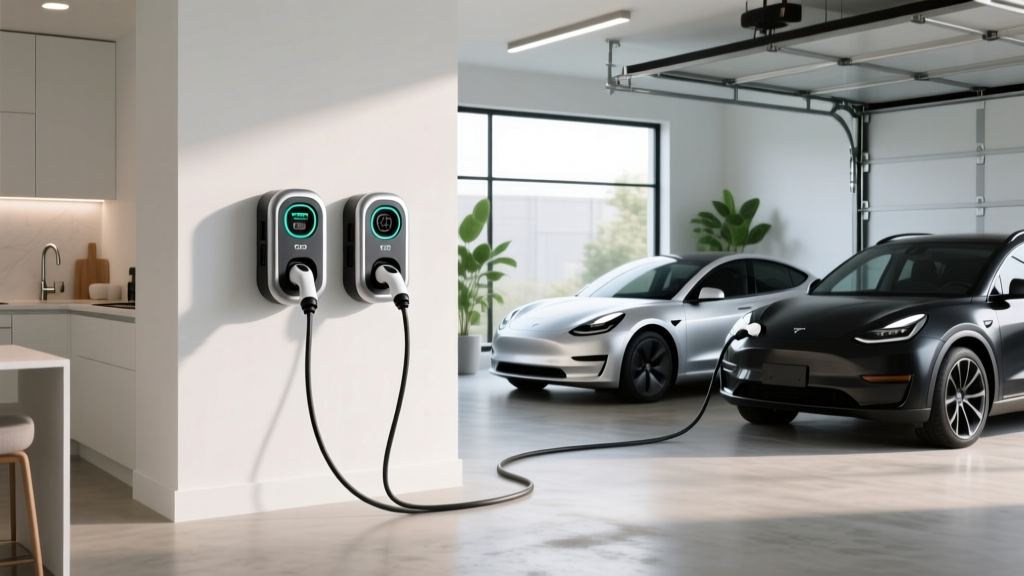
A typical Level 2 home charger requires a 240V dedicated circuit—the same voltage as your electric dryer or oven. Common configurations:
- 32A circuit / 40A breaker: Delivers 7.7 kW. Suitable for most EVs and standard 200A home panels.
- 40A circuit / 50A breaker: Delivers 9.6 kW. Faster charging; requires adequate panel capacity.
- 48A circuit / 60A breaker: Delivers 11.5 kW. Maximum for most residential chargers; needs robust panel headroom.
- 80A circuit / 100A breaker: Delivers 19.2 kW. Found on premium hardwired units; typically requires a 200A+ panel with significant spare capacity.
National Electrical Code (NEC) requires that continuous loads (like EV charging) use no more than 80% of a circuit's rated capacity. A 40A breaker supports 32A continuous draw. This is non-negotiable for safety and code compliance.
Do You Need a Panel Upgrade?
Many older homes have 100A or 150A service panels. Adding a 40–50A EV circuit to an already-loaded panel may exceed safe capacity. Signs you might need an upgrade:
- Your panel is 100A and already has high-draw appliances (electric range, dryer, HVAC)
- Breakers are double-tapped or the panel is at or near full slot capacity
- An electrician's load calculation shows insufficient headroom
A panel upgrade from 100A to 200A typically costs $1,500–$3,500 depending on your utility, local permit fees, and whether new service conductors are needed. It's a significant cost, but it future-proofs your home for additional electrification (heat pumps, solar, V2H systems).
| Component | Cost Range |
|---|---|
| Level 2 charger (hardware) | $350–$750 |
| Electrician labor (standard install, 240V outlet or hardwire) | $500–$1,500 |
| Permit fees | $50–$200 |
| Panel upgrade (if needed) | $1,500–$3,500 |
| Total (no panel upgrade) | $900–$2,450 |
| Total (with panel upgrade) | $2,400–$5,950 |
Source: Based on national averages from HomeAdvisor and licensed electrician surveys. Your actual cost depends on run length, conduit needs, and local labor rates. Always get 2–3 quotes.
Safety and Code Considerations
Any Level 2 installation should meet these baseline safety requirements:
- Dedicated circuit: Your EV charger must be on its own breaker—not shared with other appliances.
- GFCI protection: NEC 2020 and later requires GFCI protection for outdoor receptacles used for EV charging. Hardwired installations may have different requirements depending on jurisdiction.
- Outdoor rating: If your charger is installed outside, it must carry a NEMA 4 (weatherproof) rating. Most quality Level 2 chargers meet this standard.
- Proper wire gauge: A 40A circuit requires at least 8 AWG copper wire; 50A needs 6 AWG. Your electrician will size conductors based on run length and local code.
- Permit and inspection: Nearly all jurisdictions require a permit for new 240V circuits. Skipping this risks fire hazard, insurance denial, and code violations that surface during home sale.
Connector Compatibility: NACS, CCS1, and CHAdeMO
The connector landscape has consolidated significantly since 2024. Here's what you need to know for 2026:
| Connector | Brands Using It | Notes |
|---|---|---|
| NACS (North American Charging Standard) | Tesla (all models), Ford, GM, Rivian, Volvo, Polestar, Mercedes-Benz, BMW, Hyundai/Kia (2025+ models) | Now the dominant standard. Provides access to Tesla Supercharger network via native port or adapter. |
| CCS1 (Combined Charging System) | Volkswagen, Hyundai/Kia (pre-2025 models), BMW (pre-2025), Stellantis | Still widely available at Electrify America, EVgo, and ChargePoint stations. Many automakers are transitioning to NACS. |
| CHAdeMO | Nissan Leaf, Mitsubishi Outlander PHEV | Largely legacy. Fewer new stations being installed. Existing CHAdeMO chargers remain operational. |
Adapters You May Need
If your EV has a CCS1 port but you want to use Tesla Superchargers, you'll need a CCS-to-NACS adapter. Tesla sells an official adapter for ~$250, and third-party options (Lectron, A2Z) are available for $150–$200. Ford and GM owners who received complimentary adapters from their automakers should verify firmware compatibility before relying on them at high-power stalls.
For EVgo specifically, most stations offer both CCS1 and NACS connectors as of 2026. CHAdeMO remains available at older locations but is not being added to new builds. Check the EVgo app before your trip to confirm connector availability at your destination station.
Cost Per Mile: Home Charging vs. EVgo DC Fast Charge vs. Gasoline
This is where EV ownership economics become clear—or complicated, depending on your charging habits.
| Charging Method | Rate | Vehicle Efficiency | Cost Per Mile |
|---|---|---|---|
| Home Level 2 (national avg. electricity, $0.16/kWh) | $0.16/kWh | 3.5 mi/kWh | $0.046 |
| Home Level 2 (off-peak TOU rate, $0.09/kWh) | $0.09/kWh | 3.5 mi/kWh | $0.026 |
| EVgo DC Fast Charge (Plus member, avg.) | $0.45/kWh | 3.5 mi/kWh | $0.129 |
| EVgo DC Fast Charge (guest rate, peak) | $0.62/kWh | 3.5 mi/kWh | $0.177 |
| Gasoline vehicle (28 MPG combined, $3.40/gal) | $3.40/gal | 28 mi/gal | $0.121 |
| Gasoline vehicle (22 MPG combined, $3.40/gal) | $3.40/gal | 22 mi/gal | $0.155 |
The takeaway: home charging is dramatically cheaper than gasoline or public fast charging. If you charge 80% of your miles at home on off-peak rates and 20% on DC fast chargers during road trips, your blended cost per mile is roughly $0.05—about 40% of what a 28 MPG gas car costs.
However, if you rely exclusively on public DC fast charging (apartment dwellers, frequent travelers), your per-mile cost can exceed gasoline. This is why home Level 2 access is the single most important factor in EV ownership satisfaction.
Recommended Home Level 2 Chargers (2026)
Based on reliability, features, and value, these are the chargers we recommend for most EV owners:
ChargePoint Home Flex
- Power: Up to 12 kW (50A) — configurable from 16A to 50A
- Connector: NACS or J1772 (CCS adapter included)
- Cable length: 24 ft
- Smart features: Wi-Fi, app scheduling, Alexa integration, energy tracking
- Price: ~$550–$650
- Best for: Flexible amperage adjustment to match your panel capacity
Tesla Wall Connector
- Power: Up to 11.5 kW (48A)
- Connector: NACS native
- Cable length: 24 ft
- Smart features: Wi-Fi, OTA updates, power sharing (up to 6 units on one circuit), Tesla app integration
- Price: ~$450–$480
- Best for: Tesla and NACS-equipped owners; cleanest integration for Tesla vehicles
Emporia Level 2 EV Charger
- Power: Up to 11.5 kW (48A)
- Connector: J1772 (NACS adapter available)
- Cable length: 24 ft
- Smart features: Wi-Fi, solar integration, real-time energy monitoring, load management
- Price: ~$400–$450
- Best for: Budget-conscious buyers; solar panel owners who want to charge on excess production
Grizzl-E Smart
- Power: Up to 10 kW (40A)
- Connector: J1772 or NACS
- Cable length: 24 ft
- Smart features: OCPP-compatible, app control, extreme cold rated (-40°F)
- Price: ~$450–$550
- Best for: Cold-climate owners; built in Canada with ruggedized enclosure
All four chargers carry NEMA 4 outdoor ratings and UL/ETL safety certification. The ChargePoint Home Flex remains our top overall pick for its adjustable amperage—critical if your electrician determines your panel can only support a 32A or 40A circuit rather than the full 48A.
Frequently Asked Questions
How much does it cost to install a home EV charger?
A standard Level 2 home charger installation (240V, 40A circuit, no panel upgrade) typically costs $900–$2,450 including hardware, electrician labor, and permit fees. If your home needs a panel upgrade from 100A to 200A, add $1,500–$3,500. Always get a professional load calculation before committing.
How fast will each charging level add range?
Level 1 (120V) adds 3–5 miles per hour. Level 2 (240V, 40A) adds roughly 28–32 miles per hour for most EVs. DC fast charging at 150 kW can add 150–200 miles in 20–25 minutes, though charging speed tapers significantly above 80% state of charge.
Which connector is compatible with my EV?
For 2026 models: Tesla, Ford, GM, Rivian, Volvo, and newer Hyundai/Kia models use NACS. Older CCS1 vehicles (pre-2025 VW, Hyundai, BMW) still charge at CCS-equipped stations. CHAdeMO is limited to the Nissan Leaf and Mitsubishi Outlander PHEV. Check your vehicle's charge port or owner's manual to confirm.
How much does charging cost per mile vs gas?
Home charging at $0.16/kWh averages about $0.046/mile—roughly one-third the cost of a 28 MPG gas car at $3.40/gallon ($0.12/mile). Public DC fast charging at EVgo ($0.45/kWh for members) runs about $0.13/mile, comparable to gasoline. The financial case for EVs depends heavily on home charging access.
What electrical upgrades might I need?
Homes with 100A or 150A service panels may need an upgrade to 200A to safely support a Level 2 charger alongside existing appliances. Your electrician will perform a load calculation per NEC Article 220. Other potential upgrades include adding conduit runs (if the panel is far from the garage), replacing outdated wiring, or adding a sub-panel.
Is it worth getting an EVgo membership?
If you use public DC fast charging more than 2–3 times per month, the EVgo Plus Unlimited plan ($14.99/month) pays for itself through lower per-kWh rates and included charging credits. For occasional users, the standard Plus plan ($4.99/month) offers a meaningful discount over guest pricing without a large commitment.
Can I charge my CCS1 car at an EVgo station with only NACS connectors?
Not directly. If an EVgo station has been upgraded to NACS-only connectors and you drive a CCS1 vehicle, you'll need a CCS-to-NACS adapter. However, most EVgo locations in 2026 still maintain dual-connector stalls or separate CCS and NACS cables. Always check the station details in the EVgo app before driving there.
For official EV safety and efficiency data, consult fueleconomy.gov. For electrical code requirements, your licensed electrician is the final authority on your home's specific needs. Federal EV tax credit eligibility under IRS §30D involves income caps, MSRP limits, and battery sourcing requirements—consult IRS.gov or a tax professional before relying on credit estimates.