The Kia EV6 Light Long Range is one of the most compelling value propositions in the midsize electric SUV segment. Built on Hyundai Motor Group's E-GMP platform with an 800-volt electrical architecture, it accepts DC fast charging at rates that rival vehicles costing $15,000 more. But owning an EV6 Light Long Range means understanding its 77.4 kWh battery, its charging curve behavior, and the home electrical upgrades that unlock its full potential. This guide covers every number you need.
EV6 Light Long Range: Core Charging Specifications
Before plugging in anywhere, let's establish the baseline figures. The 2025–2026 Kia EV6 Light Long Range (rear-wheel drive) pairs a 77.4 kWh usable lithium-ion NMC battery with a single rear motor producing 225 horsepower. The EPA rates it at 310 miles of range and 134 MPGe combined (fueleconomy.gov). In real-world highway driving at 70 mph, expect closer to 265–280 miles; in freezing temperatures with cabin heat, that can drop to 230–250 miles. The EV6's heat pump (standard on Long Range trims) mitigates cold-weather losses better than most competitors.
| Specification | Value |
|---|---|
| Battery (usable) | 77.4 kWh, NMC chemistry |
| EPA Range (RWD) | 310 miles |
| MPGe (combined) | 134 MPGe |
| Efficiency | 25 kWh/100 mi |
| Max DC Fast Charge | ~240 kW peak (800V architecture) |
| 10–80% DC Time | ~18 minutes (optimal conditions) |
| Level 2 Onboard Charger | 10.9 kW (48A max) |
| Connector (US delivery) | CCS1 (NACS adapter available) |
| Motor Output | 225 hp / 258 lb-ft (RWD) |
| 0–60 mph | 7.2 seconds |
| Base MSRP (Light Long Range) | ~$42,900 |
| Battery Warranty | 10 years / 100,000 miles |
Charging Levels Explained: kW, Miles Per Hour, and Your EV6
Electric vehicle charging operates across three tiers. Understanding the difference between kW (power — the rate of energy flow, like water pressure in a hose) and kWh (energy — the total amount stored or delivered, like gallons in a tank) is essential. Your EV6's battery holds 77.4 kWh of energy. How quickly you refill it depends on the charger's kW output.
| Level | Voltage / Power | Max kW | Miles Added Per Hour | EV6 Full Charge Time |
|---|---|---|---|---|
| Level 1 (standard outlet) | 120V / 12A | ~1.4 kW | ~4–5 mi/hr | ~55+ hours (0–100%) |
| Level 2 (home/public AC) | 240V / 48A | 10.9 kW (EV6 max) | ~32–36 mi/hr | ~7.5 hours (0–100%) |
| DC Fast Charging | 400–800V DC | ~240 kW peak | ~750+ mi/hr (peak) | ~18 min (10–80%) |
Level 1 is a convenience fallback. Plugging your EV6 into a standard 120V household outlet via the included portable cord adds roughly 4–5 miles of range per hour. Over a 10-hour overnight session, that's 40–50 miles — adequate for short-commute drivers who can charge every night, but impractical as a primary strategy for the EV6's 77.4 kWh battery.
Level 2 is the home-charging standard. A 240V circuit delivering 48 amps provides up to 10.9 kW to the EV6 (its onboard charger caps at this rate). This refills the battery from near-empty to full in about 7.5 hours — perfectly timed for overnight charging. Most EV6 owners install a 48-amp hardwired Level 2 unit on a 60-amp dedicated circuit.
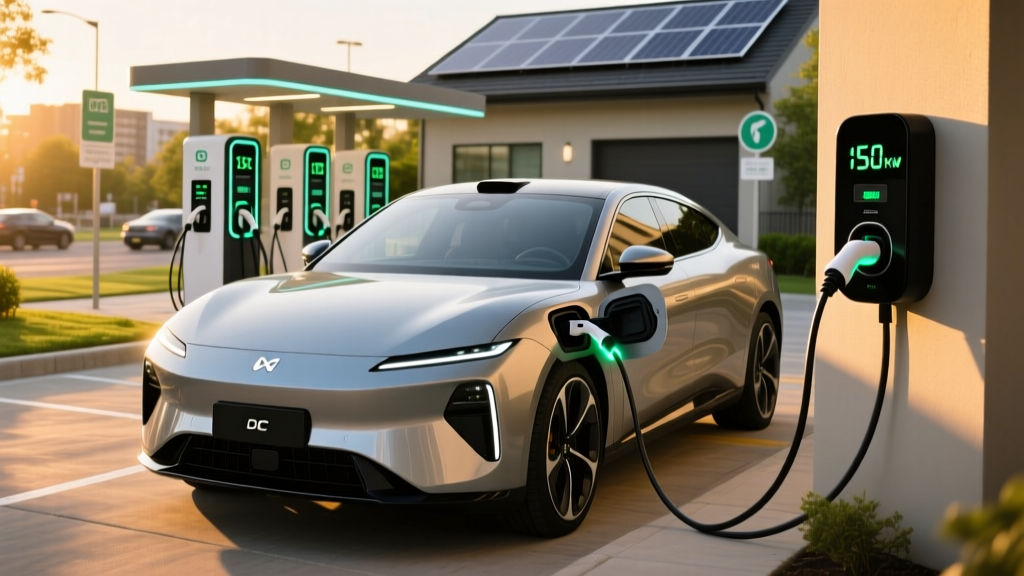
DC Fast Charging bypasses the onboard charger entirely, sending direct current straight to the battery. The EV6's 800V architecture is its standout feature here: while most competitors peak at 150–175 kW on 400V systems, the EV6 can accept up to ~240 kW at compatible chargers. The 10–80% charge takes approximately 18 minutes under ideal conditions (battery preconditioned, charger rated 350 kW, moderate ambient temperature).
Understanding the EV6 DC Fast Charging Curve
The "18-minute" headline figure requires context. DC fast charging follows a charge curve: the battery accepts maximum power only at low states of charge (SoC), then progressively tapers as it fills. For the EV6 Light Long Range:
- 10–40% SoC: Peaks near 230–240 kW at a 350 kW charger. This is where the 800V architecture delivers its biggest advantage.
- 40–60% SoC: Sustains approximately 170–190 kW.
- 60–80% SoC: Tapers to roughly 100–130 kW.
- Above 80% SoC: Drops sharply to 50 kW and below. Charging from 80–100% on DC can take as long as 10–80%.
Practical takeaway: plan road-trip stops to charge from 10–80%, then move on. Sitting at a DC fast charger above 80% wastes time and money, since many networks charge by the kWh or minute regardless of speed. Use battery preconditioning — the EV6 automatically warms the battery when you navigate to a DC fast charger in the infotainment system — to hit peak rates. Without preconditioning in cold weather, your first several minutes of charging may be limited to 70–100 kW.
Home Level 2 Charger Installation: Electrical Requirements and Costs
Installing a Level 2 charger at home is the single most impactful upgrade for EV6 ownership. Here's what the electrical work actually involves and what it costs.
Electrical Requirements for the EV6
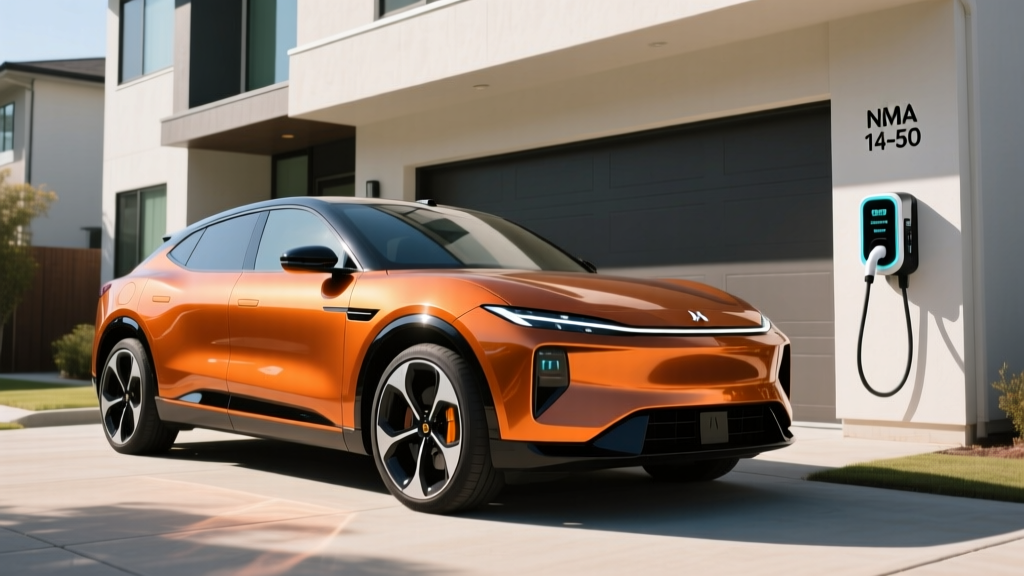
To unlock the EV6's full 10.9 kW Level 2 charging rate, you need a 240V circuit rated at 60 amps, which supports a continuous 48-amp charger load (the National Electrical Code requires circuits be rated 125% above continuous load). If your charger is hardwired, a 60A breaker is standard. If you use a NEMA 14-50 outlet (which allows portable charger removal), the circuit is typically 50A, delivering up to 40 amps (9.6 kW) to the vehicle — slightly slower but still adding ~28–30 miles per hour.
Panel Upgrade Considerations
Many older homes have 100-amp electrical panels. Adding a 60-amp EV circuit to a panel already serving central AC, an electric dryer, an electric oven, and a water heater may exceed the panel's capacity. A licensed electrician will perform a load calculation (NEC Article 220) to determine whether your panel can handle the additional draw. If it can't, options include:
- Panel upgrade to 200A: $1,500–$3,500 including permit. This is the most common solution for older homes.
- Load management device: Products like the Emporia Smart Charger with load management or the Wallbox Pulsar Plus with Power Boost can dynamically reduce charger amperage when other circuits are drawing heavily. Cost: $100–$300 additional hardware, but may avoid a full panel upgrade.
- Lower-amperage circuit: Installing a 30A or 40A circuit instead delivers 7.2 kW or 9.6 kW respectively — slower, but often sufficient for overnight charging and much easier on older panels.
Installation Cost Breakdown
| Component | Low Estimate | High Estimate |
|---|---|---|
| Level 2 Charger (48A smart unit) | $400 | $700 |
| Electrician labor (standard install, <30 ft run) | $500 | $1,200 |
| Electrical permit | $50 | $200 |
| Conduit, wiring, breaker (materials) | $100 | $400 |
| Panel upgrade (if needed — 100A to 200A) | $1,500 | $3,500 |
| Total (no panel upgrade) | $1,050 | $2,500 |
| Total (with panel upgrade) | $2,550 | $6,000 |
Shorter cable runs from the panel to the garage (under 20 feet) and accessible attic or crawlspace routing keep costs at the low end. Detached garages, long conduit runs through finished walls, or trenching for underground lines push costs higher. Always get at least two quotes from licensed electricians and verify they pull a permit — unpermitted work can void homeowner's insurance claims and complicate home sales.
Safety and Code Requirements
- Dedicated circuit: Your EV charger must be on its own breaker — never shared with other appliances.
- GFCI protection: NEC 2020 and later requires GFCI protection for outdoor receptacles and some jurisdictions extend this to garage outlets. Hardwired chargers typically do not require a separate GFCI breaker (the unit has built-in ground-fault protection).
- Outdoor rating: If your charger is mounted outside, ensure it carries a NEMA 4 or IP65 rating for weather resistance.
- Cable management: Use a holster or retractable reel to prevent tripping hazards and cord damage.
- Utility notification: Some utilities require notification before adding a Level 2 charger and may offer rebates or time-of-use rates that significantly reduce charging costs.
Connector Compatibility: CCS1, NACS, and the EV6
The Kia EV6 sold in the US through model year 2025 ships with a CCS1 (Combined Charging System) port. Starting with the 2025 refresh, Kia began offering a NACS (North American Charging Standard / Tesla-style) port on certain trims, and by 2026 most new Kia EVs are expected to transition to native NACS. If your EV6 has CCS1, you can access Tesla Superchargers using a Kia-approved NACS-to-CCS adapter (approximately $200–$250).
| Connector | Native EV6 Support? | Adapter Needed? | Network Access |
|---|---|---|---|
| CCS1 | Yes (2022–2025 models) | No | Electrify America, EVgo, ChargePoint, most non-Tesla DC networks |
| NACS (Tesla) | Limited (2025+ trims); adapter for older | Yes (CCS1→NACS, ~$200–$250) | Tesla Supercharger network (15,000+ US stalls) |
| CHAdeMO | No | Not available for EV6 | Legacy network; largely discontinued for new vehicles |
| J1772 (Level 2 AC) | Yes (via CCS1 inlet upper portion) | No | All public Level 2 stations, home chargers |
For home Level 2 charging, all chargers use a J1772 connector that plugs into the upper portion of your CCS1 port — no adapter required. For DC fast charging on road trips, the CCS1 network is robust in most metro areas and along major highways, but Tesla Supercharger access via adapter dramatically expands options in rural corridors. Kia's official adapter is recommended over third-party options for warranty and safety reasons.
Recommended Home Chargers for the EV6 Light Long Range
The EV6's 10.9 kW onboard charger means you want a Level 2 unit that can deliver at least 48 amps to maximize charge speed. Here are three proven options:
ChargePoint Home Flex
- Power: Up to 12 kW (50A), adjustable down to 16A
- Connector: J1772 (CCS1 compatible)
- Cable: 23 ft
- Smart features: Wi-Fi, app scheduling, Alexa, energy tracking
- Price: ~$550–$650
- Best for: Flexible amperage if your panel can't support a full 60A circuit
Wallbox Pulsar Plus
- Power: Up to 11.5 kW (48A)
- Connector: J1772
- Cable: 25 ft
- Smart features: Wi-Fi + Bluetooth, app control, Power Boost load management
- Price: ~$450–$550
- Best for: Homes needing load management to avoid panel upgrades
Emporia Level 2 EV Charger
- Power: Up to 11.5 kW (48A)
- Connector: J1772
- Cable: 24 ft
- Smart features: Real-time energy monitoring, solar integration, load management
- Price: ~$350–$400
- Best for: Budget-conscious buyers who want detailed energy data
All three units are hardwired-capable and UL-listed. The ChargePoint Home Flex is the most versatile for varying electrical setups; the Wallbox Pulsar Plus excels when load management is critical; and the Emporia offers the best price-to-feature ratio. For the EV6 Light Long Range specifically, any of these will fully recharge the 77.4 kWh battery overnight in approximately 7.5–8 hours.
Charging Cost: EV6 vs. Gas at Current Energy Prices
One of the strongest arguments for the EV6 Light Long Range is fuel cost savings, but the math depends heavily on where and when you charge. Here's a realistic breakdown using the EV6's efficiency of approximately 25 kWh per 100 miles (or 0.25 kWh/mi).
| Charging Scenario | Cost per kWh | Cost per Mile (EV6) | Equivalent Gas SUV (25 MPG at $3.40/gal) |
|---|---|---|---|
| Home, off-peak (utility TOU rate) | $0.09–$0.12 | $0.023–$0.030 | $0.136 |
| Home, standard rate (national avg) | $0.16–$0.18 | $0.040–$0.045 | $0.136 |
| Public Level 2 (ChargePoint, etc.) | $0.25–$0.39 | $0.063–$0.098 | $0.136 |
| DC Fast Charging (EA, EVgo, Tesla) | $0.35–$0.55 | $0.088–$0.138 | $0.136 |
Key insight: Home charging at off-peak rates makes the EV6 roughly 4–5× cheaper per mile than a comparable gasoline SUV. Even at standard residential rates, you save about 65–70%. However, exclusive reliance on DC fast charging at premium public networks can push your per-mile cost to parity with gasoline. The EV6 ownership equation strongly favors home charging.
For a driver covering 12,000 miles per year with 80% home charging (off-peak) and 20% public DC fast charging, the annual electricity cost is approximately $360–$480. The equivalent gasoline cost at 25 MPG and $3.40/gallon: $1,632. That's $1,150–$1,270 in annual fuel savings, or roughly $5,750–$6,350 over five years.
Public DC Fast Charging: Networks and EV6 Performance
The EV6's 800V architecture makes it one of the fastest-charging vehicles on public DC networks — but only at chargers rated 250 kW or higher. Here's what to expect from major US networks:
- Electrify America (EA): Many stations now feature 350 kW dispensers. The EV6 can peak at ~240 kW here, achieving 10–80% in approximately 18–20 minutes. EA pricing varies by state: $0.35–$0.52/kWh for guest rates, less with Pass+ membership ($4/month for 800 kWh discounted).
- Tesla Supercharger (with adapter): V3 Superchargers (250 kW) allow the EV6 to charge at roughly 175–200 kW — the adapter introduces a slight bottleneck. V4 Superchargers (rolling out 2025–2026) are expected to support higher rates. Pricing: $0.25–$0.40/kWh depending on location and time.
- EVgo: Many stations are 350 kW capable. EV6 performance similar to EA. Pricing: $0.30–$0.45/kWh; EVgo Plus membership reduces rates.
- ChargePoint DC: Growing network of 175–400 kW chargers. Performance and pricing vary by site.
Always navigate to a DC fast charger using the EV6's built-in route planner to trigger battery preconditioning. Arriving at a charger with a cold battery in winter can double your charging time.
Federal Tax Credit and Incentives for Home Charging
The federal §30D clean vehicle credit applies to the EV6 itself, not the charger — but eligibility is complex for 2026. The EV6 is assembled in South Korea, which currently disqualifies it from the full $7,500 new-vehicle credit under the final-assembly requirement. However, the separate §30C alternative fuel vehicle refueling property credit covers up to 30% of home charger installation costs (maximum $1,000) if you live in an eligible census tract. Consult a tax professional for your specific situation, as income limits and tract eligibility vary.
Many utilities also offer rebates for Level 2 charger purchases ($200–$500) and time-of-use electricity rates that make overnight charging dramatically cheaper. Check with your local utility before purchasing equipment.
Frequently Asked Questions
How much does it cost to install a home EV charger for the EV6?
A standard Level 2 installation (48A hardwired charger on a 60A circuit, short cable run, no panel upgrade) costs $1,050–$2,500 including equipment, electrician labor, and permit. If your home needs a 200A panel upgrade, add $1,500–$3,500, bringing the total to $2,550–$6,000. Always get a load calculation from a licensed electrician first.
How fast will each charging level add range to the EV6 Light Long Range?
Level 1 (120V): approximately 4–5 miles per hour. Level 2 (240V, 48A): approximately 32–36 miles per hour, fully recharging overnight. DC fast charging: up to ~240 kW peak, adding roughly 180 miles in 18 minutes (10–80% SoC) at a 350 kW charger.
Which connector does the EV6 use and what chargers are compatible?
Most EV6 models sold through 2025 use a CCS1 connector, compatible with Electrify America, EVgo, ChargePoint, and other non-Tesla networks natively. A Kia-approved NACS adapter (~$200–$250) unlocks Tesla Supercharger access. For home Level 2 charging, all standard J1772 chargers work without an adapter.
How much does charging the EV6 cost per mile compared to gas?
At home off-peak rates ($0.09–$0.12/kWh), the EV6 costs $0.023–$0.030 per mile — about 4–5× cheaper than a 25 MPG gas SUV at $3.40/gallon ($0.136/mi). Public DC fast charging ($0.35–$0.55/kWh) costs $0.088–$0.138/mi, approaching gas parity. Maximizing home charging is key to savings.
What electrical upgrades might I need for a Level 2 charger?
The EV6 charges fastest on a 240V/60A dedicated circuit. If your home has a 100A electrical panel with significant existing loads (central AC, electric range, dryer), a load calculation may show you need a 200A panel upgrade ($1,500–$3,500). Alternatives include a lower-amperage circuit (30–40A) or a smart charger with load management that dynamically adjusts draw.
Does the EV6's battery warranty cover degradation?
Kia covers the EV6's high-voltage battery for 10 years or 100,000 miles (whichever comes first). The warranty guarantees the battery will retain at least 70% of its original capacity. Real-world data from E-GMP platform vehicles (EV6, Ioniq 5) suggests degradation of approximately 5–8% over the first 100,000 miles under normal use — well within the warranty threshold.