The Electric Muscle Car Era: Charger Daytona EV Meets the Hellcat Legacy
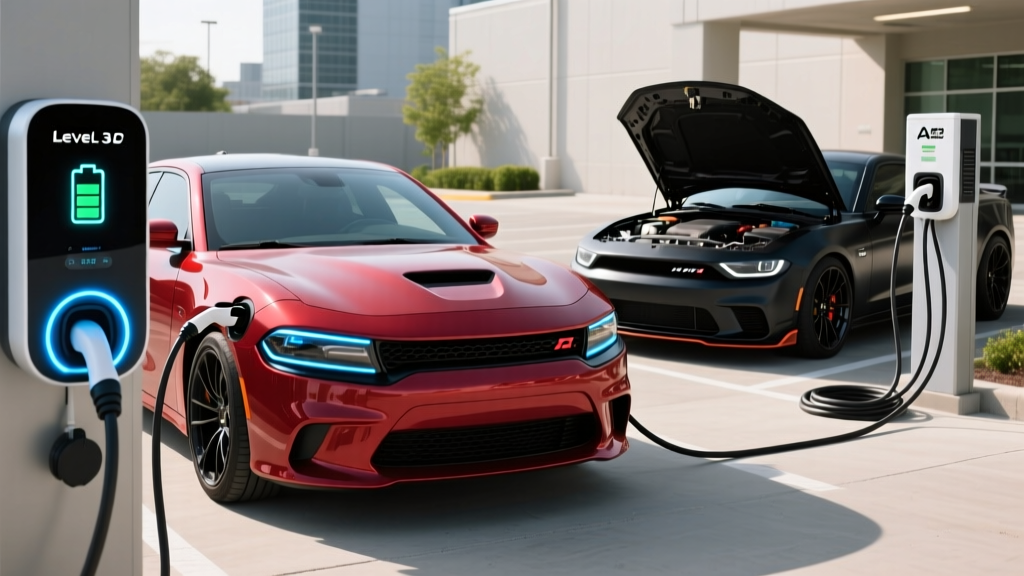
For over a decade, the Dodge Hellcat supercharged V8 defined American muscle with 707+ horsepower and a blower whine that became an automotive signature. Now, the 2026 Dodge Charger Daytona EV carries that muscle-car torch into the electric era — with up to 670 horsepower, a 100 kWh battery pack, and an EPA-estimated range of up to 317 miles on the R/T trim. But swapping a supercharged 6.2L HEMI for a battery-electric powertrain fundamentally changes how you "refuel."
This guide breaks down exactly what Charger Daytona EV owners (and prospective buyers cross-shopping the last Hellcat supercharged models) need to know about charging infrastructure, home installation costs, connector compatibility, and real-world cost per mile. Whether you're coming from a Hellcat or considering the Daytona EV as your first electric vehicle, the numbers below will tell you what to expect.
Charging Levels Explained: How Fast Can the Daytona EV Recharge?
Understanding EV charging requires distinguishing between kW (kilowatts — the rate of power delivery, like water pressure in a hose) and kWh (kilowatt-hours — the total energy stored or delivered, like gallons in a tank). The Charger Daytona's ~100 kWh battery pack needs different amounts of time depending on which charging level you use.
| Charging Level | Power (kW) | Voltage / Amperage | Miles of Range Added Per Hour | 10–80% Charge Time (Est.) |
|---|---|---|---|---|
| Level 1 (Standard 120V outlet) | 1.4–1.9 kW | 120V / 12–16A | 4–6 miles/hr | ~50–70 hours |
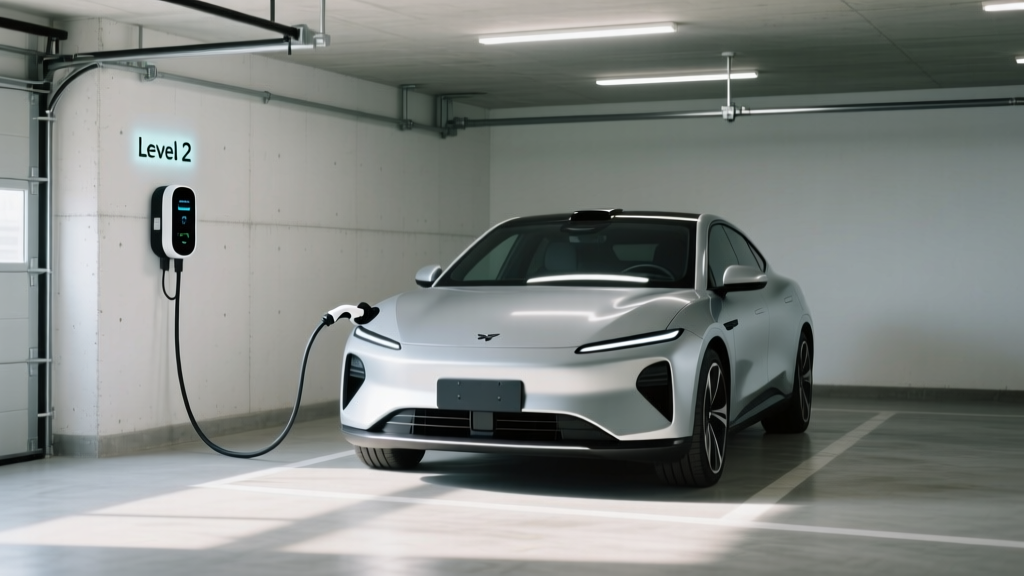
| Level 2 (Home / Workplace 240V) | 7.2–19.2 kW | 240V / 30–80A | 22–58 miles/hr | ~4.5–9 hours |
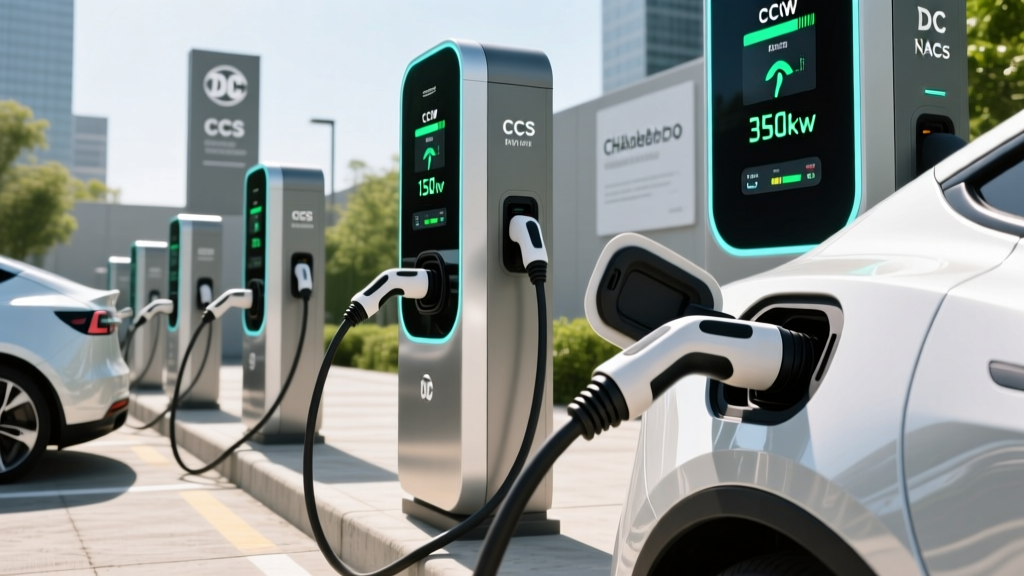
| DC Fast Charging (Public stations) | Up to 175 kW peak | 400V+ DC | ~500+ miles/hr (at peak) | ~27–32 minutes |
Charging curve reality: The Daytona EV will not sustain its 175 kW peak rate for the entire session. Like all EVs, charge speed tapers significantly above 80% state of charge (SoC) to protect battery longevity. A 10–80% session at a 180+ kW DC fast charger takes roughly 27–32 minutes, but pushing from 80–100% can add another 20–25 minutes. For road trips, plan your stops around the 10–80% window.
Home Charger Installation: Costs, Electrical Requirements & Panel Upgrades
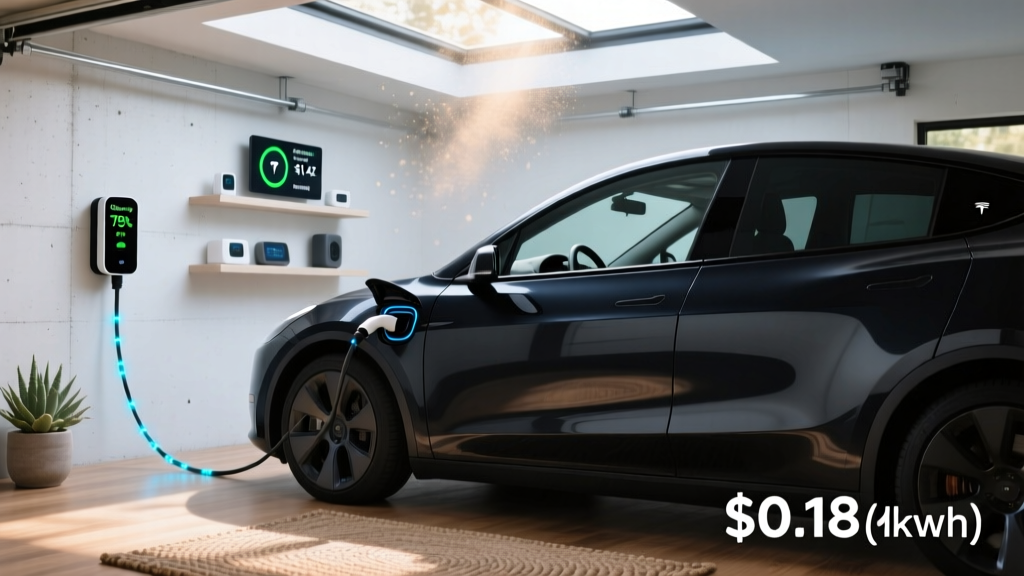
Most Charger Daytona EV owners will install a Level 2 home charger — the single most impactful upgrade for daily EV ownership. A Level 2 station replenishes 200+ miles overnight, eliminating routine visits to public chargers.
Electrical Requirements
A Level 2 charger requires a dedicated 240-volt circuit, similar to what powers an electric dryer or oven. The most common home setups are:
- 240V / 40A circuit (delivers ~9.6 kW to the car) — suitable for most daily needs, requires a 50A breaker
- 240V / 48A circuit (delivers ~11.5 kW) — requires a 60A breaker, faster overnight charging
- 240V / 60A circuit (delivers ~14.4 kW) — requires an 80A breaker, maximizes the Daytona's onboard charger capability
The Charger Daytona EV supports up to 11 kW AC Level 2 charging via its onboard charger, meaning a 48A circuit is the practical sweet spot — a 60A circuit won't charge the car faster unless future software updates raise the onboard acceptance rate.
Does Your Electrical Panel Need an Upgrade?
Homes with a 100-amp electrical panel may not have sufficient capacity to add a 40–48A EV circuit, especially if you already run electric heating, an electric oven, and a dryer. Upgrading to a 200-amp panel typically costs $1,500–$3,500 depending on your utility's requirements and local labor rates. Homes built after the 1990s usually have 200A service and can accommodate a Level 2 charger without a panel upgrade.
An alternative for 100A-panel homes: a smart panel load manager (like the Emporia VUE or Span drive) can dynamically throttle the charger when other high-draw appliances are running, potentially avoiding a full panel upgrade. Consult a licensed electrician to evaluate your specific situation.
| Cost Component | Basic Install (Short Run) | Complex Install (Long Run / Panel Upgrade) |
|---|---|---|
| Level 2 Charger Equipment (40–48A) | $350–$650 | $350–$750 |
| Electrician Labor (wiring, conduit, outlet/hardwire) | $400–$800 | $1,200–$2,500 |
| Electrical Permit | $50–$150 | $50–$200 |
| Panel Upgrade (if needed, 100A → 200A) | Not required | $1,500–$3,500 |
| Total Estimated Cost | $800–$1,600 | $3,100–$6,950 |
Federal incentive note: The Residential Clean Energy Credit (IRS §25D) previously covered 30% of home EV charger equipment and installation costs (up to $1,000). Verify current-year availability with a tax professional, as this credit has undergone legislative changes. Some utilities and states also offer rebates of $250–$750 for Level 2 charger installations — check with your local provider.
Connector Compatibility: NACS, CCS1, and What the Daytona EV Uses
The 2026 Dodge Charger Daytona EV comes equipped with the CCS1 (Combined Charging System) connector as standard — the same connector used by most non-Tesla EVs sold in North America through 2025. However, the industry is rapidly shifting toward NACS (North American Charging Standard), the Tesla-originated connector now adopted by Ford, GM, Rivian, Hyundai, and others.
| Connector Type | Used By | Network Access | Adapter Needed for Daytona EV? |
|---|---|---|---|
| CCS1 | Dodge Charger Daytona, VW ID.4, BMW i4, older Ford/GM EVs | Electrify America, EVgo, ChargePoint, Ionity | Native — no adapter required |
| NACS | Tesla (all models), Ford F-150 Lightning (2025+), GM Ultium vehicles (2025+), Hyundai Ioniq 5 (2026+) | Tesla Supercharger network, growing NACS stations | CCS1-to-NACS adapter (~$200–$250) required for Supercharger access |
| CHAdeMO | Nissan Leaf (legacy), Mitsubishi Outlander PHEV | Limited and shrinking | Not compatible — no practical adapter exists |
Practical advice for Daytona EV buyers: If you plan to road-trip frequently, investing in a CCS1-to-NACS adapter is worthwhile to access Tesla's Supercharger network — the largest and most reliable DC fast-charging network in the US with over 25,000 stalls. Stellantis has indicated future models may ship with native NACS, but for the 2026 model year, CCS1 is your native port. Always verify adapter compatibility with your specific model year before purchasing.
Charging Cost Per Mile: Daytona EV vs. Hellcat Supercharged
This is where the ownership equation shifts dramatically. The Hellcat supercharged 6.2L HEMI V8 was rated at approximately 13 MPG city / 22 MPG highway (combined ~16 MPG) per fueleconomy.gov data for its final model years. The Charger Daytona EV Scat Pack achieves an estimated 82 MPGe combined, translating to roughly 2.4–2.8 kWh per mile in real-world driving depending on temperature and driving style.
| Scenario | Daytona EV Cost/Mile | Hellcat Supercharged Cost/Mile | Annual Savings (15,000 mi/yr) |
|---|---|---|---|
| Home Charging / Gas (National Avg.) EV: $0.14/kWh | Gas: $3.50/gal |
$0.036 | $0.219 (16 MPG) | ~$2,745 |
| Home Off-Peak Rate EV: $0.08/kWh (time-of-use plan) |
$0.021 | $0.219 | ~$2,970 |
| Public DC Fast Charging EV: $0.40/kWh (Electrify America, EVgo) |
$0.105 | $0.219 | ~$1,710 |
| Premium Gas Required (Hellcat) Gas: $4.10/gal (91+ octane) |
$0.036 (home) | $0.256 (16 MPG, premium) | ~$3,300 |
The Hellcat's supercharged V8 demands premium 91+ octane fuel, which further widens the cost gap. Even if you rely entirely on expensive public DC fast chargers, the Daytona EV costs roughly half per mile compared to fueling a Hellcat. For owners who charge at home on off-peak rates, the savings approach $3,000 per year at 15,000 miles — enough to offset a significant portion of the EV's higher purchase price within a few years.
Recommended Home Charging Equipment for the Charger Daytona EV
Based on the Daytona EV's 11 kW onboard AC charger acceptance rate, a 48-amp Level 2 charger on a 60A circuit is the optimal home setup. Below are proven, UL-listed units that pair well with this vehicle.
Emporia Level 2 EV Charger
- Power Output: 48A / 11.5 kW (240V)
- Connector: CCS1 (J1772 for AC, with CCS adapter included)
- Cable Length: 24 feet
- Smart Features: Wi-Fi, app scheduling, solar integration, energy monitoring via Emporia VUE panel
- Price: ~$399
- Best For: Budget-conscious buyers who want energy monitoring and solar-aware charging
ChargePoint Home Flex
- Power Output: Up to 50A / 12 kW (adjustable 16–50A via dip switches)
- Connector: J1772 (AC Level 2; CCS1 vehicles use the car-side inlet)
- Cable Length: 23 feet
- Smart Features: Wi-Fi, Alexa integration, ChargePoint app scheduling, works with ChargePoint public network account
- Price: ~$549
- Best For: Flexibility — adjustable amperage lets you match your circuit without buying a new unit
Grizzl-E Smart
- Power Output: 40A / 9.6 kW (240V)
- Connector: J1772 (CCS1-compatible via vehicle inlet)
- Cable Length: 24 feet
- Smart Features: Wi-Fi, OCPP protocol support, over-the-air firmware updates, extreme cold rated (-40°F)
- Price: ~$449
- Best For: Cold-climate owners and those who want a rugged, Canadian-built unit with open protocols
Installation tip: Hardwiring your charger (rather than using a NEMA 14-50 plug) eliminates one potential failure point and is required by code in some jurisdictions for circuits above 40A. A hardwired install also avoids the ~$50–$80 cost of an industrial-grade receptacle. Discuss both options with your electrician.
Safety, Code Compliance & Outdoor Installation Considerations
EV charging involves sustained high-current draw — often 8+ hours continuously. This places unique demands on your home's electrical system that go beyond typical appliance circuits.
- Dedicated circuit required: Your Level 2 charger must be on its own dedicated breaker — never shared with other outlets or appliances. Continuous loads (defined as running 3+ hours) require the circuit to be rated at 125% of the charger's amperage per NEC Article 625. A 48A charger needs a 60A breaker.
- GFCI protection: The 2023 NEC update requires GFCI protection for EV charging outlets in garages and outdoor locations. Hardwired chargers may be exempt in some jurisdictions — confirm with your local inspector.
- Outdoor-rated equipment: If your charger is installed outdoors (carport, driveway, exterior wall), it must carry a NEMA 4 or NEMA 4X rating for weather resistance. All three chargers recommended above meet this standard.
- Wire gauge: A 60A circuit typically requires 6 AWG copper wire (or 4 AWG aluminum) for runs up to ~50 feet. Longer runs may require thicker wire to minimize voltage drop. Your electrician will calculate this based on your specific layout.
- Permit and inspection: Most jurisdictions require an electrical permit for EV charger installation ($50–$200). The inspection ensures your wiring, breaker, and grounding meet code. Do not skip this — unpermitted work can void home insurance claims and create fire risk.
Charger Daytona EV vs. Hellcat Supercharged: Quick Spec Comparison
| Specification | Charger Daytona EV Scat Pack | Challenger SRT Hellcat (6.2L Supercharged) |
|---|---|---|
| Powertrain | Dual-motor AWD BEV | 6.2L Supercharged HEMI V8, RWD |
| Horsepower | 670 hp | 717 hp (Redeye: 797 hp) |
| 0–60 mph | ~3.3 seconds | ~3.6 seconds |
| EPA Range / Fuel Economy | ~260 miles (est.) / ~82 MPGe | ~16 MPG combined |
| Energy/Fuel Capacity | ~100 kWh battery (NMC) | 18.5-gallon fuel tank |
| DC Fast Charge / Refuel Time | ~27 min (10–80% at 175 kW) | ~5 minutes (full tank) |
| Home "Refuel" Time | ~9 hours (Level 2, 48A) | N/A (gas station only) |
| Cost Per Mile (Home / Gas) | ~$0.036/mile | ~$0.256/mile (premium) |
| Base MSRP (2026/Last Year) | ~$59,990 | ~$72,000+ (discontinued) |
| Federal Tax Credit (§30D) | Up to $7,500 (eligibility varies — see IRS rules) | Not eligible |
| Battery/Powertrain Warranty | 8 years / 100,000 miles | 5 years / 60,000 miles (powertrain) |
Frequently Asked Questions
How much does it cost to install a home EV charger for the Dodge Charger Daytona?
A straightforward Level 2 installation (short wire run, existing 200A panel) typically costs $800–$1,600 all-in, including the charger unit ($350–$650), electrician labor ($400–$800), and a permit ($50–$150). If your home needs a panel upgrade from 100A to 200A, total costs can reach $3,100–$6,950. Always get at least two quotes from licensed electricians.
How fast will each charging level add range to the Daytona EV?
Level 1 (120V) adds roughly 4–6 miles per hour — suitable only for topping off or emergency use. Level 2 (240V, 48A) adds approximately 30–35 miles per hour, fully recharging overnight. DC fast charging at peak rate (~175 kW) can add 150+ miles in about 15 minutes, though the charge curve tapers above 80% SoC.
Which connector does the Charger Daytona EV use, and will it work at Tesla Superchargers?
The 2026 Daytona EV uses the CCS1 connector natively. To access Tesla Superchargers, you'll need a CCS1-to-NACS adapter (approximately $200–$250). Verify that Stellantis has approved the specific adapter for your model year before purchasing, as not all adapters support all vehicles' communication protocols.
How much does charging the Daytona EV cost per mile compared to a Hellcat?
At national average electricity rates ($0.14/kWh) and premium gas prices ($4.10/gal for 91+ octane), the Daytona EV costs roughly $0.036 per mile when charging at home, versus $0.256 per mile for the Hellcat supercharged — a savings of approximately $3,300 per year at 15,000 miles. Even exclusive use of expensive public DC fast chargers ($0.40/kWh) keeps the EV at roughly $0.105/mile — still less than half the Hellcat's fuel cost.
What electrical upgrades might I need before installing a Level 2 charger?
If your home has a 100-amp electrical panel, you may need an upgrade to 200A service ($1,500–$3,500). Homes with 200A panels generally have sufficient headroom for a 48A EV circuit. Your electrician will perform a load calculation per NEC Article 220 to determine if your panel can handle the additional draw. Alternatives like smart load managers can sometimes avoid a full panel upgrade.
Does the Daytona EV battery degrade, and what's covered under warranty?
All lithium-ion batteries lose capacity over time. Dodge covers the Daytona EV's battery pack for 8 years or 100,000 miles (whichever comes first), warranting it against capacity loss below a specified threshold (typically 70% of original capacity). Real-world data from similar NMC packs suggests 8–12% degradation over the first 100,000 miles under normal use. Avoiding frequent 100% charges and extreme heat exposure helps maximize longevity.