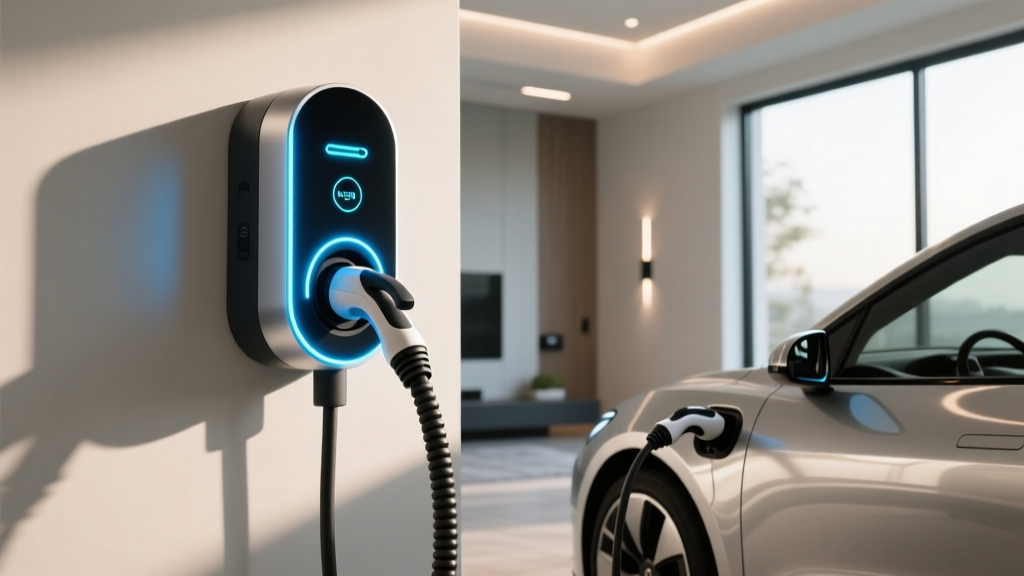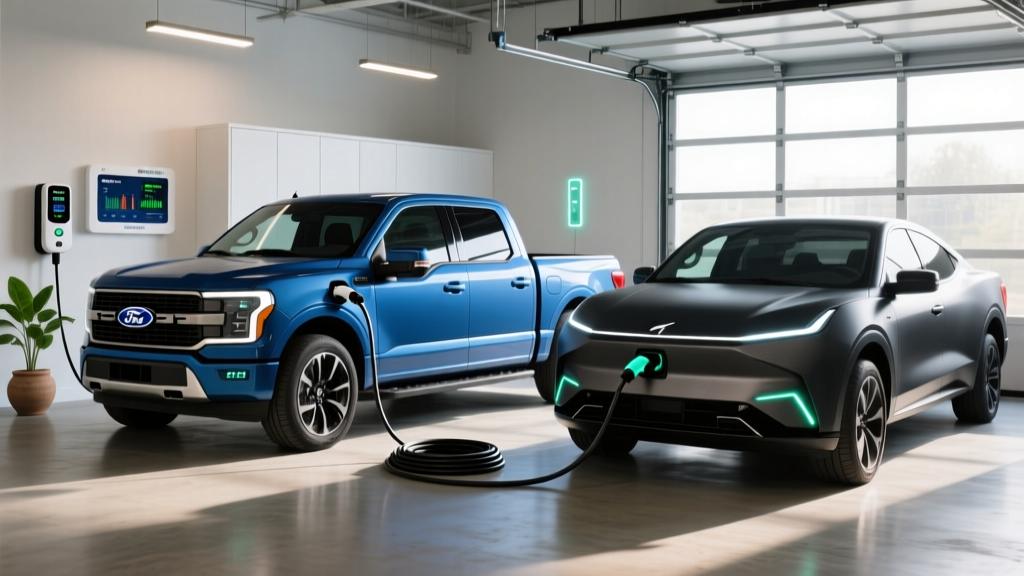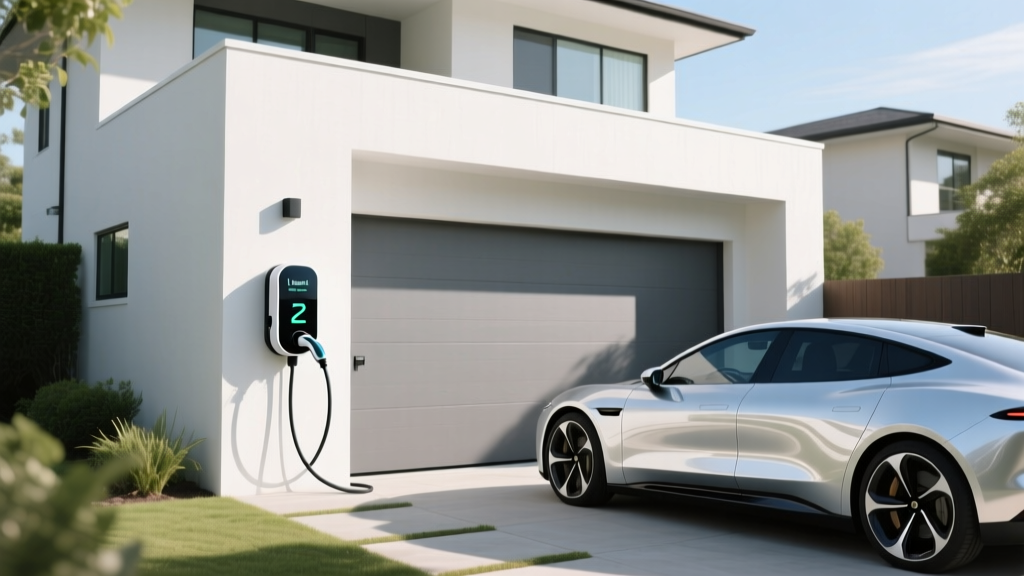
If you have ever searched for the 2006 supercharged cobalt ss and its fuel economy — roughly 22 MPG combined according to the EPA — you already know what it costs to feed a performance car. Today's EV owners face a different equation: instead of weekly gas station visits, the "refueling" happens at home, often while you sleep. But the upfront investment in a home Level 2 charger, and the electrical work behind it, can feel opaque. This guide breaks down every cost, speed, and compatibility question you need answered before plugging in.
Charging Levels Explained: Speeds in kW and Miles Per Hour
The first thing every EV buyer must understand is the difference between kW (kilowatts — a measure of power, or how fast energy flows) and kWh (kilowatt-hours — a measure of energy, or battery capacity). Think of kW as the width of a hose and kWh as the size of the bucket. A wider hose (more kW) fills the bucket (kWh) faster.
Here is how the three charging levels stack up in real-world terms:
| Level | Voltage / Amps | Max Power (kW) | Miles of Range Added Per Hour | Best Use Case |
|---|---|---|---|---|
| Level 1 | 120V / 12A | ~1.4 kW | 3–5 mi/hr | Overnight top-ups, PHEVs, low-mileage drivers |
| Level 2 (Home) | 240V / 32–48A | 7.7–11.5 kW | 25–45 mi/hr | Daily charging for most EV owners |
| DC Fast Charging | 400–800V DC | 50–350 kW | 150–300+ mi in 20 min | Road trips, quick top-ups away from home |
For a vehicle with a 75 kWh battery — roughly the size in a 2025 Tesla Model Y Long Range or a 2025 Hyundai Ioniq 5 — Level 1 charging from 10% to 80% would take approximately 40 hours. That same session on a 48A Level 2 charger takes about 7 hours. On a 250 kW DC fast charger, expect 10–80% in roughly 18–25 minutes, though the charge curve tapers significantly above 80% State of Charge (SoC) to protect the battery.
Home Charger Installation: Electrical Requirements and Cost Breakdown
Most EV owners install a Level 2 charger on a dedicated 240V circuit. The National Electrical Code (NEC) requires that continuous loads — and EV charging qualifies — use no more than 80% of a circuit's rated capacity. That means a 50A circuit supports a 40A charger (9.6 kW), and a 60A circuit supports a 48A charger (11.5 kW).
Here is what a typical installation involves and what it costs:
| Component | Typical Cost Range | Notes |
|---|---|---|
| Level 2 Charger (Equipment) | $300–$700 | Smart Wi-Fi chargers with 24–25 ft cable |
| Electrician Labor (Standard Install) | $500–$1,500 | Running conduit, wiring, mounting, 10–50 ft from panel |
| Electrical Permit | $50–$300 | Varies by municipality; required for code compliance |
| Panel Upgrade (If Needed) | $1,500–$4,000 | Upgrading from 100A to 200A service; common in older homes |
| Total (No Panel Upgrade) | $850–$2,500 | Most common scenario for homes with 200A service |
| Total (With Panel Upgrade) | $2,350–$6,500 | Older homes with 100A panels or limited breaker space |
The single biggest cost variable is whether your electrical panel can handle the additional load. A 200A panel with available breaker slots and sufficient load capacity can usually accommodate a 50A or 60A circuit without issue. Homes with 100A service — common in builds before the 1990s — often need an upgrade, especially if you already run electric dryers, ovens, or HVAC on the same panel.
Some utilities and municipalities offer rebates for home charger installations or panel upgrades. The federal Residential Clean Energy Credit (IRS Form 5695) has historically covered certain home energy infrastructure, but eligibility for EV charger-specific credits varies by year and locality. Always consult a tax professional for current-year rules.
Connector Compatibility: NACS, CCS1, and CHAdeMO
As of 2026, the North American Charging Standard (NACS), developed by Tesla, has become the dominant connector for new EVs. Nearly every major automaker — Ford, GM, Hyundai, Kia, Rivian, Volvo, BMW, and others — has adopted NACS for vehicles produced from 2025 onward. However, millions of CCS1-equipped EVs remain on the road, and CHAdeMO persists on older Nissan Leafs and Mitsubishi Outlander PHEVs.
| Connector | Compatible Brands | Adapter Needed? |
|---|---|---|
| NACS (Tesla) | Tesla (all years), Ford (2025+), GM (2025+), Hyundai/Kia (2025+), Rivian (2025+), Volvo, BMW, Mercedes | CCS1-to-NACS adapters available for legacy CCS1 vehicles (~$200–$300) |
| CCS1 | Most 2020–2024 EVs: VW ID.4 (pre-2025), older Ford Mustang Mach-E, older Hyundai Ioniq 5, Chevy Bolt | NACS-to-CCS1 adapter for Tesla Supercharger access |
| CHAdeMO | Nissan Leaf, Mitsubishi Outlander PHEV (legacy) | Limited adapter options; network declining |
For home Level 2 charging, the connector matters less because J1772 (the legacy Level 2 standard) and NACS Level 2 are both widely supported. Most NACS-equipped home chargers come with or can accept a J1772 adapter, and vice versa. When purchasing a home charger, buy one that matches your vehicle's native port to avoid daily adapter hassle.
Cost to Charge: Home vs. Public vs. Gas per Mile
The economics of EV charging depend heavily on where and when you plug in. Here is a comparison using 2026 national average electricity rates and gasoline prices:
| Scenario | Rate | Cost Per Mile (3 mi/kWh EV) | Equivalent Gas Vehicle (25 MPG @ $3.50/gal) |
|---|---|---|---|
| Home Off-Peak (Time-of-Use) | $0.08–$0.12/kWh | $0.03–$0.04 | $0.14/mile |
| Home Standard Rate | $0.14–$0.18/kWh | $0.05–$0.06 | $0.14/mile |
| Public Level 2 (Network) | $0.25–$0.40/kWh | $0.08–$0.13 | $0.14/mile |
| DC Fast Charging (Public) | $0.35–$0.60/kWh | $0.12–$0.20 | $0.14/mile |
The takeaway: home charging on an off-peak rate is roughly one-quarter the per-mile cost of gasoline. Public DC fast charging, however, can approach or even exceed gas costs per mile. This is why home charging access is the single most important factor in EV ownership economics. If you rely exclusively on public DC fast charging, your fuel savings narrow significantly.
For context, a driver covering 12,000 miles per year at home off-peak rates ($0.10/kWh, 3 mi/kWh efficiency) spends approximately $400 annually on electricity. The same distance in a 25 MPG gas vehicle at $3.50/gallon costs $1,680. That is a $1,280 annual savings — before factoring in reduced maintenance (no oil changes, fewer brake replacements due to regenerative braking).
Charging Time Examples: 10–80% by Battery Size
Charging time depends on both the battery capacity (kWh) and the charger's power output (kW). Here are real-world estimates for common battery sizes:
| Battery Size | Example Vehicles | Level 2 (11.5 kW / 48A) | DC Fast (150 kW Peak) | DC Fast (250–350 kW Peak) |
|---|---|---|---|---|
| 40 kWh | Nissan Leaf S, base PHEVs | ~2.5 hours | ~20 min | ~15 min |
| 65 kWh | Chevy Equinox EV, base Model 3 | ~4 hours | ~28 min | ~20 min |
| 80 kWh | Hyundai Ioniq 5, Ford Mustang Mach-E | ~5 hours | ~32 min | ~18–22 min |
| 100 kWh | Tesla Model S/X, Rivian R1T (Max Pack) | ~6.5 hours | ~40 min | ~25–30 min |
These times assume the battery is preconditioned (warmed to optimal temperature) and that the charger can sustain its peak rate during the early portion of the session. Cold batteries — below roughly 50°F (10°C) — charge significantly slower until the thermal management system warms them. Most modern EVs with navigation-based preconditioning will begin heating the battery when you route to a charger, reducing this penalty.
Recommended Home Level 2 Chargers (2026)
After testing and tracking reliability data across dozens of Level 2 units, these are the chargers that deliver the best combination of power, build quality, smart features, and value:
ChargePoint Home Flex
Power: Up to 11.5 kW (48A, 240V)
Connector: NACS or J1772 (configurable)
Cable Length: 24 ft
Smart Features: Wi-Fi, app scheduling, Alexa integration, energy reporting
Price: ~$550–$650
Best For: Flexibility across connector types and amperage settings
Tesla Wall Connector
Power: Up to 11.5 kW (48A, 240V)
Connector: NACS (native)
Cable Length: 24 ft
Smart Features: Wi-Fi updates, power sharing between units, load management
Price: ~$475
Best For: Tesla and NACS-equipped vehicles; cleanest integration
Emporia Vue Level 2 Charger
Power: Up to 11.5 kW (48A, 240V)
Connector: J1772 (NACS adapter included)
Cable Length: 24 ft
Smart Features: Wi-Fi, solar integration, energy monitoring, TOU scheduling
Price: ~$350–$400
Best For: Budget-conscious buyers wanting smart features
Grizzl-E Smart
Power: Up to 9.6 kW (40A, 240V)
Connector: J1772
Cable Length: 24 ft
Smart Features: Wi-Fi, OCPP support, adjustable amperage
Price: ~$450
Best For: Cold-climate durability (rated to -40°F)
All of these chargers are hardwired or plug into a NEMA 14-50 outlet (240V/50A). Hardwired installations are generally preferred because they avoid the NEC requirement for GFCI breakers on receptacle-based EV circuits — GFCI breakers for 50A circuits add $100–$200 to the electrical bill and can cause nuisance tripping.
Safety and Electrical Code Considerations
EV charging is a high-draw, continuous electrical load that runs for hours at a time. Proper installation is not optional — it protects your home and your vehicle. Key code and safety requirements include:
- Dedicated Circuit: Your Level 2 charger must be on its own dedicated circuit — not shared with other appliances. This prevents overloading and ensures consistent power delivery.
- 80% Rule (NEC 210.20): Continuous loads cannot exceed 80% of the circuit rating. A 40A charger requires a 50A circuit; a 48A charger requires a 60A circuit.
- GFCI Protection: If using a receptacle (NEMA 14-50), NEC 2020 and later require a GFCI breaker. Hardwired installations do not require GFCI protection in most jurisdictions.
- Outdoor Rating: If your charger is installed outdoors, the unit must carry a NEMA 4 (weather-resistant) rating, and the conduit and junction boxes must be rated for wet locations.
- Wire Gauge: 6 AWG copper wire is standard for 50A circuits; 4 AWG for 60A circuits. Your electrician will size wire based on run length and local code.
- Permit and Inspection: Most jurisdictions require a permit and post-installation inspection. Skipping this can void homeowner's insurance coverage for electrical fires.
Always hire a licensed electrician who has experience with EV charger installations. Ask whether they will pull a permit, perform a load calculation on your panel, and provide a written estimate that separates equipment, labor, and permit fees.
Frequently Asked Questions
How much does it cost to install a home EV charger?
A standard Level 2 home charger installation costs between $850 and $2,500 when no panel upgrade is needed. This includes the charger ($300–$700), electrician labor ($500–$1,500), and a permit ($50–$300). If your home needs a panel upgrade from 100A to 200A service, add $1,500–$4,000, bringing the total to $2,350–$6,500.
How fast will each charging level add range?
Level 1 (120V) adds 3–5 miles of range per hour. Level 2 (240V, 48A) adds 25–45 miles per hour depending on vehicle efficiency. DC fast charging at 150–350 kW can add 150–300+ miles in a 20-minute session, though the rate tapers as the battery fills past 80%.
Which connector/charger is compatible with my EV?
For 2025 and newer models, most EVs use the NACS connector. Older EVs (pre-2025) from brands like Volkswagen, Hyundai, and Ford typically use CCS1. The Nissan Leaf uses CHAdeMO. For home Level 2 charging, NACS and J1772 are both widely compatible — buy a charger matching your car's native port.
How much does charging cost per mile vs gas?
Home charging on off-peak electricity ($0.10/kWh) costs approximately $0.03–$0.04 per mile — about 75% less than gasoline at $3.50/gallon in a 25 MPG vehicle ($0.14/mile). Public DC fast charging at $0.45/kWh costs roughly $0.15/mile, approaching gasoline parity.
What electrical upgrades might I need?
The most common upgrade is a panel replacement from 100A to 200A service ($1,500–$4,000) if your existing panel lacks capacity or breaker slots. You may also need a service upgrade from the utility if your home's incoming service line is undersized. A licensed electrician can perform a load calculation to determine if your current panel can handle a 50A or 60A dedicated circuit.