Why Your Home Charging Setup Is the Most Important EV Decision You'll Make
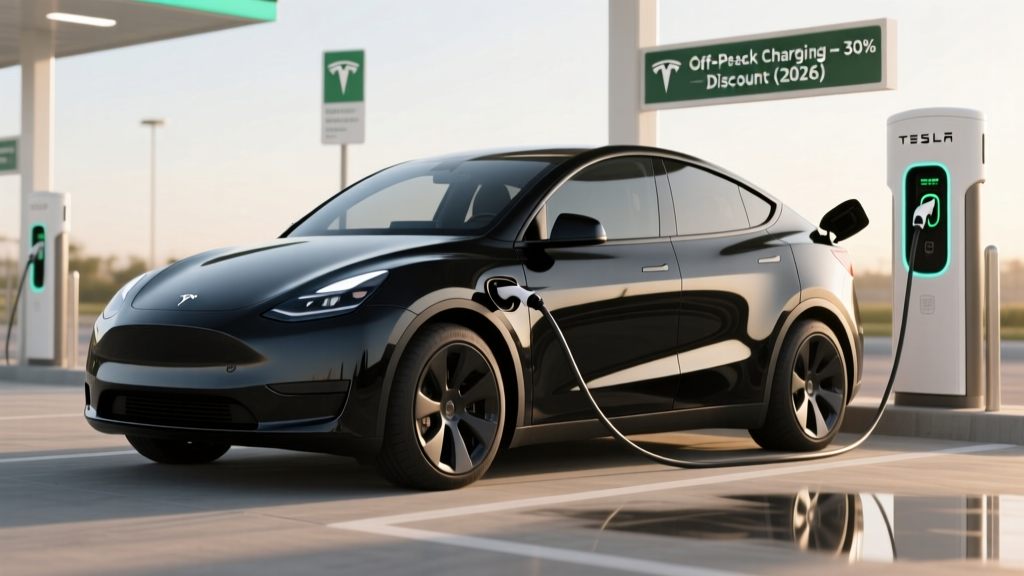
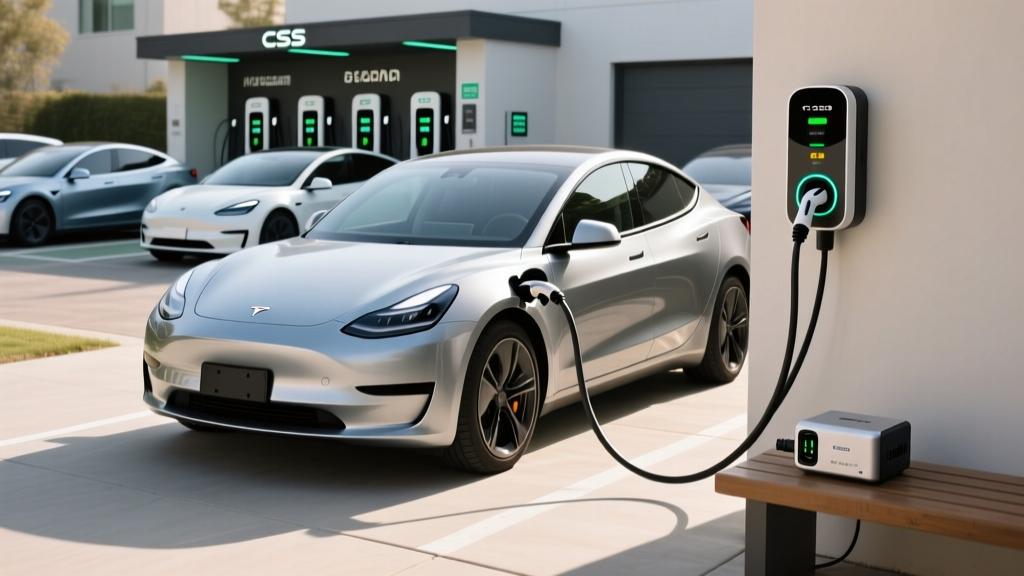
Public charging networks have expanded dramatically, but the data is unambiguous: over 80% of EV charging happens at home, according to the U.S. Department of Energy. Your daily driving experience — whether you wake up to a full battery or scramble for a public station — hinges entirely on your home charging infrastructure. This guide breaks down every variable: charging speeds, electrical requirements, real installation costs, connector compatibility, and the equipment that actually delivers on its promises in 2026.
Charging Levels Explained: Speed, Power, and Real-World Range Added
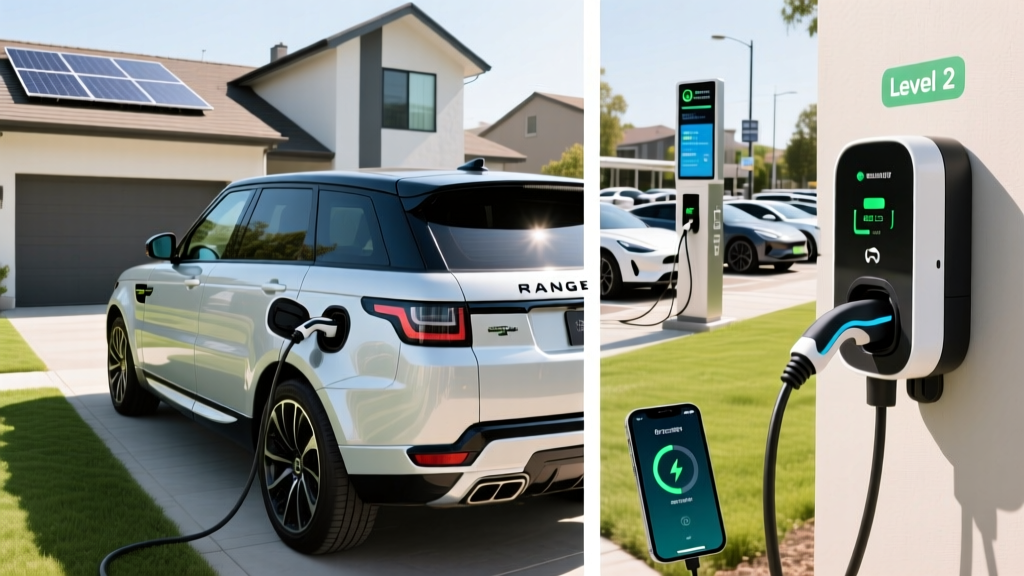
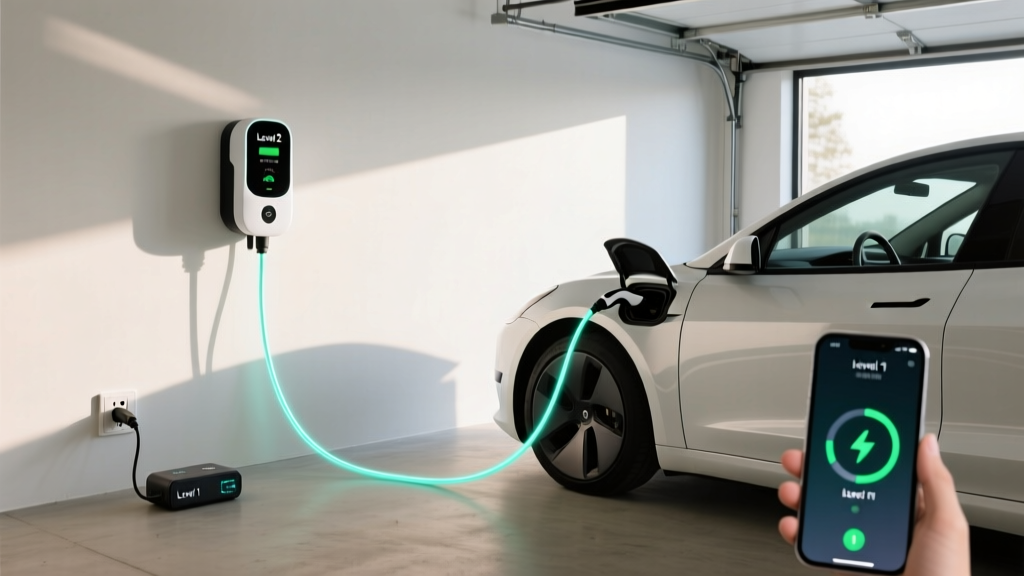
EV charging falls into three tiers, each defined by voltage, amperage, and the resulting power delivery. Here's what each level actually adds to your range per hour of charging:
| Level | Voltage / Amps | Power (kW) | Miles of Range / Hour | Best For |
|---|---|---|---|---|
| Level 1 | 120V / 12A | 1.4 kW | 3–5 mi/hr | PHEVs, overnight trickle, emergency backup |
| Level 2 | 240V / 32–48A | 7.7–11.5 kW | 25–44 mi/hr | Daily home charging (BEVs and PHEVs) |
| DC Fast Charge | 400–800V DC | 50–350 kW | 150–1,200+ mi/hr (peak) | Road trips, quick top-ups away from home |
Real-world context: A Level 2 charger delivering 11.5 kW to a vehicle averaging 3.5 mi/kWh (like the Tesla Model Y or Hyundai Ioniq 5) adds roughly 40 miles of range per hour. Plug in at 10 PM with a depleted 75 kWh battery, and you'll be near 100% by 6 AM. Level 1 at 1.4 kW would take over 50 hours for the same battery — fine for a 15 kWh PHEV battery, useless for a full BEV.
DC fast charging speeds are rated at peak power, but no vehicle sustains peak kW for the entire session. A car rated at 250 kW peak may sustain that rate only between 10–30% State of Charge (SoC), then taper progressively. A "10–80% in 18 minutes" claim assumes ideal conditions: a preconditioned battery, a charger capable of the vehicle's peak rate, and moderate ambient temperatures. In practice, expect 22–30 minutes for a 10–80% session on a well-matched 350 kW charger, and 35–50 minutes on a 150 kW unit.
Home Charger Installation: Electrical Requirements and Real Costs
The sticker price of a Level 2 charging unit is only part of the equation. Professional installation — and potentially a panel upgrade — often doubles or triples the total spend. Here's the breakdown based on 2026 national averages from licensed electricians:
| Component | Simple Install (panel nearby, capacity available) | Complex Install (long run, panel upgrade needed) |
|---|---|---|
| Level 2 charger unit (hardwired or plug-in) | $400–$700 | $400–$700 |
| Electrician labor (2–4 hrs simple; 6–10+ hrs complex) | $300–$600 | $800–$1,500 |
| Electrical permit | $50–$150 | $50–$200 |
| Conduit, wiring (6 AWG copper for 48A circuits) | $50–$150 | $200–$600 |
| 240V outlet (NEMA 14-50) if plug-in style | $75–$150 | $75–$150 |
| Electrical panel upgrade (100A → 200A service) | N/A | $1,500–$3,500 |
| TOTAL RANGE | $875–$1,750 | $3,025–$6,650 |
What Electrical Upgrades Might I Need?
A Level 2 charger drawing 48A continuous requires a dedicated 60A breaker (NEC code mandates that continuous loads not exceed 80% of breaker capacity). Your electrical panel must have both the physical space for a double-pole breaker and the total amperage headroom to support it alongside your existing loads.
The panel upgrade trigger: If your home has a 100A service panel — common in homes built before the 1990s — adding a 60A EV circuit may push your calculated load beyond safe capacity, especially if you run electric HVAC, an electric dryer, and an electric oven simultaneously. A licensed electrician will perform a load calculation per NEC Article 220 to determine whether your panel can handle the addition. If it can't, a service upgrade to 200A (or occasionally 320A for large homes with multiple EVs) becomes necessary. This is the single biggest cost variable and the one most online guides gloss over.
Safety and code requirements to verify with your electrician:
- Dedicated circuit: Your EV charger must have its own breaker — never shared with other appliances.
- GFCI protection: NEC 2020 and later requires GFCI for outdoor outlets; some jurisdictions extend this to garages. Hardwired chargers often bypass the GFCI requirement (the charger itself has ground-fault protection), which avoids nuisance tripping.
- Outdoor rating: If your charger mounts outside, both the unit and the receptacle must carry a NEMA 3R or NEMA 4 weather-resistance rating.
- Wire gauge: 6 AWG copper for 48A circuits; 8 AWG for 32A circuits. Aluminum wire requires larger gauge.
- Permit and inspection: Most jurisdictions require a permit for new 240V circuits. Skipping this risks insurance claim denial if an electrical fire occurs.
Connector Compatibility: NACS, CCS1, CHAdeMO, and What You Need in 2026
The connector landscape has consolidated significantly since Tesla opened its Supercharger network and the North American Charging Standard (NACS) emerged as the dominant plug. Here's where things stand for 2026 model-year vehicles:
| Connector | Brands Using It (Native) | Adapter Required For |
|---|---|---|
| NACS (Tesla) | Tesla, Ford, GM, Rivian, Volvo, Polestar, Mercedes-Benz (new models), Hyundai/Kia (2025+), Honda, BMW (2025+) | CCS1 stations (adapter included with most vehicles) |
| CCS1 | VW, Audi (some), older Hyundai/Kia, older BMW, Stellantis, Lucid, legacy models | Tesla Superchargers (CCS-to-NACS adapter, ~$200–$250) |
| CHAdeMO | Nissan Leaf (legacy only — discontinued) | Essentially none available; CHAdeMO infrastructure declining |
For home Level 2 charging: Nearly all home chargers use the J1772 connector (or a J1772-to-NACS adapter). Tesla's Wall Connector ships with a NACS plug; most third-party chargers ship with J1772. If you drive a NACS-equipped Ford or GM, you'll use a J1772-to-NACS adapter at home (typically included with the vehicle or available for $50–$100). This adapter situation will simplify as more chargers ship with native NACS cables.
The critical takeaway: your home charger's connector must match your vehicle's inlet, or you need an adapter. For DC fast charging on road trips, verify your vehicle's native connector against the networks you'll encounter. Tesla Superchargers are NACS-only; Electrify America and most non-Tesla networks use CCS1. A CCS-to-NACS adapter (or vice versa) bridges the gap.
Cost to Charge: Home vs. Public vs. Gas — The Real Per-Mile Numbers
Electricity pricing varies enormously by utility, time of day, and region. Here are representative scenarios using a vehicle averaging 3.5 miles per kWh (typical for a midsize crossover like the Tesla Model Y or Hyundai Ioniq 5):
| Scenario | Rate ($/kWh) | Cost Per Mile | Annual Cost (12,000 mi) |
|---|---|---|---|
| Home — off-peak TOU rate | $0.08–$0.12 | $0.023–$0.034 | $275–$410 |
| Home — standard residential rate | $0.14–$0.18 | $0.040–$0.051 | $480–$615 |
| Public Level 2 (workplace, retail) | $0.20–$0.35 | $0.057–$0.100 | $685–$1,200 |
| DC fast charge (Electrify America, EVgo) | $0.35–$0.55 | $0.100–$0.157 | $1,200–$1,885 |
| Gasoline vehicle (28 MPG combined, $3.40/gal) | — | $0.121 | $1,457 |
The key insight: Home charging at off-peak rates delivers fuel costs roughly 70–80% lower than an equivalent gas vehicle. But if you rely exclusively on DC fast charging at $0.45+/kWh, your per-mile cost can equal or exceed gasoline. This is why home charging access isn't a luxury — it's the economic foundation of EV ownership. According to fueleconomy.gov, the national average electricity rate for EV charging is approximately $0.16/kWh, but time-of-use (TOU) plans from your utility can slash that by 40–50% during overnight hours.
Charging time examples for common battery sizes (Level 2, 11.5 kW):
- 60 kWh battery (e.g., base Tesla Model 3): 0–100% in ~5.5 hours; 10–80% in ~3.8 hours
- 82 kWh battery (e.g., VW ID.4, Ford Mustang Mach-E Extended Range): 0–100% in ~7.5 hours; 10–80% in ~5 hours
- 100 kWh battery (e.g., GMC Hummer EV, Rivian R1T Max Pack): 0–100% in ~9 hours; 10–80% in ~6 hours
Best Home EV Chargers for 2026: Equipment Picks
Not all Level 2 chargers are created equal. Here are top-performing units based on power delivery, build quality, smart features, and real-world reliability:
Tesla Wall Connector (Gen 4)
- Power output: Up to 11.5 kW (48A, 240V)
- Connector: Native NACS
- Cable length: 24 ft
- Smart features: Wi-Fi, OTA updates, load sharing (multiple units on one circuit), access control
- Price: ~$425
- Best for: NACS-equipped vehicles (Tesla, Ford, GM, Rivian, most 2025+ models)
ChargePoint Home Flex
- Power output: Up to 12 kW (50A, 240V) — configurable down to 16A for limited panels
- Connector: J1772 (NACS adapter available)
- Cable length: 23 ft
- Smart features: Wi-Fi, app scheduling, Alexa/Google Home, Energy Star certified
- Price: ~$550–$650
- Best for: J1772 vehicles or households with mixed connector needs; flexible amperage for older panels
Emporia Vue Level 2 Charger
- Power output: Up to 11.5 kW (48A, 240V)
- Connector: J1772
- Cable length: 24 ft
- Smart features: Integration with Emporia energy monitor, solar-aware charging, TOU scheduling
- Price: ~$400
- Best for: Budget-conscious buyers; homes with solar panels seeking integrated energy management
Grizzl-E Smart
- Power output: Up to 10 kW (40A, 240V)
- Connector: J1772
- Cable length: 24 ft
- Smart features: OCPP-compatible, adjustable amperage, extreme cold rated (-40°F)
- Price: ~$450
- Best for: Cold-climate owners; outdoor installations; users wanting open protocol compatibility
Selection framework: Match the charger's maximum amperage to your panel's available capacity. A 48A charger on a 60A breaker delivers the fastest Level 2 speeds — but if your panel can only spare a 40A breaker, choose a charger configurable to 32A (like the ChargePoint Home Flex) rather than oversubscribing the circuit. Also verify cable length: measure from your planned mount point to your vehicle's charge port. A 24-foot cable covers most garage configurations; 18-foot cables can be limiting if your port is on the opposite side from the wall.
Smart Features, Time-of-Use Rates, and Maximizing Savings
A "smart" charger with Wi-Fi connectivity and app control isn't just a convenience — it's a cost-optimization tool. Most utilities offer time-of-use (TOU) rate plans that price electricity significantly lower during off-peak hours (typically 10 PM – 6 AM). A smart charger can be scheduled to charge only during those windows, even if you plug in at 6 PM when you get home.
Some utilities go further: programs like utility-managed charging allow your provider to slightly reduce charge rate during peak demand events in exchange for bill credits. Smart chargers with OCPP (Open Charge Point Protocol) support participate in these programs. Check with your local utility about EV-specific rate plans before finalizing your charger choice — the savings can offset the charger's cost within the first year.
Preconditioning tip: If your EV supports scheduled departure times, set it in the vehicle's app. The car will warm or cool the battery to optimal temperature by your departure time, improving efficiency and — critically — enabling faster DC charging if you're starting a road trip. This is especially impactful in cold weather, where a cold battery may accept only 30–50% of its rated peak charge rate until it warms up.
Frequently Asked Questions
How much does it cost to install a home EV charger?
A straightforward Level 2 installation with an existing 200A panel and short wire runs typically costs $875–$1,750 all-in (charger unit, electrician labor, permit, wiring). If your home needs a panel upgrade from 100A to 200A service, total costs rise to $3,025–$6,650. Always get at least two quotes from licensed electricians, and verify they perform a proper NEC Article 220 load calculation.
How fast will each charging level add range?
Level 1 (120V): 3–5 miles per hour. Level 2 (240V, 48A): 25–44 miles per hour depending on vehicle efficiency. DC fast charging: 150–1,200+ miles per hour at peak rate, but sustained rates taper significantly above 50–60% SoC. For daily driving, Level 2 is the practical standard — most EV owners need only 4–8 hours overnight to fully replenish.
Which connector/charger is compatible with my EV?
Check your vehicle's charge port. Most 2025–2026 models from Ford, GM, Rivian, Tesla, Hyundai, Kia, and others use NACS. Older models and some VW/Stellantis vehicles use CCS1. For home charging, match your charger's connector (or use the appropriate adapter) to your vehicle's inlet. A J1772-to-NACS adapter bridges the gap for most home setups.
How much does charging cost per mile vs. gas?
At home off-peak rates ($0.10/kWh), an efficient EV costs roughly $0.03/mile — about 75% less than a 28 MPG gas car at $3.40/gallon ($0.12/mile). At public DC fast chargers ($0.45/kWh), the cost rises to $0.13–$0.16/mile, potentially exceeding gasoline. The economic case for EVs depends heavily on consistent home charging access.
What electrical upgrades might I need?
The most common upgrade is a 100A-to-200A panel replacement ($1,500–$3,500) if your existing panel lacks breaker space or amperage headroom for a dedicated 60A EV circuit. Homes with 200A or larger panels typically need only a new breaker and wiring run. An electrician's load calculation will determine your specific situation. Some utilities offer rebates of $250–$1,000 for panel upgrades paired with EV charger installation — check your provider's programs.
Can I install a Level 2 charger myself?
Technically possible for experienced DIYers, but strongly discouraged. A 240V/60A circuit carries lethal current, and improper installation risks fire, electrocution, and insurance claim denial. Most jurisdictions require a permit and inspection for new 240V circuits. The labor cost for a licensed electrician ($300–$600 for a simple install) is a small price for safety and code compliance.
Sources: U.S. Department of Energy EV Grid Integration; EPA fueleconomy.gov; National Electrical Code (NEC) Article 220 and 511; IRS Alternative Fuel Vehicle Refueling Property Credit (Form 8911) for potential 30% charger installation tax credit up to $1,000 (eligibility varies by census tract and tax year).