The Reality of EV Fastest Charging in 2026
When shoppers search for the "ev fastest charging" solutions, they are usually looking for two things: how quickly they can top up on a road trip, and how to replicate that speed at home. The physics of EV charging dictate that power (measured in kilowatts, or kW) and energy (measured in kilowatt-hours, or kWh) are distinct. A 350 kW DC fast charger delivers power at a massive rate, but your vehicle's battery management system (BMS) determines how much of that power it can actually accept.
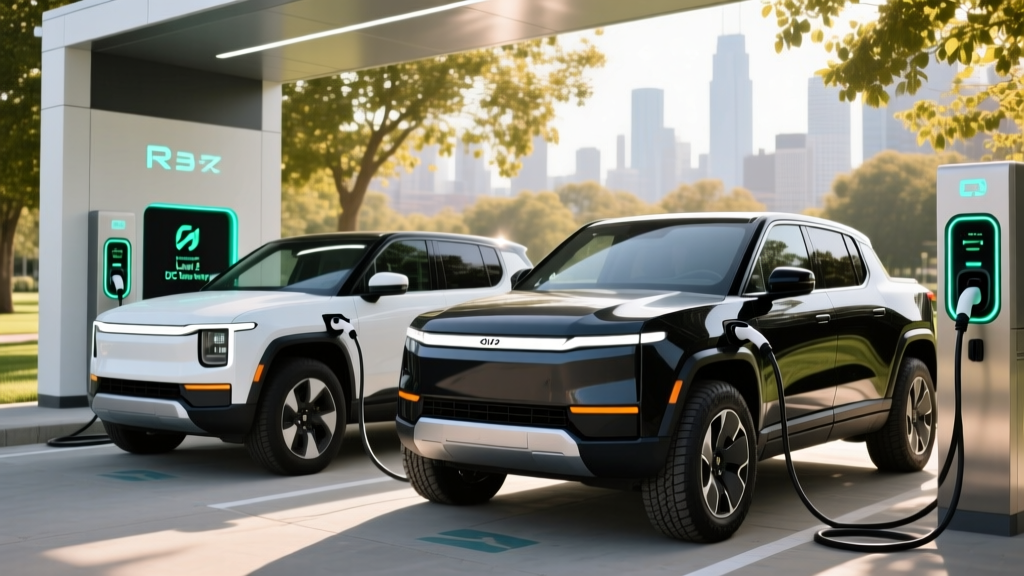
For most modern EVs with 75–100 kWh batteries, the fastest public charging happens between 10% and 80% State of Charge (SoC). Above 80%, the charge curve tapers significantly to protect battery health. In 2026, the industry standard for "fast" is a 10–80% charge in under 20 minutes, achievable by vehicles on 800-volt architectures like the Hyundai Ioniq 5, Kia EV6, and Porsche Taycan.
Charging Levels: Speed, Power, and Range Added
To understand charging speed, we must look at the three primary levels of EV charging. Level 1 is standard household current, Level 2 is the home/workplace standard, and DC Fast Charging (DCFC) is for rapid public top-ups.
| Level | Voltage / Amperage | Max Power (kW) | Miles of Range Added per Hour | Typical Use Case |
|---|---|---|---|---|
| Level 1 | 120V / 12A | 1.4 kW | 3–5 miles | Overnight trickle, PHEVs |
| Level 2 | 240V / 32A–48A | 7.7–11.5 kW | 25–45 miles | Home daily, workplace |
| DC Fast (Level 3) | 400V–800V DC | 50–350 kW | 150–1,000+ miles (theoretical) | Road trips, rapid top-ups |
Home Installation: Electrical Requirements and Costs
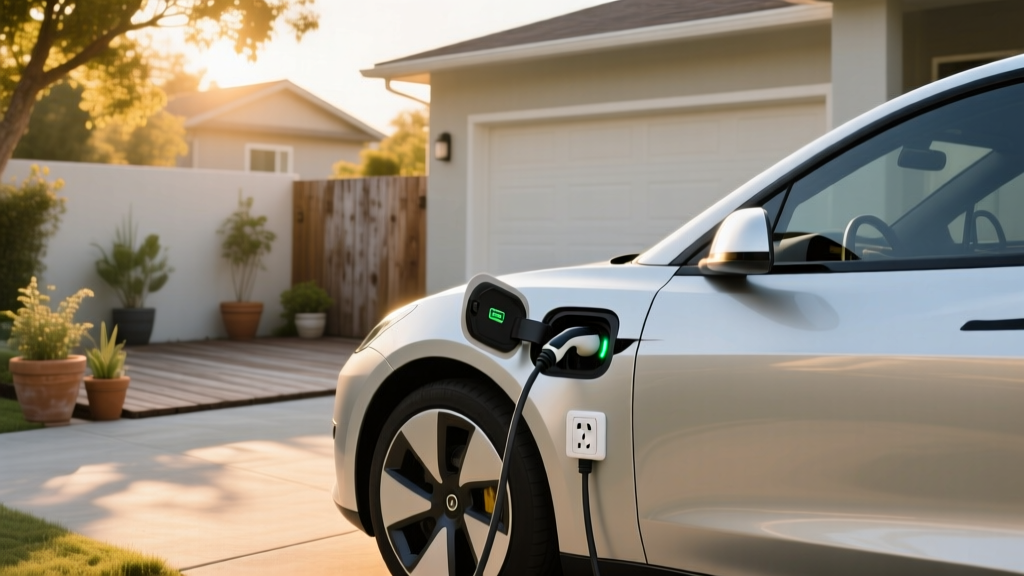
While you cannot install a 350 kW DC fast charger at home (they require industrial-grade three-phase power and cost over $100,000), a high-power Level 2 station is the practical "fastest" home solution. Most home installations focus on a 240V circuit, typically a NEMA 14-50 outlet or a hardwired connection.
Electrical Upgrades and Panel Capacity
A 48-amp Level 2 charger requires a dedicated 60-amp circuit (NEC code requires the circuit to be rated for 125% of the continuous load). If your home has an older 100-amp electrical panel, you may need a panel upgrade to 200 amps to support EV charging alongside modern appliances like electric ranges and dryers.
| Component | Standard Install (Near Panel) | Complex Install (Long Run/Upgrade) |
|---|---|---|
| Level 2 Equipment (40A–48A) | $400–$700 | $400–$700 |
| Electrician Labor & Materials | $600–$1,200 | $2,000–$4,500 |
| Permits & Inspections | $100–$250 | $150–$400 |
| Panel Upgrade (if needed) | $0 | $2,500–$5,000 |
| Total Estimated Cost | $1,100–$2,150 | $5,050–$10,600 |
Note: The IRS §30C credit may cover up to 30% of home charging equipment and installation costs (capped at $1,000) for eligible taxpayers in specific census tracts.
Connector Compatibility and the NACS Shift
As of 2026, the North American Charging Standard (NACS), originally developed by Tesla, has become the dominant connector for most new non-Stellantis EVs. However, CCS1 remains prevalent on older models and many public networks.
| Connector | Common Brands (2026) | Adapter Needs |
|---|---|---|
| NACS (Tesla) | Tesla, Ford, GM, Rivian, Volvo, Hyundai/Kia (new) | CCS-to-NACS adapter for older public stations |
| CCS1 | VW, BMW, Stellantis, legacy Ford/GM | NACS-to-CCS adapter for Tesla Superchargers |
| CHAdeMO | Nissan Leaf (legacy) | Limited public availability; no adapter for DCFC |
Cost to Charge: Electricity vs. Gasoline
Charging costs vary wildly based on where and when you plug in. To compare with gasoline, we calculate the cost per mile based on an average efficiency of 3.5 miles/kWh (approx. 115 MPGe).
| Scenario | Cost per kWh | Cost per Mile (3.5 mi/kWh) | Comparison to 25 MPG Gas Car ($3.50/gal) |
|---|---|---|---|
| Home (Off-Peak) | $0.14 | $0.04 | 71% cheaper |
| Home (Peak/TOU) | $0.30 | $0.085 | 40% cheaper |
| Public Level 2 | $0.45 | $0.13 | 8% cheaper |
| Public DC Fast | $0.60 | $0.17 | 15% more expensive |
For the best economics, home charging during off-peak hours remains the gold standard. Public DC fast charging is a premium service for convenience and speed, not cost savings.
Equipment Recommendations for Home
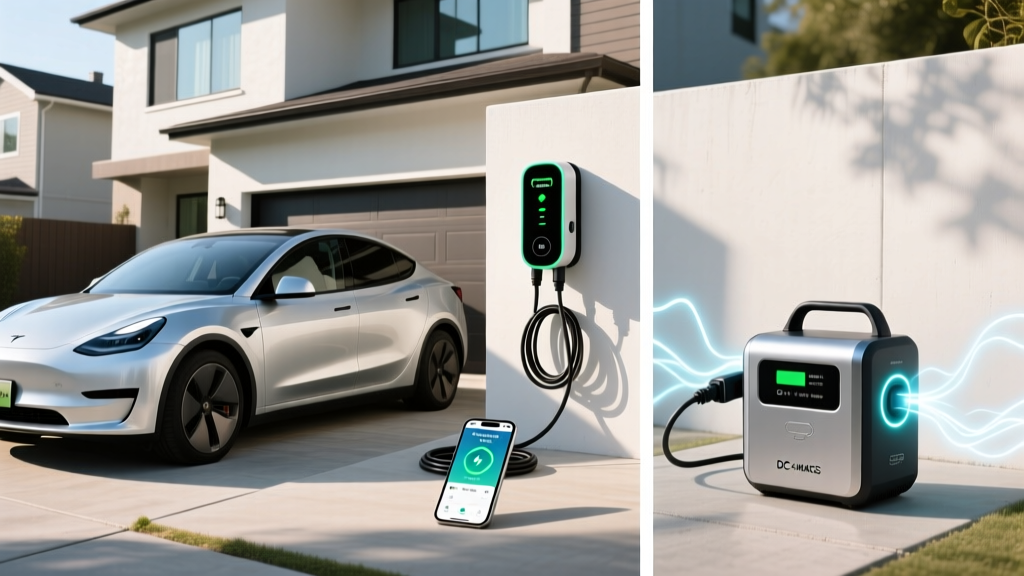
To achieve the fastest home charging, look for a 48-amp (11.5 kW) hardwired station. This provides the maximum power allowed on a standard 60-amp residential circuit.
- ChargePoint Home Flex: Up to 50 amps (12 kW), NEMA 14-50 or hardwired, excellent app integration, ~$699.
- Emporia Level 2 Charger: 48 amps (11.5 kW), robust energy monitoring, budget-friendly at ~$399.
- Tesla Universal Wall Connector: 48 amps (11.5 kW), includes both NACS and J1772 connectors, ~$599.
Safety and Code Considerations
All professional installations must meet NEC Article 625. Key requirements include a dedicated circuit for the charger, proper wire gauge (e.g., 6 AWG copper for 48A), and GFCI protection for outdoor or garage receptacles. For outdoor installations, ensure the equipment is NEMA 4-rated for weather resistance.
Frequently Asked Questions
How much does it cost to install a home EV charger?
Standard installations range from $1,100 to $2,150. However, if you require a 200-amp panel upgrade or a long wire run through finished walls, costs can reach $5,000–$10,000.
How fast will each charging level add range?
Level 1 adds 3–5 miles per hour. Level 2 adds 25–45 miles per hour. DC Fast Charging can add 100–200 miles in 15–20 minutes, depending on the vehicle's peak acceptance rate.
Which connector/charger is compatible with my EV?
Check your vehicle's charge port. Most new 2025–2026 models are switching to NACS. If your EV has a CCS port, you will need an adapter to use the Tesla Supercharger network.
What electrical upgrades might I need?
If your home has a 100-amp service or you plan to use multiple high-draw appliances simultaneously with your EV charger, an upgrade to 200-amp service is often required by code.
For more information on efficiency and range, visit fueleconomy.gov.