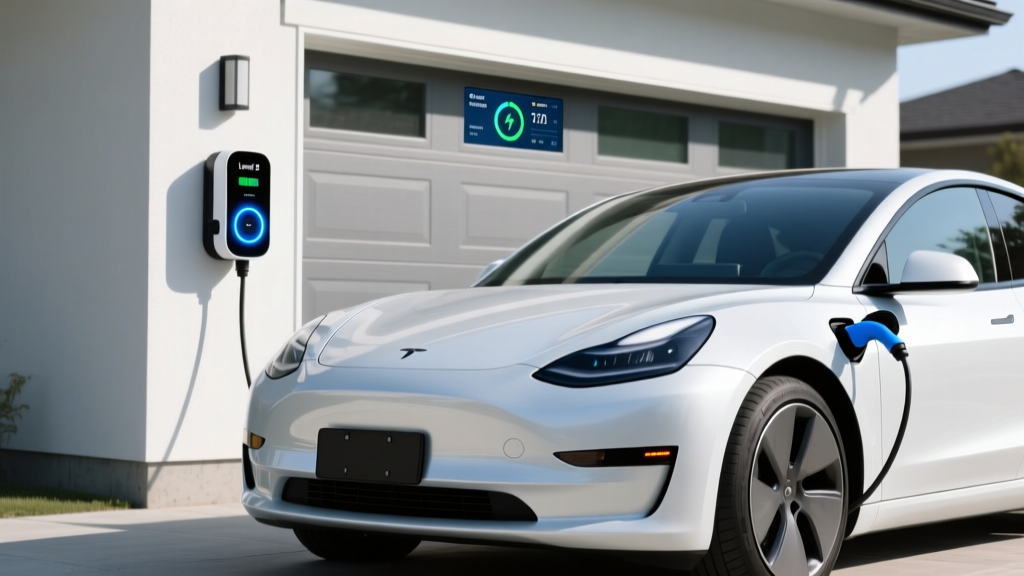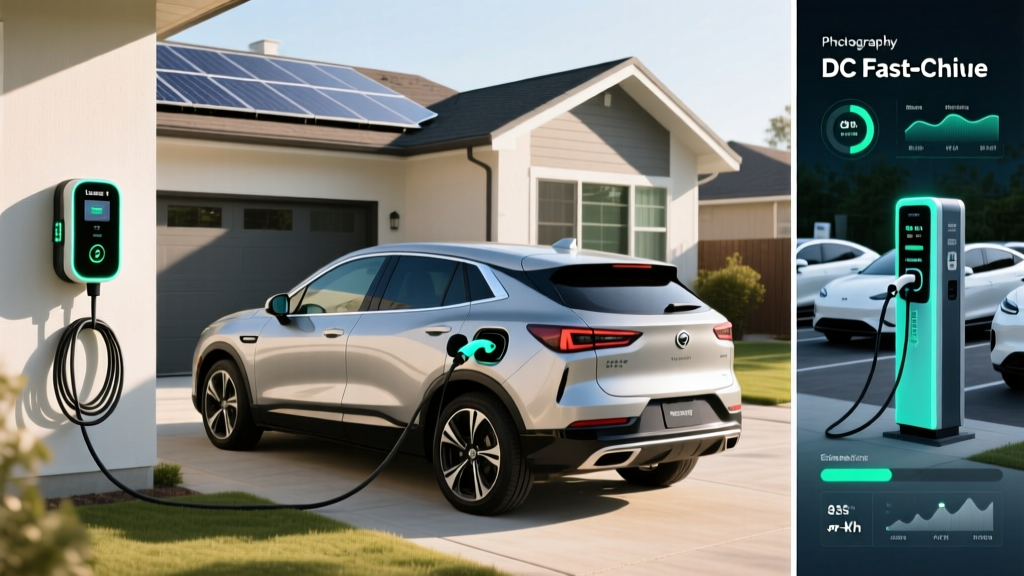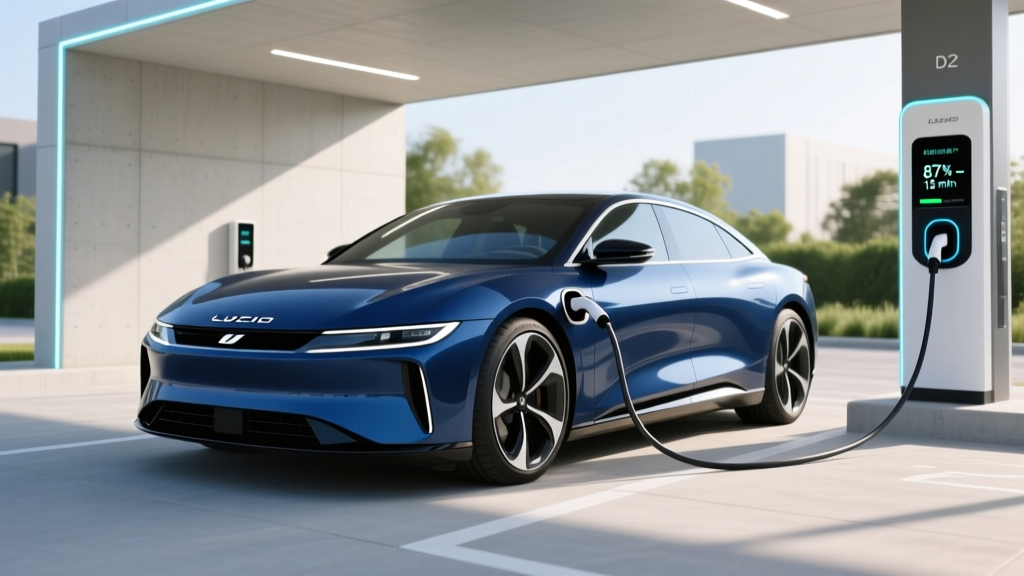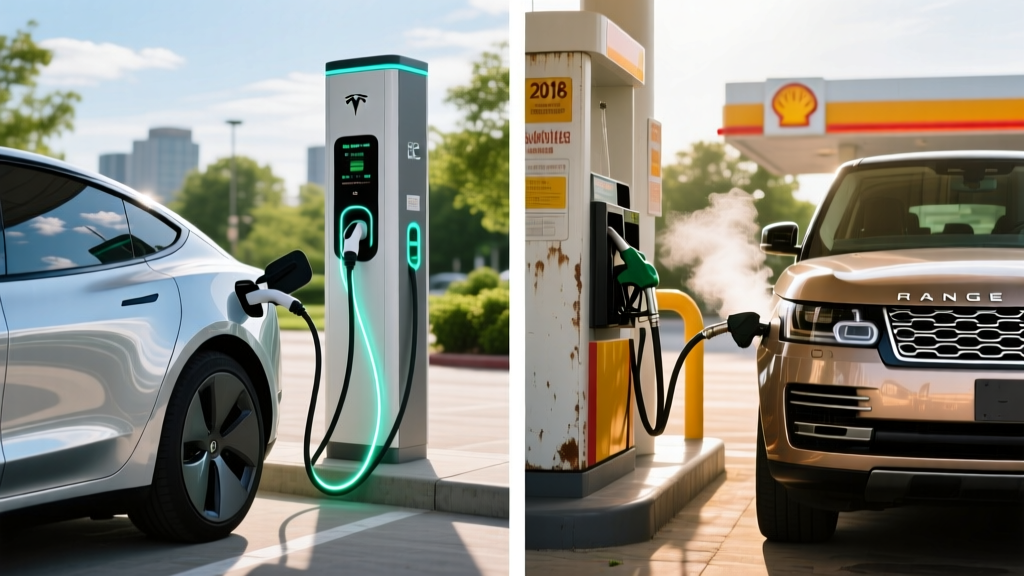
If you're cross-shopping a luxury SUV upgrade and wondering how modern EV charging stacks up against the pump bills of a 5.0L supercharged V8, you're not alone. The 2018 Range Rover Supercharged delivers 518 horsepower and serious refinement, but its EPA-rated 16 MPG combined means frequent stops at premium pumps. This guide breaks down exactly what it costs to install, operate, and live with a home EV charging setup in 2026 — and how those numbers compare to keeping a thirsty British luxury SUV on the road.
Charging Levels Explained: Speed, Power, and Miles Per Hour
Every EV owner needs to understand three charging tiers. Here's how they compare in real-world throughput, measured in kW of power delivery and approximate miles of range added per hour of charging:
| Level | Voltage / Amperage | Power (kW) | Miles of Range / Hour | Best For |
|---|---|---|---|---|
| Level 1 | 120V / 12A | ~1.4 kW | 3–5 mi/hr | Overnight top-ups, PHEVs |
| Level 2 | 240V / 32–48A | 7.7–11.5 kW | 25–45 mi/hr | Daily home charging |
| DC Fast Charging | 400–800V DC | 50–350 kW | 150–1,200+ mi/hr | Road trips, quick top-ups |
For context, a typical 2026 EV with a 75–100 kWh battery will fully replenish overnight on Level 2 in roughly 8–12 hours. DC fast charging gets you from 10–80% State of Charge (SoC) in 18–35 minutes depending on the vehicle's peak charge rate and battery chemistry — though expect the charge curve to taper significantly above 80%, sometimes cutting speeds in half to protect cell longevity.
Home EV Charger Installation: Electrical Requirements and Real Costs
A Level 2 home charger is where most EV owners do 80%+ of their charging. Here's what a proper installation actually requires and what you'll pay in 2026:
Electrical Specifications
Most Level 2 chargers require a dedicated 240V circuit. A 48-amp charger (delivering 11.5 kW) needs a 60-amp breaker per National Electrical Code (NEC) requirements that circuits operate at no more than 80% continuous load. Older homes — particularly those built before 2000 — often have 100-amp or 150-amp main panels that may not have spare capacity for a new 60A circuit alongside existing loads like electric dryers, ranges, and HVAC systems.
| Component | Low End | High End | Notes |
|---|---|---|---|
| Level 2 charger unit | $300 | $750 | 40A–48A Wi-Fi-enabled models |
| Electrician labor | $400 | $1,800 | Depends on run length, conduit, drywall work |
| Permit & inspection | $50 | $300 | Varies by municipality |
| Electrical materials | $50 | $250 | Wire gauge, conduit, breaker, junction box |
| Panel upgrade (if needed) | $2,000 | $4,500 | 100A→200A service upgrade |
| Total (no panel upgrade) | $800 | $3,100 | Most common scenario |
| Total (with panel upgrade) | $2,800 | $7,600 | Older homes with 100A panels |
The federal Residential Clean Energy Credit (IRC §25C) offers a 30% credit on charger equipment and installation costs, capped at $1,000 — so a $1,500 install nets you $450 back. Check your state and utility for additional rebates; many offer $200–$500 on top.
Connector Compatibility: NACS, CCS1, and CHAdeMO in 2026
The connector landscape has consolidated significantly. As of 2026, the North American Charging Standard (NACS) — originally developed by Tesla — is the dominant plug across nearly all new EVs sold in the US. Here's what fits what:
| Connector | Vehicles Using It | Adapter Needed? |
|---|---|---|
| NACS (J3400) | Tesla (all years), Ford, GM, Rivian, Hyundai/Kia (2025+), Volvo, Polestar, most 2025+ models | CCS→NACS adapter for older CCS vehicles at Superchargers |
| CCS1 | VW ID.4 (pre-2025), older BMW iX, Chevrolet Bolt (pre-2026), legacy models | NACS→CCS adapter to use Tesla Superchargers |
| CHAdeMO | Nissan Leaf (all years), Mitsubishi Outlander PHEV (older) | No adapter available; network is shrinking |
For home Level 2 charging, nearly all chargers use a J1772 connector (or NACS for Tesla-specific units). If you buy a non-Tesla EV with NACS, most Level 2 chargers now ship with NACS plugs. If you own an older CCS1 vehicle, a J1772-to-CCS adapter isn't needed for Level 2 — J1772 is the AC standard across all non-Tesla vehicles.
Cost Per Mile: EV Charging vs the 2018 Range Rover Supercharged at the Pump
The 2018 Range Rover Supercharged carries a 5.0L supercharged V8 producing 518 hp and an EPA combined rating of 16 MPG. With a 27.7-gallon tank and premium fuel required, fill-ups at $4.50/gallon cost roughly $125 and deliver about 443 miles of range. That works out to approximately $0.28 per mile in fuel alone.
Now compare that to charging scenarios for a typical 2026 luxury EV (let's use a 100 kWh battery, 3.0 mi/kWh efficiency — representative of vehicles like the BMW iX or Rivian R1S):
| Scenario | $/kWh | Cost per Full Charge | Range (mi) | $/Mile |
|---|---|---|---|---|
| Home (off-peak utility rate) | $0.12 | $12.00 | 300 | $0.04 |
| Home (average US rate) | $0.17 | $17.00 | 300 | $0.057 |
| Public Level 2 (ChargePoint, etc.) | $0.30 | $30.00 | 300 | $0.10 |
| DC Fast Charging (Electrify America) | $0.48 | $48.00 | 300 | $0.16 |
| 2018 Range Rover SC (premium gas) | $4.50/gal | $124.65 | 443 | $0.28 |
Even at the most expensive public DC fast-charging rates, the EV costs roughly 43% less per mile than the Range Rover Supercharged. At home off-peak rates, the savings reach 86% — roughly $0.04/mi vs $0.28/mi. Over 15,000 miles/year, that's a fuel-cost delta of $3,600 annually in favor of home-charged EV driving.
Charging Time Examples: 10–80% for Common Battery Sizes
DC fast charging times depend on the vehicle's peak acceptance rate (measured in kW), battery size, and the charging curve — the rate at which the vehicle throttles power as the battery fills. Peak kW is never sustained across the full session.
| Vehicle Class | Battery (kWh usable) | Peak DC Rate (kW) | 10–80% Time | Level 2 Home (11.5 kW) |
|---|---|---|---|---|
| Compact EV (e.g., Chevy Equinox EV) | 85 kWh | 150 kW | ~28 min | ~6 hours (0–100%) |
| Mid-size luxury EV (e.g., BMW iX) | 105 kWh | 200 kW | ~30 min | ~8 hours (0–100%) |
| Full-size SUV / truck (e.g., Rivian R1S) | 141 kWh (Max Pack) | 220 kW | ~38 min | ~11 hours (0–100%) |
| 800V architecture (e.g., Hyundai Ioniq 5) | 77 kWh | 240 kW | ~18 min | ~6 hours (0–100%) |
The key insight: peak kW is marketing; sustained average kW is reality. A vehicle rated at 240 kW peak might average 170–190 kW over the 10–80% session as the battery management system tapers power to control cell temperature. Cold batteries charge even slower — preconditioning (warming the pack before arriving at a charger) can cut 10–80% times by 20–30% in winter.
Recommended Home Charging Equipment for 2026
After testing dozens of Level 2 units, these are the chargers that deliver reliable daily performance with smart features worth paying for:
ChargePoint Home Flex
- Power: Up to 12 kW (50A) — configurable down to 16A
- Connector: J1772 (NACS adapter available)
- Cable: 23 ft
- Smart features: Wi-Fi, app scheduling, utility demand-response, energy tracking
- Price: ~$550
- Best for: Flexibility across circuit sizes, strong app
Tesla Wall Connector
- Power: Up to 11.5 kW (48A)
- Connector: NACS native
- Cable: 24 ft
- Smart features: Wi-Fi, OTA updates, power sharing (daisy-chain multiple units), vehicle integration
- Price: ~$450
- Best for: Tesla owners, best value at 48A
Emporia Level 2 EV Charger
- Power: Up to 11.5 kW (48A)
- Connector: J1772 or NACS
- Cable: 24 ft
- Smart features: Wi-Fi, solar integration, energy monitoring, load management
- Price: ~$350
- Best for: Budget pick, solar-home owners
Grizzl-E Smart
- Power: Up to 10 kW (40A)
- Connector: J1772 or NACS
- Cable: 24 ft
- Smart features: OCPP-compatible, adjustable amperage, extreme cold rated (-40°F)
- Price: ~$450
- Best for: Cold climates, rugged outdoor install
Safety, Code Compliance, and Installation Best Practices
A Level 2 charger is a permanent, high-draw electrical appliance. Cutting corners here risks fire, insurance denial, and code violations. Here's what a compliant installation requires:
- Dedicated circuit: The charger must have its own breaker — never shared with other outlets or appliances. A 48A charger requires a 60A breaker.
- GFCI protection: NEC 2020+ requires ground-fault circuit interrupter protection for all EV charging outlets. Hardwired units often have GFCI built in; receptacle-based installs need a GFCI breaker.
- Outdoor rating: If your charger mounts outside, both the unit and the connector holster must carry a NEMA 4 (or IP65+) rating for weather resistance. Look for UL or ETL listing.
- Wire gauge: 6 AWG copper for 48A circuits; 8 AWG for 32A circuits. Your electrician will size wire based on run length and local code — longer runs may require thicker gauge to prevent voltage drop.
- Permit and inspection: Nearly all jurisdictions require an electrical permit for a new 240V circuit. The inspection verifies correct wire sizing, breaker rating, grounding, and GFCI compliance. Skip this and your homeowner's insurance may deny a related claim.
Frequently Asked Questions
How much does it cost to install a home EV charger?
A typical Level 2 installation with adequate panel capacity runs $800–$3,100 total (charger + electrician + permit + materials). If your home needs a panel upgrade from 100A to 200A service, expect $2,800–$7,600 all-in. The federal §25C credit covers 30% of the cost up to $1,000.
How fast will each charging level add range?
Level 1 (120V) adds 3–5 miles per hour. Level 2 (240V) adds 25–45 miles per hour depending on amperage. DC fast charging can add 150–1,200+ miles per hour at peak power, though sessions typically last 18–38 minutes for a 10–80% fill.
Which connector or charger is compatible with my EV?
For 2025–2026 model-year vehicles, most use NACS (Tesla's standard, now adopted by Ford, GM, Hyundai, Kia, Rivian, and others). Older non-Tesla EVs likely use CCS1. The Nissan Leaf uniquely uses CHAdeMO. For home Level 2, all non-Tesla vehicles use J1772, while Teslas use NACS. Adapters are widely available for cross-compatibility.
How much does charging cost per mile vs gas?
Home charging at average US electricity rates ($0.17/kWh) costs roughly $0.05–$0.06 per mile for a typical EV. The 2018 Range Rover Supercharged at 16 MPG combined on premium fuel ($4.50/gal) costs approximately $0.28 per mile — about 5x more per mile than home EV charging.
What electrical upgrades might I need?
Homes with 200A panels usually have sufficient spare capacity for a 60A EV circuit. Homes with 100A or 150A panels — common in pre-2000 construction — may need a service upgrade ($2,000–$4,500). A licensed electrician will perform a load calculation per NEC Article 220 to determine your panel's available capacity. Some utilities offer managed-charging programs that allow a smaller circuit without panel upgrades.
Does the 2018 Range Rover Supercharged have any electrified variant?
No. The 2018 Range Rover Supercharged is exclusively a 5.0L supercharged V8 with no hybrid or plug-in option for that model year. Land Rover introduced the PHEV powertrain (P400e) on the standard-wheelbase Range Rover for 2019 with approximately 19 miles of electric-only range. If fuel costs are a primary concern, the economics strongly favor a modern EV or PHEV over the supercharged V8.
Sources: EPA Fuel Economy – 2018 Land Rover Range Rover Supercharged, IRS Residential Clean Energy Credit (§25C), US Department of Energy – Home EV Charging