From 12 MPG to Pennies Per Mile: The Charging Math That's Replacing Supercharged V8s
If you've owned a 2010 Range Rover Supercharged, you already know the ritual: watching the fuel gauge plummet past 12 MPG combined while the 5.0L supercharged V8 gulps premium gasoline. At $4.50/gallon for premium, that's roughly $0.375 per mile just in fuel. For drivers covering 12,000 miles annually, that's $4,500 in fuel alone — before oil changes, supercharger-belt service, or the air-suspension repairs that define aging L322 ownership.
Modern electric SUVs like the Rivian R1S, BMW iX, or Tesla Model X flip that equation entirely. But the savings only materialize if you understand charging infrastructure: what Level 1, Level 2, and DC fast charging actually deliver, what a home install costs, and how electricity pricing compares to premium fuel. This guide breaks down the charging ecosystem with the same precision you'd apply to a supercharger-pulley upgrade.
Charging Levels Explained: kW, Miles Per Hour, and Real Charging Times
The single most important distinction in EV literacy is kW (kilowatts) = power, the rate of energy delivery, versus kWh (kilowatt-hours) = energy, the amount stored in the battery. Confusing them is like confusing horsepower with gallons in a fuel tank. Here's how each charging level translates to actual range recovery:
| Level | Voltage / Amperage | Max Power (kW) | Miles of Range Added Per Hour | Typical Use Case |
|---|---|---|---|---|
| Level 1 | 120V / 12A | 1.4 kW | 3–5 mi/hr | Overnight trickle, PHEVs, emergency |
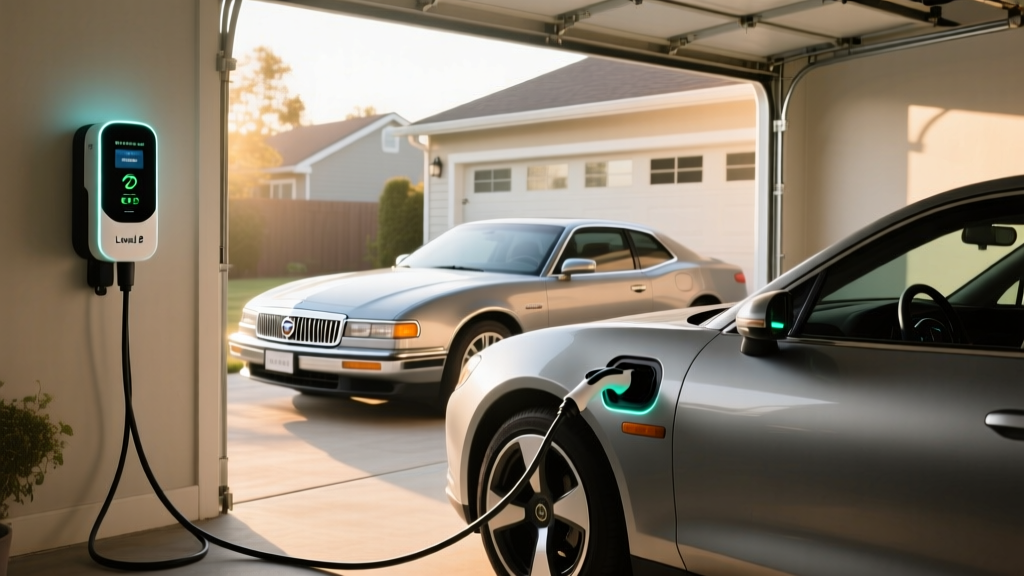
| Level 2 (Home) | 240V / 32–48A | 7.7–11.5 kW | 25–44 mi/hr | Daily home charging, primary setup |
| Level 2 (Public) | 208–240V / 30–80A | 6.6–19.2 kW | 22–70 mi/hr | Workplace, retail, apartments |
| DC Fast Charging | 400–800V DC | 50–350 kW | 150–1,200 mi/hr (peak) | Road trips, highway corridors |
For a 100 kWh battery pack (typical of large electric SUVs rivaling Range Rover size), expect these real-world charging times:
- Level 1 (1.4 kW): 0–100% in ~71 hours — impractical for daily use.
- Level 2, 48A (11.5 kW): 0–100% in ~9 hours; 10–80% in ~6 hours. Ideal overnight recovery.
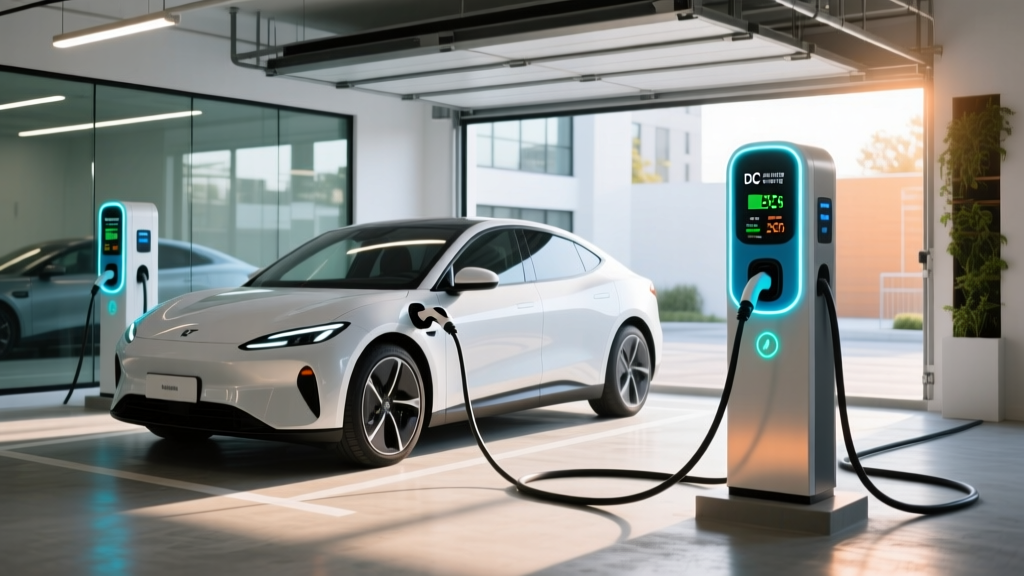
- DC Fast, 250 kW peak: 10–80% in ~20–25 minutes on an 800V architecture (Hyundai Ioniq 5, Kia EV9). Note: charge curves taper sharply above 80% to protect battery health — you won't sustain peak kW to full.
- DC Fast, 50 kW: 10–80% in ~90 minutes — older CHAdeMO stations or lower-power CCS units.
Home Level 2 Installation: Electrical Requirements, Panel Upgrades, and Real Costs
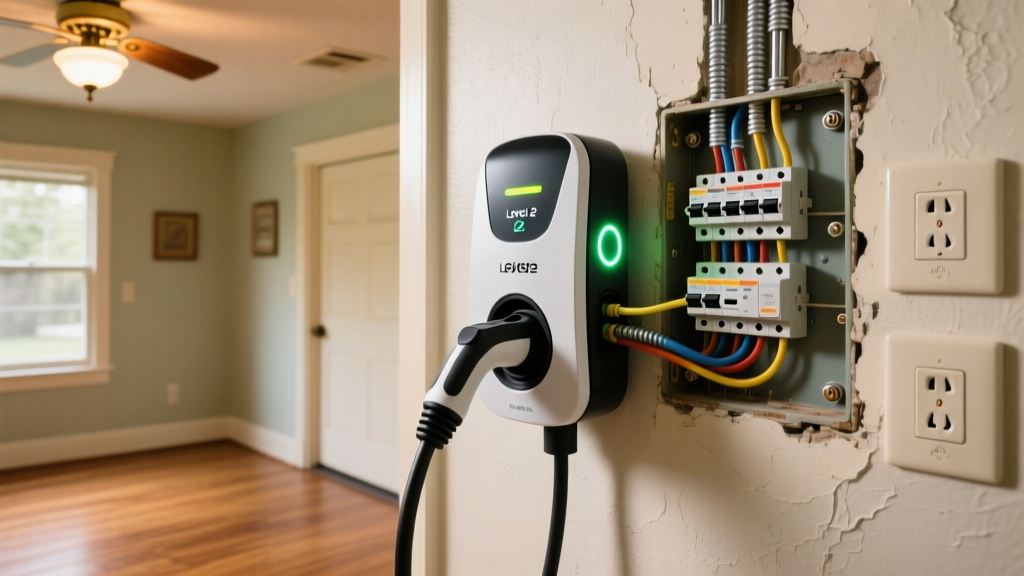
A proper Level 2 home charger requires a dedicated 240V circuit, typically 40A to 60A, hardwired or via a NEMA 14-50 outlet. Here's what an electrician evaluates during a site visit:
- Panel capacity: Most modern homes have 200A service. A 48A continuous EV load (60A breaker per NEC 80% rule) consumes ~11.5 kW. If your panel is already near capacity (electric range, dryer, HVAC), you may need a load-management device or panel upgrade.
- Panel upgrade: Upgrading from 100A to 200A service runs $2,000–$4,000 depending on utility requirements and trenching. Homes built before 1990 are prime candidates.
- Run length: Conduit and wire from panel to garage/charging location. Longer runs (50+ feet) increase copper cost significantly.
- Permits: Most jurisdictions require an electrical permit ($50–$250) and inspection. Skipping this voids insurance coverage for electrical fires.
| Component | Low End | High End | Notes |
|---|---|---|---|
| EVSE Hardware (charger unit) | $300 | $750 | 32A–48A smart chargers |
| Electrician Labor | $400 | $1,500 | Varies by run length, region |
| Materials (wire, conduit, breaker) | $150 | $600 | Longer runs cost more |
| Permit & Inspection | $50 | $250 | Jurisdiction dependent |
| Panel Upgrade (if needed) | $2,000 | $4,000 | 100A → 200A service |
| Total (no panel upgrade) | $900 | $3,100 | Most typical installs |
| Total (with panel upgrade) | $2,900 | $7,100 | Older homes |
The IRS §30C credit covers up to 30% of home charging equipment and installation costs (capped at $1,000), but only for installations in eligible census tracts. Confirm your eligibility before counting on this offset.
Connector Compatibility: NACS, CCS1, CHAdeMO, and Adapter Realities
The North American charging landscape has consolidated significantly since 2024, when Ford, GM, Rivian, Volvo, and others adopted Tesla's NACS (North American Charging Standard). Here's where things stand:
| Connector | Brands Using It (Native) | DC Fast Network Access | Adapter Needed? |
|---|---|---|---|
| NACS (Tesla) | Tesla, Ford, GM, Rivian, Volvo, Polestar, Mercedes, BMW (2025+) | Tesla Supercharger + growing NACS stations | CCS→NACS adapter for legacy CCS vehicles |
| CCS1 | Hyundai, Kia, Volkswagen, Stellantis, legacy models | Electrify America, EVgo, ChargePoint DC | NACS→CCS adapter for Supercharger access |
| CHAdeMO | Nissan Leaf (legacy), Mitsubishi Outlander PHEV | Declining network, mostly legacy stations | No viable adapter; standard is being phased out |
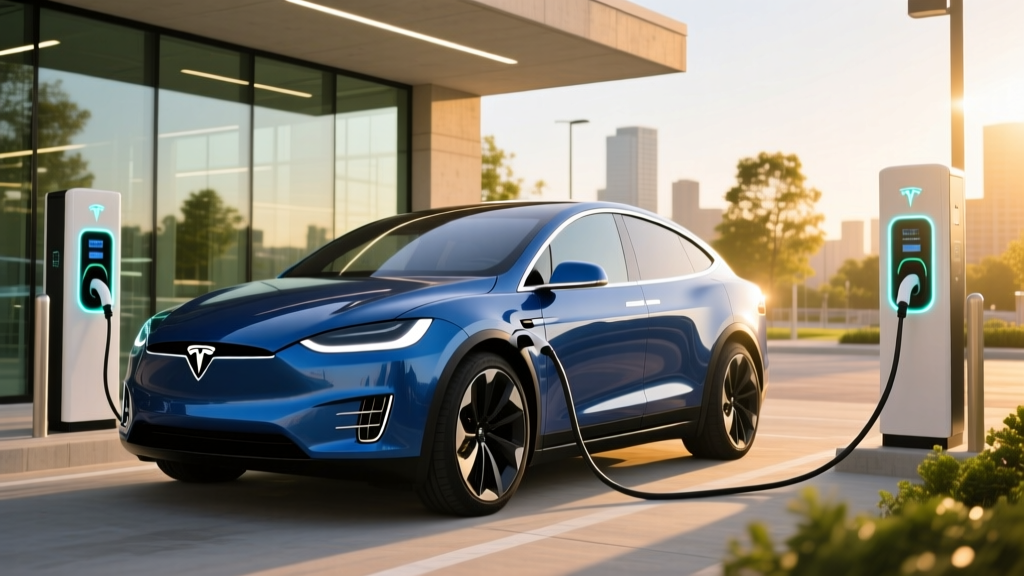
If you're buying a 2025–2026 EV, prioritize NACS-native vehicles for the broadest fast-charging access. Tesla's Supercharger network remains the most reliable, with over 25,000 stalls in North America and consistent uptime compared to Electrify America's variable reliability record.
Cost Per Mile: EV Charging vs. the 2010 Range Rover Supercharged
Here's where the financial case crystallizes. The 2010 Range Rover Supercharged carries an EPA rating of 12 MPG combined (city 12 / highway 18). At $4.50/gallon premium, that's $0.375 per mile.
| Vehicle / Scenario | Energy Cost | Efficiency | Cost Per Mile | Annual Cost (12k mi) |
|---|---|---|---|---|
| 2010 Range Rover SC (12 MPG, $4.50/gal premium) | $4.50/gallon | 12 MPG combined | $0.375 | $4,500 |
| EV — Home off-peak ($0.12/kWh, 3 mi/kWh) | $0.12/kWh | 3.0 mi/kWh (e.g., Rivian R1S) | $0.040 | $480 |
| EV — Home standard ($0.18/kWh, 3 mi/kWh) | $0.18/kWh | 3.0 mi/kWh | $0.060 | $720 |
| EV — Public Level 2 ($0.35/kWh) | $0.35/kWh | 3.0 mi/kWh | $0.117 | $1,400 |
| EV — DC Fast Charging ($0.48/kWh avg) | $0.48/kWh | 3.0 mi/kWh | $0.160 | $1,920 |
Even relying exclusively on DC fast charging — the most expensive option — an electric SUV costs less than half per mile compared to the 2010 Range Rover Supercharged on premium fuel. With home off-peak charging, the savings reach $4,000+ per year. Over a 5-year ownership period, that's $20,000 in fuel savings alone, before factoring in the Supercharged V8's timing-chain tensioner issues, supercharger-coupling wear, and $300+ oil changes every 5,000 miles.
Recommended Home Chargers: Power Output, Cable Length, Smart Features
Based on real-world reliability, smart features, and value, here are the top Level 2 home chargers for 2026:
ChargePoint Home Flex (NACS or CCS)
- Power: Up to 11.5 kW (48A) on 60A circuit; configurable down to 16A
- Cable: 23 feet
- Smart Features: Wi-Fi, app scheduling, Alexa integration, energy tracking
- Price: ~$550
- Best For: Flexible amperage for older panels; NACS and CCS plug options
WallConnector Gen 4 (NACS native)
- Power: Up to 11.5 kW (48A)
- Cable: 24 feet
- Smart Features: Wi-Fi, OTA updates, power-sharing for multi-charger installs, Tesla app integration
- Price: ~$475
- Best For: Tesla and NACS-native vehicle owners; cleanest aesthetic
Emporia Level 2 Smart Charger
- Power: Up to 11.5 kW (48A)
- Cable: 24 feet
- Smart Features: Wi-Fi, energy monitoring, solar integration, load management
- Price: ~$400
- Best For: Budget-conscious buyers with solar panels; excellent app
Grizzl-E Smart (NACS or J1772)
- Power: Up to 10 kW (40A)
- Cable: 24 feet
- Smart Features: Wi-Fi, OCPP compatibility, extreme cold rating (-40°F)
- Price: ~$450
- Best For: Cold-climate owners; rugged build quality
Safety, Code, and Installation Best Practices
EV charging involves sustained high-current draw — far more demanding than a dryer or oven cycle. Follow these non-negotiable safety requirements:
- Dedicated circuit: Never share a circuit with other appliances. EV charging runs for hours at continuous load.
- NEC 80% rule: A 48A continuous charger requires a 60A breaker. A 32A charger requires a 40A breaker. Your electrician will size accordingly.
- GFCI protection: Required for outdoor installations and some jurisdictions for indoor garage outlets. Hardwired units may have integrated ground-fault protection.
- Outdoor rating: If mounting outside, ensure the EVSE is NEMA 4 rated (weatherproof). Most quality chargers carry this rating.
- Wire gauge: 6 AWG copper for 48A circuits; 4 AWG for 60A runs over 50 feet. Aluminum wire requires upsizing.
- Permit and inspection: Always pull a permit. Unpermitted electrical work can void homeowner's insurance and create liability in the event of a fire.
Frequently Asked Questions
How much does it cost to install a home EV charger?
Most Level 2 installations without a panel upgrade cost $900–$3,100 including hardware, labor, materials, and permits. If your home needs a panel upgrade from 100A to 200A service, add $2,000–$4,000. The IRS §30C credit may offset up to $1,000 (30%) for eligible census tracts.
How fast will each charging level add range?
Level 1 adds 3–5 miles per hour. Level 2 (48A) adds 30–44 miles per hour depending on vehicle efficiency. DC fast charging can add 150–1,200 miles per hour at peak power, but charge curves taper above 80% State of Charge, so real-world 10–80% times are 18–35 minutes depending on battery size and charger power.
Which connector/charger is compatible with my EV?
For 2025–2026 models: Tesla, Ford, GM, Rivian, Volvo, and BMW use NACS. Hyundai, Kia, and Volkswagen use CCS1. Nissan Leaf (legacy) uses CHAdeMO. Check your vehicle's charge port or owner's manual. Adapters exist (CCS↔NACS) but add cost and slight efficiency loss.
How much does charging cost per mile vs. gas?
Home charging at off-peak rates ($0.12/kWh) costs roughly $0.04/mile for a large electric SUV. The 2010 Range Rover Supercharged at 12 MPG on $4.50 premium costs $0.375/mile — over 9× more. Even exclusive DC fast charging ($0.48/kWh) costs $0.16/mile, still less than half the Range Rover's fuel cost.
What electrical upgrades might I need?
Homes with 100A panels or heavy existing loads (electric heat, dual ovens, hot tub) may need a 200A panel upgrade ($2,000–$4,000). Alternatives include smart load-management devices (e.g., Emporia, Span panel) that dynamically share capacity between EV charging and other circuits, avoiding a full upgrade.
The 2010 Range Rover Supercharged was an engineering marvel of its era — a 510-horsepower luxury fortress. But at 12 MPG with escalating maintenance costs, it's a relic of cheap-fuel thinking. A modern electric SUV with a $1,500 home charging installation delivers comparable luxury, instant torque, and fuel costs below $500 per year. The math doesn't lie.