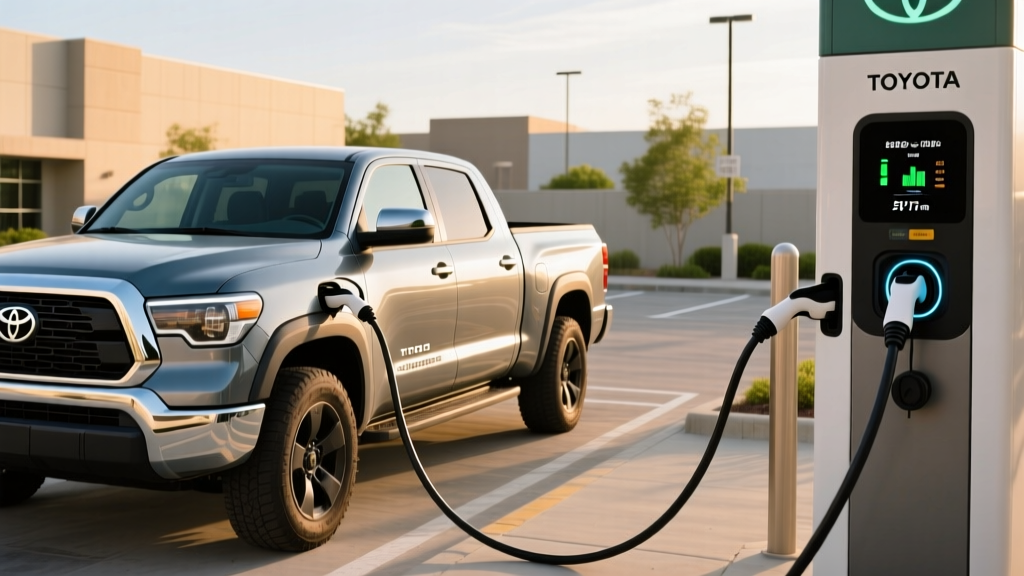
If you own or have ever fueled a 2008 Toyota Tundra TRD Supercharged, you already know the pain at the pump. That supercharged 5.7L V8 (3UR-FE) was rated by the EPA at roughly 13 mpg city / 17 mpg highway / 14 mpg combined when new — and real-world figures with age, larger tires, and a heavy right foot often dip to 11–13 mpg combined. At $3.50/gallon, that's roughly $0.25–$0.27 per mile in fuel alone.
Switching to an electric vehicle isn't just about emissions — it's about fundamentally changing your per-mile energy cost. This guide walks through exactly what home EV charging costs, how fast each charging level adds range, what electrical upgrades your home might need, and how those numbers stack up against fueling a Tundra TRD Supercharged. Every figure below is grounded in current 2026 utility rates, equipment pricing, and EPA data.
The Three Charging Levels: Speed, Power, and Range Added Per Hour
The single most important distinction in EV charging is between kW (kilowatts) and kWh (kilowatt-hours). Kilowatts measure power — how fast energy flows into the battery at any given moment. Kilowatt-hours measure energy — the total capacity of the battery, analogous to gallons in a fuel tank. A charger rated at 11.5 kW delivers energy at that rate; a battery with 80 kWh of capacity needs roughly 80 kWh of energy to fill from empty.
Charging speed is also not linear. DC fast charging follows a charge curve: the battery accepts peak power only at lower states of charge (typically 10–40% SoC), then tapers as the battery management system protects cell health. A charger rated at 250 kW peak may average only 100–130 kW across a 10–80% session. This is why manufacturers quote 10–80% charge times rather than 0–100%.
| Level | Voltage / Amperage | Max Power (kW) | Miles of Range Per Hour | Typical Use Case |
|---|---|---|---|---|
| Level 1 | 120V / 12A | 1.4 kW | 3–5 mi/hr | Overnight trickle; PHEVs; emergency backup |
| Level 2 (Home) | 240V / 32–48A | 7.7–11.5 kW | 25–44 mi/hr | Daily home charging; primary method for most owners |
| DC Fast Charge | 400–800V DC | 50–350 kW | 150–1,200+ mi/hr (peak) | Road trips; quick top-ups; commercial fleets |
For context, a typical modern EV with an 80 kWh battery and 3.5 mi/kWh efficiency (around 280 miles EPA range) charging on a 48A Level 2 home charger (11.5 kW) will gain roughly 40 miles of range per hour — enough to fully replenish overnight. That same vehicle on a 250 kW DC fast charger can add 10–80% in approximately 18–25 minutes, depending on battery chemistry, preconditioning, and ambient temperature.
Home Charger Installation: What It Actually Costs
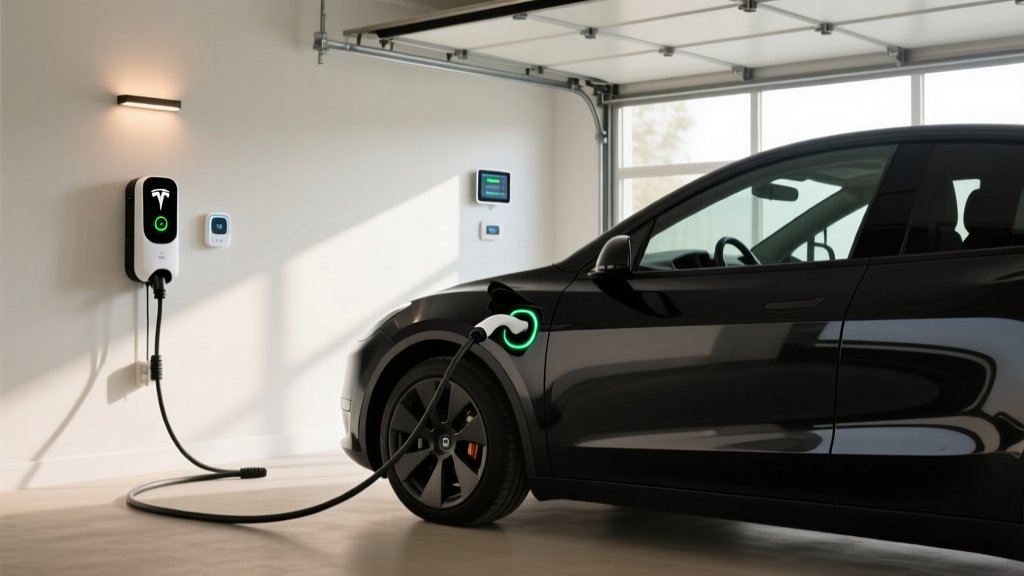
The sticker price of a Level 2 wallbox is only part of the equation. A proper installation requires a dedicated 240V circuit, and depending on your home's electrical panel, you may need a service upgrade. Here's a realistic breakdown based on 2026 national averages.
| Component | Low Estimate | High Estimate | Notes |
|---|---|---|---|
| Level 2 Charger (Equipment) | $350 | $750 | 32A–48A smart chargers; Wi-Fi enabled |
| Electrician Labor | $500 | $2,000 | Depends on run length from panel to garage/driveway |
| Electrical Permit | $50 | $250 | Varies by municipality; some jurisdictions bundle with inspection |
| Panel Upgrade (if needed) | $1,500 | $4,000 | Required if panel is 100A or near capacity; upgrade to 200A |
| Conduit / Wiring Materials | $100 | $500 | Longer runs and outdoor conduit increase cost |
| Total (No Panel Upgrade) | $1,000 | $3,500 | Most homes with 200A service and short runs |
| Total (With Panel Upgrade) | $2,500 | $7,500 | Homes with 100A service or maxed-out panels |
Panel upgrade reality check: If your home was built before the 1990s, there's a strong chance you have a 100-amp service panel. A 48A EV charger draws roughly 55 amps of continuous load (NEC requires circuits to be rated at 125% of continuous load, so a 48A charger needs a 60A breaker). That's a significant draw on a 100A panel already serving HVAC, an electric dryer, a range, and general circuits. A licensed electrician will perform a load calculation to determine if your panel can handle the addition or if a 200A upgrade is required. Do not skip this step — undersized panels are a fire hazard.
The NEC (National Electrical Code) requires EV chargers to be on a dedicated circuit with GFCI protection. Outdoor installations must use equipment rated for wet locations (NEMA 4 or IP55 minimum). Your electrician will pull a permit and schedule an inspection — this protects you and is required for any utility rebate or insurance coverage.
Connector Compatibility: NACS, CCS1, and CHAdeMO in 2026
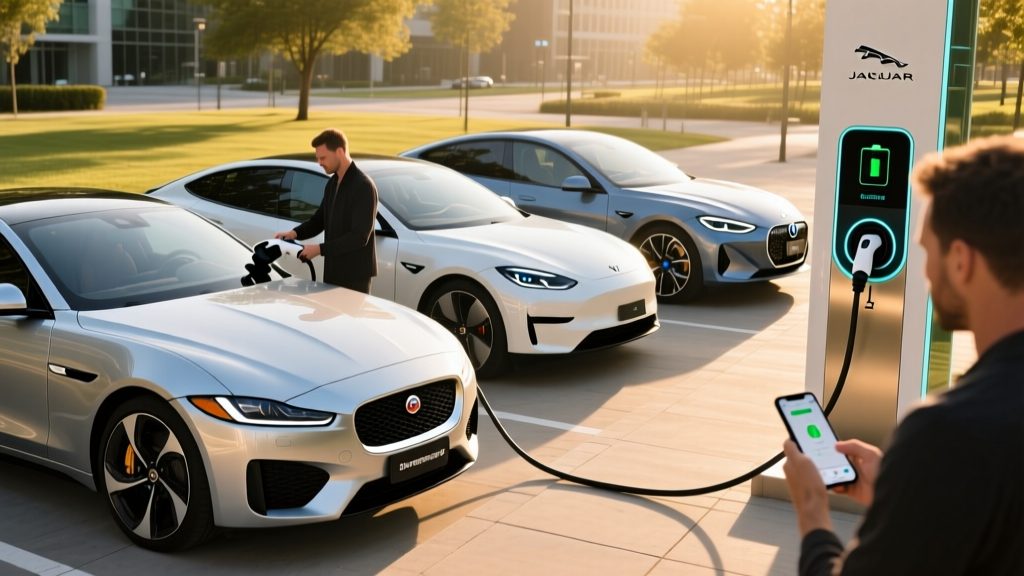
The connector landscape has consolidated significantly. As of 2026, the North American Charging Standard (NACS) — originally developed by Tesla — has become the dominant connector for new EVs sold in North America. Ford, GM, Rivian, Volvo, Hyundai/Kia, and most major automakers have adopted NACS on new models. CCS1 (Combined Charging System) remains on vehicles sold through roughly 2024–2025, and CHAdeMO is effectively legacy (Nissan Leaf being the last major holdout).
| Connector | Vehicles Using It (2026) | Home Charging | DC Fast Charging Network Access |
|---|---|---|---|
| NACS (Tesla) | Tesla (all), Ford, GM, Rivian, Volvo, Polestar, Hyundai/Kia (new models) | NACS wallbox or J1772 adapter | Tesla Supercharger network (17,000+ stalls); growing non-Tesla access |
| CCS1 | Most 2024 and earlier non-Tesla EVs; some 2025 models | J1772 connector (standard) | Electrify America, EVgo, ChargePoint DC; Tesla Supercharger via adapter |
| CHAdeMO | Nissan Leaf (legacy); Mitsubishi Outlander PHEV (older) | J1772 connector | Limited and declining; Electrify America still supports some stalls |
For home Level 2 charging, the connector on the wallbox itself is less critical than you might think. All Level 2 chargers in North America output through a J1772 connector or a NACS connector, and adapters between the two are widely available for $50–$150. What matters more is the charger's power output (kW), cable length, and smart features (scheduling, load management, utility integration).
If you own a CCS1-equipped EV and want access to the Tesla Supercharger network, Tesla sells a CCS-to-NACS adapter (~$199) that works at Superchargers with the "Open to Non-Tesla Vehicles" designation. Check the Tesla app for compatible stations near your routes.
Level 2 Charger Equipment Picks: Power, Features, and Price
Not all Level 2 chargers are equal. The critical specs are amperage (which determines kW output on a 240V circuit), cable length (you need enough reach from your outlet or hardwired point to your vehicle's charge port), and whether the unit is hardwired or plug-in (NEMA 14-50 receptacle). Hardwired installations generally support higher amperage and avoid the GFCI breaker nuisance-tripping issues that plague some 14-50 receptacle setups.
ChargePoint Home Flex
- Power Output: Up to 12 kW (50A) hardwired; up to 9.6 kW (40A) on NEMA 14-50
- Cable Length: 23 feet
- Connector: J1772 (NACS adapter available)
- Smart Features: Wi-Fi, app scheduling, Alexa integration, utility demand-response programs
- Price: ~$549 (unit only)
- Best For: Flexible amperage adjustment via DIP switches; ideal if you may move or upgrade panel later
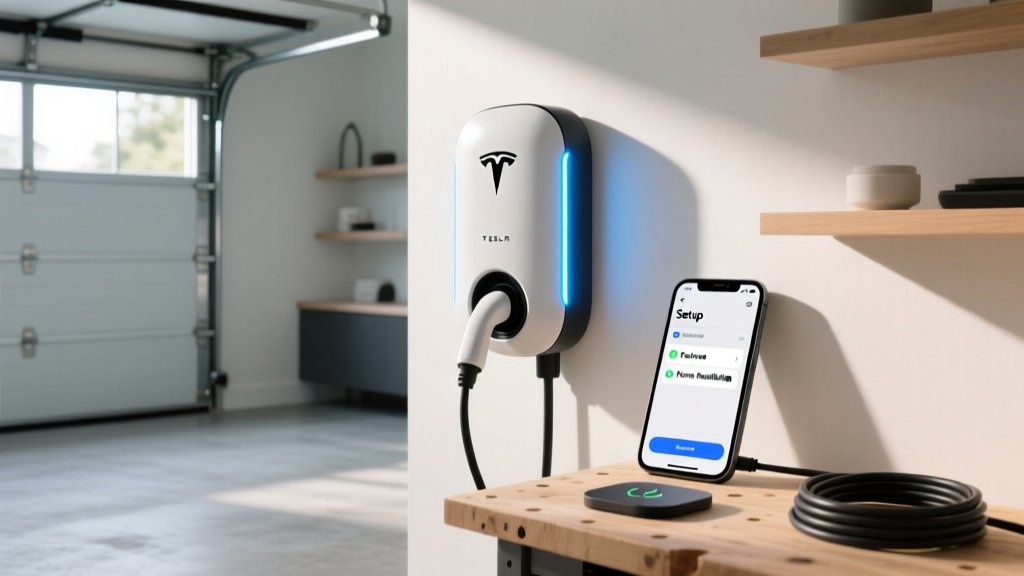
Tesla Wall Connector
- Power Output: Up to 11.5 kW (48A) hardwired
- Cable Length: 24 feet
- Connector: NACS native (includes J1772 adapter tip)
- Smart Features: Wi-Fi, over-the-air updates, power sharing between multiple units, load management
- Price: ~$475 (unit only)
- Best For: Tesla and NACS-adopted vehicle owners; excellent value-to-performance ratio
Emporia Vue EV Charger
- Power Output: Up to 11.5 kW (48A) hardwired; 9.6 kW on 14-50
- Cable Length: 24 feet
- Connector: J1772
- Smart Features: Wi-Fi, solar integration (pairs with Emporia Vue energy monitor), time-of-use scheduling, load balancing
- Price: ~$399 (unit only)
- Best For: Solar panel owners and budget-conscious buyers who want smart features
For homes with solar panels, the Emporia or ChargePoint units offer solar-aware charging — the charger can prioritize excess solar production, effectively making your "fuel" free during peak sun hours. This is where the economics of EV ownership become almost absurdly favorable compared to any combustion vehicle.
Cost Per Mile: EV Charging vs. the 2008 Tundra TRD Supercharged
Let's run the numbers that actually matter: what does it cost to drive one mile on electricity versus gasoline? The answer depends on where and when you charge, but the gap is enormous in nearly every scenario.
| Scenario | Rate / Price | EV Efficiency | Cost Per Mile (EV) | Cost Per Mile (Tundra TRD SC, 13 mpg) |
|---|---|---|---|---|
| Home, Off-Peak TOU Rate | $0.09/kWh | 3.5 mi/kWh | $0.026 | $0.269 (at $3.50/gal) |
| Home, Standard Residential | $0.16/kWh | 3.5 mi/kWh | $0.046 | $0.269 |
| Home, High-Cost State (CA/MA avg) | $0.28/kWh | 3.5 mi/kWh | $0.080 | $0.269 |
| Public Level 2 (ChargePoint, etc.) | $0.30/kWh | 3.5 mi/kWh | $0.086 | $0.269 |
| DC Fast Charge (Electrify America) | $0.48/kWh | 3.5 mi/kWh | $0.137 | $0.269 |
| DC Fast Charge (Tesla Supercharger avg) | $0.32/kWh | 3.5 mi/kWh | $0.091 | $0.269 |
The math is stark. Even at the most expensive DC fast-charging rates, an EV costs roughly half what the Tundra TRD Supercharged costs to fuel per mile. At home on off-peak rates, you're looking at roughly 90% savings per mile. Over 15,000 annual miles, that's a difference of $3,000–$3,700 per year in energy costs alone.
According to fueleconomy.gov, the 2008 Tundra 4WD with the 5.7L V8 averages 14 mpg combined. The TRD supercharger kit (dealer-installed, approximately $4,500 at the time) pushed output to 504 hp but did not improve — and in many driving conditions, worsened — fuel economy. Owners who tow or drive aggressively routinely report 10–12 mpg combined.
For comparison, a 2025–2026 EV like the Ford F-150 Lightning (extended range, 131 MPGe combined, 320 miles EPA) or the Rivian R1T (dual motor, ~330 miles EPA) provides truck-class utility at a fraction of the per-mile energy cost. According to the EPA, the national average electricity rate for EV charging is approximately $0.16/kWh, making the average EV cost per mile around $0.045 — versus $0.25+ for the supercharged Tundra.
Charging Time Examples: How Long Does a Full Session Take?
Charging time depends on three variables: battery capacity (kWh), charger power output (kW), and the charge curve. Below are realistic 10–80% session times for common battery sizes at different charger types.
| Battery Size | Level 1 (1.4 kW) | Level 2, 32A (7.7 kW) | Level 2, 48A (11.5 kW) | DC Fast (150 kW peak) | DC Fast (250 kW peak) |
|---|---|---|---|---|---|
| 60 kWh (e.g., base EV sedan) | ~43 hours | ~7.8 hours | ~5.2 hours | ~28 min (10–80%) | ~20 min (10–80%) |
| 80 kWh (e.g., mid-size SUV) | ~57 hours | ~10.4 hours | ~7.0 hours | ~35 min (10–80%) | ~24 min (10–80%) |
| 100 kWh (e.g., large truck/SUV) | ~71 hours | ~13.0 hours | ~8.7 hours | ~42 min (10–80%) | ~30 min (10–80%) |
| 135 kWh (e.g., F-150 Lightning ext.) | ~96 hours | ~17.5 hours | ~11.7 hours | ~55 min (10–80%) | ~41 min (10–80%) |
Notice that Level 1 charging is impractical for large-battery EVs — it's best suited for PHEVs with 10–20 kWh batteries or as an emergency trickle. Level 2 at 48A handles virtually any daily need overnight. DC fast charging is your road-trip tool, but remember: the last 20% of a session (80–100%) can take as long as the first 70% due to taper. For road trips, charge to 80% and move on.
Safety, Code, and Installation Best Practices
A Level 2 EV charger is a significant continuous electrical load — it runs at full draw for hours at a time, which is unusual for residential circuits. The NEC treats this seriously, and so should you.
- Dedicated circuit required: Your EV charger must have its own breaker — it cannot share a circuit with other appliances. A 48A charger requires a 60A breaker (125% rule for continuous loads).
- GFCI protection: The 2020 NEC and later require GFCI protection for EV charging outlets. Hardwired chargers with built-in ground-fault protection satisfy this without a GFCI breaker, which avoids nuisance tripping.
- Outdoor rating: If your charger is mounted outside, it must be rated for wet locations (NEMA 4 or IP55 minimum). Look for UL listing or ETL certification on any charger you purchase.
- Wire gauge: A 60A circuit requires 6 AWG copper wire (or 4 AWG aluminum) for runs up to 50 feet. Longer runs may need larger wire to prevent voltage drop. Your electrician will calculate this.
- Permit and inspection: Every jurisdiction requires a permit for new 240V circuits. The inspection ensures proper grounding, correct breaker sizing, and code-compliant installation. Skipping this can void insurance coverage in the event of a fire.
- Utility notification: Some utilities require you to notify them before installing an EV charger, especially if you're on a time-of-use rate plan. Many offer rebates of $250–$1,000 for smart charger installations — check with your local utility.
According to NHTSA and the National Fire Protection Association, properly installed EV chargers carry extremely low fire risk. The overwhelming majority of EV charging incidents involve damaged cords, undersized circuits, or uncertified equipment. Use only UL- or ETL-listed chargers and professional installation.
Frequently Asked Questions
How much does it cost to install a home EV charger?
Expect $1,000–$3,500 total (equipment + electrician + permit) for a straightforward installation on a 200A panel with a short wire run. If your home needs a panel upgrade from 100A to 200A, add $1,500–$4,000, bringing the total to $2,500–$7,500. The charger itself costs $350–$750 for a quality 32A–48A smart unit.
How fast will each charging level add range?
Level 1 (120V) adds 3–5 miles of range per hour — fine for PHEVs, impractical for full EVs. Level 2 (240V, 48A) adds 35–44 miles per hour, fully recharging most EVs overnight. DC fast charging adds 150–1,200+ miles per hour at peak, with 10–80% sessions taking 18–40 minutes depending on battery size and charger power.
Which connector/charger is compatible with my EV?
If you're buying a 2025–2026 EV, it almost certainly uses NACS (Tesla-style connector) or CCS1. Check your vehicle's charge port. For home charging, a J1772 Level 2 charger works with CCS1 vehicles natively and with NACS vehicles via an adapter (usually included with the vehicle). Tesla Wall Connectors use NACS natively and include a J1772 adapter tip.
How much does charging cost per mile vs. gas?
Home charging at the U.S. average rate of $0.16/kWh costs roughly $0.046/mile for an efficient EV (3.5 mi/kWh). The 2008 Toyota Tundra TRD Supercharged at 13 mpg combined costs roughly $0.27/mile at $3.50/gallon — nearly 6× more per mile. Even DC fast charging at $0.48/kWh ($0.137/mile) is half the Tundra's fuel cost.
What electrical upgrades might I need?
The most common upgrade is a panel replacement from 100A to 200A service ($1,500–$4,000), required when your existing panel lacks capacity for a 60A EV circuit. You may also need a new conduit run from the panel to the charger location ($100–$500 depending on distance and routing complexity). Homes with 200A panels and available breaker slots typically need no upgrade beyond the dedicated circuit itself.
Is there a federal tax credit for home EV charger installation?
The federal Alternative Fuel Vehicle Refueling Property Credit (IRC §30C) was reinstated for 2023–2032 and covers 30% of home charger equipment and installation costs, up to $1,000. However, it's restricted to equipment installed in eligible census tracts (generally low-income or non-urban areas). Check the IRS §30C page and consult a tax professional to confirm your eligibility. Many state and utility rebates stack on top of this credit.
Trading a supercharged V8 for electrons isn't just an environmental statement — it's a financial one. The 2008 Tundra TRD Supercharged was a thrilling machine, but at 13 mpg and $3.50+ per gallon, it costs more than five times as much per mile to fuel as a modern EV charged at home. With a Level 2 installation running $1,000–$3,500 and annual fuel savings of $3,000+, the charger pays for itself within the first year for most drivers.