If you still remember the supercharged 3.8L V6 in the 2005 Chevy Monte Carlo SS — and its thirst at the pump — you already understand why EV owners obsess over charging costs and setup. This guide breaks down exactly what it takes to charge a modern battery-electric vehicle at home and on the road, then puts those numbers head-to-head against fueling that mid-2000s supercharged coupe. Every figure below uses precise EV units: kW (kilowatts) for charging power and kWh (kilowatt-hours) for battery energy capacity. Mixing those two up is the single most common mistake in EV coverage, and we will not make it here.
Charging Levels Explained: How Fast Each One Adds Range
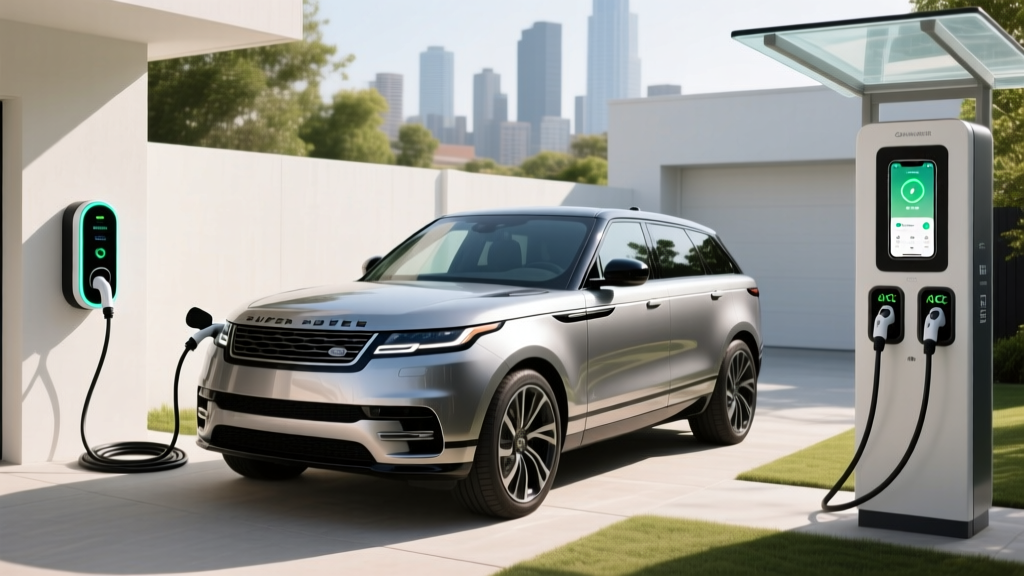
EV charging falls into three tiers. The speed you get depends on both the charger's power output (kW) and your vehicle's onboard acceptance rate. Here is what each level delivers in real-world terms:
| Level | Voltage | Power (kW) | Miles of Range Added per Hour | Best For |
|---|---|---|---|---|
| Level 1 | 120V AC | 1.2–1.9 kW | 3–5 mi/hr | Overnight top-ups, PHEVs, low-mileage drivers |
| Level 2 | 240V AC | 3.3–19.2 kW | 12–75 mi/hr | Daily home charging, workplace, destinations |
| DC Fast Charge | 400–800V DC | 50–350 kW | 150–1,200+ mi/hr (peak) | Road trips, rapid top-ups on highways |
A critical nuance: DC fast charging does not sustain its peak kW rate for the entire session. A vehicle that advertises a 250 kW peak may only hold that rate between 10–40% State of Charge (SoC), then taper progressively. A realistic 10–80% session on a 250 kW-capable vehicle with a 75 kWh battery takes roughly 18–28 minutes depending on battery chemistry, temperature, and preconditioning. Always look at the 10–80% time, not the peak kW number alone.
Home EV Charger Installation: Electrical Requirements and Costs
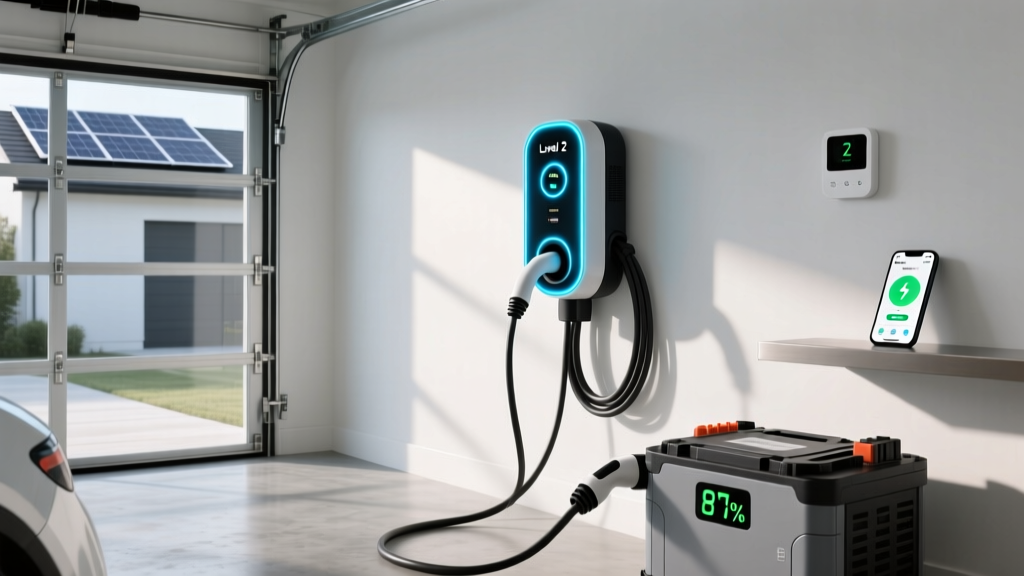
Most EV owners install a Level 2 home charger on a dedicated 240V circuit. The most common residential setup is a 40-amp or 48-amp circuit, which requires a 50-amp or 60-amp breaker respectively (electrical code requires the continuous load to be no more than 80% of the breaker rating).
What Your Electrical Panel Needs
Before installing, verify your panel has enough spare capacity. A 200-amp service panel is standard in homes built after the 1990s and usually supports a 40–48A EV circuit. Older homes — including many built around the same era as a 2005 Chevy Monte Carlo SS supercharged — may have 100-amp or 150-amp panels that lack headroom. If your panel is near capacity, a licensed electrician will recommend either:
- A panel upgrade to 200A ($1,500–$3,500)
- A smart load-management device like the Emporia Smart Load Center or Span panel that dynamically shares amperage between the EV charger and other circuits ($300–$2,000+)
- A lower-amperage charger (e.g., 24A or 32A) that fits existing capacity
Installation Cost Breakdown
| Item | Low Estimate | High Estimate | Notes |
|---|---|---|---|
| Level 2 charger (hardwired, 40–48A) | $350 | $750 | Smart WiFi models cost more |
| Electrician labor | $400 | $1,500 | Depends on run length, wall type, conduit |
| Electrical permit | $50 | $250 | Varies by municipality |
| Panel upgrade (if needed) | $1,500 | $3,500 | Only if existing panel lacks capacity |
| Total (no panel upgrade) | $800 | $2,500 | Most common scenario |
| Total (with panel upgrade) | $2,300 | $6,000 | Older homes, long wire runs |
The IRS §30D tax credit does not cover home charging equipment for most buyers in 2026 — the Alternative Fuel Vehicle Refueling Property Credit (§30C) expired for most residential installations after 2025, though some income-capped and census-tract-specific provisions may apply. Always consult a tax professional and check current IRS guidance.
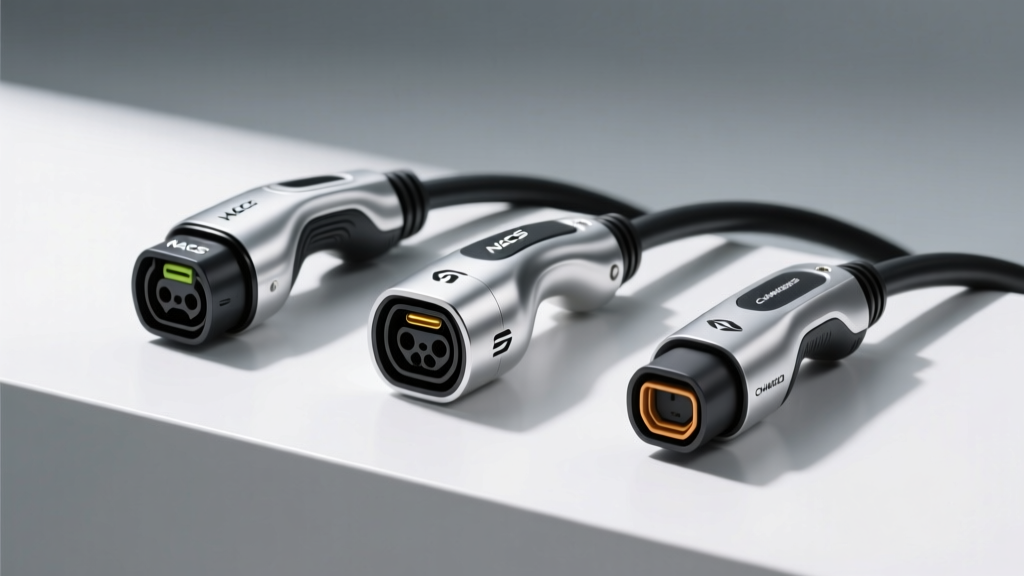
Connector Compatibility: NACS, CCS1, and CHAdeMO
North America has largely standardized on the North American Charging Standard (NACS), originally developed by Tesla and adopted by Ford, GM, Rivian, Volvo, Hyundai, and most other major automakers starting in the 2025–2026 model years. However, hundreds of thousands of CCS1-equipped vehicles remain on the road, and CHAdeMO persists on older Nissan Leafs and Mitsubishi Outlander PHEVs.
| Connector | Also Known As | Vehicles Using It (2026 MY) | Adapter Availability |
|---|---|---|---|
| NACS | Tesla connector / J3400 | Tesla (all), Ford, GM, Rivian, Hyundai, Kia, Volvo, BMW, most new models | N/A — native on new vehicles |
| CCS1 | Combo | Older VW ID.4, BMW i4 (pre-2025), older Hyundai/Kia models, Lucid | CCS-to-NACS adapters ($150–$300); Tesla Magic Dock at some Superchargers |
| CHAdeMO | — | Nissan Leaf (discontinued), Mitsubishi Outlander PHEV (older) | Limited; CHAdeMO infrastructure declining |
If you are buying a 2026 model-year EV, it almost certainly ships with a NACS port. If you own an older CCS1 vehicle, you can access Tesla Superchargers using a certified adapter — but confirm your vehicle's manufacturer has approved the specific adapter for warranty purposes.
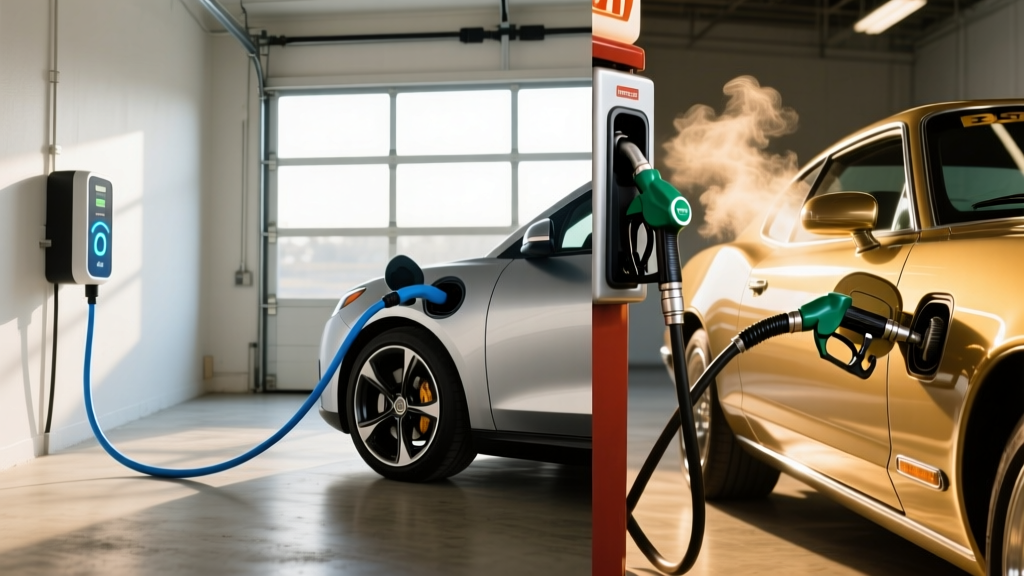
Charging Cost Per Mile vs. Fueling a 2005 Monte Carlo SS Supercharged
The 2005 Chevy Monte Carlo SS supercharged was rated by the EPA at 18 city / 28 highway / 22 combined MPG on premium unleaded. With premium gas averaging roughly $4.10/gallon in early 2026, that works out to about $0.186 per mile at the combined rate.
Now compare that with a typical 2026 EV averaging 3.0 miles per kWh (roughly 112 MPGe) across three common charging scenarios:
| Scenario | Rate | EV Cost/Mile (3 mi/kWh) | Monte Carlo SS Cost/Mile (22 MPG, $4.10/gal) | Savings per 1,000 Miles |
|---|---|---|---|---|
| Home off-peak (utility TOU rate) | $0.09/kWh | $0.030 | $0.186 | $156 |
| Home standard rate | $0.16/kWh | $0.053 | $0.186 | $133 |
| Public Level 2 (ChargePoint, EVgo L2) | $0.35/kWh | $0.117 | $0.186 | $69 |
| DC Fast Charge (Electrify America, EA Pass) | $0.48/kWh | $0.160 | $0.186 | $26 |
| DC Fast Charge (Tesla Supercharger, non-member) | $0.35/kWh | $0.117 | $0.186 | $69 |
At home on off-peak rates, an EV costs roughly 84% less per mile than fueling the supercharged Monte Carlo. Even on expensive DC fast chargers, you save money — though the margin narrows. For a driver covering 12,000 miles per year with 80% home charging at $0.12/kWh and 20% DC fast charging at $0.42/kWh, the blended annual fuel cost is approximately $720 versus $2,236 for the Monte Carlo — a $1,516 annual savings.
Charging Time Examples: What to Expect with Common Battery Sizes
Charge times depend on the battery's usable capacity (kWh), the charger's sustained power output (kW), and the vehicle's charge curve. Below are realistic estimates for three common battery sizes, assuming preconditioned batteries at moderate temperatures:
60 kWh Battery (e.g., compact crossover, ~250 mi EPA range)
- Level 1 (1.4 kW): 0–100% in ~43 hours — impractical for full charges
- Level 2 (7.7 kW / 32A): 0–100% in ~8 hours — ideal overnight charge
- Level 2 (11.5 kW / 48A): 0–100% in ~5.5 hours
- DC Fast (150 kW peak): 10–80% in ~22 minutes
82 kWh Battery (e.g., mid-size sedan/SUV, ~310 mi EPA range)
- Level 2 (7.7 kW / 32A): 0–100% in ~11 hours
- Level 2 (11.5 kW / 48A): 0–100% in ~7.5 hours
- DC Fast (250 kW peak): 10–80% in ~18–25 minutes (curve-dependent)
100 kWh Battery (e.g., large truck/SUV, ~340 mi EPA range)
- Level 2 (11.5 kW / 48A): 0–100% in ~9 hours
- Level 2 (19.2 kW / 80A): 0–100% in ~5.5 hours (requires 100A circuit)
- DC Fast (350 kW peak, 800V architecture): 10–80% in ~15–20 minutes
Real-world note: cold weather (below 32°F) can increase DC fast charge times by 20–40% if the battery has not been preconditioned. Always use your vehicle's navigation-routed preconditioning feature when heading to a fast charger.
Recommended Home EV Chargers for 2026
ChargePoint Home Flex (NACS, up to 50A)
- Power output: Up to 12 kW (50A / 240V), adjustable down to 16A
- Connector: NACS native (CCS adapter available)
- Cable length: 23 feet
- Smart features: WiFi, app scheduling, Alexa, load sharing
- Price: ~$599
- Best for: Most EV owners; flexible amperage fits older panels
Tesla Wall Connector (NACS, up to 48A)
- Power output: Up to 11.5 kW (48A / 240V)
- Connector: NACS native
- Cable length: 24 feet
- Smart features: WiFi, OTA updates, power sharing between multiple units, Tesla app integration
- Price: ~$475
- Best for: Tesla owners and NACS-equipped vehicles; excellent value
Emporia Level 2 EV Charger (48A)
- Power output: Up to 11.5 kW (48A / 240V)
- Connector: NACS (2026 models) or J1772 with adapter
- Cable length: 24 feet
- Smart features: Energy monitoring, solar integration, time-of-use scheduling, whole-home energy dashboard
- Price: ~$399
- Best for: Budget-conscious buyers; solar-panel households
Grizzl-E Smart (40A)
- Power output: Up to 9.6 kW (40A / 240V)
- Connector: NACS or J1772 (select at purchase)
- Cable length: 24 feet
- Smart features: OCPP compatible, works with utility demand-response programs
- Price: ~$499
- Best for: Extreme cold climates (rated to -40°F); rugged outdoor installs
Safety, Code, and Installation Best Practices
Home EV charging is safe and well-regulated when installed correctly. Key requirements and recommendations:
- Dedicated circuit: Your Level 2 charger must be on its own dedicated breaker — never share a circuit with appliances, HVAC, or other loads.
- GFCI protection: NEC 2023 (and most 2026 local adoptions) requires GFCI protection for all EV charging outlets. Hardwired units often include internal GFCI; plug-in units require a GFCI breaker.
- Outdoor rating: If mounting outside, ensure the charger carries a NEMA 4 or IP65 rating. All recommended units above are outdoor-rated.
- Permit and inspection: Most jurisdictions require an electrical permit and post-installation inspection. Skipping this can void homeowner's insurance coverage for electrical fires.
- Wire gauge: A 48A charger on a 60A breaker typically requires 6 AWG copper wire (THHN in conduit) or 4 AWG NM-B cable. Your electrician will determine the correct gauge based on run length and local code.
- Cable management: Use a wall-mounted cable holster or retractor to prevent tripping hazards and protect the connector from ground moisture and physical damage.
Frequently Asked Questions
How much does it cost to install a home EV charger?
For most homes with a 200-amp panel and a garage or carport near the electrical service, expect $800–$2,500 total (charger + electrician + permit). If your home needs a panel upgrade — common in houses built before 2000 — add $1,500–$3,500, bringing the total to $2,300–$6,000. Always get at least two quotes from licensed electricians.
How fast will each charging level add range?
Level 1 (120V) adds roughly 3–5 miles of range per hour. Level 2 (240V, 32–48A) adds 12–35 miles per hour depending on amperage and vehicle efficiency. DC fast charging adds 150–1,200+ miles per hour at peak rates, but tapers significantly above 80% SoC — which is why the 10–80% time (typically 15–30 minutes) is the more useful metric.
Which connector/charger is compatible with my EV?
For 2025–2026 model-year vehicles, NACS is the dominant standard. If your EV has a CCS1 port (common on 2020–2024 models from VW, BMW, and some Hyundai/Kia), you can use a CCS-to-NACS adapter to access Tesla Superchargers, or charge natively at Electrify America and other CCS networks. CHAdeMO is effectively legacy — new CHAdeMO vehicles are no longer sold in the US market.
How much does charging cost per mile vs gas?
Home charging at $0.12/kWh with a 3 mi/kWh EV costs about $0.04/mile. Compare that to the 2005 Chevy Monte Carlo SS supercharged at 22 MPG combined on premium gas at $4.10/gallon — roughly $0.19/mile. Even expensive DC fast charging at $0.48/kWh ($0.16/mile) still beats premium gasoline. The savings widen further if your utility offers time-of-use rates with off-peak pricing below $0.09/kWh.
What electrical upgrades might I need?
The most common upgrade is adding a 50A or 60A double-pole breaker to your panel. If your panel lacks physical space or amperage headroom, you may need a panel upgrade (100A to 200A, costing $1,500–$3,500). An alternative is a smart electrical panel add-on like Span or Emporia that dynamically manages loads, allowing EV charging without a full panel replacement. Have a licensed electrician perform a load calculation before committing to any approach.
Does cold weather affect charging speed?
Yes. Lithium-ion batteries charge significantly slower when cold. Below 32°F, DC fast charge times can increase by 20–40% unless the battery is preconditioned. Most 2026 EVs automatically precondition the battery when you navigate to a charging station — always use this feature. Level 2 home charging is less affected because the slower rate generates less heat stress, but expect slightly longer charge times in deep winter.
Can I use a regular 120V outlet for EV charging?
Yes, Level 1 charging on a standard 120V/15A outlet works for plug-in hybrids (which have small batteries of 10–20 kWh) and for BEV owners who drive fewer than 30–40 miles per day. A full charge of a 75 kWh battery on Level 1 takes roughly 50+ hours, so it is only practical as a supplement or emergency option.
Transitioning from a supercharged V6 to an electrified powertrain is a shift not just in drivetrain but in how you think about energy. The upfront cost of a home Level 2 charger — typically $800–$2,500 installed — pays for itself within 12–18 months through fuel savings alone for most drivers. The key is getting the electrical assessment right, choosing a charger matched to your panel capacity and daily driving needs, and understanding that kW and kWh are not interchangeable. With the right setup, you will never visit a gas station again — and you will not miss the premium fuel bills that came with that supercharged 3800 Series II.