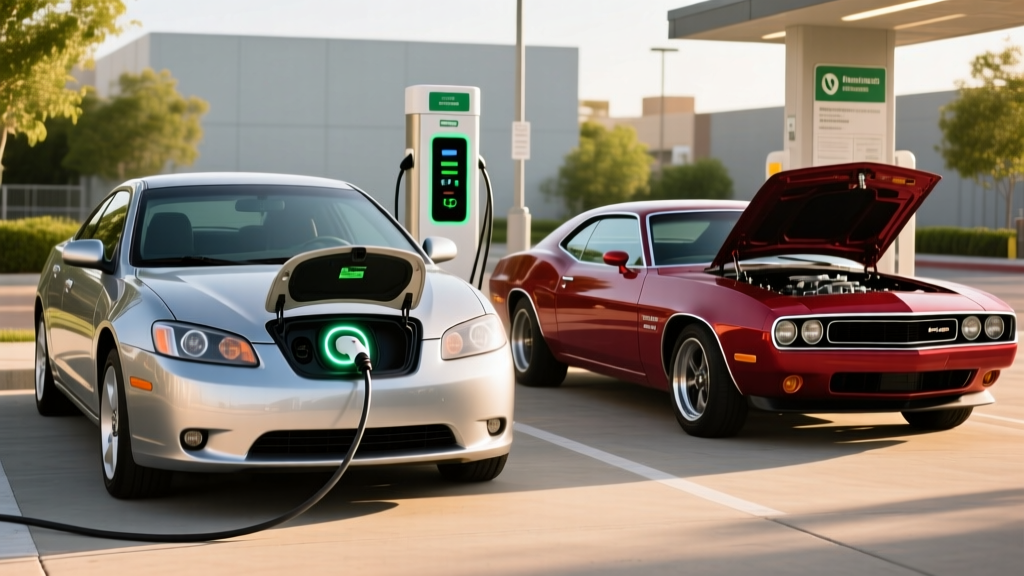
If you still remember the 2004 Chevrolet Monte Carlo SS Supercharged — its 3.8L supercharged V6 pushing 240 hp and 280 lb-ft of torque through the front wheels — you know it was a torque-rich, highway-cruising sedan that got roughly 18 city / 28 highway mpg on premium fuel. Today, a new generation of buyers is asking a practical question: how does the real cost and convenience of owning that classic compare to charging a modern electric vehicle at home and on the road?
This guide breaks down EV charging from the ground up — Levels 1, 2, and DC Fast — and puts hard numbers next to what you'd spend keeping a 04 Monte Carlo SS Supercharged fueled in 2026. Whether you're cross-shopping a used supercharged Chevy against a new EV or simply want a baseline comparison, the data below gives you exact kW speeds, installation costs, connector types, and cost-per-mile figures.
Charging Levels Explained: Speeds in kW and Miles Per Hour
The single most important distinction in EV charging is between kW (kilowatts — the rate of power flow, like water pressure from a hose) and kWh (kilowatt-hours — the total energy stored, like gallons in a tank). A charger rated at 11.5 kW delivers energy at that rate; a 75 kWh battery stores that much total energy. Confusing the two is the most common EV literacy mistake.
Here's how each charging level translates to real range added per hour, based on an average EV efficiency of 3.5 miles per kWh:
| Level | Voltage | Max Power (kW) | Miles of Range Per Hour | Best Use Case |
|---|---|---|---|---|
| Level 1 | 120V (standard outlet) | 1.2–1.9 kW | 3–5 mi/hr | Overnight top-up; PHEVs; low-mileage drivers |
| Level 2 | 240V (dryer-style outlet) | 7.2–19.2 kW | 25–65 mi/hr | Daily home charging; workplace; hotels |
| DC Fast Charge | 400–800V DC | 50–350 kW | 150–1,000+ mi/hr (peak) | Road trips; highway corridors; quick top-ups |
Real-world caveat: DC fast chargers do not sustain peak kW for an entire session. A charger rated at 250 kW may only deliver that rate between roughly 10–30% State of Charge (SoC), then taper as the battery warms and fills. Expect a 10–80% session on a 250 kW charger with a capable vehicle (like the Hyundai Ioniq 5 or Tesla Model 3) to take 18–25 minutes, not the theoretical minimum.
How Much Does It Cost to Install a Home EV Charger?
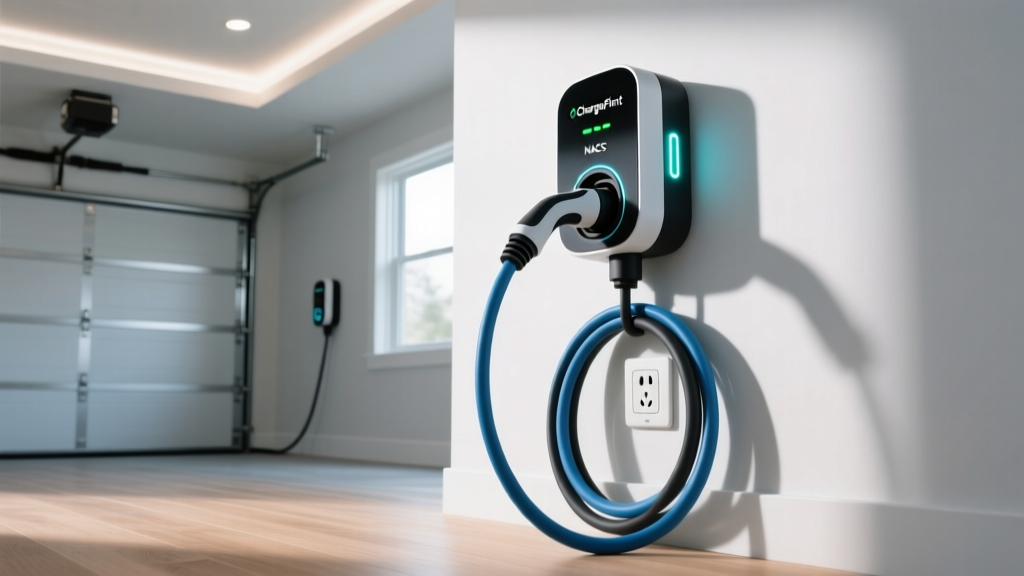
A Level 2 home charger is where 80%+ of all EV charging happens, and installation cost varies enormously based on your home's electrical panel, the distance from panel to charger location, and local permit fees. Here's a realistic breakdown:
| Component | Typical Range | Notes |
|---|---|---|
| Level 2 EVSE equipment (charger unit) | $350–$750 | Smart Wi-Fi models at higher end; 32A–48A |
| Electrician labor (standard install) | $500–$1,500 | Depends on run distance, conduit, drywall work |
| Permit & inspection | $50–$250 | Varies by municipality; some jurisdictions waive |
| Electrical panel upgrade (if needed) | $1,500–$3,500 | Required if panel is 100A or maxed out; 200A upgrade |
| Total (no panel upgrade) | $900–$2,500 | Most common scenario for newer homes |
| Total (with panel upgrade) | $2,400–$6,000 | Older homes with 100A service or full panels |
Electrical requirements: A 48-amp Level 2 charger requires a dedicated 60-amp, 240V circuit (the National Electrical Code requires circuits to be rated at 125% of continuous load). A 32-amp charger needs a 40-amp circuit. If your panel is already near capacity — common in homes built before 1990 with 100-amp service — you'll need a panel upgrade to 200 amps before adding a high-amperage EV circuit.
According to the U.S. Department of Energy, homeowners who install a Level 2 charger can also check for utility rebates that may cover $250–$1,000 of equipment or installation costs, depending on your provider.
Which Connector Is Compatible With My EV?
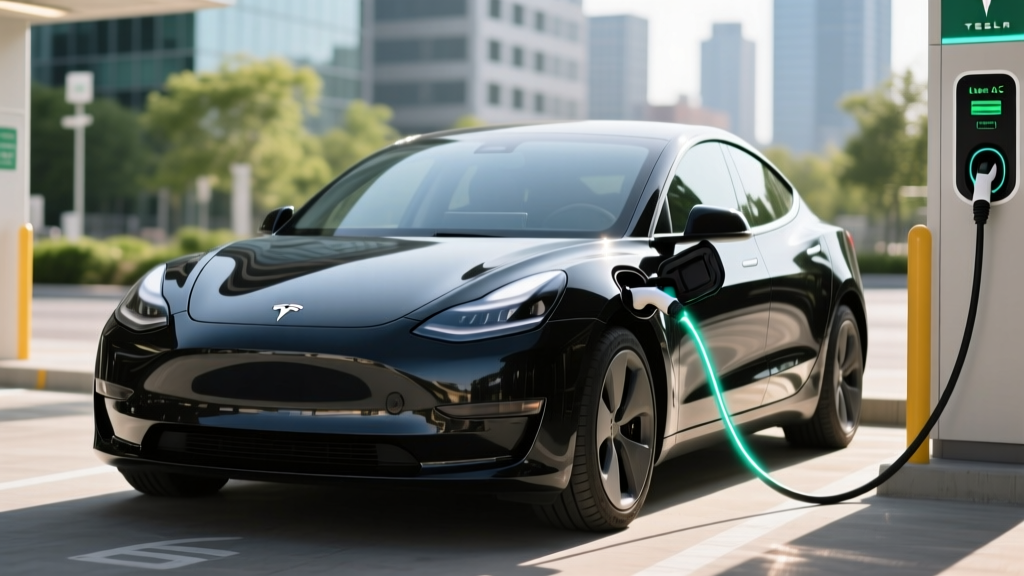
The connector landscape has consolidated significantly since 2024, when Ford, GM, Rivian, and most major automakers committed to adopting the North American Charging Standard (NACS) — Tesla's connector design. Here's where things stand in 2026:
| Connector Type | Brands Using It (Native) | Adapter Needed? |
|---|---|---|
| NACS (Tesla / SAE J3400) | Tesla, Ford, GM, Rivian, Volvo, Polestar, Mercedes, Nissan (new Ariya refresh) | No — native on new models; CCS vehicles need adapter for Superchargers |
| CCS1 (Combined Charging System) | Hyundai, Kia, Volkswagen, BMW, Stellantis (legacy models) | NACS-to-CCS adapter (~$150–$250) needed for Tesla Supercharger access |
| CHAdeMO | Nissan Leaf (legacy only — no new models) | Increasingly rare; no adapter to NACS; limited DCFC access |
For home Level 2 charging, all EVs (except Tesla) use the J1772 connector. Tesla provides a J1772-to-NACS adapter in the box with every vehicle, so any Level 2 home charger will work with any EV. For DC fast charging, check whether your vehicle has a native NACS port or still uses CCS1 — this determines which public networks you can access without an adapter.
Cost Per Mile: EV Charging vs. Fueling a 04 Monte Carlo SS Supercharged
The 2004 Monte Carlo SS Supercharged carries an EPA rating of 18 city / 28 highway mpg. With a combined driving cycle, figure roughly 21 mpg on premium unleaded. At a 2026 national average premium price of $4.15/gallon, that's about $0.198 per mile in fuel alone.
Now compare that to common EV charging scenarios, using an average EV efficiency of 3.5 mi/kWh (roughly 28.5 kWh/100mi — typical for a midsize crossover like the Tesla Model Y or Hyundai Ioniq 5):
| Scenario | Rate ($/kWh) | Cost Per Mile | Savings vs. Monte Carlo |
|---|---|---|---|
| Home charging (off-peak utility rate) | $0.09–$0.13 | $0.026–$0.037 | 81–87% cheaper |
| Home charging (standard residential rate) | $0.14–$0.18 | $0.040–$0.051 | 74–80% cheaper |
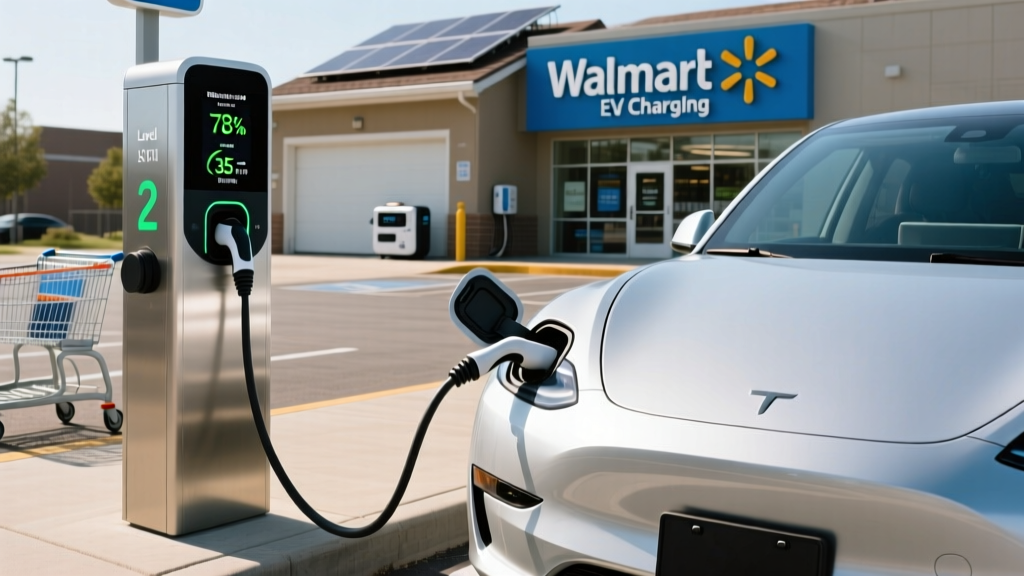
| Public Level 2 (ChargePoint, workplace) | $0.20–$0.35 | $0.057–$0.100 | 49–71% cheaper |
| DC Fast Charging (Electrify America, EVgo) | $0.35–$0.55 | $0.100–$0.157 | 21–49% cheaper |
| 04 Monte Carlo SS Supercharged (premium fuel) | $4.15/gal (21 mpg) | $0.198 | — baseline — |
Annual savings example: At 12,000 miles per year with mostly home charging at $0.15/kWh, an EV costs roughly $514 in electricity vs. $2,376 in premium fuel for the Monte Carlo SS — a difference of about $1,862 annually. Over five years, that's $9,310 in fuel savings, enough to offset a significant portion of an EV's higher purchase price.
Charging Time Examples: 10–80% for Common Battery Sizes
EV batteries come in a range of sizes, and your 10–80% DC fast charge time depends on both battery capacity (kWh) and the vehicle's peak charge rate (kW). Here are representative examples:
- 40 kWh battery (Nissan Leaf, Chevy Bolt-era): On a 50 kW CHAdeMO/CCS charger, 10–80% takes roughly 45–55 minutes. These smaller batteries charge at lower absolute kW.
- 60–65 kWh battery (Tesla Model 3 RWD, base Hyundai Kona Electric): On a 150 kW DCFC, expect 10–80% in 25–35 minutes. The Tesla Model 3 RWD peaks around 170 kW but tapers quickly.
- 75–82 kWh battery (Tesla Model Y LR, VW ID.4, Ford Mustang Mach-E Extended Range): On a 250 kW Supercharger or equivalent, 10–80% in 20–28 minutes. The Model Y Long Range sustains strong charge rates up to ~50% SoC.
- 84–100 kWh battery (Hyundai Ioniq 5, Kia EV6, BMW iX, Rivian R1S): The Ioniq 5 and EV6 use 800V architecture and can peak at 240–250 kW, achieving 10–80% in approximately 18–22 minutes on a compatible 350 kW charger. This is the current benchmark for fast charging.
Charge curve reality: Peak kW is a headline number, not a sustained rate. A vehicle rated for 250 kW may only hold that peak for 2–4 minutes before tapering to 150 kW, then 100 kW, then 50 kW as SoC climbs. The 10–80% time is a more honest metric than peak kW alone. Always precondition your battery (most EVs do this automatically when you navigate to a charger) to hit advertised speeds.
Recommended Home Level 2 Chargers (2026 Picks)
After testing dozens of units and tracking long-term reliability data, these are the home chargers that balance power output, build quality, smart features, and value:
ChargePoint Home Flex (48A)
- Power output: Up to 11.5 kW (48A on a 60A circuit)
- Connector: J1772 (works with all EVs; Tesla uses included adapter)
- Cable length: 23 feet
- Smart features: Wi-Fi, app scheduling, utility demand-response integration, Alexa
- Price: ~$549
- Best for: Most homeowners; adjustable amperage (16A–48A) fits any panel
Wallbox Pulsar Plus (48A)
- Power output: Up to 11.5 kW (48A)
- Connector: J1772 with optional NACS pigtail available
- Cable length: 25 feet
- Smart features: Wi-Fi + Bluetooth, Eco-Smart solar integration, load balancing
- Price: ~$499
- Best for: Homes with solar panels; compact unit with excellent app
Tesla Wall Connector (48A)
- Power output: Up to 11.5 kW (48A)
- Connector: NACS native; J1772 adapter available (~$95) for non-Tesla EVs
- Cable length: 24 feet
- Smart features: Wi-Fi, OTA updates, power sharing between two units, Tesla app integration
- Price: ~$425
- Best for: Tesla households or multi-Tesla garages; best value at 48A
Emporia Level 2 Smart Charger (48A)
- Power output: Up to 11.5 kW (48A)
- Connector: J1772
- Cable length: 24 feet
- Smart features: Wi-Fi, real-time energy monitoring, solar-aware scheduling, integrates with Emporia home energy monitor
- Price: ~$399
- Best for: Budget-conscious buyers who still want smart features and energy tracking
Safety, Code, and Electrical Considerations
EV charging is a high-draw, continuous electrical load — the NEC classifies it as a continuous duty appliance, meaning the circuit must be rated for 125% of the charger's amperage. Here's what you need to know before installation:
- Dedicated circuit: Your Level 2 charger must be on its own dedicated breaker — never shared with other appliances. A 48A charger needs a 60A breaker; a 32A charger needs a 40A breaker.
- GFCI protection: The 2020 NEC requires GFCI (Ground Fault Circuit Interrupter) protection for all EV charging outlets. Hardwired installations may not require an external GFCI breaker if the EVSE has built-in ground-fault protection (most do).
- Outdoor rating: If your charger is installed outside, ensure the unit carries a NEMA 4 (or IP65+) weather rating. All chargers listed above meet this standard, but the connector holster should also be shielded from direct rain and snow accumulation.
- Wire gauge: A 60A circuit typically requires 6 AWG copper wire for runs up to 50 feet; longer runs may need 4 AWG to prevent voltage drop. Your electrician will calculate this based on distance.
- Permit and inspection: Most jurisdictions require an electrical permit for EV charger installation. The inspection ensures proper wire gauge, breaker sizing, grounding, and GFCI compliance. Skipping the permit risks voiding homeowner's insurance coverage for electrical fires.
For a detailed overview of electrical code requirements, the National Fire Protection Association's NEC guidelines provide the authoritative reference your electrician will follow.
What Electrical Upgrades Might I Need?
Not every home can support a 48-amp Level 2 charger without modifications. Here are the common upgrade scenarios:
- Panel capacity: If your home has a 100-amp main panel (common in homes built before 1985), adding a 60-amp EV circuit may exceed the panel's capacity. An upgrade to 200-amp service typically costs $1,500–$3,500 depending on your utility and local labor rates.
- Load calculation: Even with a 200-amp panel, if you're already running electric heat, an electric oven, a dryer, and A/C, you may be near capacity. Your electrician will perform a NEC Article 220 load calculation to determine if you have headroom.
- Smart load management: Some chargers (like the Wallbox Pulsar Plus with Power Meter or the Emporia with energy monitor) offer load-balancing features that dynamically reduce charging amperage when other appliances draw heavily — avoiding the need for a panel upgrade in marginal cases.
- Sub-panel installation: If your main panel is full but has capacity, a sub-panel ($400–$800 installed) can add breaker slots for the EV circuit without a full service upgrade.
- Conduit and wiring distance: If your parking spot is far from the panel (over 50 feet through walls, attic, or underground), expect higher labor costs for conduit runs and potentially larger-gauge wire.
Frequently Asked Questions
How much does it cost to install a home EV charger?
A typical Level 2 home charger installation costs $900–$2,500 when no panel upgrade is needed, covering the charger unit ($350–$750), electrician labor ($500–$1,500), and permit fees ($50–$250). If your home needs a 200-amp panel upgrade, add $1,500–$3,500, bringing the total to $2,400–$6,000. Utility rebates and federal incentives under IRS §30C (up to $1,000 for home charging equipment, subject to income and location requirements) can offset some of this cost.
How fast will each charging level add range?
Level 1 (120V) adds 3–5 miles per hour — sufficient only for PHEVs or very low daily mileage. Level 2 (240V, 48A) adds roughly 35–40 miles per hour, easily replenishing a full day's driving overnight. DC Fast Charging at 150–350 kW can add 150–250+ miles in 15–20 minutes, though actual speed depends on battery size, state of charge, and charge-curve taper.
Which connector/charger is compatible with my EV?
For home Level 2 charging, every EV works with a J1772 connector (Teslas use an included J1772-to-NACS adapter). For DC fast charging, 2026 models from Tesla, Ford, GM, Rivian, Volvo, and others use NACS natively. Hyundai, Kia, VW, and BMW still use CCS1 on current models. CHAdeMO is effectively discontinued — only legacy Nissan Leafs use it, and DCFC infrastructure for CHAdeMO is shrinking.
How much does charging cost per mile vs. gas?
Home EV charging at typical residential rates ($0.14–$0.18/kWh) costs $0.04–$0.05 per mile — roughly 75% less than fueling a 21-mpg vehicle like the 04 Monte Carlo SS Supercharged on premium ($0.20/mile). Even DC fast charging at $0.45/kWh ($0.13/mile) remains cheaper than premium gasoline. The savings are largest for high-mileage drivers and those with access to off-peak utility rates.
What electrical upgrades might I need?
The most common upgrade is a 200-amp panel service ($1,500–$3,500) if your home currently has 100-amp service or a panel near its breaker-slot limit. You may also need a sub-panel if the main panel is full but has spare capacity, or larger-gauge wiring for long conduit runs. A licensed electrician will perform a load calculation to determine exactly what's required. Smart load-management chargers can sometimes avoid a full panel upgrade by dynamically sharing capacity with other circuits.