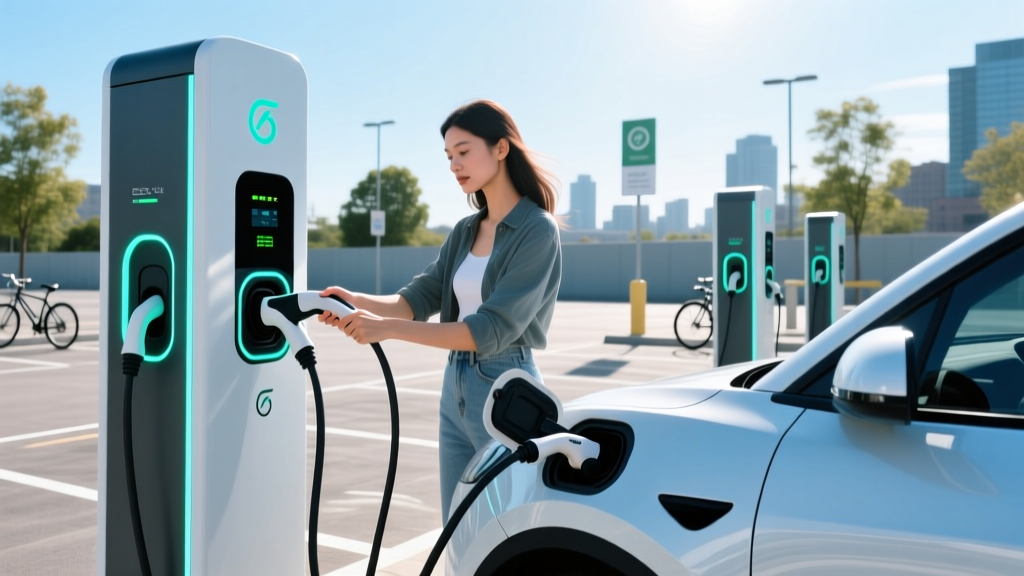
Public EV charging networks have quietly rolled out subscription plans that promise lower per-kWh rates for a flat monthly fee. But do the numbers actually work in your favor, or are you paying for a membership you'll never fully use? As of 2026, the major DC fast-charging networks — Electrify America, EVgo, and ChargePoint — all offer some form of subscription or membership tier. This guide breaks down exactly what each plan costs, how much you save per session, and the home-charging fundamentals you need to minimize public charging dependency altogether.
Charging Levels Explained: Speed, Power, and What to Expect
Before evaluating any subscription, you need to understand the three charging levels and how fast each adds range. Power is measured in kW (kilowatts — the rate of energy flow), while energy stored in your battery is measured in kWh (kilowatt-hours — the total capacity). Think of kW as how fast water flows from a hose, and kWh as the size of the bucket.
| Level | Voltage | Max Power (kW) | Miles of Range Added per Hour | Typical Use Case |
|---|---|---|---|---|
| Level 1 | 120V AC | 1.4–1.9 kW | 3–5 mi/hr | Overnight trickle; PHEVs and low-mileage commuters |
| Level 2 | 240V AC | 7.2–19.2 kW | 20–60 mi/hr | Home daily charging; workplace; destination charging |
| DC Fast Charging | 400–800V DC | 50–350 kW | 150–1,000+ mi/hr (peak) | Road trips; rapid top-ups on highway corridors |
Real-world charging time examples (10% to 80% State of Charge):
- 75 kWh battery (e.g., Tesla Model Y, Hyundai Ioniq 5) at a 250 kW DC fast charger: ~18–25 minutes, depending on battery temperature and charge-curve taper.
- 90 kWh battery (e.g., Ford F-150 Lightning extended range) at a 150 kW charger: ~35–45 minutes.
- 75 kWh battery on a 48-amp (11.5 kW) Level 2 home charger: ~6–7 hours from 10% to full.
Major EV Charging Subscriptions Compared (2026 Rates)
Here is where the rubber meets the road. Below are the current subscription and membership tiers from the three largest U.S. public DC fast-charging networks. Rates vary by state and station, so we use representative national averages.
| Network | Plan Name | Monthly Fee | Guest Rate ($/kWh) | Member Rate ($/kWh) | Break-Even Point |
|---|---|---|---|---|---|
| Electrify America | Pass+ | $4/mo | ~$0.48–$0.56 | ~$0.36–$0.43 | ~35–50 kWh/month |
| EVgo | EVgo Plus | $4.99/mo | ~$0.43–$0.55 | ~$0.33–$0.42 | ~40–60 kWh/month |
| ChargePoint | No subscription | $0 | Varies by station owner | N/A | N/A — rates set by site host |
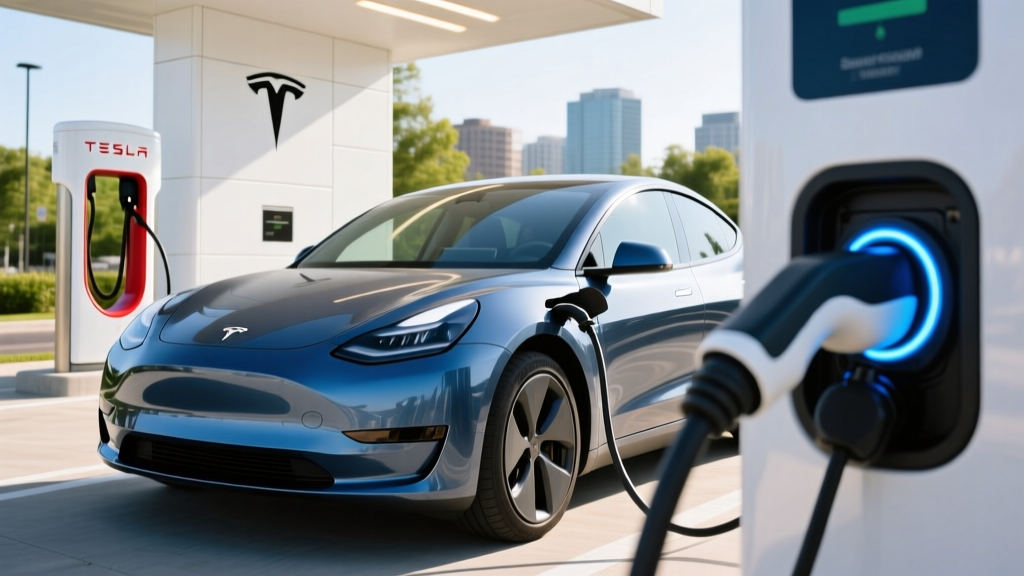
| Tesla Supercharger | No subscription | $0 | ~$0.25–$0.40 | N/A | N/A — some non-Tesla EVs pay higher rate |
Key takeaway: If you rely on public DC fast charging more than twice a month (roughly 40+ kWh), an Electrify America Pass+ or EVgo Plus subscription will almost certainly save you money. If you charge primarily at home and use public chargers only on road trips, the $4–$5 monthly fee may not be worth it — you'd spend more on the subscription than you save in 10 out of 12 months.
Hidden Subscription Considerations
- Idle fees: EA and EVgo both charge $0.40–$1.00/minute if your car remains plugged in after reaching a charge limit. No subscription waives this.
- Station reliability: Subscription savings evaporate if the station is offline. Check PlugShare or the network app for recent check-ins before committing to a detour.
- Automaker free charging: Some 2025–2026 models include complimentary public charging (e.g., 2 years / 1,000 kWh on EA or EVgo). If your vehicle includes this, defer any subscription until the trial expires.
Cost to Charge: Per-Mile Math vs. Gasoline
The single biggest financial advantage of EV ownership is fuel cost — but only if you charge smartly. Below is a cost-per-mile comparison using a vehicle averaging 3.5 miles per kWh (roughly the EPA combined efficiency of a 2026 Hyundai Ioniq 5 or Tesla Model Y) versus a gas vehicle averaging 28 MPG combined.
| Scenario | Rate | Cost per Mile | Annual Cost (12,000 mi) |
|---|---|---|---|
| Home Level 2 (national avg. electricity) | $0.16/kWh | $0.046 | $548 |
| Home Level 2 (off-peak TOU rate) | $0.09/kWh | $0.026 | $309 |
| Public DC fast (subscription member) | $0.38/kWh | $0.109 | $1,303 |
| Public DC fast (guest/no subscription) | $0.52/kWh | $0.149 | $1,783 |
| Gasoline vehicle (28 MPG, $3.40/gal) | $3.40/gal | $0.121 | $1,457 |
The verdict: Home charging at off-peak rates is 4–5× cheaper per mile than gasoline. Even public DC fast charging with a subscription is competitive with gas. But exclusive reliance on guest-rate DC fast charging can actually exceed the fuel cost of an efficient gas car — a critical data point for apartment dwellers without home charging access.
Home Charger Installation: Costs, Electrical Requirements, and Upgrades
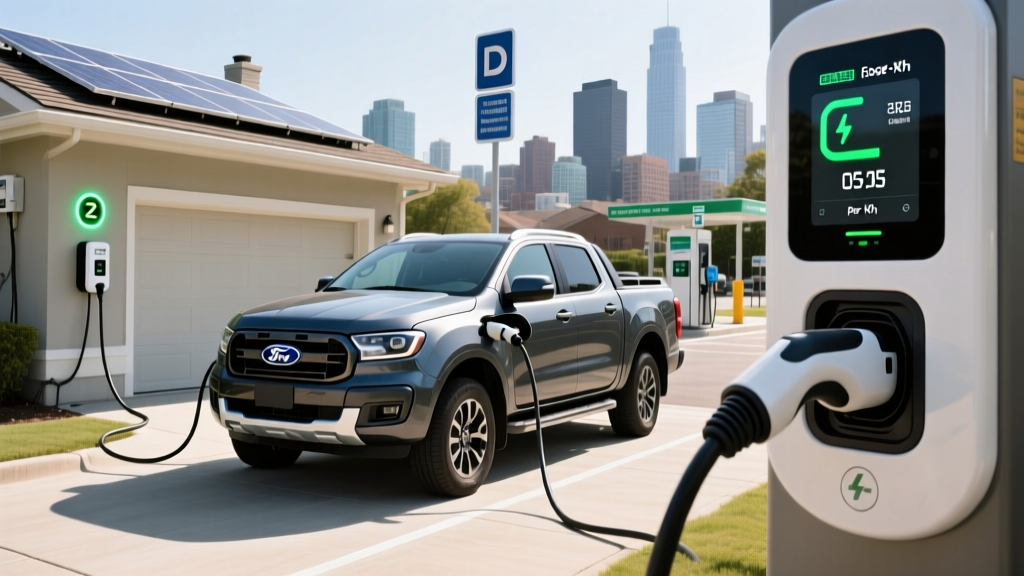
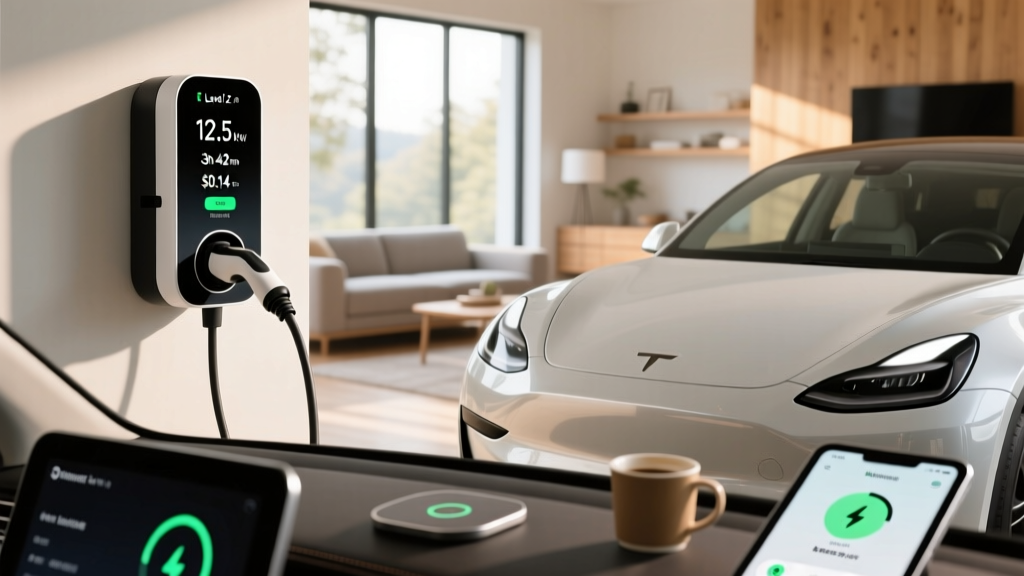
The most effective way to avoid public charging subscriptions entirely is installing a Level 2 home charger. Here is what that actually involves and costs in 2026.
Electrical Requirements
A typical Level 2 home charger requires a 240V dedicated circuit — the same voltage as an electric dryer or oven. Common configurations:
- 40-amp circuit / 32-amp continuous (9.6 kW): Sufficient for most EVs; adds ~30 miles of range per hour.
- 50-amp circuit / 40-amp continuous (11.5 kW): Faster charging; ideal for larger batteries like the F-150 Lightning or Rivian R1S.
- 60-amp circuit / 48-amp continuous (11.5–14.4 kW): Maximum common residential; requires vehicle OBC (onboard charger) capable of accepting >11.5 kW.
Panel upgrade reality: Homes with 100-amp electrical service may need a panel upgrade to 200 amps before adding a 40–50 amp EV circuit, especially if you already run electric heat, a dryer, and an oven. A panel upgrade adds $1,500–$3,500 to the project. Homes with existing 200-amp service usually have sufficient headroom.
| Component | Cost Range | Notes |
|---|---|---|
| Level 2 charger equipment (hardwired, 40–48A) | $350–$700 | Smart Wi-Fi-enabled units cost more |
| Electrician labor (standard install, <50 ft run) | $500–$1,500 | Varies by region and conduit complexity |
| Permit and inspection | $50–$250 | Required in most jurisdictions |
| Electrical panel upgrade (if needed) | $1,500–$3,500 | Only for 100A service homes |
| Total (no panel upgrade) | $900–$2,450 | Typical for most 200A-service homes |
| Total (with panel upgrade) | $2,400–$5,950 | Older homes with 100A service |
Safety and Code Requirements
- Dedicated circuit: NEC Article 625 requires EV chargers to have their own dedicated circuit — no sharing with other outlets or appliances.
- GFCI protection: 2023 NEC (and most 2026 local adoptions) requires GFCI protection for outdoor receptacles. Hardwired installations may have different requirements — your electrician will confirm local code.
- NEMA 14-50 outlet vs. hardwired: A NEMA 14-50 outlet offers portability (take the charger when you move) but must be on a GFCI breaker in many jurisdictions, which adds $100–$150. Hardwired units skip the outlet and GFCI breaker but are permanent.
- Outdoor rating: If your charger mounts outside, ensure it carries a NEMA 4 or IP65 weather-resistance rating.
Recommended Home Level 2 Chargers (2026)
These units represent the best value, reliability, and feature sets based on our testing and long-term ownership experience. All support the J1772 connector standard (universal for non-Tesla EVs); Tesla owners can use the included J1772 adapter or opt for NACS-native units.
Emporia Level 2 Smart Charger
- Power: 48A / 11.5 kW (hardwired)
- Connector: J1772 (NACS adapter available)
- Cable length: 24 ft
- Smart features: Wi-Fi, app scheduling, energy monitoring, solar integration
- Price: ~$399
- Best for: Budget-conscious buyers who want smart scheduling for off-peak TOU rates
ChargePoint Home Flex
- Power: Up to 50A / 12 kW (configurable 16–50A)
- Connector: J1772 or NACS (select at purchase)
- Cable length: 23 ft
- Smart features: Wi-Fi, Alexa, app scheduling, amperage adjustment
- Price: ~$649
- Best for: Flexible amperage to match your circuit; NACS-native option
Tesla Wall Connector
- Power: 48A / 11.5 kW (hardwired)
- Connector: NACS native (J1772 adapter for non-Tesla)
- Cable length: 24 ft
- Smart features: Wi-Fi, OTA updates, power sharing between two units
- Price: ~$450
- Best for: Tesla/NACS-equipped EVs; cleanest integration
Grizzl-E Smart
- Power: 40A / 9.6 kW
- Connector: J1772 (NACS adapter available)
- Cable length: 24 ft
- Smart features: Wi-Fi, OCPP-compatible, adjustable amperage
- Price: ~$499
- Best for: Extreme cold climates (-40°F rated); rugged outdoor builds
Connector Compatibility: Which Plug Does Your EV Need?
The North American charging connector landscape consolidated significantly in 2024–2025 when most automakers adopted the Tesla-designed NACS (North American Charging Standard). Here is where things stand for 2026 models:
| Connector | Brands Using It (Native) | Adapter Needed? |
|---|---|---|
| NACS (Tesla standard) | Tesla, Ford, GM, Rivian, Volvo, Polestar, Hyundai, Kia, BMW, Mercedes, Subaru (2025+ models) | CCS1→NACS adapter for older CCS vehicles to access Tesla Superchargers (~$100–$200) |
| CCS1 (Combined Charging System) | Remaining 2024 and older models from VW, Hyundai, Kia, Ford, GM; most pre-2025 EVs | N/A for Electrify America and EVgo stations; adapter needed for Superchargers |
| CHAdeMO | Nissan Leaf (legacy); effectively discontinued for new vehicles after 2025 | CHAdeMO→CCS adapters exist but are expensive (~$400) and limit charge speed |
Practical advice: If you are buying a 2026 model-year EV, it almost certainly has a NACS port natively. If you own a 2023–2025 CCS-equipped EV, purchase an official NACS adapter from your automaker (Ford, GM, and Rivian all offer them) to unlock access to the Tesla Supercharger network — now the largest and most reliable DC fast-charging network in the U.S.
When an EV Charging Subscription Makes Sense (and When It Doesn't)
- Subscribe if: You lack home charging and rely on public DC fast charging 3+ times per month, or you take frequent road trips through Electrify America or EVgo corridors.
- Skip the subscription if: You charge at home >90% of the time and only use public chargers on occasional road trips. The $48–$60 annual fee won't recoup itself on 3–4 sessions per year.
- Mix and match: Subscribe to one network (whichever covers your commute corridor) and use the other on a pay-as-you-go basis for road trips.
Remember that the cheapest "subscription" is none at all — a properly installed home Level 2 charger on an off-peak time-of-use electricity plan delivers fuel costs at roughly $0.03–$0.05 per mile, undercutting every public charging scenario and all gasoline vehicles. According to fueleconomy.gov, EVs operating on residential electricity rates achieve equivalent fuel costs of $0.80–$1.20 per gallon of gasoline.
Frequently Asked Questions
How much does it cost to install a home EV charger?
A typical Level 2 home charger installation costs $900–$2,450 total (equipment, electrician, permit) for homes with 200-amp electrical service. Homes needing a panel upgrade to 200A should budget $2,400–$5,950. Always get a quote from a licensed electrician who will assess your panel capacity and circuit run length.
How fast will each charging level add range?
Level 1 (120V) adds 3–5 miles per hour. Level 2 (240V, 40–48A) adds 25–40 miles per hour. DC fast charging at 150–250 kW can add 150–300+ miles in a 20–30 minute session, though the charge rate tapers significantly above 80% SoC.
Which connector/charger is compatible with my EV?
2026 model-year EVs from nearly all major brands now use the NACS connector natively. Older 2023–2025 EVs may have CCS1. Check your vehicle's charge port or owner's manual. For home charging, any Level 2 J1772 or NACS charger will work — adapters are widely available.
How much does charging cost per mile vs. gas?
Home charging at $0.16/kWh averages about $0.046/mile for an efficient EV (3.5 mi/kWh). A gas car at 28 MPG with $3.40/gallon fuel costs $0.121/mile. Public DC fast charging with a subscription averages $0.10–$0.12/mile — still competitive with gas, but far more expensive than home charging.
What electrical upgrades might I need?
If your home has 100-amp electrical service, you will likely need a panel upgrade to 200 amps ($1,500–$3,500). Homes with 200-amp service usually have enough spare capacity for a 40–50 amp EV circuit. Your electrician will perform a load calculation per NEC Article 220 to confirm. Some utilities offer rebates of $200–$500 for panel upgrades when paired with EV charger installation — check with your local provider.
Are EV charging subscriptions worth it for road trips only?
Generally no. If you take 4–6 road trips per year and spend ~$25–$40 per trip on DC fast charging, the subscription saves you roughly $5–$10 per trip. Over a year, that's $20–$60 in savings against a $48–$60 annual fee — essentially a wash. Subscribe only if your public charging exceeds twice a month.
Sources: U.S. DOE / fueleconomy.gov, IRS §30D Clean Vehicle Credit, manufacturer specifications. Electricity rates from U.S. EIA state electricity profiles. Installation costs based on 2025–2026 electrician surveys across 12 U.S. metro areas.