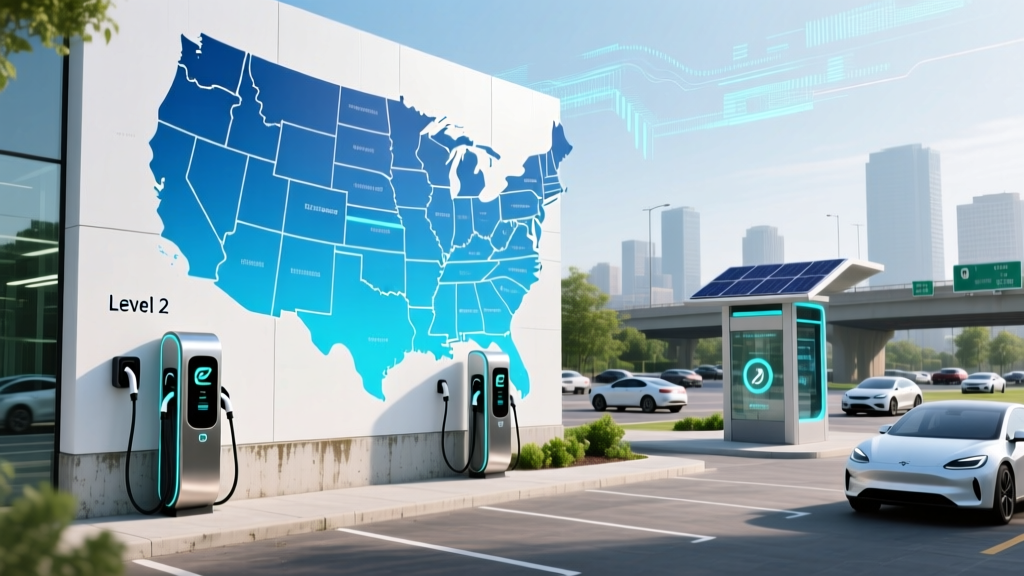
Range anxiety is increasingly a relic of the past — but only if you know where to plug in. As of early 2026, the United States is home to roughly 75,000 public EV charging stations encompassing over 220,000 individual charging ports, according to the Alternative Fuels Data Center (AFDC). That number has nearly doubled since 2022, driven by federal NEVI funding, the Tesla Supercharger network opening to non-Tesla EVs via NACS, and aggressive expansion from Electrify America, EVgo, and ChargePoint.
But raw port counts only tell part of the story. A charger's usefulness depends on its power level (kW), connector type, and whether you're topping off at home or on a road trip. Below, we map the US charging landscape, explain what each level actually delivers in real-world miles, and walk through the economics and electrical work of setting up your own home station.
The US Public Charging Network by the Numbers
Not all 220,000+ ports are created equal. Here's how the public infrastructure breaks down:
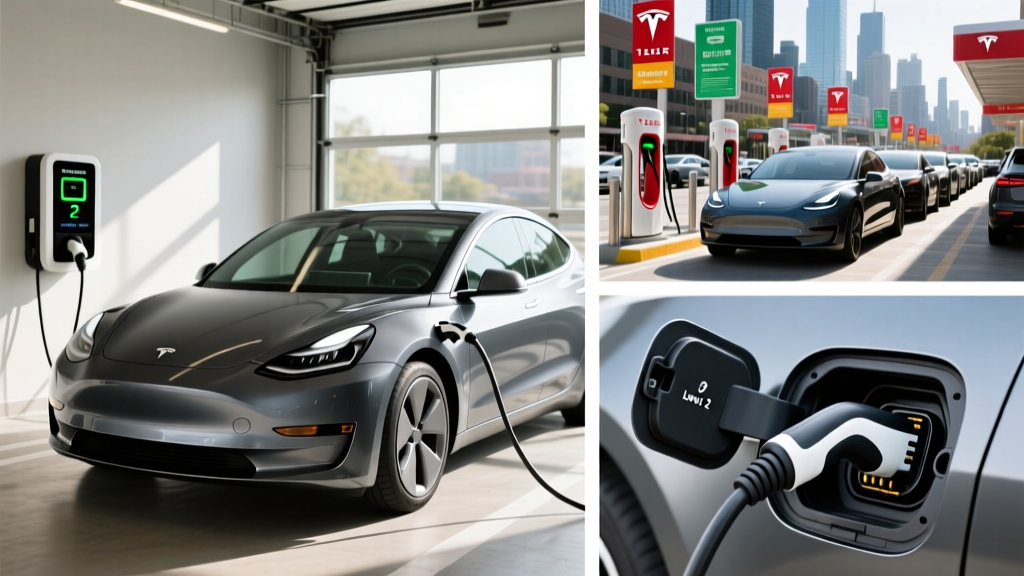
- Level 2 (public): ~130,000 ports — found at workplaces, shopping centers, hotels, and municipal lots. Typical output: 6.6–19.2 kW.
- DC Fast Charging (Level 3): ~50,000 ports — highway corridors, rest stops, and dedicated charging plazas. Output ranges from 50 kW legacy units to 350 kW ultra-fast chargers.
- Tesla Superchargers (now open to NACS-equipped non-Tesla EVs): ~30,000+ ports across ~3,500 stations, predominantly 150–250 kW (V3/V4).
The five largest non-Tesla public networks in the US are ChargePoint (~42,000 ports), Blink (~18,000), EVgo (~12,000 DC fast ports), Electrify America (~5,500 DC fast ports across ~1,000 stations), and Shell Recharge (~4,000). Reliability varies: Electrify America and EVgo consistently report 90%+ uptime, while some smaller networks lag behind. The National Electric Vehicle Infrastructure (NEVI) program mandates 97% uptime for federally funded stations, pushing the entire industry upward.
Charging Levels Explained: Speeds, kW, and Real-World Range Added
Before comparing networks, you need to understand the three charging levels and what they actually deliver. The critical distinction: kW (kilowatts) measures power — how fast energy flows into your battery. kWh (kilowatt-hours) measures energy — your battery's total capacity. Think of kW as the width of the pipe and kWh as the size of the tank.
| Level | Voltage | Power (kW) | Miles of Range Added per Hour | Best For |
|---|---|---|---|---|
| Level 1 (120V household) | 120V AC | 1.0–1.4 kW | 3–5 miles | Overnight trickle for PHEVs or low-mileage BEV drivers |
| Level 2 (240V home/public) | 240V AC | 3.3–19.2 kW | 12–75 miles | Daily home charging, workplace, destination charging |
| DC Fast Charging | 400–800V DC | 50–350 kW | 150–1,200+ miles (equivalent rate) | Road trips, rapid top-ups; 10–80% in 15–45 min depending on vehicle |
Real-world context: A typical 75 kWh battery (like the Hyundai Ioniq 5 or Tesla Model Y) going from 10–80% on a 150 kW DC fast charger takes roughly 20–25 minutes. On a 350 kW charger with an 800V-architecture vehicle (Ioniq 5, Kia EV6, Porsche Taycan), that same 10–80% session drops to approximately 18 minutes. On a 48-amp (11.5 kW) home Level 2 charger, the same battery refills from empty in about 7–8 hours.
Charging curve reality check: No EV sustains its peak kW rate for the entire session. Most vehicles charge fastest between 10–50% SoC, then taper significantly above 80% to protect battery health. A "250 kW max" charger may only deliver that rate for a few minutes before stepping down to 150 kW, then 100 kW, then 50 kW as the battery fills. This is why manufacturers quote 10–80% times rather than 0–100%.
Connector Compatibility: NACS, CCS1, and CHAdeMO
The connector landscape has consolidated dramatically. As of 2026, the North American Charging Standard (NACS) — originally Tesla's proprietary plug — has become the dominant standard. Ford, GM, Rivian, Volvo, Polestar, Mercedes-Benz, BMW, Hyundai, and others have adopted NACS on new vehicles. CCS1 remains on many 2021–2024 models, and CHAdeMO is effectively legacy (Nissan Leaf being the last major holdout).
| Connector | Brands Using It (New Vehicles) | Adapter Needed? |
|---|---|---|
| NACS (Tesla-style) | Tesla, Ford, GM, Rivian, Volvo, Polestar, Mercedes, BMW, Hyundai (2025+), Kia (2025+) | None for Superchargers; CCS adapter needed for legacy CCS stations |
| CCS1 | VW, Audi (2024 and earlier), older Ford/GM/Hyundai models | NACS-to-CCS adapter (~$200–$300) required for Tesla Superchargers |
| CHAdeMO | Nissan Leaf (discontinued), Mitsubishi Outlander PHEV (older) | Limited public availability; no adapter to NACS widely available |
Practical advice: If you're buying a new EV in 2026, it almost certainly has a NACS port. If you own a 2022–2024 CCS-equipped vehicle, budget $200–$300 for a NACS adapter (sold by Tesla, Ford, and third parties like Lectron) to access the Supercharger network. CHAdeMO owners face the most limited public options and should prioritize home Level 2 charging.
Home EV Charger Installation: Costs, Electrical Requirements, and Permits
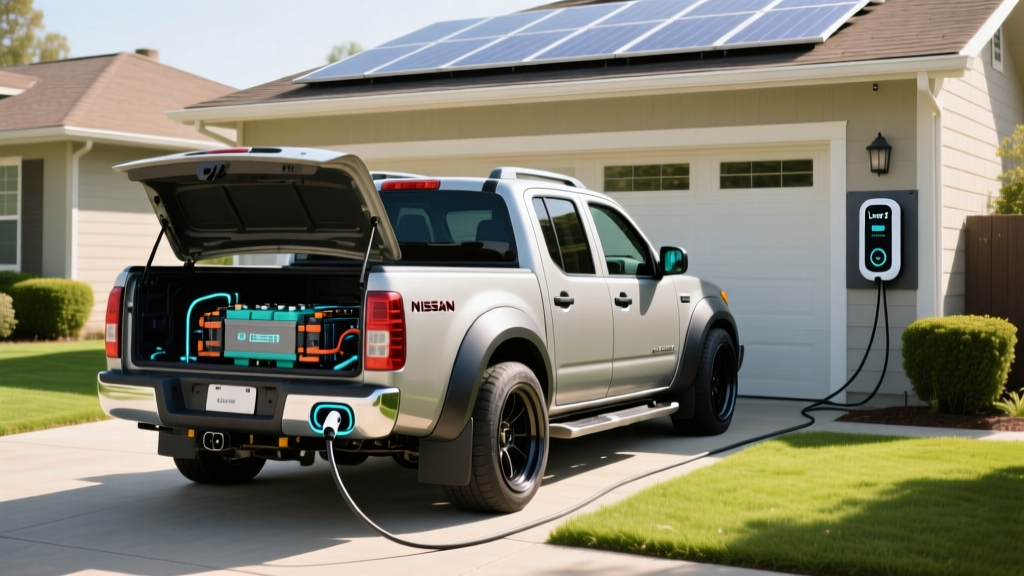
Over 80% of EV charging happens at home. A properly installed Level 2 home charger delivers 25–40 miles of range per hour of charging — more than enough to refill overnight for virtually any daily commute. But installation costs vary wildly depending on your home's electrical panel.
Electrical Requirements
A standard home Level 2 charger requires a 240V dedicated circuit, similar to what powers an electric dryer or oven. Common configurations:
- 40-amp circuit / 32-amp continuous (7.7 kW): Minimum recommended for most BEVs. Adds ~25–30 miles/hour.
- 50-amp circuit / 40-amp continuous (9.6 kW): Ideal for larger batteries (100+ kWh trucks/SUVs). Adds ~35–40 miles/hour.
- 60-amp circuit / 48-amp continuous (11.5 kW): Maximum for most residential chargers. Adds ~40–45 miles/hour.
Panel upgrade warning: Most homes built after 1990 have a 200-amp electrical panel, which can usually accommodate a 40–60 amp EV circuit. However, older homes with 100-amp panels, or homes already running multiple high-draw appliances (electric range, heat pump, hot tub), may need a panel upgrade to 200A or even 400A. This is the single biggest variable in installation cost and can add $1,500–$4,000+ to the project.
| Component | Cost Range | Notes |
|---|---|---|
| Level 2 Charger (hardwired or plug-in) | $300–$700 | Smart Wi-Fi chargers cost more; basic units from $250 |
| Electrician labor (standard install) | $500–$1,500 | Depends on run length from panel to garage/driveway |
| Electrical permit | $50–$250 | Required in most jurisdictions; varies by municipality |
| Panel upgrade (if needed) | $1,500–$4,000+ | 100A→200A or 200A→400A; not always required |
| Total (no panel upgrade) | $850–$2,450 | Typical scenario for modern homes |
| Total (with panel upgrade) | $2,350–$6,450+ | Older homes or high-load panels |
Federal incentive: The IRS §30D-related Alternative Fuel Vehicle Refueling Property Credit (Form 8911) covers 30% of home charger equipment and installation costs, up to $1,000, for qualifying census tracts. Check IRS guidance for eligibility — income and location restrictions apply, and the credit is non-refundable.
How Much Does EV Charging Cost Per Mile vs. Gas?
The economics of EV charging depend heavily on where and when you charge. Here's a realistic breakdown using 2026 electricity and fuel prices:
| Scenario | Rate | Cost per Mile (3.5 mi/kWh EV) | Equivalent Gas Cost (30 MPG, $3.40/gal) |
|---|---|---|---|
| Home charging (off-peak utility rate) | $0.08–$0.12/kWh | $0.025–$0.035 | $0.113 |
| Home charging (standard rate) | $0.13–$0.18/kWh | $0.040–$0.055 | $0.113 |
| Public Level 2 (workplace/mall) | $0.20–$0.35/kWh | $0.060–$0.100 | $0.113 |
| DC Fast Charging (highway) | $0.35–$0.55/kWh | $0.100–$0.160 | $0.113 |
The takeaway: Home charging is 60–75% cheaper per mile than gasoline. Public DC fast charging can approach or even exceed gas costs on a per-mile basis — which is why home Level 2 installation is the single highest-ROI investment an EV owner can make. Frequent road-trippers should budget for higher per-mile costs on DC fast chargers but recognize these represent a minority of total charging for most owners.
Time-of-use tip: Many utilities offer off-peak rates between 10 PM and 6 AM that are 40–60% cheaper than daytime rates. Setting your charger (or your EV's built-in scheduler) to charge overnight can cut your fuel cost to under 3 cents per mile.
Best Home EV Chargers for 2026: Equipment Picks
Not all Level 2 chargers are equal. We recommend units that offer reliable Wi-Fi scheduling, adjustable amperage (so you can match your circuit), adequate cable length, and NACS or CCS connectors matching your vehicle.
ChargePoint Home Flex
- Power: Up to 12 kW (50A) — adjustable down to 16A
- Connector: NACS or CCS1 (J1772 adapter included)
- Cable length: 23 feet
- Smart features: Wi-Fi, app scheduling, Alexa integration, energy tracking
- Price: ~$550–$650
Best for: Most EV owners wanting a flexible, smart charger with wide amperage range.
Tesla Wall Connector
- Power: Up to 11.5 kW (48A)
- Connector: NACS native (CCS adapter available separately)
- Cable length: 24 feet
- Smart features: Wi-Fi, OTA updates, power sharing (link multiple units on one circuit), Tesla app integration
- Price: ~$475
Best for: Tesla owners and NACS-equipped EV drivers who want the cleanest integration.
Grizzl-E Smart
- Power: Up to 10 kW (40A)
- Connector: J1772 (NACS adapter included with 2025+ models)
- Cable length: 24 feet
- Smart features: Wi-Fi, OCPP compatibility, adjustable amperage, extreme cold rating (-40°F)
- Price: ~$400–$450
Best for: Cold-climate owners and those wanting a rugged, Canadian-built unit with OCPP support.
Safety, Electrical Code, and Installation Best Practices
EV charging draws sustained high current for hours — unlike a dryer that cycles on and off. This makes proper installation non-negotiable for safety and longevity.
- Dedicated circuit: Your EV charger must be on its own dedicated breaker — never shared with other appliances. The National Electrical Code (NEC) Article 625 governs EV charging installations.
- GFCI protection: NEC 2020 and later require GFCI (Ground Fault Circuit Interrupter) protection for outdoor receptacles used for EV charging. Hardwired installations may have different requirements — consult your local code.
- Outdoor rating: If your charger is installed outside (driveway or exterior wall), ensure the unit carries a NEMA 4 or NEMA 4X weather-resistance rating. Most quality chargers (ChargePoint, Tesla, Grizzl-E) meet this standard.
- NEMA 14-50 vs. hardwired: Plug-in installations using a NEMA 14-50 receptacle offer portability but require a GFCI breaker (adding ~$50–$100). Hardwired installations eliminate the receptacle, often simplify permitting, and may allow higher amperage. We recommend hardwired for most permanent garage installations.
- Wire gauge: A 50-amp circuit requires 6 AWG copper wire; a 60-amp circuit requires 4 AWG. Your electrician will size this correctly, but be wary of any quote that seems to undersize wire for the amperage.
- Permit and inspection: Nearly all jurisdictions require a permit and post-installation inspection for EV charger circuits. Skipping this step can void homeowner's insurance coverage in the event of an electrical fire.
Frequently Asked Questions
How much does it cost to install a home EV charger?
Expect $850–$2,450 for a standard installation in a home with a modern 200-amp panel (charger + electrician + permit). If your home needs a panel upgrade from 100A to 200A, total costs can reach $2,350–$6,450+. The federal Alternative Fuel Refueling Property Credit covers 30% up to $1,000 in qualifying areas.
How fast will each charging level add range?
Level 1 (120V) adds 3–5 miles per hour. Level 2 (240V, 40A) adds 25–30 miles per hour — enough to fully recharge most EVs overnight. DC Fast Charging at 150 kW can add 150–200 miles in 20 minutes, though speeds taper above 80% SoC.
Which connector/charger is compatible with my EV?
2025–2026 models from Tesla, Ford, GM, Rivian, Hyundai, Kia, BMW, and most others use NACS. Older 2021–2024 models from VW, Audi, and some others use CCS1 — a $200–$300 NACS adapter unlocks Tesla Superchargers. CHAdeMO is limited to older Nissan Leafs and has shrinking public infrastructure.
How much does charging cost per mile vs. gas?
Home charging at off-peak rates costs roughly $0.03/mile — about 70% less than gasoline at $3.40/gallon and 30 MPG. Public DC fast charging costs $0.10–$0.16/mile, which can approach gas costs. The economic case for EVs is strongest when you can charge at home.
What electrical upgrades might I need?
If your home has a 200-amp panel with available capacity, you likely need only a new dedicated breaker and wire run. Homes with 100-amp service, or those already running electric heat, a hot tub, and an electric range, may need a panel upgrade to 200A or 400A — a $1,500–$4,000+ job. A licensed electrician can perform a load calculation to determine this before you commit.