Knowing your electric vehicle charging station time is one of the most practical pieces of EV ownership. It dictates your road-trip strategy, your daily routine, and your home electrical setup. Yet charging times are routinely misunderstood—partly because automakers quote peak charge rates that aren't sustained, and partly because the difference between kW (power, the rate of flow) and kWh (energy, the battery's capacity) trips up even experienced buyers.
This guide gives you exact charging times across all three charging levels, real-world cost comparisons, home installation requirements, and equipment picks for 2026. No marketing fluff, just the numbers you need to plan.
Understanding kW vs kWh: The Single Most Important Distinction
Before looking at times, get this straight:
- kW (kilowatts) = power, or how fast energy flows into the battery. Think of it as the width of a hose.
- kWh (kilowatt-hours) = energy, or how much the battery holds. Think of it as the size of the tank.
A 77 kWh battery charged at 11 kW takes roughly 7 hours (77 ÷ 11). The same battery at 150 kW (peak DC fast charging) could theoretically fill in about 30 minutes—but charging curves taper well before 100%, so real times are longer. We'll break those curves down below.
Charging Levels Explained: Speeds, Times, and Use Cases
Every EV sold in the US charges at one or more of three levels. Here's what each delivers in practical terms:
| Level | Voltage / Amps | Power (kW) | Miles of Range Added per Hour | Typical Use Case |
|---|---|---|---|---|
| Level 1 | 120V / 12A | ~1.4 kW | 3–5 miles | Overnight top-ups, PHEVs, low-mileage drivers |
| Level 2 | 240V / 32–48A | 7.7–11.5 kW | 25–44 miles | Daily home charging, workplace, retail locations |
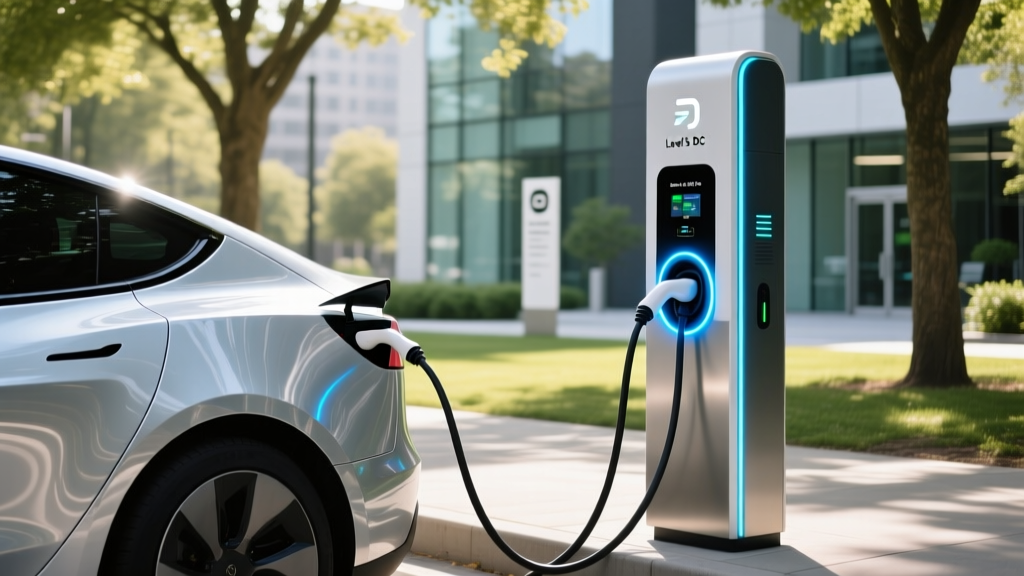
| DC Fast Charging | 400–800V DC | 50–350 kW | 150–800+ miles (at peak rate) | Road trips, highway corridors, quick top-ups |
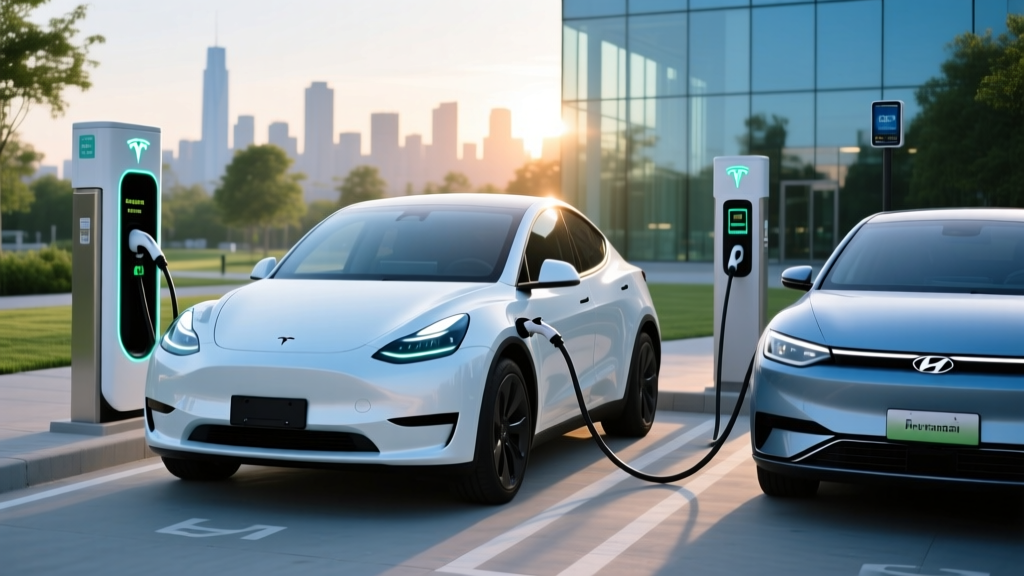
The "miles per hour" column assumes an average efficiency of 3–3.5 miles per kWh (typical for a midsize crossover EV like the Hyundai Ioniq 5 or Tesla Model Y). Heavier vehicles like the Ford F-150 Lightning or Rivian R1T will add fewer miles per hour at the same kW rate.
Real Charging Times: 10–80% for Common Battery Sizes
Most EV owners charge between 10% and 80% State of Charge (SoC) on DC fast chargers. Charging slows dramatically above 80% to protect battery health—a phenomenon called the charge curve taper. Here's what 10–80% looks like for popular 2026 models:
| Vehicle | Battery (kWh usable) | Peak DC Rate (kW) | 10–80% Time | Level 2 (11.5 kW) 0–100% |
|---|---|---|---|---|
| Tesla Model Y Long Range | ~75 kWh (NMC) | 250 kW | ~25 min | ~6.5 hours |
| Hyundai Ioniq 5 (800V architecture) | 77.4 kWh (NMC) | 240 kW | ~18 min | ~6.7 hours |
| Ford F-150 Lightning Extended Range | ~131 kWh (NMC) | 150 kW | ~45 min | ~11.5 hours |
| Chevrolet Equinox EV | 85 kWh (NMC) | 150 kW | ~32 min | ~7.5 hours |
| BMW iX xDrive50 | 105.2 kWh (NMC) | 200 kW | ~34 min | ~9.2 hours |
How Much Does It Cost to Install a Home EV Charger?
Home Level 2 charging is where most EV owners do 80–90% of their charging. But installation costs vary enormously depending on your home's electrical panel, the distance from panel to charger location, and local permit fees.
| Component | Low-End Cost | High-End Cost | Notes |
|---|---|---|---|
| Level 2 Charger (hardware) | $300 | $700 | 32A–48A smart chargers; see equipment picks below |
| Electrician labor | $400 | $1,500 | Depends on run distance, wall type, conduit needs |
| Permit & inspection | $50 | $300 | Varies by municipality; some jurisdictions waive EV permits |
| Electrical panel upgrade (if needed) | $1,500 | $4,000 | Required if panel is maxed out or below 150A total service |
| Total (no panel upgrade) | $750 | $2,500 | Most homes with 200A service fall here |
| Total (with panel upgrade) | $2,250 | $6,500 | Older homes with 100A service often need this |
Electrical requirements: A 48-amp Level 2 charger requires a dedicated 60-amp circuit (the National Electrical Code requires circuits to be rated at 125% of continuous load). A 32-amp charger needs a 40-amp circuit. Both require 240V service, the same as an electric dryer or oven.
Panel upgrade gotcha: If your home has a 100-amp main panel, adding a 60-amp EV circuit may push you over the calculated load. A licensed electrician will perform a load calculation per NEC Article 220. If you're over, you'll need a panel upgrade to 200 amps—or consider a smart panel-level load manager like the Emporia Smart Load Center, which can throttle charger amperage dynamically to avoid exceeding your panel's capacity.
Which Connector Is Compatible with My EV?
As of 2026, the connector landscape has consolidated significantly. Tesla's North American Charging Standard (NACS) has been adopted by nearly every major automaker, but CCS1 connectors are still widely used on vehicles sold between 2019 and 2024.
| Connector | Brands Using It (2026 models) | Adapter Needed? |
|---|---|---|
| NACS (Tesla) | Tesla (all), Ford, GM, Rivian, Volvo, Polestar, Hyundai/Kia (2025+), BMW, Mercedes-Benz | No — native NACS on these vehicles |
| CCS1 | VW ID.4 (pre-2026), older Ford/GM/Hyundai/Kia models, Lucid, some legacy EVs | NACS-to-CCS adapter needed for Tesla Superchargers (~$200–$250) |
| CHAdeMO | Nissan Leaf (2025 final model year — discontinued after) | Largely obsolete; CHAdeMO stations declining |
Adapter note: If you own a CCS1-equipped vehicle and want access to the Tesla Supercharger network (over 30,000 stalls in North America), you'll need a CCS-to-NACS adapter. Ford, GM, and Rivian provide these adapters to owners for free or at a discount. Third-party options from Lectron and A2Z run $180–$250. Per Tesla's support page, only approved adapters should be used to maintain warranty coverage.
Cost to Charge: Home vs Public vs Gas
Charging cost is where EVs typically win decisively over gasoline—but only if you charge smartly. Here's a cost-per-mile breakdown using a midsize EV averaging 3.2 miles per kWh (about 31 kWh/100 miles, similar to a 2026 Tesla Model Y):
| Charging Scenario | Cost per kWh | Cost per Mile | Cost for 300 Miles |
|---|---|---|---|
| Home, off-peak utility rate | $0.08–$0.12 | $0.03–$0.04 | $9–$12 |
| Home, standard rate | $0.14–$0.18 | $0.04–$0.06 | $12–$18 |
| Public Level 2 (ChargePoint, EVgo) | $0.25–$0.49 | $0.08–$0.15 | $24–$45 |
| DC Fast Charging (Electrify America, Tesla) | $0.35–$0.55 | $0.11–$0.17 | $33–$51 |
| Gasoline car (28 MPG combined, $3.50/gal) | — | $0.125 | $37.50 |
The data is clear: home charging at off-peak rates costs roughly one-quarter to one-third what gasoline does per mile. Even public DC fast charging is often competitive with gas, depending on your state's fuel prices. According to fueleconomy.gov, the average 2026 EV achieves 97–130 MPGe combined, making electricity the cheaper fuel in nearly every US market when charging at home.
Pro tip: Many utilities offer time-of-use (TOU) plans that drop rates to $0.05–$0.08/kWh between midnight and 6 AM. If your utility offers this, schedule your charger to operate in that window. Over a year of 12,000 miles of driving, off-peak home charging saves $200–$400 compared to standard-rate charging.
Equipment Recommendations: Top Home Chargers for 2026
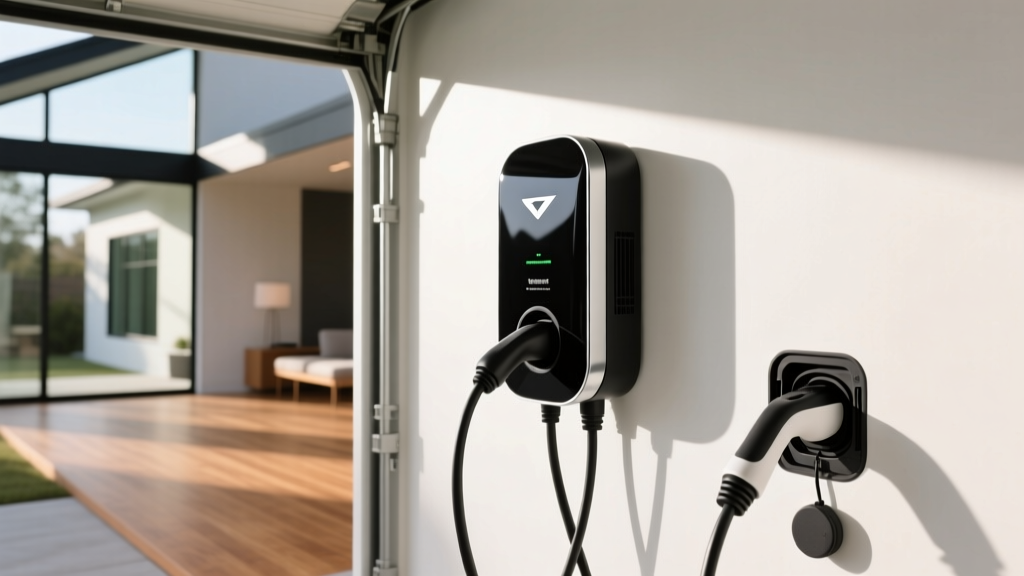
Here are three Level 2 home chargers we recommend based on reliability, smart features, and value. All are hardwired or NEMA 14-50 plug compatible, and all support at least 40 amps.
ChargePoint Home Flex (2nd Gen)
- Power: Up to 11.5 kW (48A)
- Connector: NACS (native), CCS1 adapter available
- Cable length: 23 feet
- Smart features: Wi-Fi, app scheduling, Alexa integration, energy tracking
- Price: ~$550–$600
- Best for: Most EV owners; flexible amperage settings (16A–48A) let you match your circuit
Tesla Wall Connector
- Power: Up to 11.5 kW (48A)
- Connector: NACS native (CCS adapter required for non-Tesla vehicles)
- Cable length: 24 feet
- Smart features: Wi-Fi, over-the-air updates, power sharing between multiple units
- Price: ~$475
- Best for: Tesla owners or households with multiple NACS-equipped EVs (power sharing allows two units on one 60A circuit)
Emporia Level 2 EV Charger
- Power: Up to 11.5 kW (48A)
- Connector: NACS (2025+ models)
- Cable length: 24 feet
- Smart features: Real-time energy monitoring, solar integration, load management with Emporia Vue panel monitor
- Price: ~$400
- Best for: Homes with solar panels or those wanting granular energy monitoring; best value at 48A
Safety, Code, and Installation Considerations
EV charging involves sustained high-current draw—unlike a dryer that cycles on and off, a Level 2 charger can run at full load for 6–10 hours straight. This makes proper installation non-negotiable.
- Dedicated circuit: Your EV charger must have its own dedicated breaker. Never share a circuit with other appliances.
- GFCI protection: The 2023 NEC update (adopted by most states by 2026) requires GFCI protection for all EV charging outlets. Hardwired chargers with built-in ground-fault protection satisfy this requirement. If using a NEMA 14-50 receptacle, your electrician must install a GFCI breaker—which adds $50–$100 to the panel cost.
- Outdoor rating: If mounting outside, ensure the charger is rated NEMA 4 (weatherproof). The ChargePoint Home Flex, Tesla Wall Connector, and Emporia charger all carry NEMA 4 ratings.
- Cable management: A 23–24 foot cable is long enough for most driveways and garages. If your parking spot is farther from the mount point, consider a 25-foot option or plan conduit routing accordingly.
- Permits: Most jurisdictions require an electrical permit for a new 240V circuit. The electrician typically pulls this. Expect a post-install inspection—don't skip it, as unpermitted work can void home insurance coverage.
Always hire a licensed electrician experienced with EV charger installs. Ask whether they've done load calculations for EV circuits before. Per the National Electrical Contractors Association, a qualified installer will walk you through panel capacity, wire gauge (6 AWG copper for 48A/60A circuits), and conduit requirements.
Frequently Asked Questions
How much does it cost to install a home EV charger?
Expect $750–$2,500 for a standard installation (charger, electrician, permit) if your electrical panel has sufficient capacity. If your panel needs an upgrade from 100A to 200A, add $1,500–$4,000. The total with a panel upgrade can reach $6,500 for older homes.
How fast will each charging level add range?
Level 1 (120V) adds 3–5 miles per hour. Level 2 (240V) adds 25–44 miles per hour depending on amperage. DC fast charging adds 150–800+ miles per hour at peak rate, but only for the first portion of the charge session—rates taper above 50–60% SoC.
Which connector/charger is compatible with my EV?
Check your vehicle's charge port. Most 2025–2026 EVs from Tesla, Ford, GM, Rivian, Hyundai, Kia, BMW, and Volvo use NACS. Older models (2019–2024) from VW, some Hyundai/Kia, and others may use CCS1. CHAdeMO is limited to the Nissan Leaf and is being phased out. When in doubt, consult your owner's manual or the fueleconomy.gov vehicle listing.
How much does charging cost per mile vs gas?
Home charging at off-peak rates costs $0.03–$0.04 per mile. A comparable gasoline car at 28 MPG and $3.50/gallon costs about $0.125 per mile. Even public DC fast charging at $0.35–$0.55/kWh costs $0.11–$0.17 per mile—roughly on par with or slightly cheaper than gas.
What electrical upgrades might I need?
If your home has a 200-amp electrical panel with available breaker spaces and load headroom, you likely need no upgrade. If your panel is 100 amps or nearly full, a panel upgrade to 200 amps ($1,500–$4,000) or a smart load-management device ($200–$500 plus installation) may be necessary. Your electrician will determine this during a load calculation.
Does DC fast charging damage my battery?
Occasional DC fast charging has minimal impact on battery health. Modern thermal management systems and charge-curve algorithms protect the pack. However, daily DC fast charging at high rates can accelerate degradation by 1–3% over 100,000 miles compared to Level 2 charging. For daily use, Level 2 at home remains the best practice for long-term battery health.
Can I charge my EV with a regular household outlet?
Yes, but slowly. A standard 120V outlet (Level 1) delivers about 1.4 kW, adding 3–5 miles of range per hour. This works for plug-in hybrids with small batteries (8–18 kWh) or for EV drivers who travel fewer than 30 miles per day. For a 77 kWh battery, a full Level 1 charge from 10% to 100% takes roughly 50+ hours—impractical for most BEV owners.