Why a 2005 Chevrolet Impala SS Supercharged Makes a Surprising EV Charging Benchmark
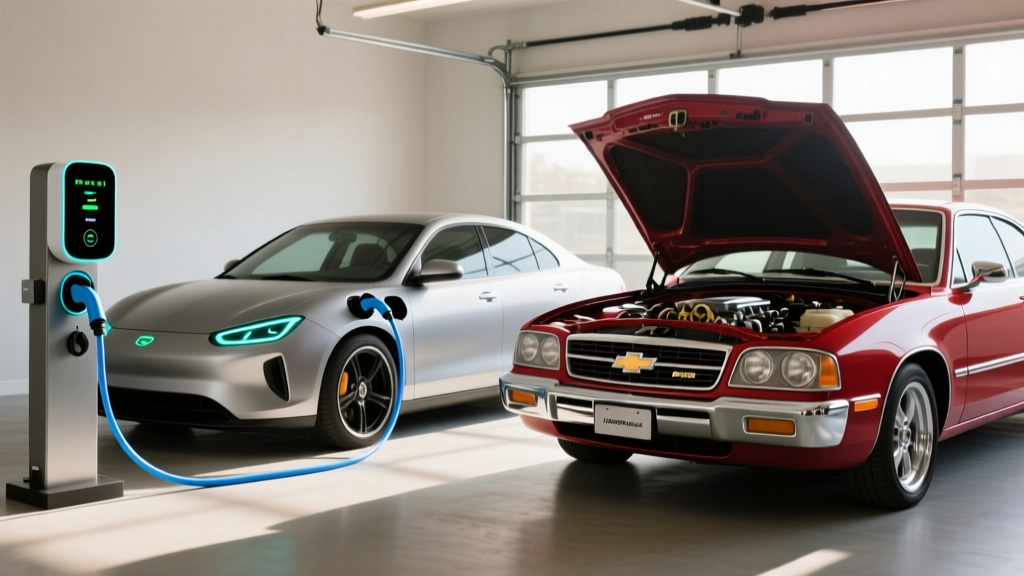
If you still see a 2005 Chevrolet Impala SS Supercharged on the road, you're looking at a 3.8-liter supercharged V6 producing 240 horsepower, EPA-rated around 18 city / 28 highway MPG, and burning roughly $2,400–$2,900 in gasoline per year at 15,000 miles (per fueleconomy.gov). That sedan is a real-world anchor for understanding what EV charging actually costs today — not in marketing abstractions, but in kilowatt-hours, install invoices, and cents-per-mile.
This guide breaks down Level 1, Level 2, and DC fast charging with exact speeds, home installation requirements and costs, connector compatibility, equipment picks for 2026, and a direct cost-per-mile comparison to that supercharged Impala. Whether you're replacing a gas car or adding an EV to a mixed garage, the numbers below are what matter.
Charging Levels Explained: kW, Miles Per Hour, and Real-World Times
The single most important EV literacy point: kW (kilowatts) is power — how fast energy flows into the car. kWh (kilowatt-hours) is energy — the size of the battery. A 75 kWh battery charged at 7 kW takes roughly 10+ hours; at 150 kW, roughly 30 minutes to 80%. Never use them interchangeably.
| Level | Voltage / Amps | Power (kW) | Miles Added Per Hour | Typical Use |
|---|---|---|---|---|
| Level 1 | 120V / 12A | ~1.4 kW | 3–5 mi/hr | Overnight top-ups, PHEVs |
| Level 2 (home) | 240V / 32–48A | 7.7–11.5 kW | 25–44 mi/hr | Daily home charging |
| Level 2 (public) | 208–240V / 30–80A | 6.6–19.2 kW | 22–70 mi/hr | Workplace, retail, apartments |
| DC Fast (CCS/NACS) | 400–800V DC | 50–350 kW | 180–1,200+ mi/hr (peak) | Road trips, highway corridors |
Realistic 10–80% charging times for common battery sizes on DC fast charging:
- 60 kWh pack (e.g., base RAV4 EV-class crossover, 150 kW peak): ~22–26 minutes
- 77–82 kWh pack (e.g., Tesla Model Y, Hyundai Ioniq 5, 250 kW peak): ~18–22 minutes
- 100+ kWh pack (e.g., GMC Sierra EV, 350 kW peak on 800V): ~20–25 minutes
Remember the charge curve: peak kW is sustained only between ~10–50% state of charge. Above 80%, speeds taper sharply to protect battery health — plan to unplug at 80% on road trips rather than wait for the last 20%.
Home EV Charger Installation: Electrical Requirements and Real Costs
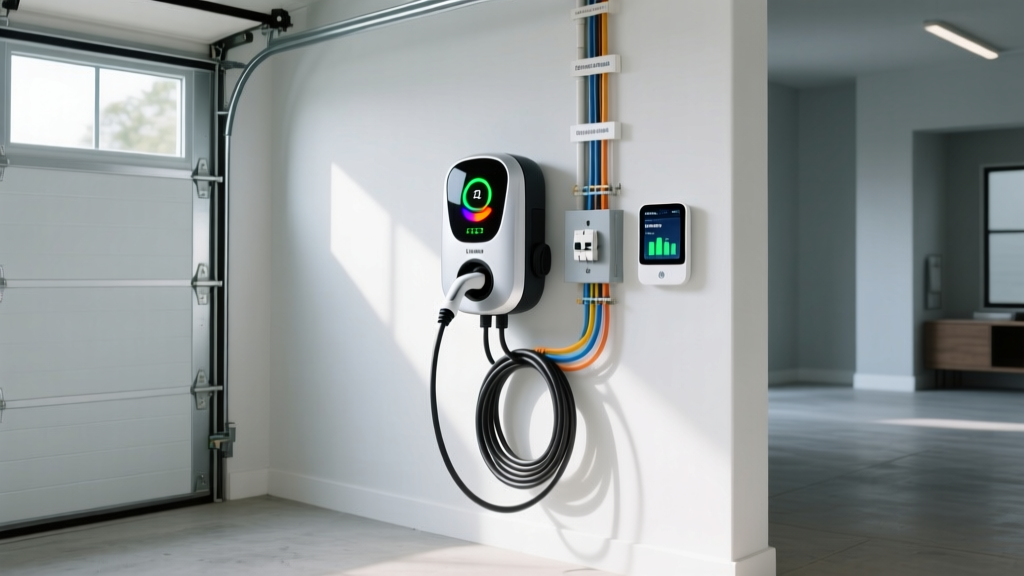
Most EV owners install a 240V Level 2 circuit. A typical setup is a NEMA 14-50 outlet or hardwired wallbox on a dedicated 40A–60A circuit, which supports 32A–48A continuous charging (NEC requires circuits rated 125% above continuous load).
What an electrician evaluates
- Panel capacity: Homes with 100A service often need an upgrade to 200A before adding a 40–60A EV circuit — especially if you already run electric heat, dryer, and range.
- Run length: Longer conduit runs from panel to garage/driveway add wire and labor cost fast.
- Permit and inspection: Most jurisdictions require a permit ($50–$250) and final inspection for code compliance.
- GFCI and outdoor rating: Outdoor installations must use weather-rated (NEMA 4) enclosures; NEC 2020+ requires GFCI protection on receptacle-based EV circuits in many areas.
| Component | Low End | High End | Notes |
|---|---|---|---|
| Level 2 charger (hardware) | $350 | $750 | 32A–48A, Wi-Fi smart units |
| Electrician labor (short run, 200A panel) | $400 | $900 | Panel adjacent garage, ~20 ft run |
| Electrician labor (long run or trenching) | $900 | $2,200 | Detached garage, 50+ ft, conduit |
| Permit and inspection | $50 | $250 | Varies by municipality |
| Panel upgrade 100A → 200A (if needed) | $1,800 | $4,500 | Older homes, 1960s–1980s builds |
| Total — straightforward install | $800 | $1,900 | Existing 200A panel, short run |
| Total — with panel upgrade | $2,600 | $6,650 | Older home, full service upgrade |
Get at least two quotes and confirm the electrician pulls permits — unpermitted work can void homeowners insurance claims. The IRS §30D credit does not cover home charger hardware anymore (the §30C alternative fuel infrastructure credit expired for most residential use), but some utilities still rebate $250–$500; check with your provider.
Connector Compatibility: NACS, CCS1, CHAdeMO, and Adapters
As of 2026, the North American market has consolidated heavily around NACS (Tesla's connector, now SAE J3400). Ford, GM, Rivian, Volvo, Polestar, and most new 2025+ EVs ship with native NACS. Legacy CCS1 vehicles (Hyundai/Kia E-GMP, VW ID.4, older Ford/GM) can use NACS Superchargers via OEM-supplied or third-party adapters.
| Connector | Native Brands | Adapter Notes |
|---|---|---|
| NACS (J3400) | Tesla, Ford, GM, Rivian, Volvo, Polestar, Lucid, Toyota (bZ new), Honda (new) | Standard on most 2025+ models |
| CCS1 | Hyundai, Kia, VW, BMW, Mercedes, Stellantis (legacy) | NACS-to-CCS adapters widely available (~$150–$250) |
| CHAdeMO | Nissan Leaf (discontinued), Mitsubishi Outlander PHEV | Network being retired; plan around CCS/NACS |
For home Level 2, the connector is J1772 on the charger side with NACS or CCS on the vehicle side — most wallboxes ship with a J1772 tethered cable and include or offer a NACS adapter.
Cost Per Mile: EV Charging vs the 2005 Impala SS Supercharged
The 2005 Chevrolet Impala SS Supercharged averaged ~21 MPG combined in real-world driving. At $3.40/gallon (2026 national average), that's roughly $0.162 per mile in fuel alone. Here's how EV charging stacks up across scenarios using a typical efficiency of 3.0 miles/kWh (roughly 105 MPGe, representative of a 2026 midsize EV):
| Scenario | Rate ($/kWh) | Cost Per Mile | Annual @ 15k mi |
|---|---|---|---|
| Home off-peak (utility TOU) | $0.09 | $0.030 | $450 |
| Home standard residential | $0.16 | $0.053 | $800 |
| Public Level 2 (ChargePoint/EVgo) | $0.35 | $0.117 | $1,750 |
| DC fast (Electrify America / Tesla) | $0.48 | $0.160 | $2,400 |
| 2005 Impala SS Supercharged (gas) | $3.40/gal | $0.162 | $2,430 |
The verdict: Home-charged EVs cost 65–80% less per mile than the supercharged Impala. But if you rely exclusively on DC fast charging, costs converge with gasoline — public infrastructure is a road-trip convenience, not a daily fueling strategy.
2026 Equipment Recommendations: Home Chargers Worth Buying
Emporia Vue Level 2 (48A)
- Power: 11.5 kW @ 240V / 48A
- Connector: J1772 (NACS adapter included)
- Cable: 24 ft
- Smart features: Wi-Fi, scheduling, solar integration, energy monitoring
- Price: ~$399
- Best for: Budget-conscious buyers with solar panels
ChargePoint Home Flex (50A)
- Power: 12 kW @ 240V / 50A
- Connector: J1772 or NACS (select at purchase)
- Cable: 23 ft
- Smart features: App scheduling, Alexa, utility demand-response
- Price: ~$599
- Best for: All-around reliability and app polish
Tesla Wall Connector (48A)
- Power: 11.5 kW @ 240V / 48A
- Connector: NACS native (J1772 adapter optional)
- Cable: 24 ft
- Smart features: Wi-Fi updates, power sharing (multiple units), load management
- Price: ~$475
- Best for: Tesla and NACS-native households
Grizzl-E Smart (40A)
- Power: 9.6 kW @ 240V / 40A
- Connector: J1772 or NACS
- Cable: 24 ft
- Smart features: OCPP-compatible, outdoor-rated (NEMA 4), extreme-cold tested
- Price: ~$549
- Best for: Outdoor installs, Canadian/northern climates
Safety, Code, and the Panel-Upgrade Gotcha
Every Level 2 install should be on a dedicated circuit — never shared with a dryer, HVAC, or workshop outlet. Key code points:
- NEC 625: EV charging is a continuous load; circuit breaker must be rated 125% above the charger's max draw (a 40A charger needs a 50A breaker).
- GFCI: Required on receptacle-based (NEMA 14-50) circuits in most jurisdictions since NEC 2020; hardwired units may be exempt but confirm locally.
- Outdoor rating: Any driveway or exterior-wall mount must be NEMA 4 rated for rain and dust.
- Panel headroom: The NEC "2026 load calculation" must show your panel can handle the new circuit without exceeding 80% of its rating — this is where older 100A panels fail and trigger the $1,800–$4,500 upgrade.
Skip the DIY YouTube approach. A failed inspection or improperly torqued terminal on a 48A continuous circuit is a fire risk, not a weekend project.
Frequently Asked Questions
How much does it cost to install a home EV charger?
A straightforward Level 2 install on an existing 200A panel with a short wire run typically costs $800–$1,900 total (charger + electrician + permit). Homes needing a panel upgrade to 200A service should budget $2,600–$6,650. Always get itemized quotes and confirm permits are pulled.
How fast will each charging level add range?
Level 1 (120V) adds roughly 3–5 miles per hour — adequate for PHEVs with small batteries. Level 2 (240V, 40–48A) adds 25–44 miles per hour, enough to fully recharge most EVs overnight. DC fast charging adds 180–1,200+ miles per hour at peak, with typical 10–80% sessions taking 18–26 minutes depending on pack size and peak kW.
Which connector or charger is compatible with my EV?
For 2025+ models from Tesla, Ford, GM, Rivian, Volvo, and most new entrants, NACS is native. Hyundai, Kia, VW, and BMW still use CCS1 but can access NACS Superchargers with an adapter (~$150–$250). CHAdeMO is effectively retired. Check your vehicle's charge port before buying a wallbox — most units ship with J1772 or NACS tethers, and adapters are widely available.
How much does charging cost per mile vs gas?
Home-charged EVs at off-peak utility rates (~$0.09/kWh) cost about $0.03/mile — roughly 80% cheaper than a 2005 Chevrolet Impala SS Supercharged at $0.16/mile. Standard residential rates (~$0.16/kWh) bring EV cost to $0.05/mile. Public DC fast charging at $0.48/kWh roughly matches gasoline at $0.16/mile, so home charging is where the economics win.
What electrical upgrades might I need?
Homes built before the 1990s with 100A service almost always need a panel upgrade to 200A before adding a 40–60A EV circuit — budget $1,800–$4,500. Even modern homes with heavy electric loads (heat pump, dryer, range, pool) may need a load calculation that triggers an upgrade. A licensed electrician will run this calculation during the quote.
Does the federal tax credit cover home charger installation?
The §30D clean vehicle credit covers the EV itself (up to $7,500, subject to MSRP caps, buyer income limits, and battery-sourcing rules per IRS guidance). The §30C alternative fuel infrastructure credit that once covered home chargers has largely expired for residential use; check afdc.energy.gov for state and utility rebates instead.