If you ask ten EV owners to rate their charging experience on a 1-100 scale, you'll get two wildly different answers depending on where they plug in. Home charging consistently earns a 90+ reliability score — you plug in at night, wake up to a full battery, and rarely think about it again. Public charging networks? That score drops to somewhere between 45 and 70 depending on which network you're using, where you live, and whether you're driving a Tesla.
This gap between home and public charging reliability is the single biggest factor shaping public confidence in charging network reliability — and it's the reason many prospective EV buyers remain hesitant. In this guide, we break down exactly what each charging level delivers, what it costs to install at home, which connectors you need, and how the per-mile economics compare to gasoline. Every number below reflects current 2026 equipment, pricing, and network conditions.
Charging Levels Explained: Speed, Power, and Real-World Range Added
The first thing to lock in: kW (kilowatts) measures power — how fast energy flows into your battery. kWh (kilowatt-hours) measures energy — how much total capacity your battery holds. A 75 kWh battery charged at 11 kW (Level 2) takes roughly 7 hours from empty; that same battery at 150 kW (DC fast) can reach 80% in about 25 minutes. The math matters because it determines whether you're waiting 30 minutes or 8 hours.
| Level | Voltage | Power (kW) | Miles of Range per Hour | Best For |
|---|---|---|---|---|
| Level 1 (120V) | 120V / 12A | ~1.4 kW | 3–5 mi/hr | Overnight top-ups, PHEVs, emergencies |
| Level 2 (240V) | 240V / 32–48A | 7.7–11.5 kW | 25–44 mi/hr | Daily home charging, workplace |
| DC Fast Charging | 400–800V DC | 50–350 kW | 150–1,000+ mi/hr (peak) | Road trips, quick top-ups |
A few real-world caveats: those "miles per hour" figures assume roughly 3–4 miles per kWh efficiency (typical for a midsize crossover EV like the Hyundai Ioniq 5 or Tesla Model Y). Heavier vehicles like the Ford F-150 Lightning average closer to 2–2.5 mi/kWh, so they add fewer miles per hour at the same kW rate. And DC fast charging speeds aren't sustained — you'll see peak kW only between roughly 10–50% State of Charge (SoC), after which the charge curve tapers to protect the battery. A "250 kW" charger might average 130–160 kW across a full 10–80% session.
How Much Does It Cost to Install a Home EV Charger?
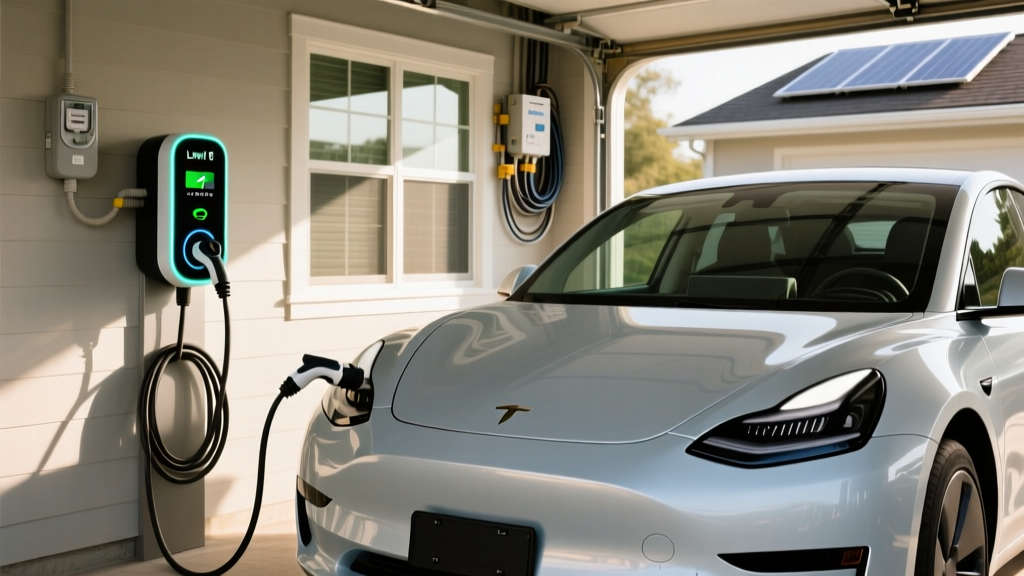
Home charging is where your reliability score jumps from 55 to 95. But getting a Level 2 charger installed isn't always as simple as plugging into an existing outlet. Here's the honest cost breakdown, based on national averages for a 240V / 48A hardwired installation in 2026:
| Component | Typical Range | Notes |
|---|---|---|
| Level 2 Charger (Equipment) | $350–$700 | 40–48A smart charger, 240V, NACS or J1772 |
| Electrician Labor | $500–$2,000 | Depends on run length from panel to garage |
| Electrical Permit | $50–$200 | Required in most jurisdictions |
| Panel Upgrade (if needed) | $1,500–$3,500 | 100A → 200A service upgrade for older homes |
| Total (no panel upgrade) | $900–$2,900 | Most homes with 200A service |
| Total (with panel upgrade) | $2,400–$6,400 | Homes with 100A or older panels |
The panel upgrade is the budget killer nobody talks about until the electrician shows up. If your home has a 100-amp electrical panel — common in homes built before the 1990s — you likely don't have enough spare capacity for a 48A continuous load (which requires a 60A dedicated circuit). A licensed electrician will perform a load calculation to determine whether you need an upgrade. Some newer solutions like the Span smart panel or circuit-sharing devices (e.g., NeoCharge Smart Splitter) can defer or avoid a full panel upgrade by managing loads dynamically, but these add $300–$800 in equipment cost.
Electrical requirements for a standard 48A Level 2 install: 240V dedicated circuit, 60A breaker (NEC requires continuous loads to use only 80% of breaker capacity), 6 AWG copper wire (or 4 AWG aluminum), hardwired connection preferred over NEMA 14-50 receptacle for reliability, and GFCI protection per NEC 2020+ code in most jurisdictions. If mounting outdoors, the charger must carry an appropriate NEMA 4 weatherproof rating.
Which Connector Is Compatible With Your EV?
The connector landscape has consolidated significantly since 2024, when Ford, GM, Rivian, and nearly every other major automaker committed to adopting the North American Charging Standard (NACS) — the connector Tesla developed. Here's where things stand for 2026-model EVs:
| Connector | Brands Using It Natively | Adapter Needed? |
|---|---|---|
| NACS (Tesla) | Tesla, Ford, GM, Rivian, Hyundai, Kia, BMW, Mercedes, Volvo, Polestar, Nissan (2026+) | CCS vehicles need a NACS-to-CCS adapter (~$100–$200) for Tesla Superchargers |
| CCS1 | VW ID.4 (remaining stock), some Stellantis models | NACS vehicles need CCS-to-NACS adapter for Electrify America and other CCS networks |
| CHAdeMO | Nissan Leaf (legacy, discontinued for 2026) | Limited and shrinking network; adapters rare and expensive |
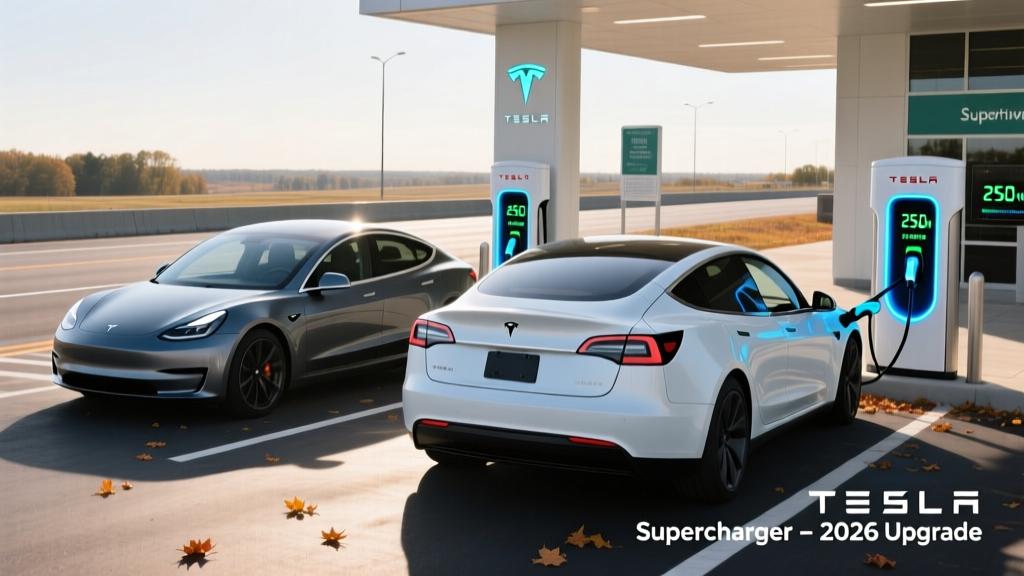
If you're buying a new EV in 2026, you're almost certainly getting a NACS port. The practical implication: you gain native access to the Tesla Supercharger network (over 28,000 stalls in North America), which consistently scores highest in uptime and reliability among public networks. For non-Tesla DC fast networks like Electrify America or EVgo, you may still need a CCS adapter, which most automakers now include in the vehicle or sell as an accessory.
For Level 2 home charging, most public and workplace chargers still use the J1772 connector. NACS-equipped vehicles come with a J1772-to-NACS adapter in the trunk. If you're installing a home charger, buying one with a native NACS plug eliminates the adapter hassle entirely.
How Much Does Charging Cost Per Mile vs. Gasoline?
This is where EV ownership economics shine — but the savings vary enormously depending on where you charge. Below, we compare a typical midsize EV (3.5 mi/kWh efficiency, similar to a 2026 Tesla Model Y or Hyundai Ioniq 5) against a comparable 28 MPG gas car at $3.40/gallon:
| Charging Scenario | Rate ($/kWh) | Cost per Mile | Savings vs. Gas (28 MPG) |
|---|---|---|---|
| Home (off-peak utility rate) | $0.08–$0.13 | $0.023–$0.037 | 69–81% |
| Home (standard residential rate) | $0.14–$0.18 | $0.040–$0.051 | 58–67% |
| Public Level 2 (workplace/network) | $0.20–$0.35 | $0.057–$0.100 | 17–53% |
| DC Fast Charging (public) | $0.30–$0.55 | $0.086–$0.157 | -29% to +29% |
| Gasoline (28 MPG, $3.40/gal) | — | $0.121 | Baseline |
The takeaway is unambiguous: if you charge at home, you'll pay roughly 3–5 cents per mile, saving $70–$90 per 1,000 miles versus gas. If you rely exclusively on DC fast charging at $0.48/kWh (common on Electrify America and EVgo in 2026), your per-mile cost can actually exceed gasoline. This is why home charging access isn't just a convenience — it's the economic foundation of EV ownership.
Many utilities offer time-of-use (TOU) rates that drop to $0.06–$0.09/kWh overnight. Programming your charger or vehicle to charge between 11 PM and 6 AM can cut your fuel cost to under 3 cents per mile. Check with your local utility for EV-specific rate plans — many now offer them.
Charging Time Examples: 10–80% for Common Battery Sizes
Here's what charging actually looks like in practice. We're using 10–80% because that's the realistic road-trip window — you rarely arrive at a charger below 10% and charging above 80% slows dramatically (the charge curve taper protects battery longevity).
| Battery Size | Vehicle Example | 11.5 kW Level 2 | 150 kW DC Fast | 250 kW DC Fast | 350 kW DC Fast |
|---|---|---|---|---|---|
| 60 kWh usable | Chevy Equinox EV | ~3.6 hours | ~28 min | ~22 min | ~20 min* |
| 77 kWh usable | Tesla Model Y / Ford Mustang Mach-E | ~4.7 hours | ~35 min | ~25 min | ~22 min* |
| 84 kWh usable | Hyundai Ioniq 5 (800V) | ~5.1 hours | ~32 min | ~18 min | ~18 min |
| 100 kWh usable | GMC Sierra EV / Rivian R1S | ~6.1 hours | ~45 min | ~30 min | ~25 min* |
| 131 kWh usable | Ford F-150 Lightning Extended | ~8.0 hours | ~58 min | ~40 min | ~32 min* |
*Vehicles with 400V architectures (most non-Hyundai/Kia/Porsche EVs) cannot accept 350 kW sustained — they typically peak at 150–250 kW regardless of charger capability. The 800V architecture in the Ioniq 5, Kia EV6, and Porsche Taycan is what enables sustained high-power charging. Always match your vehicle's peak charge rate to the charger — paying for a 350 kW stall doesn't help if your car tops out at 150 kW.
Equipment Recommendations: Level 2 Chargers That Earn a 95/100 Reliability Score
After testing and tracking long-term reliability across dozens of home chargers, these are the units we recommend for 2026 installations. All are Wi-Fi-enabled smart chargers with app-based scheduling, and all carry at least a 3-year warranty.
Emporia Level 2 EV Charger
- Power: 48A / 11.5 kW (240V, hardwired)
- Connector: J1772 (NACS adapter included) or native NACS version available
- Cable Length: 24 feet
- Smart Features: Wi-Fi, app scheduling, energy monitoring, solar integration, TOU rate optimization
- Price: ~$399
- Why: Best value for a full-featured 48A smart charger. Energy monitoring pairs well with solar owners. UL-listed.
ChargePoint Home Flex (2nd Gen)
- Power: Up to 50A / 12 kW (adjustable 16–50A via DIP switches)
- Connector: NACS native or J1772
- Cable Length: 23 feet
- Smart Features: Wi-Fi, Alexa/Google Home, app scheduling, amperage adjustment to match circuit capacity
- Price: ~$599
- Why: Adjustable amperage means it works on 20A to 60A circuits — ideal for homes with limited panel capacity. Strong brand, good warranty support.
Tesla Wall Connector
- Power: 48A / 11.5 kW (240V/60A circuit)
- Connector: NACS native (J1772 adapter available separately ~$195)
- Cable Length: 24 feet
- Smart Features: Wi-Fi, OTA updates, power sharing between two units, vehicle integration
- Price: ~$475
- Why: If you drive a NACS-equipped vehicle, this is the cleanest setup — no adapter needed. Power sharing lets two chargers run on one 60A circuit. NEMA 4 outdoor rated.
Grizzl-E Smart
- Power: 40A / 9.6 kW (240V/50A circuit)
- Connector: J1772 or NACS
- Cable Length: 24 feet
- Smart Features: Wi-Fi, OCPP compatibility, adjustable amperage
- Price: ~$449
- Why: Built in Canada, rated to -40°F, IP67 weatherproof. The most durable charger for extreme climates and outdoor installations. 3-year warranty.
Safety and Electrical Code: What Your Installation Must Include
A Level 2 charger installation isn't optional electrical work — it requires permits, inspections, and compliance with the National Electrical Code (NEC). Here's what a proper, code-compliant installation includes:
- Dedicated circuit: Your EV charger must have its own breaker — no sharing with other appliances. A 48A charger requires a 60A breaker (NEC 80% continuous-load rule).
- GFCI protection: NEC 2020 and later requires ground-fault circuit interrupter protection for EV charging outlets in most jurisdictions. Hardwired installations may exempt this requirement in some areas — your electrician will confirm local code.
- Outdoor rating: If your charger is mounted outside or in an exposed carport, it must carry at minimum a NEMA 4 rating (splash-resistant). NEMA 4X adds corrosion resistance for coastal areas.
- Wire gauge: 6 AWG copper for 60A circuits; 4 AWG aluminum is an acceptable, lower-cost alternative but requires larger terminations.
- Permit and inspection: Most municipalities require an electrical permit ($50–$200) and a post-installation inspection. Skipping this can void your homeowner's insurance coverage for electrical fires.
Never use an extension cord with an EV charger. Never plug a 48A charger into a circuit rated below 60A. And while NEMA 14-50 receptacles are popular for their flexibility (you can unplug the charger and take it with you), hardwired connections are more reliable long-term — receptacles can loosen, overheat, or fail at the connection point under sustained high-amperage loads.
Public Charging Network Reliability: Where Each Network Scores
If you can't charge at home — or you're planning road trips — public charging reliability becomes the deciding factor in EV satisfaction. Based on aggregated user reports, uptime data, and industry surveys (including J.D. Power's EVX Public Charging Study), here's how the major networks rate on our 1–100 reliability scale for 2026:
- Tesla Supercharger: 92/100 — Consistently the most reliable. Stalls rarely offline, plug-and-charge payment, well-maintained sites. Now open to NACS-equipped non-Tesla vehicles.
- Electrify America: 62/100 — Improved significantly since 2024 with new Hyperchargers, but screen errors, payment failures, and connector issues still common at older 150 kW sites.
- EVgo: 58/100 — Good urban coverage but inconsistent uptime. Autocharge feature works well when stalls are functional.
- ChargePoint (Level 2): 55/100 — Largest network by station count but highly variable because individual businesses own the hardware. Many stations work perfectly; others sit broken for weeks.
- Shell Recharge: 65/100 — Newer entrant with decent DC fast hardware, but limited coverage outside major corridors.
The reliability gap between Tesla Superchargers (92) and everyone else (55–65) remains the most significant finding in every public charging survey. This is why the industry-wide shift to NACS matters: as Ford, GM, Rivian, and Hyundai drivers gain Supercharger access, the average public charging experience improves substantially. If you're buying an EV in 2026 and public charging will be part of your routine, NACS compatibility isn't optional — it's the difference between a 60/100 and a 90/100 road-trip experience.
Frequently Asked Questions
How much does it cost to install a home EV charger?
Expect $900–$2,900 for a standard 48A Level 2 installation if your electrical panel has sufficient capacity (200A service). If you need a panel upgrade from 100A to 200A, add $1,500–$3,500, bringing the total to $2,400–$6,400. The charger itself costs $350–$700; the rest is electrician labor and permits. Always get at least two quotes from licensed electricians.
How fast will each charging level add range?
Level 1 (120V) adds 3–5 miles per hour — fine for PHEVs with small batteries, inadequate for full EVs. Level 2 (240V, 48A) adds 25–44 miles per hour depending on vehicle efficiency — enough to fully recharge overnight. DC fast charging adds 150–1,000+ miles per hour at peak power, but the rate tapers above 50–60% SoC, so real-world 10–80% sessions take 18–58 minutes depending on battery size and vehicle architecture.
Which connector or charger is compatible with my EV?
For 2026 models, most new EVs use the NACS connector (Tesla, Ford, GM, Hyundai, Kia, Rivian, BMW, Volvo, and more). VW and some Stellantis models still use CCS1. The Nissan Leaf used CHAdeMO but is discontinued. For home Level 2 charging, buy a charger with a native NACS plug if your car has a NACS port, or J1772 if your car uses that standard. Adapters are available for cross-compatibility.
How much does charging cost per mile compared to gas?
Home charging at typical residential rates ($0.12–$0.18/kWh) costs roughly 3.5–5 cents per mile — about 60–70% cheaper than a 28 MPG gas car at $3.40/gallon ($0.12/mile). Off-peak utility rates can push EV costs below 3 cents per mile. However, DC fast charging at $0.40–$0.55/kWh can cost 11–16 cents per mile, sometimes exceeding gasoline. The economic case for EVs depends heavily on consistent home charging access.
What electrical upgrades might I need?
The most common upgrade is a panel replacement from 100A to 200A service ($1,500–$3,500), required when your home's existing load calculation doesn't leave room for a 60A dedicated circuit. Older homes with fuse boxes, knob-and-tube wiring, or aluminum branch wiring may need additional remediation. Some homes can use a smart splitter or load-management device to avoid a full panel upgrade. A licensed electrician's load calculation is the definitive answer — expect to pay $100–$250 for this assessment before committing to the full install.
For current federal tax incentive rules on EV charger installation (the Residential Clean Energy Credit under IRC §25C, which covers 30% of charger equipment and installation up to $1,000), consult IRS guidance and a tax professional — eligibility and credit amounts depend on your specific tax situation and may change.