From 510-HP V8 Supercharged to Kilowatts: Why This Guide Exists
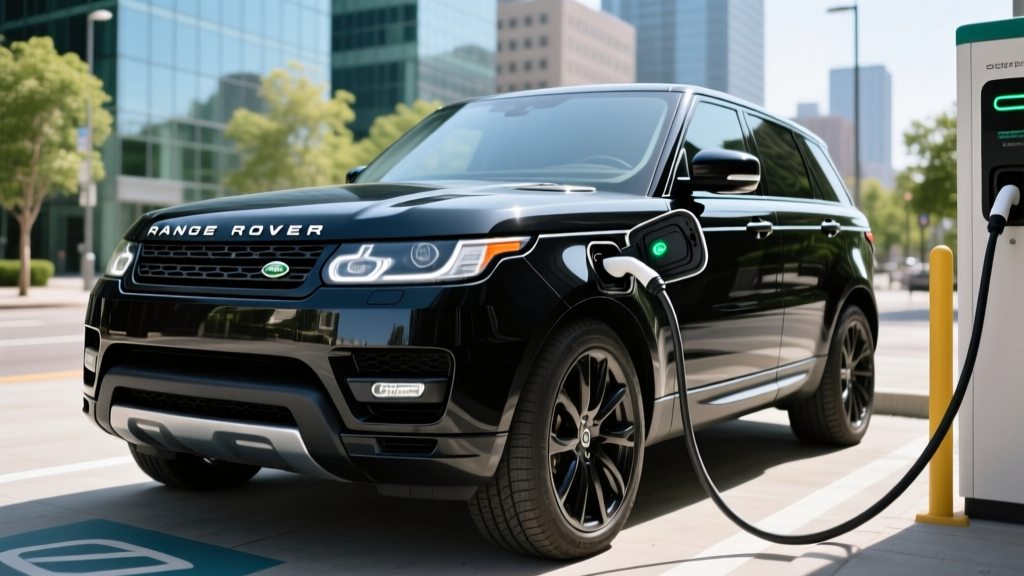
If you're driving a 2012 Land Rover Range Rover Sport Supercharged—with its 5.0L supercharged V8 producing 510 horsepower and returning roughly 12 MPG city / 17 MPG highway per fueleconomy.gov—you're likely spending $4,000–$5,500 a year on premium fuel. That reality is pushing many luxury-SUV owners toward electric alternatives like the BMW iX, Rivian R1S, Mercedes EQS SUV, or Range Rover's own upcoming electric model (announced, not yet on sale as of 2026).
But the jump from a gas tank to a battery pack comes with a new vocabulary: kW vs kWh, NACS vs CCS, Level 2 vs DC fast charging, and 240V/48A circuits. This guide is written for buyers coming from high-performance, high-consumption SUVs who need exact numbers on charging speed, home-install cost, and per-mile economics before making the switch.
Charging Levels Explained: kW, Miles Per Hour, and Real-World Times
The single most important distinction in EV literacy: kW (kilowatts) is power—how fast energy flows. kWh (kilowatt-hours) is energy—how much the battery holds. Confusing them is like confusing horsepower with gallons. Here's how each level translates into range added per hour of charging, using a typical large electric SUV (~3.0 mi/kWh efficiency):
| Level | Voltage | Power (kW) | Miles of Range / Hour | Typical Use Case |
|---|---|---|---|---|
| Level 1 | 120V AC | 1.0–1.4 kW | 3–5 mi/hr | Overnight top-up, PHEVs, emergencies |
| Level 2 (Home/Public AC) | 240V AC | 7.2–19.2 kW | 22–58 mi/hr | Daily home charging, workplace, hotels |
| DC Fast Charging | 400–800V DC | 50–350 kW | 150–700+ mi/hr (peak) | Road trips, highway corridors |
Charging time examples (10%–80% SoC):
- 75 kWh battery (e.g., BMW iX xDrive50): ~7.5 hours on a 9.6 kW Level 2; ~22 minutes on a 150 kW DCFC; ~32 minutes on a 350 kW CCS stall (charge curve tapers hard past 80%).
- 100 kWh battery (e.g., Rivian R1S Max Pack): ~10 hours on 9.6 kW Level 2; ~28 minutes on 150 kW DCFC; ~20 minutes on a 350 kW NACS Supercharger (peak conditions, preconditioned pack).
- 135 kWh battery (e.g., GMC Hummer EV): ~14 hours on 9.6 kW Level 2; ~40 minutes on 350 kW DCFC. This is why larger packs demand either robust home Level 2 or reliance on DCFC networks.
Note: Peak kW is not sustained kW. Most EVs hit their advertised peak rate only between ~10%–40% SoC, then taper. A "240 kW capable" SUV might average 140–160 kW across the full 10–80% session.
Home Level 2 Installation: Electrical Requirements, Permits, and Cost Breakdown
A proper home Level 2 setup requires a dedicated 240V circuit on a breaker sized to 125% of the charger's continuous draw (NEC Article 625). A 48A charger needs a 60A breaker; a 40A charger needs a 50A breaker. Most modern homes have 200A service panels with enough headroom, but older homes—especially those built before 2000—may need a panel upgrade or a sub-panel.
| Component | Typical Range | Notes |
|---|---|---|
| Level 2 charger hardware (40–48A, hardwired) | $400–$750 | Wi-Fi/smart models at the upper end |
| Electrician labor (2–6 hours) | $500–$1,800 | Depends on run length, conduit, wall material |
| Electrical permit | $50–$200 | Required in most jurisdictions; varies by city |
| Panel upgrade (if needed) | $1,500–$4,000 | 200A→400A or sub-panel; older homes only |
| Total (no panel upgrade) | $950–$2,750 | Most common scenario for 2000+ homes |
| Total (with panel upgrade) | $2,500–$6,500 | Common in pre-2000 homes with 100–150A service |
The IRS Residential Clean Energy Credit (IRC §25D) covers 30% of qualified home EV charging equipment and installation costs up to $1,000 through 2032. Check current-year rules, as incentive caps and eligibility vary by tax year and jurisdiction.
Connector Compatibility: NACS, CCS, and CHAdeMO in 2026
The North American charging landscape has consolidated heavily around NACS (Tesla's connector, now an SAE standard), but legacy connectors remain on vehicles sold before 2025. Here's what to know:
| Connector | Brands Using It (Native) | Adapter Needed? |
|---|---|---|
| NACS (Tesla/SAE J3400) | Tesla (all), Ford, GM, Rivian, Volvo, Polestar, Hyundai/Kia (2025+), Mercedes (2026+) | None for Tesla Superchargers; CCS→NACS adapters available for legacy EVs |
| CCS1 | VW ID.4 (pre-2026), BMW iX (US-spec), older Hyundai/Kia, Stellantis | NACS→CCS adapter needed for Supercharger access |
| CHAdeMO | Nissan Leaf (legacy), Mitsubishi Outlander PHEV (legacy) | Being phased out; limited new DCFC stalls |
If you're buying a 2026 model-year EV, it almost certainly uses NACS. If you're buying a 2023–2024 used EV, verify the port and plan for an adapter ($200–$400 for a quality NACS↔CCS adapter from Lectron, A2Z, or Tesla's official adapter).
Cost to Charge: $/kWh Scenarios and Cost Per Mile vs. Your Range Rover Sport
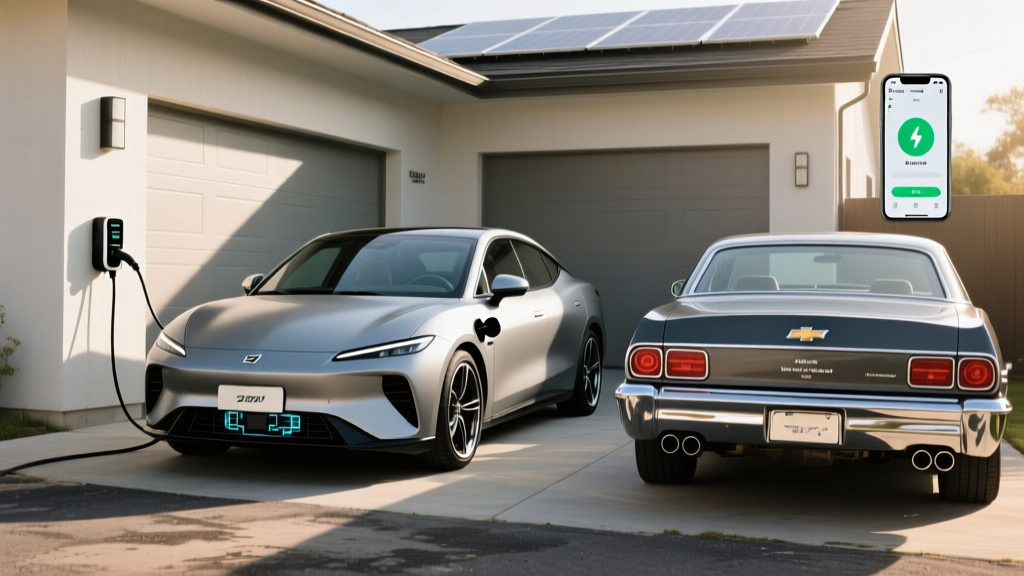
This is where the economics flip dramatically from your 2012 Range Rover Sport Supercharged. At 14 MPG combined and $4.50/gallon premium fuel, you're paying roughly $0.32 per mile in fuel alone. Here's how EV charging compares:
| Scenario | Cost ($/kWh) | Cost Per Mile (3.0 mi/kWh EV) | Savings vs. Gas |
|---|---|---|---|
| Home, off-peak utility rate | $0.10–$0.14 | $0.033–$0.047 | 85–90% cheaper |
| Home, standard residential rate | $0.16–$0.22 | $0.053–$0.073 | 77–83% cheaper |
| Public Level 2 (ChargePoint, EVgo) | $0.25–$0.49 | $0.083–$0.163 | 49–74% cheaper |
| DC Fast Charging (Electrify America, Tesla) | $0.35–$0.58 | $0.117–$0.193 | 40–63% cheaper |
| 2012 Range Rover Sport SC (14 MPG, $4.50/gal) | — | $0.321 | Baseline |
At 12,000 miles/year, home-charging an EV at $0.14/kWh costs roughly $560/year vs. $3,850/year fueling the Range Rover. That's $3,290 in annual fuel savings—enough to offset a higher EV purchase price within 3–5 years, before factoring in reduced maintenance (no oil changes, no supercharger belt, no transmission fluid, significantly less brake wear thanks to regenerative braking).
Equipment Recommendations: Home Chargers for Luxury SUV Owners
For owners accustomed to the Range Rover Sport's premium feel, here are Level 2 home chargers that match that standard with smart features, robust build, and adequate power for large-battery EVs:
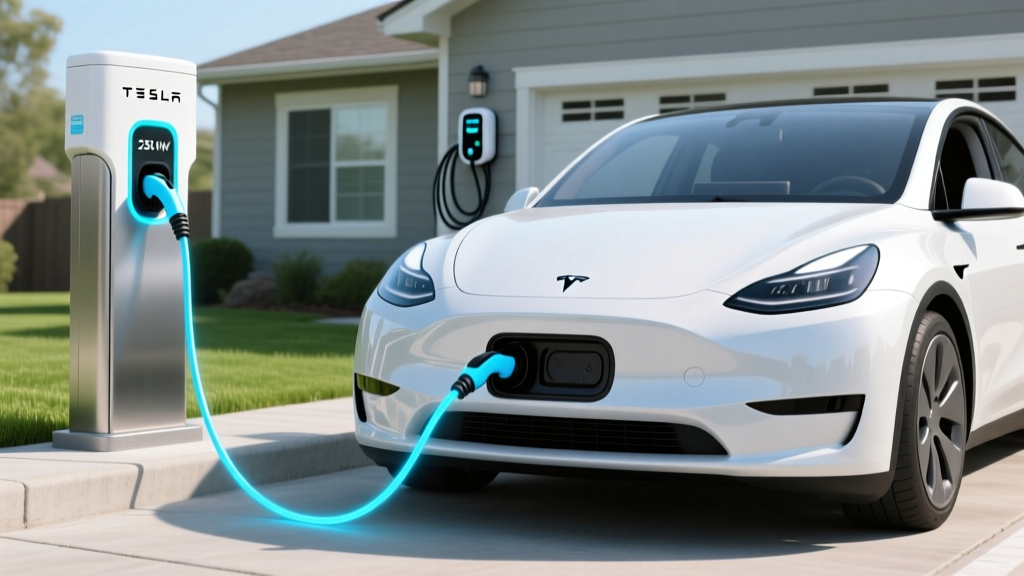
Tesla Wall Connector (Gen 4, NACS)
- Power: 48A / 11.5 kW (on 60A circuit)
- Cable: 24 ft
- Smart features: Wi-Fi, OTA updates, load sharing, Power-Link integration
- Price: ~$475
- Best for: NACS-equipped EVs; cleanest install aesthetic
ChargePoint Home Flex (NACS or CCS)
- Power: Up to 50A / 12 kW (adjustable 16–50A)
- Cable: 23 ft
- Smart features: Wi-Fi, app scheduling, Alexa, utility demand-response
- Price: ~$699
- Best for: Flexibility across connector types; adjustable amperage for older panels
Emporia Vue Level 2 Charger
- Power: 48A / 11.5 kW
- Cable: 24 ft
- Smart features: Energy monitoring, solar integration, load management
- Price: ~$399
- Best for: Budget-conscious smart charging; solar-home integration
Grizzl-E Smart (NACS or J1772/CCS)
- Power: 40A / 9.6 kW
- Cable: 24 ft
- Smart features: OCPP-compatible, app control, extreme-weather rated (-40°F)
- Price: ~$449
- Best for: Cold-climate garages; durable, no-frills reliability
Safety, Code, and Panel-Upgrade Gotchas
A safe, code-compliant install isn't optional—it protects your home, your EV, and your insurance coverage. Key requirements per NEC Article 625 and typical local amendments:
- Dedicated circuit: Your EV charger must have its own breaker—no sharing with dryers, ovens, or HVAC.
- GFCI protection: Required for all outdoor receptacles and increasingly for indoor hardwired installs (2023 NEC update).
- Outdoor rating: If your charger is exterior-mounted, it must be NEMA 4-rated (weatherproof). All chargers listed above meet this standard.
- Wire gauge: 6 AWG copper for 48A/60A circuits; 8 AWG for 40A/50A circuits. Aluminum wire requires upsizing.
- Load calculation: Your electrician must verify your panel's available capacity. A 200A panel with a 160A continuous load calculation may not have room for a 48A charger without a panel upgrade or load-management device (e.g., Emporia Smart Load Center, Tesla Gateway).
Panel-upgrade reality check: Homes built before 1990 often have 100A or 150A service. Adding a 60A EV circuit to a 100A panel is usually not feasible without upgrading to 200A+ service ($2,500–$4,000) or installing a smart load-management system that throttles the charger when other high-draw appliances are active ($300–$800 for the device plus install).
Frequently Asked Questions
How much does it cost to install a home EV charger?
Most 2000+ homes with 200A service: $950–$2,750 total (charger + electrician + permit). Older homes needing a panel upgrade: $2,500–$6,500. The IRS §25D credit covers 30% up to $1,000 of equipment and installation costs through 2032.
How fast will each charging level add range?
Level 1 (120V): 3–5 miles/hour. Level 2 (240V, 48A): ~40–45 miles/hour for a typical SUV. DC Fast (150 kW+): 150–300+ miles in 20–30 minutes. Exact figures depend on your EV's efficiency (mi/kWh) and battery size.
Which connector/charger is compatible with my EV?
For 2026 model-year EVs, NACS is the dominant standard (Tesla, Ford, GM, Rivian, Hyundai/Kia, Volvo, Mercedes). Pre-2025 non-Tesla EVs mostly use CCS1. CHAdeMO is limited to older Nissan/Mitsubishi models. Check your vehicle's charge port or the manufacturer's spec sheet before buying a home charger.
How much does charging cost per mile vs. gas?
Home charging at $0.14/kWh costs ~$0.047/mile. Your 2012 Range Rover Sport Supercharged at 14 MPG and $4.50/gal costs ~$0.32/mile. That's an 85% reduction in per-mile energy cost with home charging.
What electrical upgrades might I need?
If your home has 100A or 150A service, you'll likely need a panel upgrade ($1,500–$4,000) or a smart load-management device ($300–$800). Homes with 200A+ service typically need only a new dedicated 60A breaker and a wire run from panel to garage. Your licensed electrician will perform a load calculation to determine the exact requirement.