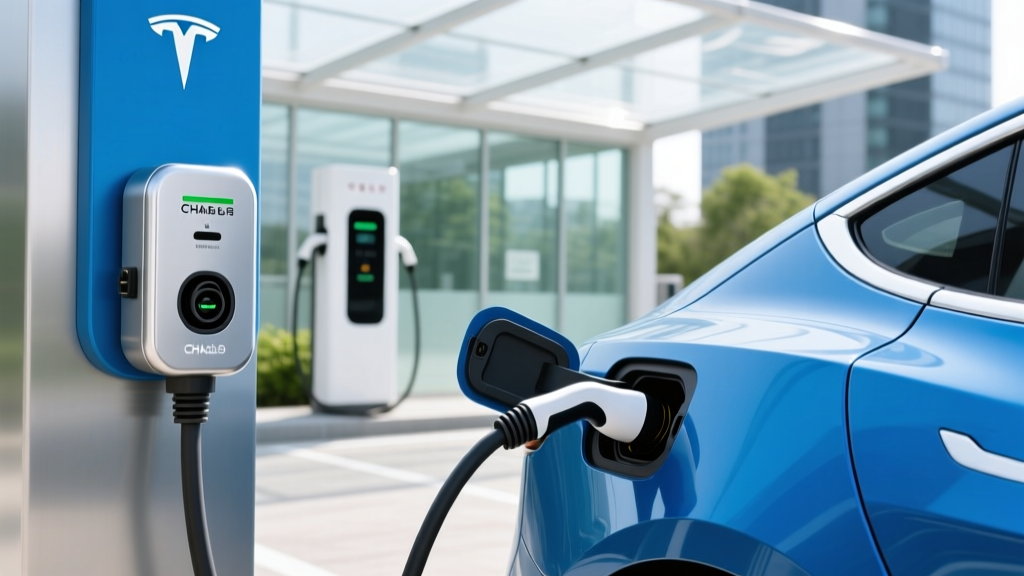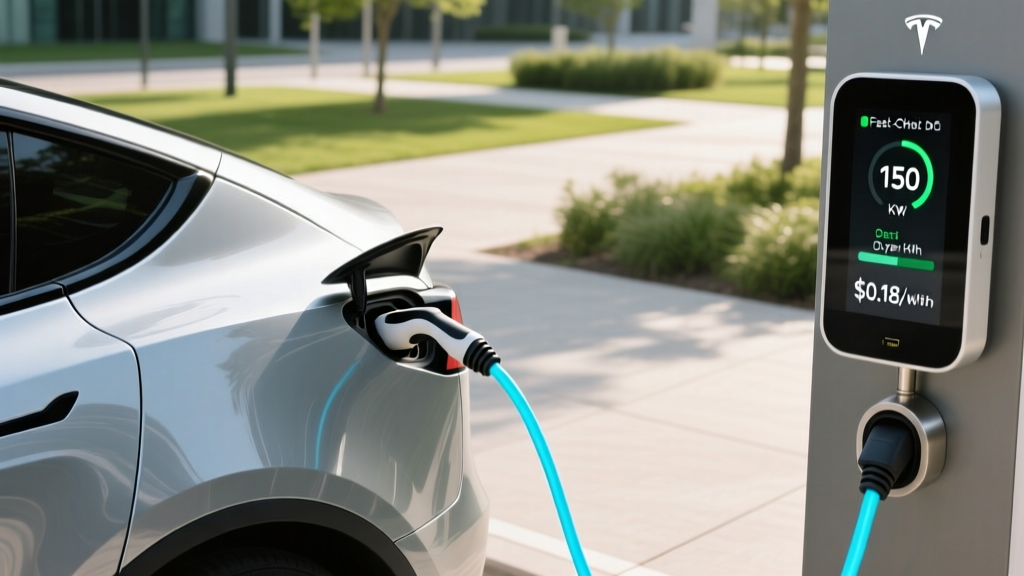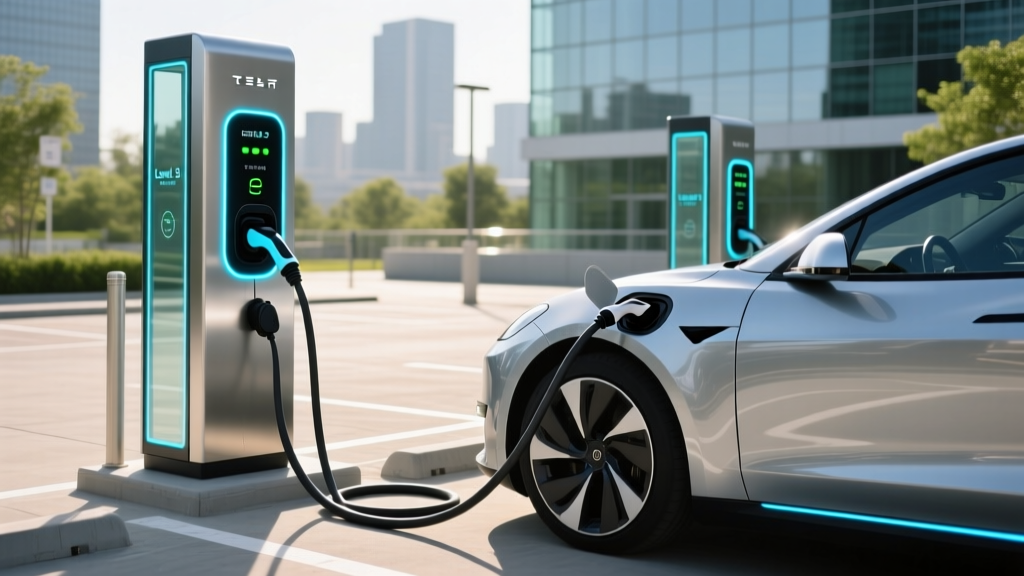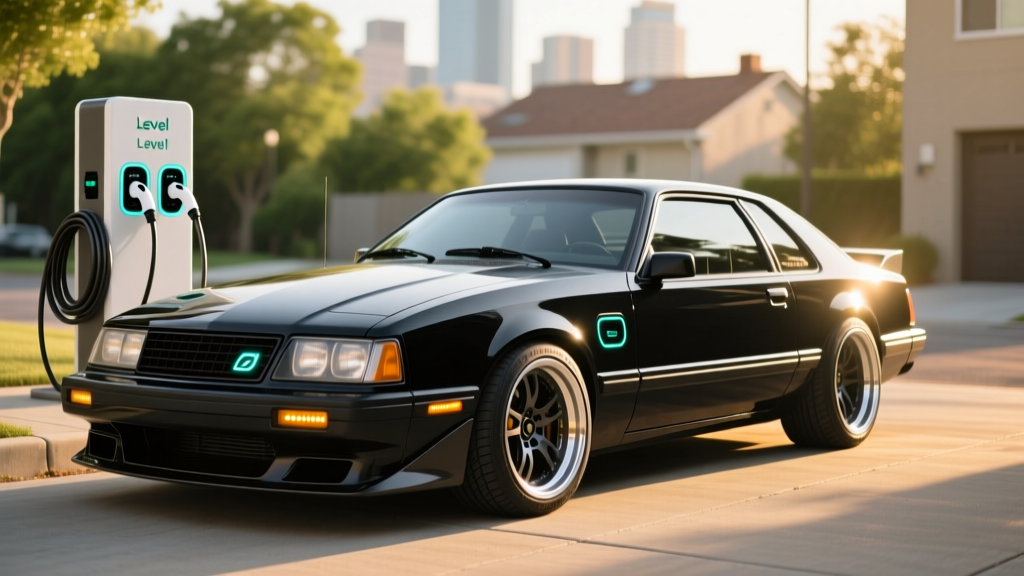
If you've ever owned a 1987 Shelby Charger — that turbocharged, intercooled, 2.2L front-wheel-drive pocket rocket from Dodge's partnership with Carroll Shelby — you know the ritual: 21 MPG combined on a good day, premium fuel recommended, and a carburetor-era fuel system that demands patience at every fill-up. Fast-forward to 2026, and many classic-car enthusiasts are adding an EV to the garage (or converting their classics entirely). The question isn't whether electric is different — it's how different the fueling infrastructure really is.
This guide breaks down everything you need to know about EV charging at home and on the road, written for buyers transitioning from analog performance machines to modern electrified vehicles. We'll cover charging speeds in exact kilowatt (kW) figures, real installation costs down to the permit fee, connector compatibility, and whether your home's electrical panel can handle the load.
Understanding EV Charging Levels: kW, kWh, and What They Actually Mean
Before we talk hardware, let's resolve the single most common confusion in EV ownership: kW vs. kWh.
- kW (kilowatt) = power, or the rate at which energy flows. Think of it like water pressure from a hose.
- kWh (kilowatt-hour) = energy, or the total amount stored in your battery. Think of it like gallons in a tank.
A Level 2 charger delivering 11.5 kW adds 11.5 kWh of energy to your battery in one hour. If your EV has an 82 kWh battery (like a Tesla Model Y Long Range), charging from 10% to 80% means adding roughly 57 kWh — which takes about 5 hours at that rate.
| Level | Voltage | Max Power (kW) | Miles of Range Added per Hour | Typical Use Case |
|---|---|---|---|---|
| Level 1 | 120V AC | 1.4–1.9 kW | 3–5 miles | Overnight top-up, PHEVs, low-mileage drivers |
| Level 2 | 240V AC | 7.2–19.2 kW | 20–60 miles | Home daily charging, workplace, destinations |
| DC Fast Charging | 400–800V DC | 50–350+ kW | 150–1,000+ miles (theoretical) | Road trips, highway corridors, rapid top-ups |
Real-world note: DC fast charging speeds are peak rates, not sustained. A charger rated at 250 kW may only deliver that speed between 10–30% State of Charge (SoC), then taper significantly. Expect a 10–80% charge on a modern 82 kWh battery at a 250 kW station to take 18–25 minutes, not the "15 minutes" some marketing implies. Above 80%, thermal management and battery protection algorithms slow the charge curve dramatically to preserve cell longevity.
Home EV Charger Installation: What It Really Costs
Coming from a 1987 Shelby Charger where "refueling infrastructure" meant a gas can in the trunk, home EV charging is where the real ownership advantage lives — but installation isn't free, and costs vary wildly based on your home's electrical system.
Electrical Requirements for Level 2 Home Charging
A typical Level 2 home charger requires:
- 240V dedicated circuit (same voltage as your electric dryer or oven)
- 40A to 60A breaker depending on charger amperage (a 48A charger needs a 60A breaker per NEC 80% continuous-load rule)
- Hardwired connection or NEMA 14-50 outlet (240V/50A receptacle)
If your home's electrical panel is already near capacity — common in homes built before 1990, around the same era as our Shelby Charger reference — you may need a panel upgrade from 100A to 200A service. This is the single biggest cost variable.
| Component | Low Estimate | High Estimate | Notes |
|---|---|---|---|
| Level 2 Charger (Equipment) | $350 | $750 | 32A–48A Wi-Fi-enabled units |
| Electrician Labor (standard install) | $500 | $1,500 | 2–6 hours, depends on run length and conduit |
| Permit & Inspection | $50 | $300 | Varies by municipality; some areas waive for EV |
| Panel Upgrade (100A → 200A) | $1,500 | $4,000 | Required if existing panel lacks capacity; older homes |
| NEMA 14-50 Outlet (if not hardwired) | $100 | $300 | Industrial-grade receptacle; GFCI breaker required |
| Total (No Panel Upgrade) | $1,000 | $2,850 | Most homes with 200A service |
| Total (With Panel Upgrade) | $2,500 | $6,850 | Homes with older 100A panels |
Pro tip: Some utilities offer rebates of $250–$1,000 for Level 2 charger installation, and the federal Residential Clean Energy Credit (IRS §25D) covers 30% of charger equipment and installation costs up to $1,000 through 2032. Check your local utility and IRS guidelines — eligibility varies by location and income.
Connector Compatibility: NACS, CCS1, CHAdeMO Explained
If you're shopping for a charger or a new EV in 2026, the connector landscape has largely consolidated — but it still matters which plug your vehicle uses.
| Connector | Brands Using It | Notes |
|---|---|---|
| NACS (North American Charging Standard / Tesla) | Tesla, Ford, GM, Rivian, Volvo, Polestar, Hyundai, Kia, BMW, Mercedes-Benz (most new models 2025+) | Industry standard going forward; access to Tesla Supercharger network |
| CCS1 (Combined Charging System) | Legacy VW ID.4, some Stellantis models, older BMW/Hyundai/Kia models | Being phased out for NACS on new models; adapters available |
| CHAdeMO | Nissan Leaf (legacy), Mitsubishi Outlander PHEV | Effectively discontinued for new vehicles; declining station availability |
For home Level 2 charging: Nearly all Level 2 chargers use a J1772 connector (the universal AC plug). Tesla vehicles include a J1772-to-NACS adapter in the glovebox, and NACS-native vehicles from Ford, GM, and others now ship with the same. If you buy a non-Tesla Level 2 charger, it will work with every EV on the market using either the native plug or the included adapter.
For DC fast charging: If you buy a CCS-equipped EV in 2026, you'll need a CCS-to-NACS adapter (typically $150–$250) to access the Tesla Supercharger network, which now hosts over 25,000 stalls open to non-Tesla vehicles. Most Electrify America and EVgo stations still offer CCS natively.
Cost to Charge: EV Electricity vs. Gasoline (Per Mile)
The 1987 Shelby Charger averaged about 21 MPG combined, requiring premium fuel. At $4.20/gallon premium (2026 national average), that's roughly $0.20 per mile in fuel alone. Here's how EV charging compares:
| Scenario | Rate | Cost per kWh | Cost per Mile (at 3.5 mi/kWh efficiency) |
|---|---|---|---|
| Home Level 2 — Off-Peak (utility time-of-use rate) | ~$0.08–$0.12/kWh | $0.10 avg | $0.029 |
| Home Level 2 — Standard Residential Rate | ~$0.13–$0.18/kWh | $0.15 avg | $0.043 |
| Public Level 2 (ChargePoint, workplace, destination) | ~$0.20–$0.35/kWh | $0.28 avg | $0.080 |
| DC Fast Charging (Electrify America, EVgo, Tesla Supercharger) | ~$0.30–$0.55/kWh | $0.42 avg | $0.120 |
| 1987 Shelby Charger (21 MPG, $4.20/gal premium) | — | — | $0.200 |
The takeaway: Even at the most expensive DC fast-charging rates, an EV costs roughly 40% less per mile than a thirsty turbocharged classic. At home off-peak rates, you're paying 85% less per mile — the equivalent of filling up a Shelby Charger for $0.63/gallon.
According to fueleconomy.gov, a 2026 Tesla Model Y Long Range achieves 122 MPGe combined, translating to roughly $0.04–$0.05 per mile on average residential electricity rates. That's a far cry from the Shelby's 21 MPG reality.
Charging Time Examples: 10–80% for Common Battery Sizes
How long does it actually take? Here are real-world estimates for popular 2026 EVs at different charging levels:
| Vehicle | Battery (kWh usable) | Level 2 at 11.5 kW (10–80%) | DC Fast (10–80%) | Peak DC Rate |
|---|---|---|---|---|
| Tesla Model Y Long Range | 75 kWh | ~4.5 hours | ~22 minutes | 250 kW (V3 Supercharger) |
| Hyundai Ioniq 5 (Long Range) | 77.4 kWh | ~5 hours | ~18 minutes | 240 kW (800V architecture) |
| Ford F-150 Lightning (Extended) | 131 kWh | ~8 hours | ~41 minutes | 150 kW |
| Chevrolet Equinox EV (3RS) | 85 kWh | ~5.5 hours | ~28 minutes | 190 kW |
| BMW i4 eDrive40 | 81.5 kWh | ~5.5 hours | ~31 minutes | 200 kW |
Charge curve reality: The Hyundai Ioniq 5's 18-minute claim holds because its 800V electrical architecture sustains high charge rates longer. A 400V vehicle like the F-150 Lightning tapers more aggressively above 60% SoC, which is why a larger battery doesn't always mean proportionally longer charge times at DC stations. Always check the sustained charge rate, not just the peak kW number.
Best Home EV Chargers for 2026: Equipment Picks
Here are four Level 2 chargers we recommend based on reliability, smart features, and value — each with its power output, connector type, and pricing:
ChargePoint Home Flex
- Power Output: Up to 12 kW (50A) — configurable down to 16A for older panels
- Connector: J1772 (works with all EVs; Tesla adapter included)
- Cable Length: 23 feet
- Smart Features: Wi-Fi, app scheduling, Alexa integration, energy tracking, utility demand-response
- Price: ~$599 (frequent sales to $499)
Best for: Flexible amperage settings if your panel is tight on capacity. NEMA 14-50 or hardwired.
Wallbox Pulsar Plus
- Power Output: Up to 11.5 kW (48A)
- Connector: J1772
- Cable Length: 25 feet
- Smart Features: Wi-Fi + Bluetooth, Power Sharing (daisy-chain two units on one circuit), app control
- Price: ~$549
Best for: Two-EV households — Power Sharing lets two chargers split a single 60A circuit intelligently.
Emporia Level 2 EV Charger
- Power Output: Up to 11.5 kW (48A)
- Connector: J1772
- Cable Length: 24 feet
- Smart Features: Wi-Fi, real-time energy monitoring, solar integration, load management
- Price: ~$399
Best for: Budget-conscious buyers who still want smart features. Excellent energy-monitoring dashboard.
Tesla Wall Connector
- Power Output: Up to 11.5 kW (48A)
- Connector: NACS native (J1772 adapter sold separately for non-Tesla EVs)
- Cable Length: 24 feet
- Smart Features: Wi-Fi, power sharing, OTA updates, sleek integrated design
- Price: ~$425
Best for: Tesla owners who want the cleanest plug-and-play experience. Non-Tesla EV owners will need a NACS-to-J1772 adapter.
Safety and Electrical Code Considerations
EV charging involves sustained high-current draw for hours — far more demanding on your wiring than a dryer that cycles on and off. Here's what the National Electrical Code (NEC) and best practices require:
- Dedicated circuit: Your Level 2 charger must be on its own breaker — no sharing with other appliances.
- GFCI protection: NEC 2020 and later requires Ground Fault Circuit Interrupter protection for all EV receptacles. Hardwired chargers with built-in GFCI satisfy this.
- 80% continuous load rule: A 48A charger requires a 60A breaker (48 ÷ 0.80 = 60). Never undersize the breaker.
- Outdoor rating: If installing outside, the charger must be rated NEMA 4 (weatherproof). All four picks above carry outdoor ratings.
- Wire gauge: 6 AWG copper for 48A circuits; 4 AWG for 60A. Your electrician will spec this based on run length.
- Permit required: Nearly all jurisdictions require an electrical permit and inspection for new 240V circuits. Skipping this voids insurance coverage in the event of a fire.
If your home was built in the 1980s — roughly the same vintage as a 1987 Shelby Charger — there's a strong chance your panel is 100A or 125A service with limited spare breaker slots. Budget for a panel upgrade, or consider a smart load-management system (like the Emporia or Wallbox Power Sharing feature) that throttles charging when other high-draw appliances are running.
Frequently Asked Questions
How much does it cost to install a home EV charger?
Between $1,000 and $2,850 for most homes with existing 200A electrical service (equipment + electrician + permit). Homes needing a panel upgrade from 100A to 200A should budget $2,500–$6,850 total. Federal tax credits under IRS §25D may cover 30% of equipment and installation costs up to $1,000, and many utilities offer additional rebates.
How fast will each charging level add range?
Level 1 (120V) adds 3–5 miles of range per hour — adequate for plug-in hybrids with 30–40 miles of electric range. Level 2 (240V) at 11.5 kW adds roughly 35–40 miles per hour, easily replenishing a full day's driving overnight. DC fast charging adds 150–300+ miles in 20–30 minutes, depending on the vehicle's peak charge rate and battery architecture.
Which connector/charger is compatible with my EV?
For home Level 2 charging, every EV sold in the US accepts the J1772 connector (Tesla vehicles use an included adapter). For DC fast charging, the industry is converging on NACS (Tesla's standard) for 2025+ models from Ford, GM, Hyundai, Kia, BMW, and others. Older CCS-equipped vehicles can access NACS Superchargers with a $150–$250 adapter. CHAdeMO (Nissan Leaf) is effectively discontinued and station availability is declining.
How much does charging cost per mile vs gas?
Home charging at standard residential rates ($0.15/kWh) costs roughly $0.04–$0.05 per mile for an efficient EV like the Model Y. Even DC fast charging at $0.42/kWh averages $0.12/mile. Compare that to a 1987 Shelby Charger at 21 MPG on $4.20/gallon premium: $0.20 per mile. EVs save 40–85% on fuel costs depending on where and when you charge.
What electrical upgrades might I need?
The most common upgrade is a panel expansion from 100A to 200A service ($1,500–$4,000), especially in homes built before 1995. You may also need a new breaker slot, conduit run from the panel to the garage or driveway, and a NEMA 14-50 outlet installation. A licensed electrician can assess your panel's spare capacity during a free or low-cost site visit. If you're running a smart home with electric heat, an electric oven, and a dryer, your panel may already be near its limit — making load management or a panel upgrade essential before adding a 48A EV charger.
Sources: EPA fueleconomy.gov, IRS Residential Clean Energy Credit, manufacturer specifications.