The single most common question from new EV buyers isn't about range — it's about charger time. How many hours on a wall outlet? How fast is a home Level 2 unit? How long does a DC fast-charger road-trip stop actually take? The answers depend on three variables: the power output of the charger (measured in kilowatts, or kW), the energy capacity of your battery (measured in kilowatt-hours, or kWh), and the charge curve your vehicle's battery management system allows.
This guide breaks down real-world charger time across all three charging levels, shows you what home installation actually costs in 2026, and helps you pick the right equipment for your garage. No marketing fluff — just the numbers that matter.
The kW vs kWh Distinction You Must Get Right
Before calculating any charger time, lock in this distinction:
- kW (kilowatts) = power, or the rate at which electricity flows into your car. Think of it as the width of the hose.
- kWh (kilowatt-hours) = energy, or the total amount of electricity stored in your battery. Think of it as the size of the tank.
A 60 kWh battery charged at a steady 10 kW takes roughly 6 hours from 0 to 100% (60 ÷ 10 = 6). In practice, charger time is always longer than this simple math suggests because of tapering above 80% state of charge (SoC), thermal management, and charging-curve limits. We'll cover all of that below.
Charging Levels: Speeds, Miles Per Hour, and Typical Charger Time
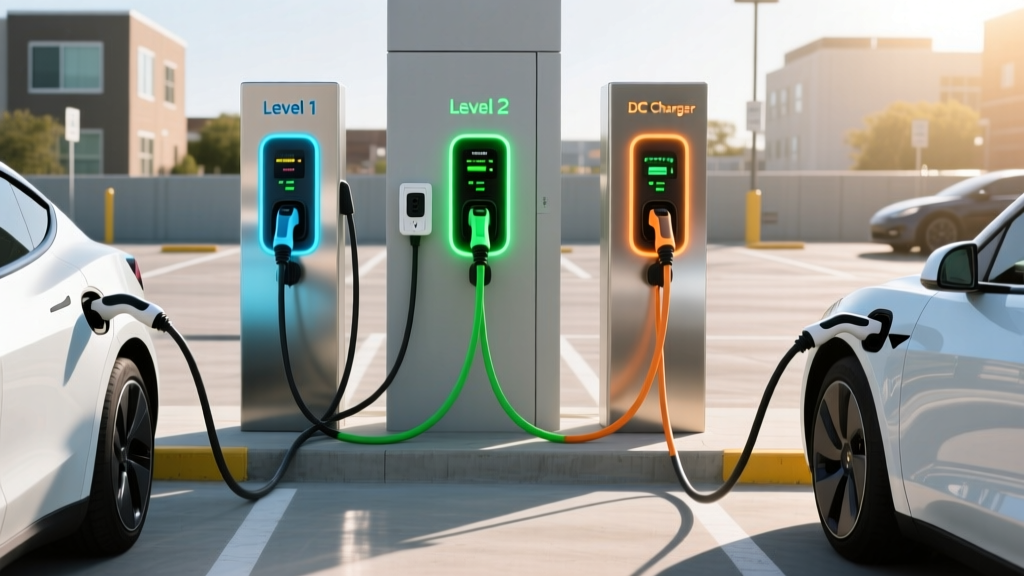
Every EV sold in the U.S. charges at one of three levels. Here's how they compare on speed and real-world range recovery.
| Level | Voltage | Power Output | Miles of Range Added Per Hour | Best Use Case |
|---|---|---|---|---|
| Level 1 | 120V AC | 1.0–1.4 kW | 3–5 mi/hr | Overnight top-off; PHEVs; low-mileage drivers |
| Level 2 (Home/Public) | 240V AC | 3.3–19.2 kW | 12–75 mi/hr | Daily home charging; workplace; destination |
| DC Fast Charging | 400–800V DC | 50–350 kW | 150–1,200+ mi/hr (peak) | Road trips; highway corridors; rapid top-ups |
The "miles per hour" column assumes an average EV efficiency of roughly 3–4 miles per kWh (similar to a Tesla Model Y or Hyundai Ioniq 5). Less efficient vehicles like the Ford F-150 Lightning (~2 mi/kWh) will see lower range recovery at the same power level.
Real-World Charger Time by Battery Size
Here's what charger time looks like for common battery sizes when charging from 10% to 80% SoC — the range most EV owners use to protect battery health and avoid the slow taper above 80%.
| Battery Size (usable kWh) | Example Vehicles | Level 1 (1.4 kW) | Level 2 (11.5 kW / 48A) | DC Fast (Peak Rate, 10–80%) |
|---|---|---|---|---|
| ~15 kWh | Toyota RAV4 PHEV, Chrysler Pacifica PHEV | ~8 hrs | ~1 hr | N/A (most PHEVs lack DC fast) |
| ~60 kWh | Chevrolet Equinox EV, Nissan Leaf (larger pack) | ~36 hrs | ~4 hrs | ~25–35 min (at 150 kW peak) |
| ~75–82 kWh | Tesla Model Y, Hyundai Ioniq 5, VW ID.4 | ~48 hrs | ~5.5–6 hrs | ~18–25 min (at 200–250 kW peak) |
| ~100–131 kWh | Ford F-150 Lightning Ext. Range, GMC Hummer EV | ~75+ hrs | ~8–10 hrs | ~35–45 min (at 150–350 kW peak) |
Home Level 2 Installation: Electrical Requirements and Costs
Level 2 home charging is the sweet spot for most EV owners: fast enough to fully replenish overnight, cheap enough to run daily. But installation costs vary widely depending on your home's electrical panel, the distance from panel to charger location, and local permit requirements.
Electrical Requirements
- Voltage: 240V (same as a dryer or oven circuit)
- Amperage: 40A circuit for a 32A charger (EVSE), or 60A circuit for a 48A charger — National Electrical Code requires circuits rated at 125% of continuous load
- Wire gauge: Typically 6 AWG copper for 40A; 4 AWG for 60A (varies by run length)
- Dedicated circuit: Required — no sharing with other appliances
- GFCI protection: Required by NEC 2020+ for EV charging outlets (some hardwired units have built-in GFCI)
Do You Need a Panel Upgrade?
This is the biggest wildcard in home charger installation. Most modern homes with 200A service panels have enough spare capacity for a 40–60A EV circuit. But older homes with 100A panels — or homes already running heavy loads (electric heat, tankless water heater, pool equipment) — may need a panel upgrade to 200A or even 400A.
A licensed electrician will perform a load calculation (per NEC Article 220) to determine if your existing panel can handle the additional draw. If you're close to the limit, alternatives include:
- Lower-amperage charger: A 32A (7.7 kW) charger on a 40A circuit draws less than a 48A (11.5 kW) unit
- Smart panel load management: Devices like the Emporia VUE or Span smart panel can dynamically throttle charger power when other circuits spike, avoiding a full panel upgrade
- Panel upgrade: 100A → 200A typically costs $1,500–$4,000 depending on your utility and local code
Installation Cost Breakdown
| Cost Component | Simple Install (Panel Nearby, No Upgrade) | Complex Install (Long Run or Panel Upgrade) |
|---|---|---|
| Level 2 Charger Equipment | $400–$700 | $400–$700 |
| Electrician Labor | $300–$800 | $800–$2,500 |
| Materials (Wire, Conduit, Breaker) | $50–$200 | $200–$600 |
| Permit Fee | $50–$150 | $50–$250 |
| Panel Upgrade (if needed) | $0 | $1,500–$4,000 |
| Total Range | $800–$1,850 | $2,950–$8,050 |
Always hire a licensed electrician and pull a permit. Unpermitted EV charger installs can void home insurance and create fire risk. Many utilities offer rebates of $250–$1,000 for Level 2 installations — check with your provider. Additionally, the federal Alternative Fuel Vehicle Refueling Property Credit (IRC §30C) may cover up to 30% of home charger equipment and installation costs (capped at $1,000), subject to census-tract eligibility requirements. Consult a tax professional for your specific situation.
Connector Compatibility: NACS, CCS, and CHAdeMO in 2026
The connector landscape has shifted dramatically. As of 2026, the North American Charging Standard (NACS), originally developed by Tesla, has become the dominant connector for new EVs. Here's where each brand stands:
| Connector Type | Brands Using It (2026 Models) | DC Fast Availability | Adapter Needed? |
|---|---|---|---|
| NACS (Tesla) | Tesla (all), Ford, GM, Rivian, Volvo, Polestar, Hyundai/Kia (2025+ models), BMW, Mercedes | Tesla Supercharger network + NACS-equipped public stations | CCS-to-NACS adapters available (~$200–$300) |
| CCS1 (Combo) | VW ID.4 (remaining stock), some Stellantis models, legacy 2022–2024 EVs | Electrify America, EVgo, ChargePoint DC stations | NACS-to-CCS adapters for Supercharger access |
| CHAdeMO | Nissan Leaf (discontinued), Mitsubishi Outlander PHEV (legacy) | Limited and declining | No viable adapter to NACS/CCS for DC fast |
For home Level 2 charging, the connector story is simpler: all Level 2 home chargers sold in the U.S. now ship with either a NACS plug or a J1772 plug (the legacy Level 2 standard). Most new EVs with NACS ports include a J1772-to-NACS adapter in the trunk. If you buy a J1772 home charger, it will work with any EV via adapters — this is the safest universal choice if you plan to keep the charger across multiple vehicles.
Cost to Charge: Per-Mile Economics vs. Gasoline
One of the strongest arguments for EV ownership is fuel cost savings — but the actual savings depend heavily on where and when you charge.
| Charging Scenario | Typical $/kWh | Cost Per Mile (at 3.5 mi/kWh) | Annual Cost (12,000 mi) |
|---|---|---|---|
| Home, Off-Peak Utility Rate | $0.08–$0.14 | $0.023–$0.040 | $275–$480 |
| Home, Standard Residential Rate | $0.14–$0.20 | $0.040–$0.057 | $480–$685 |
| Public Level 2 (Workplace, Mall) | $0.20–$0.40 | $0.057–$0.114 | $685–$1,370 |
| DC Fast Charging (Electrify America, EVgo) | $0.35–$0.55 | $0.100–$0.157 | $1,200–$1,885 |
| Gasoline Vehicle (25 MPG, $3.40/gal) | — | $0.136 | $1,632 |
The takeaway: home charging is where EV economics win decisively. If you charge primarily at home on off-peak rates, you'll spend $300–$500 per year on "fuel" — roughly one-quarter the cost of gasoline. If you rely exclusively on DC fast charging, your costs approach or even exceed gas, especially at $0.48–$0.55/kWh premium networks.
Time-of-use (TOU) utility plans can dramatically reduce your home charging cost. Many utilities offer rates as low as $0.06–$0.08/kWh during overnight hours (typically 11 PM – 6 AM). Set your EV or charger to schedule charging during these windows.
Equipment Recommendations: Top Home Level 2 Chargers for 2026
These are the chargers we'd recommend based on power output, build quality, smart features, and value. All are UL-listed for safety.
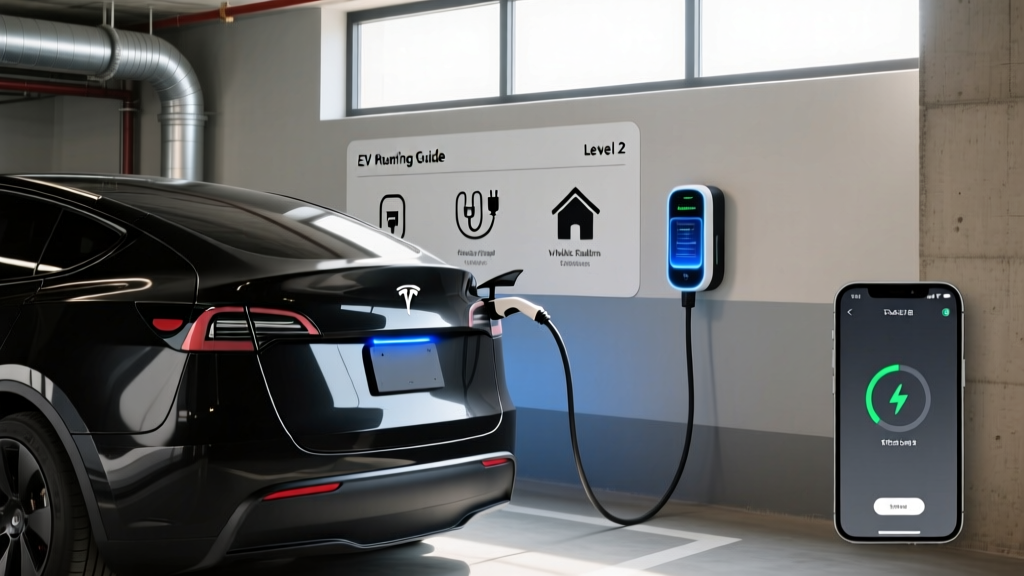
Tesla Wall Connector (J1772 + NACS Versions)
- Power Output: 11.5 kW (48A on 60A circuit)
- Cable Length: 24 ft
- Connector: Available in NACS or J1772
- Smart Features: Wi-Fi, OTA updates, load sharing between multiple units, access control
- Price: ~$475
- Best For: Tesla owners or mixed-fleet garages; highest power at a competitive price
ChargePoint Home Flex
- Power Output: Up to 12 kW (50A on 60A circuit); configurable down to 16A for smaller panels
- Cable Length: 23 ft
- Connector: J1772 (works with all EVs; NACS vehicles use adapter)
- Smart Features: Wi-Fi, app scheduling, Alexa integration, detailed energy tracking
- Price: ~$550–$700
- Best For: Multi-EV households wanting universal J1772 compatibility with flexible amperage
Emporia Level 2 EV Charger
- Power Output: 11.5 kW (48A on 60A circuit)
- Cable Length: 24 ft
- Connector: J1772
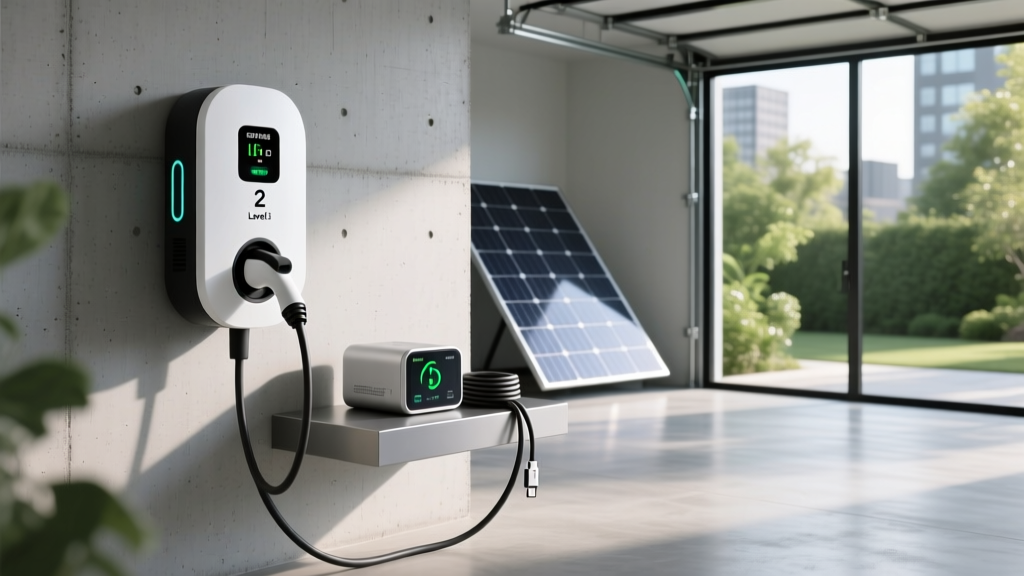
- Smart Features: Wi-Fi, app control, integrates with Emporia VUE energy monitor for solar-aware and load-managed charging
- Price: ~$400–$450
- Best For: Budget-conscious buyers with solar panels or homes needing load management to avoid panel upgrades
Grizzl-E Smart
- Power Output: 9.6 kW (40A on 50A circuit)
- Cable Length: 24 ft
- Connector: J1772
- Smart Features: Wi-Fi, OCPP-compatible, adjustable amperage via dip switches
- Price: ~$450–$550
- Best For: Outdoor installations (IP65-rated, -40°F rated); Canadian-built durability
Hardwired vs. Plug-In: Chargers above 40A (9.6 kW) typically require hardwiring — there's no standard 240V plug rated above 50A for residential use. A NEMA 14-50 outlet (50A) works for chargers up to 40A continuous draw. Hardwired installs eliminate the GFCI breaker requirement (the EVSE has built-in ground-fault protection) and are generally more reliable long-term.
Safety, Code, and Installation Best Practices
EV charging is a continuous high-amperage load that runs for hours — similar to an electric furnace, not a toaster. Safety requirements reflect this:
- Dedicated circuit: Your EV charger must have its own breaker with no other outlets or appliances on the same circuit.
- GFCI protection: NEC 2020 and later requires ground-fault circuit interrupter protection for all EVSE connected via a receptacle (outlet). Hardwired units integrate GFCI internally.
- Outdoor rating: If installing outdoors, choose a charger rated IP55 or higher (IP65 preferred). Ensure the enclosure and all conduit fittings are rated for wet locations.
- Wire sizing: Undersized wire causes voltage drop and heat buildup. Your electrician will size wire per NEC Table 310.16 based on circuit amperage, run length, and ambient temperature.
- Permit and inspection: Required in virtually all U.S. jurisdictions. The inspector verifies wire gauge, breaker size, grounding, and GFCI compliance. Skipping the permit risks insurance denial in the event of an electrical fire.
- Cable management: Use a holster or retractable reel to keep the cable off the garage floor — prevents tripping, tire damage, and connector contamination.
Frequently Asked Questions
How much does it cost to install a home EV charger?
A straightforward Level 2 installation with the electrical panel nearby and no upgrade needed typically costs $800–$1,850 including equipment, labor, materials, and permit. If your home needs a panel upgrade (100A → 200A), a long wire run, or conduit through finished walls, expect $2,950–$8,050. Always get 2–3 quotes from licensed electricians and confirm they include the permit fee.
How fast will each charging level add range?
Level 1 (120V) adds roughly 3–5 miles of range per hour — enough for PHEVs or low-mileage drivers. Level 2 (240V) at 48A/11.5 kW adds roughly 35–45 miles per hour for a typical crossover EV, fully replenishing most batteries overnight. DC fast charging adds 150–300+ miles in a 20–30 minute session, depending on the vehicle's peak charge rate and battery preconditioning. Refer to the EPA's fueleconomy.gov for specific vehicle efficiency data to calculate your own miles-per-hour figures.
Which connector/charger is compatible with my EV?
Check your vehicle's charge port. For 2025–2026 models, most new EVs from Tesla, Ford, GM, Rivian, Hyundai, Kia, BMW, and Volvo use the NACS connector. Older models (2022–2024) from VW, Stellantis, and others may still use CCS1. The Nissan Leaf uses CHAdeMO (being phased out). For home Level 2, a J1772 charger works with every EV via adapters — it's the most future-proof choice if you expect to change vehicles.
How much does charging cost per mile vs. gas?
Home charging at typical residential rates ($0.12–$0.18/kWh) costs roughly $0.03–$0.05 per mile — about 60–75% less than a 25 MPG gas vehicle at $3.40/gallon ($0.14/mile). Even public DC fast charging at $0.48/kWh comes in around $0.10–$0.14/mile, roughly matching gasoline. The savings are greatest when you charge at home on off-peak utility rates.
What electrical upgrades might I need?
The most common upgrade is a panel capacity increase from 100A to 200A service, costing $1,500–$4,000. You may also need a new 240V circuit with appropriately sized wire and breaker (included in standard installation quotes). In rare cases, your utility may need to upgrade the service drop to your home. Before buying a charger, have an electrician perform a load calculation — it's usually free with a quote and tells you exactly what your panel can support.
Why does my charger slow down above 80%?
This is the charge curve taper, and it's by design. Lithium-ion batteries accept charge fastest at low state of charge. Above ~80% SoC, the battery management system (BMS) reduces charge rate to prevent lithium plating, excessive heat, and accelerated degradation. A session that averages 150 kW from 10–80% might drop to 30–50 kW from 80–100%. For daily driving, charging to 80% is faster, cheaper, and better for long-term battery health.