Shoppers obsess over 0-60 mph times, but the metric that actually defines daily EV ownership is how fast your charger replenishes the battery. A Tesla Model 3 Performance might sprint to 60 mph in 3.1 seconds, but if you're plugged into a standard 120V wall outlet, you're adding roughly 3 miles of range per hour — meaning a full recharge takes over two days. Understanding the relationship between your charger, your vehicle's 0-60 performance envelope, and the battery chemistry underneath is the key to sizing your home charging setup correctly and avoiding costly electrical surprises.
This guide breaks down every charging tier with exact kW figures, miles-per-hour replenishment rates, real installation costs, and equipment picks for the 2026 model year landscape — where the North American Charging Standard (NACS) has largely displaced CCS1 on new vehicles.
Charging Levels Explained: kW, Miles Per Hour, and 10-80% Times
Before comparing hardware, let's lock down the critical distinction: kW (kilowatts) measures charging power — the rate at which energy flows into your battery. kWh (kilowatt-hours) measures energy capacity — the total amount of electricity your battery holds. Think of kW as the width of the pipe and kWh as the size of the tank. A bigger pipe (higher kW) fills the tank (kWh) faster.
| Level | Voltage | Power (kW) | Miles of Range Added/Hour | Typical Use Case | 10-80% Time (84 kWh Battery) |
|---|---|---|---|---|---|
| Level 1 | 120V AC | 1.0–1.4 kW | 3–5 mi/hr | Overnight trickle, PHEVs, emergencies | ~50+ hours |
| Level 2 | 240V AC | 7.2–19.2 kW | 25–65 mi/hr | Home daily charging, workplace | ~5–11 hours |
| DC Fast Charge | 400–900V DC | 50–350 kW | 180–1,200+ mi/hr (peak) | Road trips, rapid top-ups | ~15–45 minutes |
Real-world caveat: Those DC fast-charge mile-per-hour figures represent peak rates sustained only between roughly 10-50% State of Charge (SoC). Above 80%, the charge curve tapers aggressively to protect battery health — a 350 kW peak might drop to under 40 kW past 85%. This is why manufacturers quote 10-80% times rather than 0-100%.
Matching Your Charger to Your EV's Performance Profile
Here's where the charger vs. 0-60 comparison gets practical. High-performance EVs with large batteries demand proportionally robust home charging. Consider three popular 2026 models:
| Vehicle | Battery (kWh) | 0-60 mph | EPA Range | Max AC Charge Rate | Max DC Fast Charge | 10-80% DCFC Time |
|---|---|---|---|---|---|---|
| Tesla Model 3 Long Range | 79 kWh (NMC) | 4.2 sec | 363 mi | 11.5 kW | 250 kW | ~25 min |
| Hyundai Ioniq 5 (Long Range AWD) | 84 kWh (NMC) | 5.1 sec | 290 mi | 10.9 kW | 240 kW (800V) | ~18 min |
| Ford F-150 Lightning (Extended) | 131 kWh (NMC) | 3.8 sec | 320 mi | 19.2 kW | 150 kW | ~41 min |
Home Charger Installation: Electrical Requirements and Real Costs
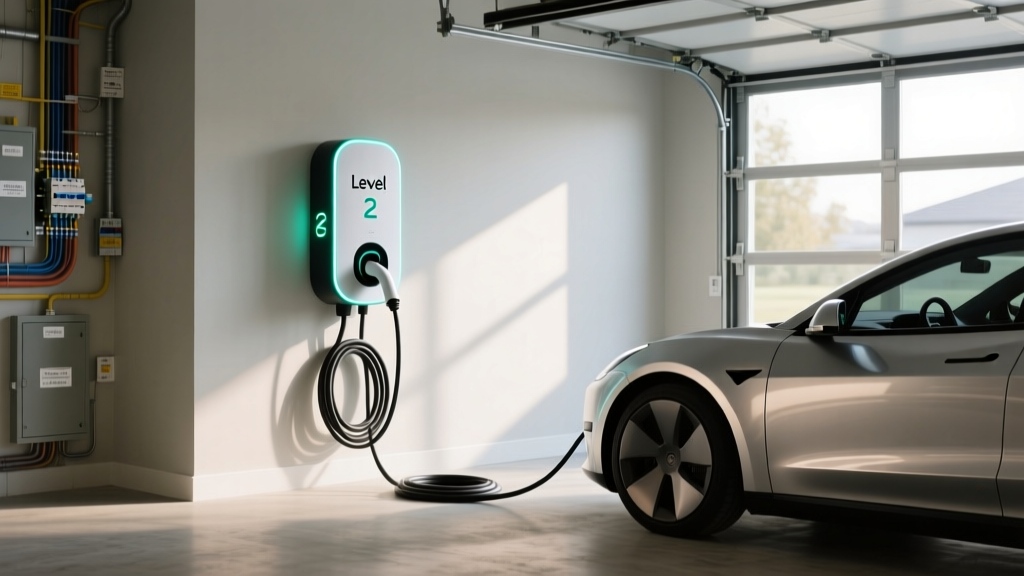
Most EV owners install a 240V Level 2 charger on a dedicated circuit. The most common configurations are:
- 32-amp circuit (7.7 kW): Requires a 40-amp breaker. Adequate for most sedans and crossovers with batteries under 85 kWh.
- 48-amp circuit (11.5 kW): Requires a 60-amp breaker. Recommended for large-battery vehicles (F-150 Lightning, Rivian R1S, Cadillac Escalade IQ).
- 80-amp circuit (19.2 kW): Requires a 100-amp breaker. Needed to max out vehicles like the F-150 Lightning's onboard charger. Uncommon in residential settings and often triggers a panel upgrade.
What Electrical Upgrades Might You Need?
Homes built before 2000 often have 100-amp or 150-amp main electrical panels. Adding a 60-amp breaker for a 48-amp EV charger can max out your panel's capacity — especially if you already run electric dryer, oven, and HVAC loads. A licensed electrician will perform a load calculation per NEC Article 220 to determine if your panel can handle the additional draw. If it can't, expect a panel upgrade to 200 amps, which is the single largest variable in installation cost.
| Component | Basic Install (Short Run, No Panel Work) | Complex Install (Long Run, Panel Upgrade) |
|---|---|---|
| Level 2 Charger Equipment | $350–$700 | $500–$750 |
| Electrical Permit | $50–$150 | $100–$250 |
| Electrician Labor (240V circuit) | $400–$800 | $1,200–$2,500 |
| Panel Upgrade (if needed) | $0 | $1,500–$3,500 |
| Conduit, Wiring, Misc. | $100–$300 | $300–$800 |
| Total Estimated Cost | $900–$1,950 | $3,600–$7,800 |
Federal incentive note: The IRS residential clean energy credit (IRC §25D) does not cover EV charger equipment for most taxpayers as of 2026 — the separate §30C alternative fuel vehicle refueling property credit expired for residential installations after 2025, though some state-level rebates persist. Check your state incentive database for local utility or state rebates that can offset $200–$1,000 of installation cost.
Connector Compatibility in 2026: NACS, CCS1, CHAdeMO, and Adapters
The 2026 charging landscape has shifted decisively toward NACS (North American Charging Standard), the connector Tesla pioneered and which Ford, GM, Rivian, Hyundai, Kia, and most other automakers have adopted for new vehicles. Here's where things stand:
| Connector | Brands Using It (New Vehicles) | Notes |
|---|---|---|
| NACS (Tesla) | Tesla, Ford, GM, Rivian, Hyundai, Kia, Volvo, Polestar, BMW, Mercedes-Benz | Native access to Tesla Supercharger network (20,000+ stalls in North America) |
| CCS1 | Legacy models (pre-2025 VW ID.4, some Stellantis); mostly phased out for new vehicles | Requires NACS-to-CCS adapter for Supercharger access; Electrify America adding NACS cables |
| CHAdeMO | Nissan Leaf (discontinued after 2025), Mitsubishi Outlander PHEV | Effectively a legacy standard; dwindling public infrastructure |
If you own a CCS1-equipped vehicle from the 2023-2025 era, a NACS-to-CCS adapter ($150–$250) unlocks the Tesla Supercharger network — the most reliable public DC fast-charging infrastructure in the US. Tesla, Lectron, and A2Z sell adapters rated for up to 250 kW. For home Level 2 charging, most wall units now ship with a NACS connector, but CCS-equipped vehicles can use a simple J1772-to-CCS adapter or a NACS-to-J1772 adapter depending on the charger's native plug.
Cost Per Mile: Home Charging vs. Public DC Fast Charging vs. Gasoline
The economics of EV ownership hinge on where and when you charge. Here's a realistic comparison for 2026:
| Scenario | Rate | Cost Per Mile (at 3.5 mi/kWh) | Annual Cost (12,000 mi) |
|---|---|---|---|
| Home Level 2 (Off-Peak TOU Rate) | $0.09/kWh | $0.026 | $309 |
| Home Level 2 (Standard Residential) | $0.16/kWh | $0.046 | $549 |
| Public Level 2 (ChargePoint, etc.) | $0.28/kWh | $0.080 | $960 |
| DC Fast Charge (Electrify America) | $0.48/kWh | $0.137 | $1,646 |
| Tesla Supercharger (V3/V4) | $0.32/kWh | $0.091 | $1,097 |
| Gasoline (25 MPG combined, $3.40/gal) | $3.40/gal | $0.136 | $1,632 |
The takeaway: Home off-peak charging delivers fuel costs roughly 80% lower than a comparable gas car. But exclusive reliance on DC fast charging erases most of the savings — and accelerates battery degradation due to sustained high-heat charging. Plan your ownership around 80-90% home Level 2 charging for the best economics and battery longevity.
Recommended Home Level 2 Chargers for 2026
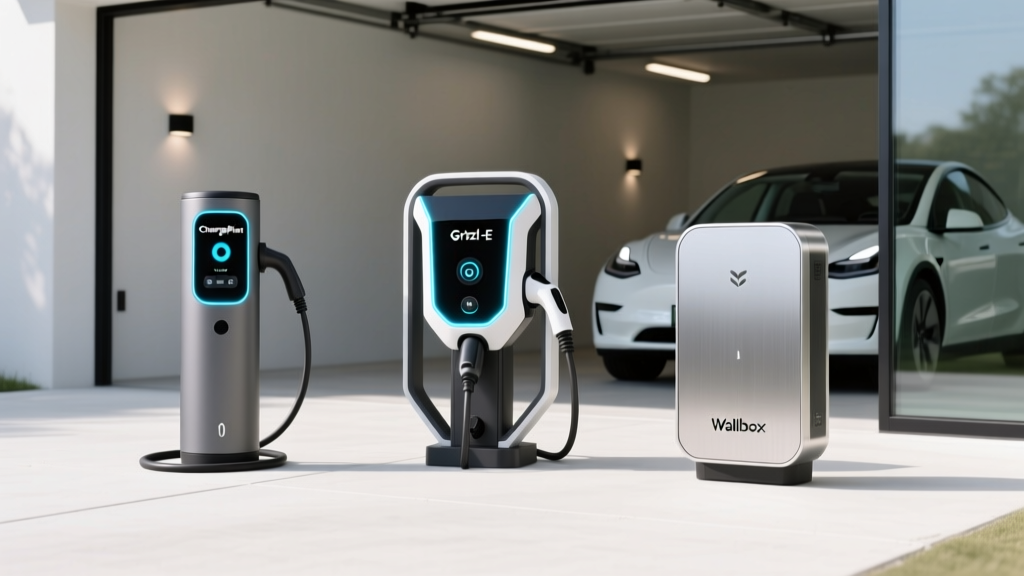
These units represent the current best-in-class options based on power output, connector flexibility, smart features, and real-world reliability:
Tesla Wall Connector (Gen 4)
- Power Output: Up to 11.5 kW (48A)
- Connector: NACS native
- Cable Length: 24 ft
- Smart Features: Wi-Fi, OTA updates, power sharing between two units, access control
- Price: ~$475
- Best For: Tesla and NACS-native vehicles; cleanest integration
Emporia Vue Level 2 Charger
- Power Output: Up to 11.5 kW (48A)
- Connector: J1772 (NACS adapter included)
- Cable Length: 24 ft
- Smart Features: Energy monitoring, solar integration, scheduled charging, load management
- Price: ~$399
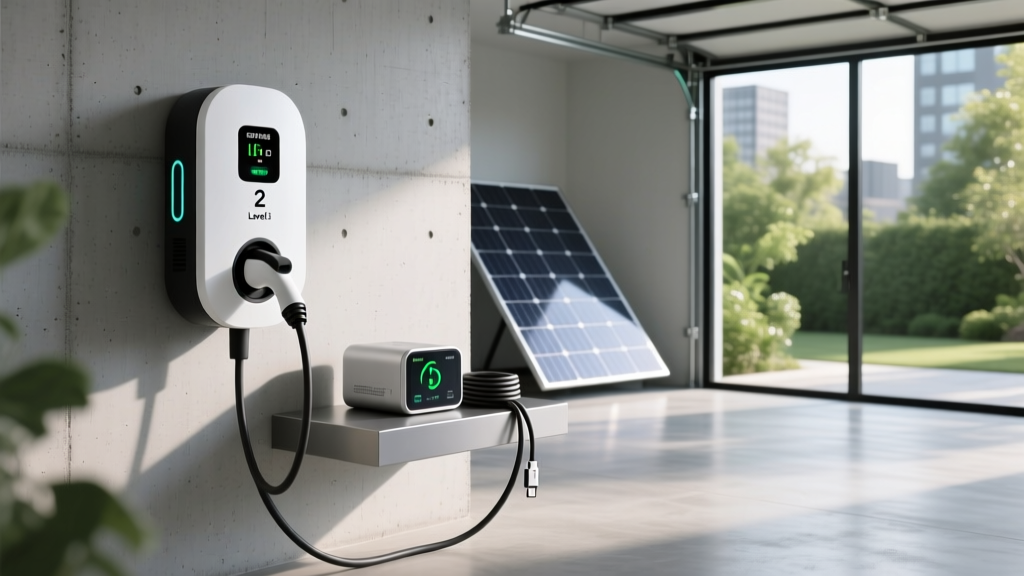
- Best For: Solar-panel homes, budget-conscious buyers, CCS1 legacy vehicles
ChargePoint Home Flex (2nd Gen)
- Power Output: Up to 12 kW (50A, configurable)
- Connector: NACS or J1772 (configurable at purchase)
- Cable Length: 23 ft
- Smart Features: App scheduling, Alexa integration, detailed session history
- Price: ~$599
- Best For: Smart-home enthusiasts, flexible connector needs
Grizzl-E Smart (United Chargers)
- Power Output: Up to 10 kW (40A)
- Connector: J1772 or NACS
- Cable Length: 24 ft
- Smart Features: OCPP-compatible, adjustable amperage (16A-40A), extreme-weather rated (-40°F)
- Price: ~$499
- Best For: Cold-climate owners, outdoor installations, future-proofing
Safety, Electrical Code, and Installation Best Practices
EV charging draws sustained high current for hours — far longer than any other household appliance. This makes proper installation non-negotiable:
- Dedicated circuit: Your Level 2 charger must be on its own dedicated breaker — never shared with other outlets or appliances. NEC 2023/2026 requires continuous loads to be derated to 80% of breaker capacity (a 48A charger needs a 60A breaker).
- GFCI protection: The 2023 NEC update (Article 625.54) requires GFCI protection for all receptacles used for EV charging. Hardwired installations are exempt from this requirement and are generally preferred by electricians for reliability.
- Outdoor rating: If your charger is installed outdoors (garage-exterior wall, carport, driveway post), the unit must carry a NEMA 4 or NEMA 4X rating for water and dust ingress. All four chargers recommended above meet this standard.
- Wire gauge: A 60-amp circuit typically requires 6 AWG copper wire for runs under 50 feet, stepping up to 4 AWG for longer runs to prevent voltage drop. Your electrician will size wire per NEC Table 310.15(B)(16).
- Permit and inspection: Every jurisdiction requires a permit for new 240V circuits. The inspection verifies proper grounding, breaker sizing, wire gauge, and GFCI compliance. Do not skip this — it protects your home insurance coverage in the event of an electrical fire.
Frequently Asked Questions
How much does it cost to install a home EV charger?
A straightforward Level 2 installation in a home with an adequate electrical panel typically costs $900–$1,950 including equipment, labor, and permit. If your home needs a 200-amp panel upgrade, total costs range from $3,600–$7,800. Always get a load calculation from a licensed electrician before committing.
How fast will each charging level add range?
Level 1 (120V) adds 3–5 miles per hour. Level 2 (240V) adds 25–65 miles per hour depending on amperage and vehicle acceptance rate. DC fast charging can add 180–1,200+ miles per hour at peak, but only for the 10–50% SoC window before tapering.
Which connector and charger is compatible with my EV?
For 2026 model-year vehicles, most new EVs use NACS. If your vehicle has a CCS1 port (common on 2022-2024 models), you'll need a NACS-to-CCS adapter for Supercharger access and a J1772-to-CCS adapter for most public Level 2 stations. CHAdeMO is effectively discontinued.
How much does charging cost per mile vs. gas?
Home off-peak charging averages $0.026/mile — roughly 80% cheaper than a 25 MPG gas car at $3.40/gallon ($0.136/mile). Public DC fast charging narrows the gap to near parity with gas, so home charging access is the key economic driver.
What electrical upgrades might I need?
The most common upgrade is a panel replacement from 100A or 150A to 200A service ($1,500–$3,500). Older homes may also need grounding upgrades, new conduit runs, or a sub-panel installation if the main panel is full. A load calculation determines your specific needs.