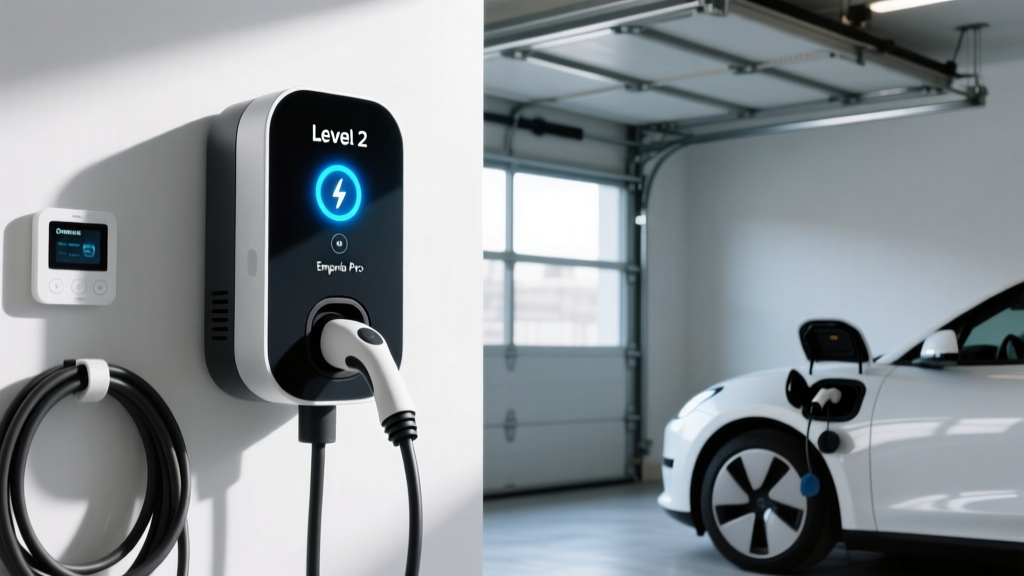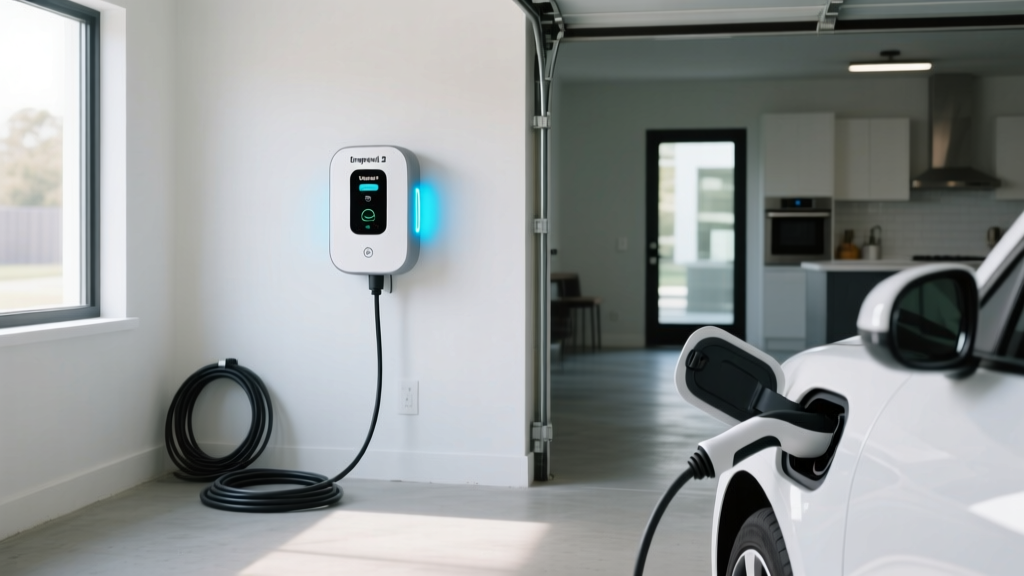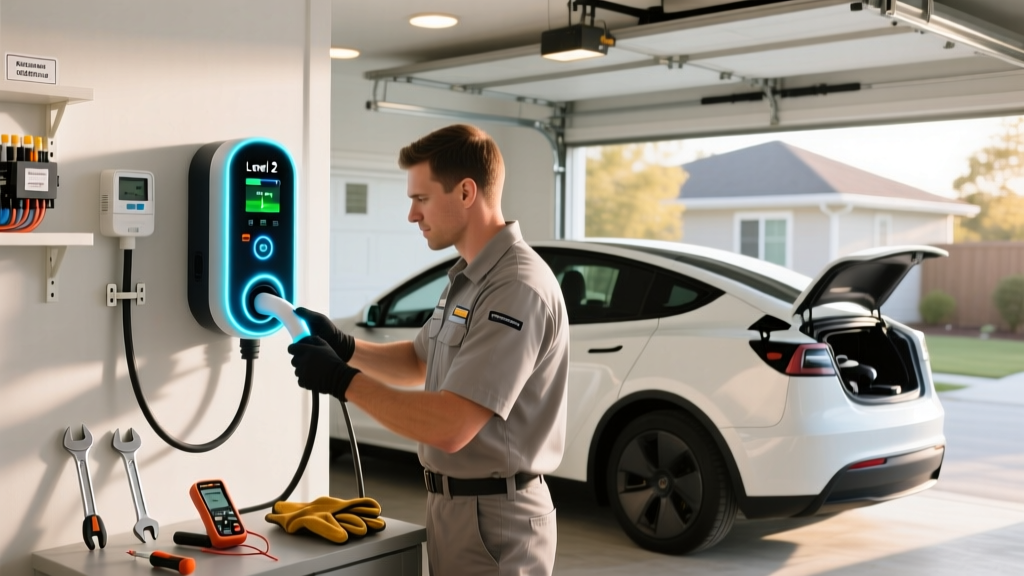
Buying an EV is only half the equation — charging it efficiently at home is where daily ownership is won or lost. But before you order a Level 2 wallbox and call an electrician, there's a financial layer most buyers overlook: EV charger rebates. Federal, state, and utility incentives can slash your home charging station cost by hundreds or even thousands of dollars, sometimes covering the entire installation.
This guide breaks down the real costs of installing a home EV charger in 2026, the rebates that offset them, charging speeds across all three levels, connector compatibility for every major brand, and the specific equipment worth your money. We'll also run the numbers on cost-per-mile versus gasoline so you can see exactly when your setup pays for itself.
Understanding EV Charging Levels: Speed, Power, and Range Added
Every EV owner needs to understand three charging tiers. The critical distinction: kW (kilowatts) measures power — how fast energy flows into your battery. kWh (kilowatt-hours) measures energy capacity — the total amount your battery holds. Think of kW as the width of a pipe and kWh as the size of the tank it fills.
| Level | Voltage | Power (kW) | Miles of Range Added Per Hour | Typical Use Case |
|---|---|---|---|---|
| Level 1 | 120V AC | 1.0–1.4 kW | 3–5 miles | Overnight top-up, PHEVs, low-mileage drivers |
| Level 2 | 240V AC | 3.3–19.2 kW | 12–75 miles | Home daily charging, workplace, public destinations |
| DC Fast Charge | 400–900V DC | 50–350 kW | 150–1,200+ miles (equivalent rate) | Road trips, highway corridors, rapid top-ups |
Real-world charging time examples (10–80% SoC):
- 75 kWh battery (e.g., Tesla Model Y, Ford Mustang Mach-E) at a 150 kW DC fast charger: ~25–30 minutes. At home on a 48-amp Level 2 (11.5 kW): ~6.5 hours.
- 100 kWh battery (e.g., GMC Sierra EV, Lucid Air) at a 350 kW charger: ~20–25 minutes (with 800V architecture). At home on 11.5 kW: ~9 hours.
- 18 kWh PHEV battery (e.g., Toyota RAV4 Prime) on Level 1 (1.4 kW): ~12 hours. On a 240V Level 2 at 3.3 kW: ~5 hours.
Note that DC fast charging follows a charge curve: your vehicle pulls peak kW only between roughly 10–50% state of charge, then tapers significantly above 80% to protect battery longevity. That's why we measure 10–80% times rather than 0–100%.
How Much Does It Cost to Install a Home EV Charger?
Home Level 2 installation costs vary dramatically based on your home's electrical panel, the distance from panel to charger location, and local labor rates. Here's a realistic breakdown for a typical 48-amp (11.5 kW) hardwired wallbox installation in 2026:
| Component | Simple Install (Panel Adjacent) | Complex Install (Long Run / Upgrade) |
|---|---|---|
| Level 2 Charger Equipment (48-amp) | $400–$700 | $400–$700 |
| Electrician Labor (licensed) | $300–$600 | $800–$2,000 |
| Electrical Permit | $50–$150 | $50–$200 |
| Wiring & Conduit Materials | $50–$150 | $200–$600 |
| Panel Upgrade (100A → 200A, if needed) | N/A | $1,500–$3,500 |
| Total Estimated Cost | $800–$1,600 | $2,950–$7,000 |
When will you need a panel upgrade? Most homes built after 1990 have a 200-amp electrical panel, which can typically support a 48-amp EV charger (requiring a 60-amp dedicated circuit per NEC 80% continuous-load rules). If your home has a 100-amp panel — common in pre-1980s construction — adding a 60-amp circuit may push your total load beyond safe capacity, requiring a service upgrade. A licensed electrician will perform a load calculation during the estimate to determine this.
EV Charger Rebates: Federal, State, and Utility Incentives
The financial case for home charging gets significantly better once you layer in available rebates. Here's where to look:
Federal Tax Credit (IRS §30C — Alternative Fuel Infrastructure)
The federal government offers a tax credit of up to $1,000 for residential EV charger installation under IRS §30C (Alternative Fuel Vehicle Refueling Property Credit). Key rules for 2026:
- Credit amount: 30% of equipment + installation costs, capped at $1,000 for residential property
- Location requirement: The charger must be installed at your primary residence in a qualifying census tract (typically non-urban or low-income communities, per Inflation Reduction Act targeting)
- Eligible costs: Charger hardware AND electrical labor/installation
- Claiming: Filed on IRS Form 8911 with your annual tax return — this is a non-refundable credit, meaning it reduces your tax liability but won't generate a refund beyond what you owe
Important: Tax rules change. Consult a tax professional and review current IRS guidance before relying on credit availability.
Utility Company Rebates
This is where the most underutilized savings live. Many electric utilities offer direct rebates for Level 2 charger purchases and installations — often $250 to $750, sometimes more. Examples of utility programs active in recent years:
- PG&E (California): Historically offered up to $800 for residential Level 2 installations with time-of-use enrollment
- Xcel Energy (Colorado/Minnesota): Rebates up to $500–$1,200 depending on income tier
- DTE Energy (Michigan): Up to $500 rebate for smart charger installations
- National Grid (Northeast): Various programs offering $250–$750
Check your utility's EV program page or the Alternative Fuels Data Center (AFDC) incentive search tool for current programs in your ZIP code.
State and Local Rebates
Many states stack additional incentives on top of federal and utility programs. California's CC4CP program, New York's Charge Ready NY, Massachusetts' MOR-EV, and Colorado's state tax credit all offer residential charging support. Amounts and eligibility vary by jurisdiction — search your state energy office website or AFDC's state-by-state database.
Federal §30C credit: $1,000
Utility rebate: $750
State/local incentive: $500
Total potential savings: $2,250 — enough to cover a simple installation entirely.
Which Connector and Charger Is Compatible with My EV?
The connector landscape shifted dramatically between 2023 and 2026. Here's where things stand:
| Connector Type | Brands Using It (Factory) | Notes |
|---|---|---|
| NACS (North American Charging Standard / Tesla connector) | Tesla, Ford, GM, Rivian, Volvo, Polestar, Mercedes-Benz, Nissan, Fisker, Honda (upcoming) | Now the dominant standard. Most new 2025–2026 EVs ship with NACS. CCS vehicles can use a NACS-to-CCS adapter for Supercharger access. |
| CCS1 (Combined Charging System) | Hyundai, Kia, Volkswagen, BMW, Stellantis, some legacy models | Still common on 2023–2024 models. Many brands transitioning to NACS by 2026–2027. |
| CHAdeMO | Nissan Leaf (legacy), Mitsubishi Outlander PHEV | Effectively discontinued for new vehicles. Existing CHAdeMO vehicles still supported at many stations. |
For home Level 2 charging, nearly all chargers use a J1772 connector (or NACS for Tesla-specific units). If your EV has a NACS port, you'll either buy a NACS-native home charger or use the J1772-to-NACS adapter that most automakers now include. CCS-ported EVs plug directly into any J1772 Level 2 station.
Cost to Charge: Home Electricity vs. Public Stations vs. Gasoline
The economic advantage of home charging is the single biggest ownership benefit of EVs. Here's the math across scenarios, using a mid-size EV averaging 3.0 miles per kWh (roughly 112 MPGe combined):
| Scenario | Cost per kWh | Cost Per Mile | Full "Tank" Cost (75 kWh Battery) |
|---|---|---|---|
| Home — Off-Peak TOU Rate | $0.08–$0.12 | $0.027–$0.040 | $6.00–$9.00 |
| Home — Standard Residential Rate | $0.14–$0.18 | $0.047–$0.060 | $10.50–$13.50 |
| Public Level 2 (ChargePoint, etc.) | $0.25–$0.49 | $0.083–$0.163 | $18.75–$36.75 |
| DC Fast Charging (Electrify America, EVgo, Tesla Supercharger) | $0.32–$0.56 | $0.107–$0.187 | $24.00–$42.00 |
| Gasoline Vehicle (28 MPG, $3.40/gal) | — | $0.121 | $45–$55 |
The takeaway: Charging at home on an off-peak rate costs roughly one-quarter to one-third of what gasoline costs per mile. Even DC fast charging on the road is often cheaper than gas. But relying exclusively on public DC fast charging erodes much of the cost advantage — home charging is where the economics shine.
Maximize savings by enrolling in your utility's Time-of-Use (TOU) rate plan and scheduling charging during off-peak hours (typically 10 PM–6 AM). Most smart chargers and EV infotainment systems allow scheduled/deferred charging.
Best Home EV Chargers for 2026: Equipment Recommendations
After testing and tracking reliability data across dozens of residential installations, here are the Level 2 chargers that consistently deliver on performance, durability, and smart features:
ChargePoint Home Flex
- Power Output: Up to 12 kW (50-amp circuit) — adjustable from 16A to 50A
- Connector: J1772 (NACS adapter included or available)
- Cable Length: 18 or 23 feet
- Smart Features: Wi-Fi, app scheduling, energy tracking, Alexa integration
- Price: $550–$650
- Best for: Most homeowners; adjustable amperage fits any panel capacity
Wallbox Pulsar Plus
- Power Output: Up to 11.5 kW (48-amp)
- Connector: J1772 or NACS (model-dependent)
- Cable Length: 13 or 25 feet
- Smart Features: Wi-Fi + Bluetooth, load balancing, solar integration, Power Sharing for dual units
- Price: $500–$650
- Best for: Homes with solar panels or dual-EV households
Tesla Wall Connector
- Power Output: Up to 11.5 kW (48-amp) — NACS native; J1772 adapter included for non-Tesla EVs
- Connector: NACS
- Cable Length: 18 or 24 feet
- Smart Features: Wi-Fi, over-the-air updates, power sharing, access control
- Price: $425–$475
- Best for: Tesla owners or households standardizing on NACS
Emporia Level 2 EV Charger
- Power Output: Up to 11.5 kW (48-amp)
- Connector: J1772
- Cable Length: 24 feet
- Smart Features: Wi-Fi, real-time energy monitoring, integration with Emporia Vue home energy panel, solar-aware scheduling
- Price: $350–$400
- Best for: Budget-conscious buyers who want energy monitoring
Key buying criteria: Ensure the charger is UL-listed (or ETL-listed) for safety certification, rated for outdoor use (NEMA 4 or IP56) if installing outside, and hardwired rather than plug-in if you want maximum amperage (plug-in NEMA 14-50 outlets are limited to 40 amps / 9.6 kW by code).
Safety, Electrical Code, and Installation Requirements
A Level 2 charger is a high-draw, continuous-load appliance — the National Electrical Code (NEC) treats it seriously. Here's what your installation must meet:
- Dedicated circuit: Your EV charger requires its own dedicated breaker — it cannot share a circuit with other appliances. A 48-amp charger requires a 60-amp breaker (NEC Article 210.20 requires 125% overcurrent protection for continuous loads).
- GFCI protection: NEC 2020 and later require Ground Fault Circuit Interrupter protection for EV charging outlets. Hardwired installations may have GFCI built into the charger unit itself — confirm with your electrician.
- Outdoor rating: If mounted outdoors, the charger must carry a NEMA 4 (or higher) or IP56+ rating to withstand rain, dust, and temperature swings. Most quality units meet this.
- Wire gauge: A 60-amp circuit typically requires 6 AWG copper wire (or 4 AWG aluminum). Longer runs may require upsizing to minimize voltage drop — your electrician will calculate this.
- Permit and inspection: Virtually all jurisdictions require an electrical permit for EV charger installation. The work must pass inspection to be code-compliant. Unpermitted work can void home insurance claims and create resale issues.
Frequently Asked Questions About EV Charger Rebates and Installation
How much does it cost to install a home EV charger?
A straightforward Level 2 installation with the electrical panel near the charger location typically costs $800–$1,600 including equipment, labor, and permits. Complex installations requiring long wire runs, trenching, or a panel upgrade can range from $2,950–$7,000. EV charger rebates from federal, state, and utility programs can offset $500–$2,250+ of this cost depending on your location and eligibility.
How fast will each charging level add range?
Level 1 (120V) adds 3–5 miles per hour — adequate for plug-in hybrids and low-mileage drivers. Level 2 (240V) at 48 amps adds roughly 30–40 miles per hour, fully replenishing most EV batteries overnight. DC fast charging at 150+ kW can add 150–300 miles in 20–30 minutes, though charge speed tapers significantly above 80% state of charge.
Which connector/charger is compatible with my EV?
For 2026 model-year vehicles: Tesla, Ford, GM, Rivian, Volvo, and most new EVs use the NACS connector. Hyundai, Kia, VW, and BMW still largely use CCS1. Nissan Leaf and older Mitsubishi PHEVs use CHAdeMO. For home Level 2, any J1772 charger works with CCS vehicles directly, and with NACS vehicles using the included adapter. NACS-native home chargers (like the Tesla Wall Connector) work with NACS vehicles directly and include J1772 adapters for CCS vehicles.
How much does charging cost per mile vs gas?
Home charging on a standard residential rate costs roughly $0.04–$0.06 per mile — about one-third to one-half the cost of gasoline at $3.40/gallon in a 28 MPG vehicle ($0.12/mile). Off-peak TOU rates can push home charging below $0.03/mile. Public DC fast charging at $0.35–$0.50/kWh costs $0.11–$0.17/mile, still competitive with gas but erasing most of the EV cost advantage.
What electrical upgrades might I need?
If your home has a 200-amp electrical panel (standard in most post-1990 construction), you likely need no upgrade — just a dedicated 60-amp breaker. Homes with 100-amp panels (common pre-1980s) may require a service upgrade to 200A, costing $1,500–$3,500. Your electrician will perform a load calculation to determine whether your existing panel can safely support the additional 60-amp circuit alongside your current appliances.
Do I qualify for the federal EV charger tax credit?
The §30C credit covers 30% of equipment and installation costs up to $1,000, but only if your charger is installed in a qualifying census tract (generally non-urban or lower-income areas as defined by the IRA). Check the Alternative Fuels Data Center census tract lookup tool and consult a tax professional to confirm eligibility. State and utility rebates have their own independent criteria and often stack on top of the federal credit.