What Does "Getting the Level 1 Seed" Actually Mean for EV Charging?
If you've been searching whether your chargers can "get the Level 1 seed," you're likely asking a practical question: Can I rely on a basic Level 1 (120V) outlet to charge my electric vehicle, or do I need something faster? The short answer depends on your daily mileage, battery size, and how much patience you have. Level 1 charging is the seed — the baseline trickle that every EV ships with — but for most drivers, it's only the starting point.
This guide breaks down every charging tier with exact kW speeds, real-world miles added per hour, home installation costs, connector compatibility, and the per-mile economics versus gasoline. Whether you're plugging into a standard wall outlet or wiring a 48-amp hardwired station, you'll know exactly what to expect.
Charging Levels Explained: Speeds, Power, and Range Added Per Hour
Before comparing costs, the single most important distinction in EV charging is between kW (kilowatts) and kWh (kilowatt-hours). kW measures power — how fast energy flows into your battery at any given moment. kWh measures energy — the total capacity of your battery, like gallons in a fuel tank. A 75 kWh battery charged at 7.2 kW takes roughly 10 hours from empty to full (ignoring taper at high state of charge).
| Level | Voltage / Phase | Power (kW) | Miles of Range Added per Hour | Typical Use Case |
|---|---|---|---|---|
| Level 1 | 120V AC, single-phase | 1.2–1.9 kW | 3–5 mi/hr | Overnight top-off, PHEVs, low-mileage drivers |
| Level 2 | 240V AC, single-phase | 3.3–19.2 kW | 12–75 mi/hr | Home daily charging, workplace, public destinations |
| DC Fast Charging (Level 3) | 400–800V DC | 50–350+ kW | 150–1,200+ mi/hr (peak) | Road trips, highway corridors, commercial fleets |
Real-world nuance: Those "miles per hour" figures assume an efficient sedan consuming roughly 25–30 kWh per 100 miles. A heavier SUV like the Rivian R1S or Ford F-150 Lightning may see 20–30% fewer miles added per hour at the same kW rate because it takes more energy to move the vehicle one mile.
Level 1: Can It Actually Be Your Primary Charger?
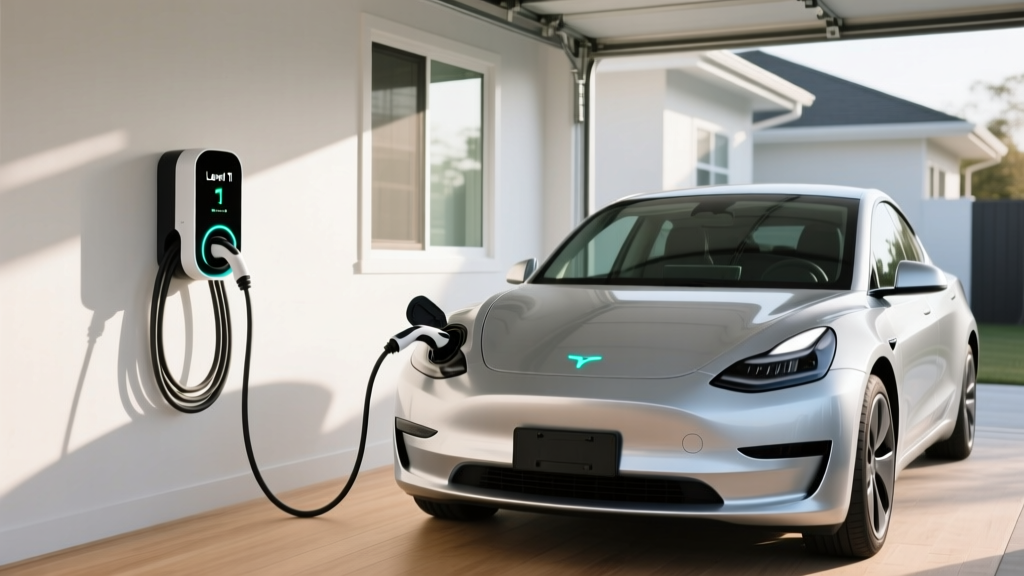
Level 1 charging delivers 1.2 kW on a standard 15-amp household circuit, or up to 1.9 kW on a 20-amp circuit. For a vehicle with a 75 kWh battery (e.g., Tesla Model Y Long Range), a full 0–100% charge at 1.4 kW would take approximately 53 hours. That's impractical for a full recharge, but it can be sufficient if:
- You drive fewer than 30 miles per day and plug in every night (10 hours × 4 mi/hr ≈ 40 miles recovered)
- You own a PHEV with a smaller 10–20 kWh battery (e.g., Toyota RAV4 Prime: ~42 mi electric range, full charge in ~5–8 hours on Level 1)
- You have access to Level 2 or DC fast charging during the week for heavier driving days
The "Level 1 seed" works as a baseline, but most BEV owners upgrade to Level 2 within the first few months of ownership.
Level 2: The Home Charging Standard
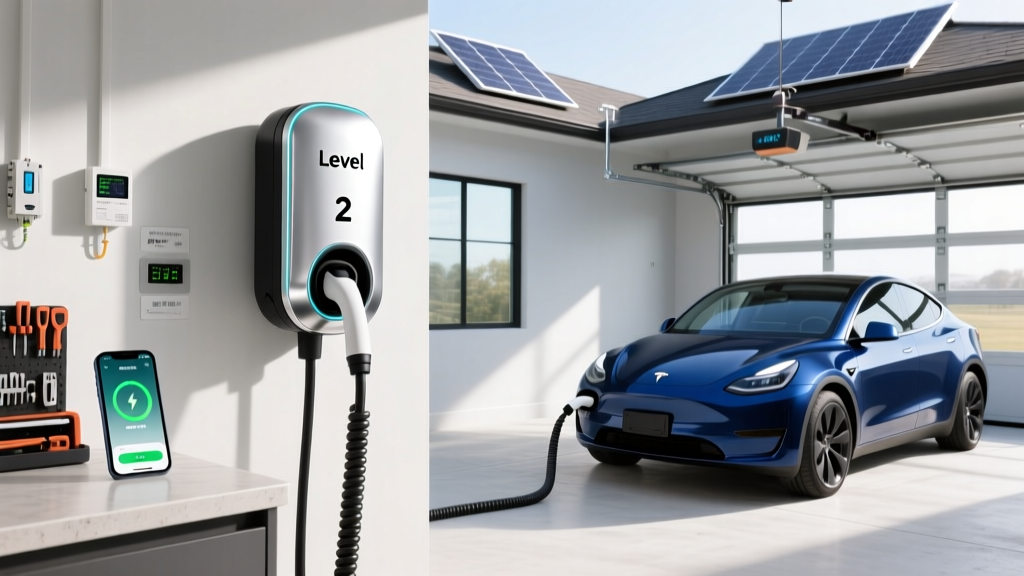
Level 2 at 240V is where daily EV ownership becomes effortless. Most home chargers deliver 7.2 kW (32 amps), 9.6 kW (40 amps), or 11.5 kW (48 amps). An 11.5 kW charger adds roughly 40–46 miles of range per hour for an efficient sedan, meaning a 75 kWh battery recharges from 10–80% in about 5 hours — overnight, every time.
Many EVs also have an onboard charger limit. The Hyundai Ioniq 5 accepts up to 10.9 kW on Level 2 AC; plugging it into a 48-amp (11.5 kW) station won't charge it faster. Always check your vehicle's max AC charge rate before overspending on a higher-amperage unit.
DC Fast Charging: Road-Trip Speed
DC fast chargers bypass the vehicle's onboard charger and deliver DC power directly to the battery. Speeds range from 50 kW (older CHAdeMO stations) to 350 kW (latest Electrify America and Tesla V4 Superchargers).
Charge curve reality: Peak kW is not sustained kW. A vehicle rated at 250 kW peak (e.g., Tesla Model 3 Long Range) may only hold that rate between 10–30% state of charge, then taper progressively. A realistic 10–80% session on a 250 kW-capable vehicle with an ~80 kWh battery takes 18–28 minutes depending on battery temperature and preconditioning. Always look at 10–80% time, not peak kW, for practical comparisons.
How Much Does It Cost to Install a Home EV Charger?
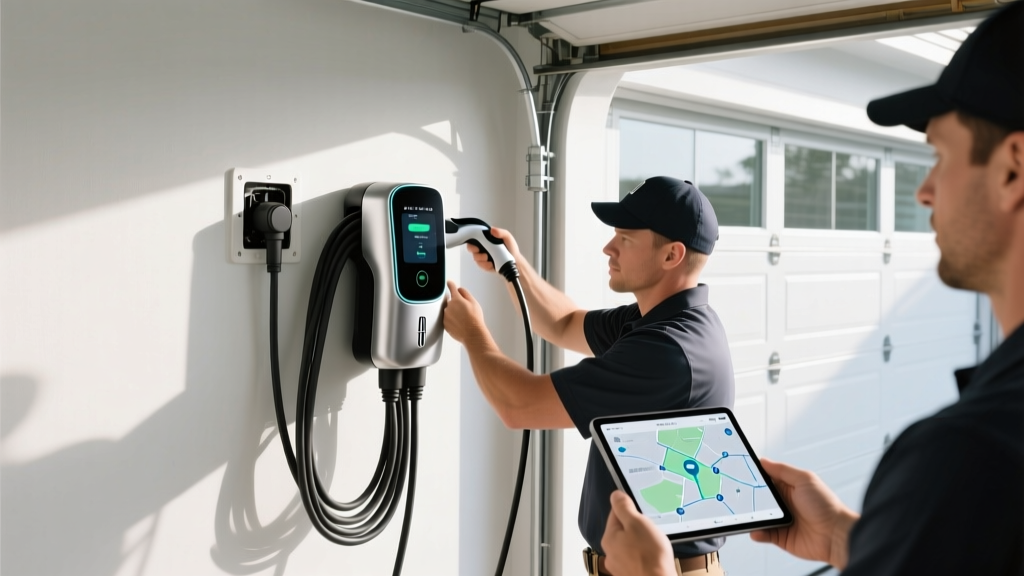
Home Level 2 installation costs vary enormously based on your electrical panel's capacity, the distance from panel to charger location, and local permitting. Here's a realistic breakdown for a typical 240V / 48-amp hardwired Level 2 station:
| Component | Low End | Typical | High End |
|---|---|---|---|
| Level 2 EVSE equipment (charger unit) | $350 | $550 | $800 |
| Electrician labor (2–6 hours) | $300 | $600 | $1,200 |
| Materials (conduit, wire, breaker) | $100 | $200 | $500 |
| Permit and inspection | $50 | $150 | $350 |
| Electrical panel upgrade (if needed: 100A → 200A) | $1,500 | $2,500 | $4,000 |
| Total (no panel upgrade) | $800 | $1,500 | $2,850 |
| Total (with panel upgrade) | $2,300 | $4,000 | $6,850 |
The panel-upgrade gotcha: Homes built before 1990 often have 100-amp service. Adding a 48-amp continuous-load EV circuit (which requires a 60-amp breaker per the National Electrical Code's 125% rule) may exceed your panel's spare capacity. A licensed electrician will perform a load calculation to determine if an upgrade is required. Don't skip this step — an overloaded panel is a fire hazard.
Some utilities offer rebates of $200–$1,000 for Level 2 installation, and the federal Alternative Fuel Vehicle Refueling Property Credit (IRS Form 8911) covers up to 30% of home charging equipment and installation costs, capped at $1,000, subject to census-tract eligibility. Check your utility and the IRS for current-year rules.
Connector Compatibility: NACS, CCS1, and CHAdeMO Explained
As of 2026, the North American connector landscape has consolidated significantly. Here's what fits what:
| Connector | Description | Brands Using It (2026) | Adapter Needed? |
|---|---|---|---|
| NACS (J3400) | Tesla-originated, now SAE standard; compact, lightweight | Tesla, Ford, GM, Rivian, Volvo, Polestar, Mercedes, BMW, Hyundai, Kia, Toyota | None for native NACS vehicles; CCS→NACS adapters available (~$200) |
| CCS1 (Combo) | Bulkier legacy standard; being phased out by most OEMs | VW ID.4 (pre-2026), older BMW i4/iX, Stellantis models, legacy Nissan Ariana | NACS→CCS adapter needed for Tesla Supercharger access (~$200–$250) |
| CHAdeMO | Japanese legacy DC standard; no longer used on new vehicles | Nissan Leaf (discontinued), Mitsubishi Outlander PHEV (older) | No adapter available for NACS; use CHAdeMO-specific stations |
Practical advice: If you're buying a new EV in 2026, it almost certainly has a native NACS port or ships with a CCS-to-NACS adapter for Tesla Supercharger access. For home Level 2 charging, all connectors use the same J1772 (or NACS) AC standard, so any Level 2 EVSE will work with any EV — the DC connector difference only matters at public fast chargers.
Cost to Charge: Per-Mile Economics vs. Gasoline
One of the strongest arguments for EV ownership is lower fuel cost per mile — but the savings depend heavily on where and when you charge.
| Scenario | Rate ($/kWh) | Vehicle Efficiency | Cost per Mile | Equivalent Gas Price (at 30 MPG) |
|---|---|---|---|---|
| Home, off-peak (utility time-of-use) | $0.08–$0.12 | 3.0 mi/kWh | $0.03–$0.04 | $0.90–$1.20/gal |
| Home, standard rate (national avg) | $0.16 | 3.0 mi/kWh | $0.053 | $1.59/gal |
| Public Level 2 (ChargePoint, EVgo L2) | $0.25–$0.40 | 3.0 mi/kWh | $0.08–$0.13 | $2.40–$3.90/gal |
| DC Fast Charging (Electrify America, Tesla Supercharger) | $0.35–$0.55 | 3.0 mi/kWh | $0.12–$0.18 | $3.60–$5.40/gal |
| Gas vehicle (national avg $3.40/gal, 30 MPG combined) | — | 30 MPG | $0.113 | $3.40/gal |
The takeaway: Home off-peak charging delivers fuel costs equivalent to paying under $1/gallon for gas. Even public DC fast charging at $0.48/kWh roughly matches a 30 MPG gas car at current fuel prices. The economics strongly favor home charging — if you can install Level 2 at home, your per-mile fuel cost drops to roughly one-third to one-half of a comparable gasoline vehicle.
For precise efficiency data on specific models, the EPA's fueleconomy.gov lists kWh/100mi and MPGe ratings for every certified EV sold in the US.
Charging Time Examples: 10–80% for Common Battery Sizes
Most EV owners charge between 10% and 80% state of charge for daily use — charging above 80% slows dramatically to protect battery health, and keeping a buffer below 10% is recommended for longevity (especially with NMC chemistry).
| Battery Size (kWh usable) | Level 1 (1.4 kW) | Level 2 (7.2 kW) | Level 2 (11.5 kW) | DC Fast (150 kW avg) | DC Fast (250 kW avg) |
|---|---|---|---|---|---|
| 18 kWh (PHEV, e.g., RAV4 Prime) | ~9 hrs | ~1.75 hrs | ~1.1 hrs | N/A (no DCFC) | N/A |
| 60 kWh (e.g., base Model 3) | ~30 hrs | ~5.8 hrs | ~3.7 hrs | ~25 min | ~18 min |
| 82 kWh (e.g., Model Y LR, Ioniq 5) | ~41 hrs | ~8 hrs | ~5 hrs | ~32 min | ~22 min |
| 100 kWh (e.g., F-150 Lightning Ext.) | ~50 hrs | ~9.7 hrs | ~6.1 hrs | ~40 min | ~28 min |
| 131 kWh (e.g., Rivian R1T Max) | ~65 hrs | ~12.7 hrs | ~8 hrs | ~52 min | ~35 min |
DC fast-charge taper: The "avg" kW figures above account for taper. A vehicle that peaks at 250 kW might average only 150–180 kW across the full 10–80% session because power drops significantly above 50–60% SoC. Battery preconditioning (automatic navigation to a charger in Tesla, Hyundai, and GM vehicles) can reduce taper by warming the battery to optimal temperature before arrival.
Recommended Home Level 2 Chargers (2026 Picks)
ChargePoint Home Flex
- Power Output: Up to 12 kW (50 amps), configurable down to 16A for lower-capacity panels
- Connector: NACS (J3400) native, J1772 adapter included
- Cable Length: 23 feet
- Smart Features: Wi-Fi, app scheduling, Alexa integration, energy tracking, utility demand-response compatible
- Price: ~$599 (unit only)
- Best For: Flexible amperage for homes with limited panel capacity
Tesla Wall Connector
- Power Output: Up to 11.5 kW (48 amps)
- Connector: NACS native; J1772 adapter available separately (~$50)
- Cable Length: 24 feet
- Smart Features: Wi-Fi, OTA updates, Power Share (load balancing between two units), integrated cable management
- Price: ~$475
- Best For: Tesla owners and multi-EV households (Power Share avoids panel upgrades)
Emporia Vue Level 2 Charger
- Power Output: Up to 11.5 kW (48 amps)
- Connector: J1772 (NACS adapter available)
- Cable Length: 24 feet
- Smart Features: Wi-Fi, app-based scheduling, solar integration with Emporia energy monitor, load management
- Price: ~$399
- Best For: Budget-conscious buyers who want smart features and solar pairing
Grizzl-E Smart
- Power Output: Up to 10 kW (40 amps)
- Connector: J1772 or NACS (select at purchase)
- Cable Length: 24 feet
- Smart Features: Wi-Fi, OCPP protocol for commercial/fleet use, adjustable amperage via dip switches
- Price: ~$449
- Best For: Cold-climate durability (rated to -40°F) and outdoor installations
Safety, Code, and Electrical Requirements
EV charging is a high-draw, continuous-load application — the National Electrical Code (NEC) treats it differently from plugging in a dryer. Key requirements:
- Dedicated circuit: Your Level 2 charger must be on its own dedicated double-pole breaker. No sharing with other appliances.
- 125% rule: A 48-amp continuous load requires a 60-amp breaker (48 × 1.25 = 60). Wire gauge must match — typically 6 AWG copper for 60A runs, or 4 AWG for longer distances to reduce voltage drop.
- GFCI protection: The 2020 NEC and later require GFCI protection for indoor receptacles used for EV charging. Hardwired installations (no plug) often sidestep this requirement and are preferred by many electricians for reliability.
- Outdoor rating: If your charger is installed outside, ensure it carries a NEMA 4 or NEMA 4X rating for weather resistance. All major chargers listed above meet this standard.
- Permit and inspection: Most jurisdictions require an electrical permit for a new 240V circuit. The inspection verifies wire gauge, breaker sizing, grounding, and proper mounting. Don't skip this — unpermitted work can void homeowner's insurance claims.
Always hire a licensed electrician. The National Highway Traffic Safety Administration and NFPA both emphasize that improper EV charging installations pose fire and shock risks. A qualified electrician will also assess whether your panel needs a load-management device (e.g., Emporia Smart Panel or Tesla Gateway) to avoid a costly service upgrade.
Frequently Asked Questions
Can I charge my EV on a regular 120V outlet every day?
Yes, if you drive fewer than 30–40 miles per day and have a 10+ hour overnight charging window. Level 1 adds 3–5 miles of range per hour. For PHEVs with small batteries (10–20 kWh), Level 1 is often sufficient. For BEVs with 60+ kWh batteries, Level 1 is best used as a backup or supplement — you'll want Level 2 for practical daily use.
How much does it cost to install a home EV charger?
A typical Level 2 installation runs $800–$2,850 including equipment, electrician labor, materials, and permit — assuming your electrical panel has sufficient spare capacity. If a panel upgrade from 100A to 200A is needed, add $1,500–$4,000. Federal tax credits under IRS Form 8911 may cover up to 30% of equipment and installation (capped at $1,000) depending on your census tract.
How fast will each charging level add range?
Level 1 adds 3–5 miles per hour. Level 2 adds 12–75 miles per hour depending on amperage and vehicle efficiency. DC fast charging adds the equivalent of 150–1,200+ miles per hour at peak, but sessions are typically measured in 10–80% time: 18–35 minutes for most modern EVs on a 150–350 kW station.
Which connector and charger is compatible with my EV?
For 2026 model-year vehicles, most new EVs use the NACS (J3400) connector. Older CCS1 vehicles can use adapters (~$200) to access Tesla Superchargers. CHAdeMO is legacy-only. For home Level 2 charging, all vehicles accept either NACS or J1772 AC connectors — any Level 2 home charger will work with any EV, with an adapter if needed.
How much does EV charging cost per mile compared to gas?
Home charging at the national average electricity rate (~$0.16/kWh) costs about $0.05/mile for an efficient EV — roughly half the cost of a 30 MPG gas car at $3.40/gallon ($0.11/mile). Off-peak home charging drops to $0.03–$0.04/mile. Public DC fast charging at $0.45/kWh costs roughly $0.15/mile, comparable to or slightly above gasoline depending on your vehicle's efficiency.
What electrical upgrades might I need for a Level 2 charger?
If your home has a 100-amp electrical panel or your existing load calculation leaves insufficient headroom for a 60-amp breaker (required for 48-amp continuous charging), you may need a panel upgrade to 200 amps ($1,500–$4,000). Alternatives include installing a lower-amperage charger (e.g., 32 amps on a 40-amp breaker), using a load-management device that throttles the charger when other appliances draw power, or pairing a smart panel with your EVSE to dynamically share capacity.