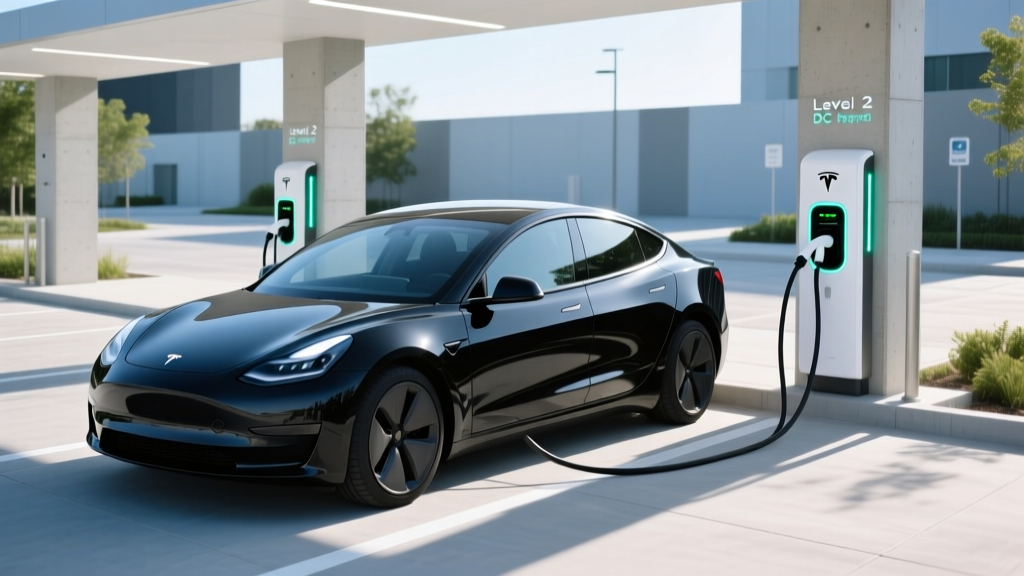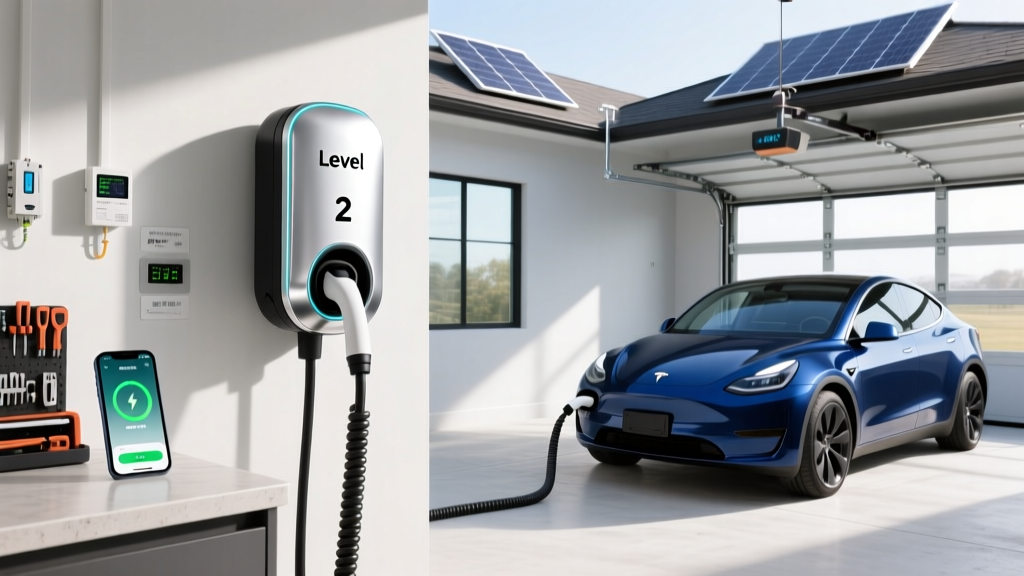
Understanding EV Charging Levels: Speeds in kW and Miles Per Hour
Before shopping for a 2025 electric charger, you need to understand the three charging levels available to EV owners. The distinction between kW (kilowatts — the rate of power delivery) and kWh (kilowatt-hours — the total energy stored in your battery) is the single most important concept in EV charging. Think of kW as the width of the pipe and kWh as the size of the tank you're filling.
| Level | Voltage | Power (kW) | Miles of Range Per Hour | Typical Use Case |
|---|---|---|---|---|
| Level 1 | 120V AC | 1.0–1.4 kW | 3–5 mi/hr | Overnight top-up, PHEVs, emergencies |
| Level 2 | 240V AC | 3.3–19.2 kW | 12–75 mi/hr | Home daily charging, workplace, public AC |
| DC Fast Charge | 400–900V DC | 50–350 kW | 150–1,200+ mi/hr (peak) | Road trips, highway corridors |
For context, a 75 kWh battery (like the one in a Tesla Model Y Long Range) charged at a 11.5 kW Level 2 home station takes roughly 7–8 hours from near-empty to full — perfect for overnight. That same battery on a 250 kW DC fast charger can go from 10% to 80% in about 20–25 minutes, though charging speed tapers significantly above 80% state of charge to protect the battery cells.
How Much Does It Cost to Install a Home EV Charger?
The total cost of installing a Level 2 home charging station varies enormously based on your home's electrical infrastructure. Here's a realistic breakdown for a typical 48-amp (11.5 kW) hardwired Level 2 charger on a dedicated 60-amp circuit:
| Component | Typical Range | Notes |
|---|---|---|
| Level 2 Charger (Equipment) | $350–$750 | Smart WiFi-enabled 40–48A units |
| Electrician Labor | $400–$1,500 | Depends on run length, conduit, wall type |
| Electrical Permit | $50–$200 | Required by most jurisdictions |
| Electrical Panel Upgrade (if needed) | $1,500–$3,500 | 100A → 200A service upgrade for older homes |
| Total (no panel upgrade) | $800–$2,450 | Most homes with 200A service |
| Total (with panel upgrade) | $2,300–$5,950 | Older homes with 100A or 150A panels |
When Will You Need a Panel Upgrade?
Homes built before the 1990s often have 100-amp or 150-amp electrical service. Adding a 60-amp dedicated circuit for EV charging can push total load beyond the panel's capacity — especially if you're already running central AC, an electric dryer, and an electric range. A licensed electrician will perform a load calculation per NEC Article 220 to determine if an upgrade is necessary. Don't skip this step: an overloaded panel is a fire hazard and will fail inspection.
If a panel upgrade is cost-prohibitive, consider a lower-amperage charger. A 32-amp unit (7.7 kW) on a 40-amp circuit draws less total load and still adds roughly 28–30 miles of range per hour — sufficient for most daily driving needs.
Which Connector Is Compatible With Your EV?
The connector landscape has shifted dramatically. As of 2025, the North American Charging Standard (NACS) — originally developed by Tesla — has been adopted by Ford, GM, Rivian, Hyundai, Kia, BMW, and most other major automakers. CCS1 (Combined Charging System) remains on many vehicles sold between 2019–2024, while CHAdeMO is essentially legacy (Nissan Leaf being the primary holdout).
| Connector | Brands Using It (2025+) | Adapter Needed? |
|---|---|---|
| NACS (Tesla) | Tesla, Ford, GM, Rivian, Hyundai, Kia, BMW, Volvo, Polestar, Mercedes, Lucid, Toyota | CCS-to-NACS adapters (~$200) for older CCS vehicles accessing Superchargers |
| CCS1 | VW, Audi, Porsche, older Ford/GM/Hyundai models (pre-2025), Honda Prologue (2024–25) | NACS-to-CCS adapter needed for Tesla Supercharger access |
| CHAdeMO | Nissan Leaf (legacy), Mitsubishi Outlander PHEV (legacy) | No viable adapter to NACS/CCS; shrinking public network |
Practical advice: If you're buying a new EV in 2025 or later, NACS is the connector to get. Tesla's Supercharger network remains the most reliable DC fast-charging infrastructure in the U.S., and the transition to NACS gives non-Tesla EVs access to it. If you own a CCS-equipped vehicle from 2022–2024, a NACS-to-CCS adapter (sold by Tesla, Lectron, and A2Z for $150–$250) is a worthwhile investment for road trips.
Charging Cost Per Mile: EV vs. Gas in Real Dollars
The economic case for home charging is strong — but public DC fast charging narrows the gap considerably. Here's a cost comparison based on a mid-size electric SUV averaging 3.0 miles per kWh (roughly 112 MPGe combined):
| Scenario | Rate | Cost Per Mile | Annual Cost (12,000 mi) |
|---|---|---|---|
| Home Level 2 (off-peak utility rate) | $0.09/kWh | $0.030 | $360 |
| Home Level 2 (national avg residential) | $0.17/kWh | $0.057 | $680 |
| Public Level 2 (network pricing) | $0.25/kWh | $0.083 | $1,000 |
| DC Fast Charging (Electrify America, EVgo) | $0.48/kWh | $0.160 | $1,920 |
| Gasoline vehicle (28 MPG avg, $3.40/gal) | $3.40/gal | $0.121 | $1,457 |
Home charging at off-peak rates is roughly 4x cheaper per mile than gasoline. Even at the national average residential electricity rate, you're saving about $780/year over a comparable gas vehicle at 12,000 miles driven. However, if you rely exclusively on DC fast charging, your per-mile cost actually exceeds gasoline — a critical consideration for apartment dwellers without home charging access. According to fueleconomy.gov, efficiency varies significantly by model, so check your specific vehicle's kWh/100mi rating for a personalized calculation.
Charging Time Examples: What to Expect With Common Battery Sizes
Charge time depends on battery capacity (kWh), the charger's power output (kW), and the vehicle's onboard charger limit for AC charging. Here are real-world estimates for popular EV battery sizes:
| Battery Size | Example Vehicles | Level 2 at 11.5 kW (0–100%) | DC Fast 10–80% |
|---|---|---|---|
| 62 kWh | Nissan Leaf Plus, Chevy Bolt EV | ~5.5 hours | ~30 min (50 kW peak) |
| 75 kWh | Tesla Model Y LR, Ford Mustang Mach-E ER | ~7 hours | ~20–25 min (250 kW peak) |
| 84 kWh | Hyundai Ioniq 5, Kia EV6 | ~7.5 hours | ~18 min (240 kW, 800V architecture) |
| 100 kWh | Tesla Model S, Rivian R1T (Max Pack) | ~9 hours | ~25–30 min (250 kW peak) |
| 131 kWh | Ford F-150 Lightning Extended | ~11.5 hours | ~35–41 min (150 kW sustained) |
Important caveat on DC fast charging: Manufacturers quote peak charge rates, but no EV sustains peak speed for the entire session. A vehicle advertising 250 kW peak may only hold that rate between 10–30% state of charge, then taper to 150 kW, then drop further to 50 kW above 70%. This is why the 10–80% metric is more useful than 0–100% for DC charging — and why preconditioning your battery (warming it to optimal temperature via navigation to a charger) matters enormously for achieving advertised speeds, especially in cold weather.
Top 2025 Electric Charger Recommendations for Home Use
These Level 2 home chargers represent the best combination of reliability, features, and value based on real-world ownership:
ChargePoint Home Flex (2nd Gen)
- Power Output: Up to 12 kW (50A) on a 60A circuit; adjustable down to 16A
- Connector: NACS (native); CCS available
- Cable Length: 23 feet
- Smart Features: WiFi, app scheduling, Alexa/Google Home, energy tracking, automatic software updates
- Price: ~$550
- Best For: Most EV owners; flexible amperage accommodates older panels
Tesla Wall Connector (Gen 4)
- Power Output: Up to 11.5 kW (48A) on a 60A circuit
- Connector: NACS native; J1772 adapter included for non-Tesla EVs
- Cable Length: 24 feet
- Smart Features: WiFi, Tesla app integration, load sharing (up to 6 units on one circuit), Powerwall integration
- Price: ~$450
- Best For: Tesla owners or households planning to stay in the NACS ecosystem
Grizzl-E Smart (United Chargers)
- Power Output: Up to 10 kW (40A) on a 50A circuit
- Connector: NACS or J1772 options
- Cable Length: 24 feet
- Smart Features: WiFi, OCPP-compatible, adjustable amperage, extreme cold rated (-40°F)
- Price: ~$450
- Best For: Cold-climate owners; built in Canada with rugged housing
Emporia Vue Level 2 Charger
- Power Output: Up to 11.5 kW (48A) on a 60A circuit
- Connector: NACS or J1772
- Cable Length: 24 feet
- Smart Features: WiFi, energy monitoring with Emporia Vue home energy panel, solar integration, EV/solar scheduling
- Price: ~$400
- Best For: Solar panel owners who want to charge exclusively on excess production
Safety, Code, and Installation Requirements
EV charging draws sustained high current for hours — this is fundamentally different from the short bursts of an oven or dryer. The National Electrical Code (NEC) and local building codes enforce specific requirements:
- Dedicated Circuit: Your Level 2 charger must be on its own dedicated breaker — no sharing with other outlets or appliances.
- Circuit Sizing: NEC requires the breaker to be rated at 125% of the continuous load. A 48-amp charger requires a 60-amp breaker; a 40-amp charger requires a 50-amp breaker.
- GFCI Protection: NEC 2020 and later requires GFCI (Ground Fault Circuit Interrupter) protection for all EV charging outlets. Hardwired installations typically have GFCI built into the charger unit.
- Outdoor Rating: If installing outdoors, the charger must carry a NEMA 4 (or IP65+) weather-resistance rating. All chargers listed above meet this standard.
- Permit and Inspection: Most municipalities require an electrical permit and post-installation inspection. This protects you from liability and ensures your homeowner's insurance remains valid in the event of an electrical fire.
Never use an extension cord for EV charging. Never plug a Level 2 charger into a dryer outlet using a splitter — this is a leading cause of EV-related electrical fires. If you need to share a dryer outlet, look into smart splitter devices like the NeoCharge Smart Splitter, which automatically switches power between the dryer and charger but still requires a properly rated circuit.
Federal Tax Credit for Home Charger Installation
The IRS §30C Alternative Fuel Vehicle Refueling Property Credit covers 30% of home EV charger equipment and installation costs, up to a maximum of $1,000. Key eligibility requirements:
- The charger must be installed at your primary residence in the United States
- The property must be located in an eligible census tract (non-urban or low-income community — check the IRS eligibility tool)
- Both equipment and labor costs qualify
- The credit is non-refundable (you must have tax liability to claim it)
- File IRS Form 8911 with your annual tax return
This credit is separate from the §30D new EV purchase credit and can be claimed in addition to it. Consult a tax professional to confirm eligibility, as census tract rules and income considerations apply.
Frequently Asked Questions
Can I charge my EV with a regular 120V household outlet?
Yes — this is Level 1 charging, and every EV ships with a mobile cord that plugs into a standard 120V/15A outlet. However, it delivers only 1.0–1.4 kW, adding roughly 3–5 miles of range per hour. For a 75 kWh battery, a full charge from empty would take 55+ hours. Level 1 works for plug-in hybrids with small batteries (10–18 kWh) or EV owners who drive fewer than 30 miles daily and can charge overnight. For anyone else, Level 2 is a practical necessity.
What electrical upgrades might I need for a home charger?
The most common upgrade is a panel capacity increase from 100A to 200A service, costing $1,500–$3,500 depending on your utility connection. Other potential upgrades include replacing a Federal Pacific or Zinsco panel (known fire hazards found in homes from the 1960s–1980s), running new conduit from the panel to the garage (especially if the panel is on the opposite side of the house), or upgrading the utility service drop if your home's total load calculation exceeds available supply. A licensed electrician can assess all of this during a site visit — expect to pay $100–$200 for the assessment, often credited toward the installation.
How fast will a Level 2 charger add range compared to Level 1?
A 48-amp Level 2 charger delivering 11.5 kW adds approximately 40–45 miles of range per hour for an efficient EV like the Tesla Model 3, or roughly 30–35 miles per hour for a larger vehicle like the Ford F-150 Lightning. That's 8–10x faster than Level 1's 3–5 miles per hour. Over an 8-hour overnight session, Level 2 adds 240–360 miles — more than enough for any daily driving need.
Do I need a smart charger, or will a basic unit work?
A basic "dumb" charger will charge your car just fine. Smart features — WiFi connectivity, app-based scheduling, energy monitoring — are valuable if your utility offers time-of-use (TOU) rates and you want to automatically charge during off-peak hours (typically midnight–6 AM) when electricity costs 40–60% less. Some utilities even offer demand-response programs that pay you to curtail charging during grid peaks. A smart charger makes participating effortless.
Is it safe to leave my EV plugged in overnight or for days?
Yes. Modern EVs and Level 2 chargers have multiple safeguards: the vehicle's battery management system (BMS) stops drawing current once the battery reaches its target state of charge, and the charger enters a low-power standby mode. Leaving your EV plugged in for extended periods is actually beneficial — it allows the BMS to perform cell-balancing and thermal management. For long-term storage (weeks), set the charge limit to 50–60% to minimize battery degradation, particularly for NMC chemistry batteries. LFP batteries tolerate sustained higher states of charge better.