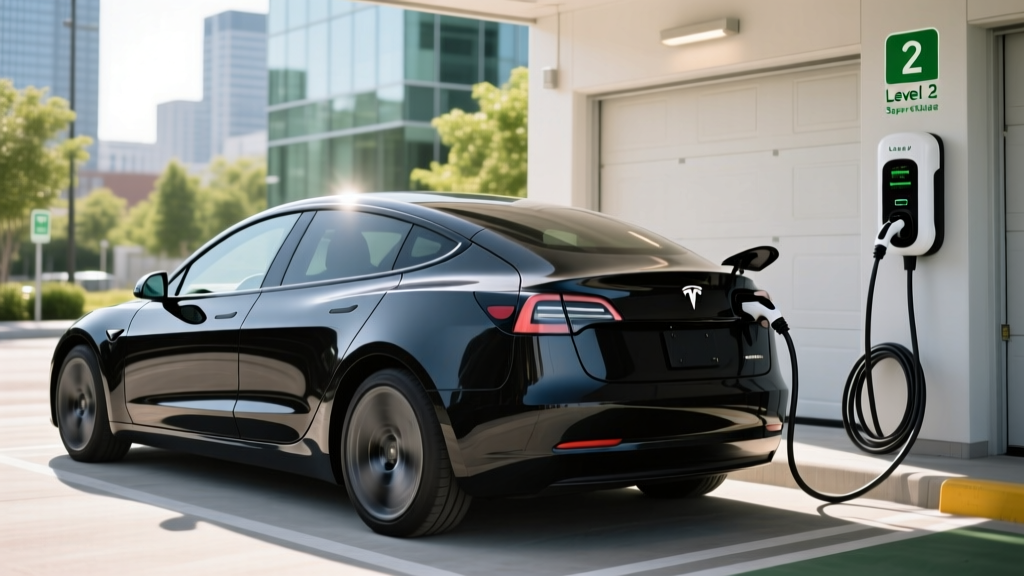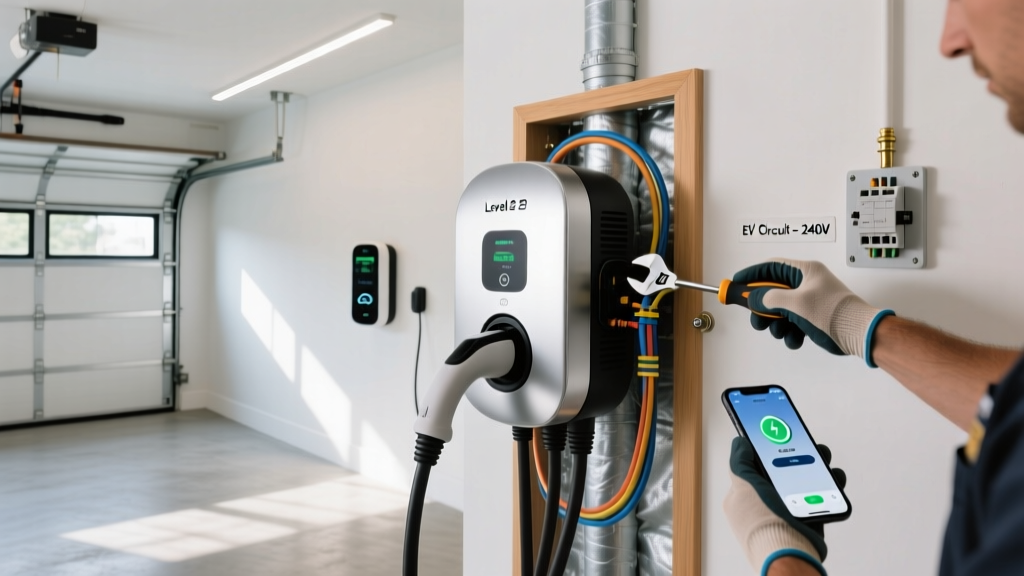
Level 2 EV chargers deliver significantly faster charging than a standard wall outlet, adding roughly 20 to 30 miles of range per hour of charging. But what happens when your 240-volt outlet is just a few feet too far from where you park? Many EV owners turn to extension cords as a solution — and while it is technically possible to use one with a Level 2 charger, doing so safely requires careful attention to electrical specifications, wire gauge, and National Electrical Code (NEC) requirements.
In this comprehensive guide, we break down everything you need to know about using an extension cord with a Level 2 EV charger. We cover the difficulty level, estimated costs, code compliance, step-by-step setup, and critical safety considerations so you can charge your electric vehicle without risking damage to your car, your charger, or your home's electrical system.
- Difficulty Level: Moderate — requires understanding of electrical ratings & code compliance
- Estimated Cost: $50 – $250 for a heavy-duty, EV-rated extension cord; $150 – $500+ if an electrician installs a closer outlet instead
- Time Required: 15 – 30 minutes for cord setup; 2 – 4 hours for a new outlet installation
Understanding Level 2 EV Chargers & Why Extension Cords Are Tricky
Level 2 EV chargers operate on a 240-volt circuit and typically draw between 16 amps and 48 amps, depending on the unit. Popular models like the ChargePoint Home Flex, JuiceBox, and Emporia Vue fall within this range. That is substantially more current than a typical household appliance, which means the extension cord you use must be rated to handle the full amperage without overheating, creating voltage drop, or posing a fire hazard.
Most Level 2 chargers come with a cord that is 18 to 25 feet long. If your NEMA 14-50 or hardwired connection point is beyond that reach, you face a dilemma. The ideal solution is always to relocate the outlet closer to your parking spot. However, a properly rated extension cord can serve as a practical bridge — provided you follow strict safety guidelines.
It is important to understand that the National Electrical Code (NEC) generally discourages the use of extension cords as a substitute for permanent wiring. NEC Article 400.8 specifically states that flexible cords shall not be used as a substitute for the fixed wiring of a structure. This does not mean using one temporarily is illegal in every jurisdiction, but it does mean you must be thoughtful about how and when you use one.
For a deeper look at what to expect from different charging setups, check out our guide to Level 2 vs. Level 3 charging and our roundup of the best home EV chargers.
Requirements: Choosing the Right Extension Cord for a Level 2 EV Charger
Not all extension cords are created equal. A standard household extension cord rated for 120 volts and 15 amps is completely inadequate — and dangerous — for a Level 2 charger. Here are the non-negotiable requirements your extension cord must meet:
Voltage & Amperage Rating
Your extension cord must be rated for 240 volts and must match or exceed the amperage of your EV charger. If your charger draws 32 amps, you need a cord rated for at least 40 amps to provide a safety margin. The U.S. Department of Energy recommends following all manufacturer specifications for charging equipment to ensure safe operation.
Wire Gauge (AWG)
Wire gauge is critical. Thicker wires (lower AWG numbers) carry more current with less resistance and heat buildup. Here is a general guideline:
| Charger Amperage | Minimum Wire Gauge | Recommended Gauge (25 ft) | Recommended Gauge (50 ft) |
|---|---|---|---|
| 16A | 12 AWG | 10 AWG | 8 AWG |
| 24A | 10 AWG | 8 AWG | 6 AWG |
| 32A | 8 AWG | 6 AWG | 4 AWG |
| 40A | 6 AWG | 6 AWG | 4 AWG |
| 48A | 4 AWG | 4 AWG | 3 AWG |
Remember: the NEC requires that continuous loads (those running for three hours or more, which EV charging qualifies as) be derated to 80% of the circuit's capacity. So a 40-amp charger needs a 50-amp circuit, and your extension cord must be rated accordingly.
Connector Type
Your extension cord must have the correct plug and receptacle configuration. Most Level 2 chargers use a NEMA 14-50 plug (four-prong, 50-amp). Your extension cord must have a matching NEMA 14-50 receptacle on one end and a NEMA 14-50 plug on the other. Never use adapter pigtails to convert between plug types for high-amperage EV charging — each connection point introduces resistance and potential failure.
Outdoor & Weather Resistance
If any portion of the cord will be exposed to the elements, it must be rated for outdoor use. Look for cords with a weather-resistant jacket (often marked "W" or "Outdoor" on the cable). UV-resistant and water-resistant insulation prevents cracking and degradation over time.
Cord Length
Use the shortest cord that will reach. Every additional foot of cable adds resistance, increases voltage drop, and generates more heat. Avoid daisy-chaining multiple extension cords together — this violates NEC guidelines and creates a serious fire hazard.
Need help choosing the right charger to pair with your setup? Read our reviews of the ChargePoint Home Flex and the JuiceBox Pro 48.
Step-by-Step: Setting Up Your Level 2 EV Charger with an Extension Cord
If you have determined that an extension cord is the right temporary solution for your situation, follow these steps to set it up safely.
Step 1: Verify Your Circuit Capacity
Before plugging anything in, confirm that your circuit breaker is rated appropriately. A Level 2 charger drawing 32 amps requires a dedicated 40-amp breaker (following the 80% continuous load rule). Check your electrical panel and ensure no other significant loads share the same circuit.
Step 2: Inspect the Extension Cord
Examine the entire length of the cord for any signs of damage — cuts, abrasions, exposed wires, bent prongs, or discoloration around the plugs. Even minor damage can lead to arcing, overheating, or shock hazards under high-amperage loads. If you find any damage, do not use the cord.
Step 3: Route the Cord Safely
Lay the cord along a path where it will not be pinched, tripped over, or run through doorways and windows where it can be compressed. Never run an extension cord under a rug, through a wall, or across a driveway where vehicles will drive over it. If the cord must cross a walkway, use a cord cover or ramp protector.
Step 4: Make the Connections
Plug the extension cord directly into the wall outlet first, then connect your EV charger's plug to the extension cord's receptacle. Ensure both connections are fully seated and snug. A loose connection creates resistance, which generates heat — one of the leading causes of electrical fires.
Step 5: Monitor Initial Charging Sessions
During your first few charging sessions, physically check both ends of the extension cord and the midpoint for heat. The cord should feel cool or slightly warm — never hot. If you detect significant warmth, stop charging immediately and reassess your cord gauge or length.
Step 6: Establish a Routine Inspection Schedule
Inspect the cord before every use. Look for wear, plug integrity, and any discoloration. High-amperage EV charging puts more stress on cords than typical household use, so vigilance is essential.
Permits, Inspections & Code Compliance
Using an extension cord with your Level 2 EV charger sits in a regulatory gray area. Here is what you need to know about permits and inspections.
When Permits Apply
If you are installing a new 240-volt outlet for your EV charger, most municipalities require an electrical permit. This applies whether you are adding a NEMA 14-50 receptacle in your garage or on an exterior wall. The permit ensures the installation meets local building codes and is typically followed by an inspection by a licensed electrical inspector.
Extension Cords & NEC Compliance
As mentioned earlier, NEC Article 400.8 prohibits using flexible cords as a substitute for permanent wiring. This means that if a building inspector sees an extension cord serving as a permanent connection for your EV charger, it could be flagged as a code violation. The intent of the code is clear: permanent loads should be served by permanent wiring.
Insurance Implications
If an electrical fire occurs and the investigation traces it to an improperly used extension cord, your homeowner's insurance provider may deny the claim. This is a serious financial risk that many EV owners overlook. Always document your setup, use properly rated equipment, and consider transitioning to a permanent outlet solution as soon as possible.
EV Charger-Specific Permits
Some jurisdictions require a separate permit or notification when installing EV charging equipment, particularly for hardwired units. Check with your local building department before beginning any installation. For more details on what the process looks like, see our home EV charger installation guide.
DIY vs. Hiring a Professional Electrician
When it comes to getting power to your EV, you have two primary paths: using an extension cord yourself or hiring a licensed electrician to install a properly located outlet.
The DIY Extension Cord Route
Pros:
- Low upfront cost ($50 – $250 for a quality cord)
- Immediate solution — no scheduling or waiting
- No permit required for temporary use
Cons:
- Potential code violation if used permanently
- Safety risk if cord is undersized or damaged
- Insurance liability concerns
- Tripping hazard & aesthetic issues
- Not a long-term solution
Hiring a Professional Electrician
Pros:
- Code-compliant, permanent solution
- No ongoing safety concerns about extension cords
- Increases home value & appeal to future EV-owning buyers
- Full warranty & insurance coverage
- Can optimize outlet location for your parking spot
Cons:
- Higher upfront cost ($300 – $1,500+ depending on complexity)
- Requires scheduling & potentially waiting for permits
- May involve drywall repair or conduit runs
Our recommendation: use a properly rated extension cord only as a short-term bridge while you arrange for a licensed electrician to install a dedicated 240-volt outlet in the ideal location. The investment pays for itself in safety, compliance, and peace of mind.
Cost Breakdown: Extension Cord vs. New Outlet Installation
Understanding the full cost picture helps you make an informed decision. Here is a detailed breakdown:
| Item | Estimated Cost | Notes |
|---|---|---|
| Heavy-duty 25 ft EV extension cord (6 AWG, NEMA 14-50) | $120 – $200 | Must be rated for your charger's amperage |
| Heavy-duty 50 ft EV extension cord (4 AWG, NEMA 14-50) | $180 – $300 | Longer runs require thicker gauge |
| Cord protector / ramp cover | $30 – $60 | Recommended for outdoor or walkway routing |
| New 240V outlet installation (electrician) | $300 – $800 | Simple garage install near panel |
| New 240V outlet (complex run) | $800 – $2,000+ | Long conduit runs, panel upgrades, outdoor installs |
| Electrical permit | $50 – $200 | Varies by municipality |
| Electrical panel upgrade (if needed) | $1,500 – $3,000+ | Required if panel lacks capacity for a new circuit |
For many homeowners, the cost difference between a high-quality extension cord and a simple outlet installation is relatively small — often just a few hundred dollars. When you factor in the long-term safety and compliance benefits, the permanent outlet installation usually represents better value.
Many utility companies offer rebates for EV charger installations that can offset a significant portion of the cost. Check with your local provider or visit the Department of Energy's EV resources for available incentives in your area.
Safety Tips for Using an Extension Cord with Your Level 2 EV Charger
Safety must be your top priority whenever you combine high-amperage EV charging with flexible cords. Follow these essential guidelines:
- Never use a standard household extension cord. Cords rated for 120V or light-duty use will overheat and potentially catch fire under a 240V Level 2 charging load.
- Always match or exceed the amperage rating. Your extension cord's amp rating must meet or exceed the maximum draw of your EV charger.
- Keep connections dry. Use weatherproof covers for outdoor connections and avoid charging during heavy rain or storms if connections are exposed.
- Do not coil the cord while charging. Coiled cords trap heat and can overheat dangerously under continuous high-amperage loads. Always lay the cord out straight or in gentle curves.
- Avoid running cords through walls, ceilings, or floors. This violates NEC code and conceals potential hazards from view.
- Use a single cord — never daisy-chain. Connecting multiple extension cords increases resistance at each junction point and creates a serious overheating risk.
- Install a GFCI breaker or outlet. Ground fault circuit interrupter protection is required by NEC for outdoor receptacles and is strongly recommended for any EV charging circuit, especially when extension cords are involved.
- Consider a smart EV charger with built-in monitoring. Chargers like the Emporia Vue provide real-time data on charging current, voltage, and temperature, giving you early warning of any electrical anomalies.
- Replace cords showing any signs of wear. Do not attempt to repair a damaged high-amperage extension cord with tape or splice kits — replace it entirely.
Troubleshooting Common Issues
Even with a properly rated extension cord, you may encounter issues during Level 2 charging. Here is how to diagnose and resolve the most common problems.
Charger Shows a Fault or Error Light
If your EV charger displays a fault indicator when connected through an extension cord, the most common cause is voltage drop. A cord that is too long or too thin for the amperage will cause the voltage at the charger end to fall below the acceptable range. Solution: switch to a shorter cord or one with a thicker wire gauge (lower AWG number).
Plugs or Cord Feel Hot to the Touch
Warmth is normal; heat is not. If the plug ends or any section of the cord feels hot, stop charging immediately. This indicates either an undersized cord, a loose connection, or damaged internal wiring. Check that both plug connections are fully seated and that the cord gauge matches your charger's requirements.
Charging Speed Is Slower Than Expected
Voltage drop across a long or undersized extension cord can cause your EV charger to reduce its charging current, resulting in slower charging. If your charger normally delivers 32 amps but is only pulling 24 amps through the extension cord, voltage drop is the likely culprit. A heavier-gauge cord or a shorter run will resolve this.
Breaker Trips During Charging
If your circuit breaker trips while charging through an extension cord, possible causes include: a cord with damaged insulation creating a short circuit, a circuit that is already near capacity and cannot handle the continuous load, or a ground fault. Reset the breaker once, inspect the cord thoroughly, and if the breaker trips again, discontinue use and consult an electrician.
EV Does Not Recognize the Charger
Some electric vehicles perform a handshake protocol with the charger before initiating charging. A poor connection at the extension cord junction can interrupt this communication. Disconnect and reconnect both ends of the extension cord, ensuring firm, clean connections. If the problem persists, the extension cord's receptacle contacts may be worn and the cord should be replaced.
Frequently Asked Questions
Is it safe to use an extension cord with a Level 2 EV charger?
It can be safe if — and only if — you use a heavy-duty extension cord specifically rated for the voltage, amperage, and environment of your charging setup. The cord must have the correct NEMA connector type, adequate wire gauge, and outdoor rating if used outside. However, extension cords should be treated as a temporary solution. The NEC discourages their use as permanent wiring, and long-term reliance on one introduces safety and compliance risks. For a permanent setup, have a licensed electrician install a 240-volt outlet near your parking spot.
What gauge extension cord do I need for a 32-amp Level 2 charger?
For a 32-amp Level 2 EV charger, you should use a minimum of 6 AWG wire for runs up to 25 feet and 4 AWG for runs up to 50 feet. Because EV charging is classified as a continuous load under the NEC, your circuit and cord must be rated for at least 125% of the charger's maximum draw — meaning a 32-amp charger requires a circuit and cord rated for 40 amps or more. Always choose a cord with a NEMA 14-50 connector configuration to match standard Level 2 charging outlets.
Can I use a regular 120V extension cord with an adapter for my Level 2 charger?
No. Absolutely not. Level 2 chargers require 240 volts and draw significantly more current than any standard 120-volt household circuit can provide. Using a 120-volt extension cord — even with an adapter — creates an extreme fire hazard and will almost certainly damage your charger, your vehicle's onboard charging system, or both. Only use extension cords specifically designed and rated for 240-volt, high-amperage applications.
Will using an extension cord void my EV charger's warranty?
Many EV charger manufacturers specify in their documentation that damage caused by the use of unauthorized extension cords is not covered under warranty. Some manufacturers explicitly prohibit extension cord use altogether. Before using one, check your charger's user manual and warranty terms. If the manufacturer advises against it, you risk losing warranty coverage for any related damage. Contacting the manufacturer directly for guidance is always a smart step.
What is the best long-term alternative to using an extension cord?
The best long-term solution is to hire a licensed electrician to install a dedicated 240-volt NEMA 14-50 outlet (or hardwired connection) within direct reach of your EV charger's cord. This eliminates the safety risks and code concerns associated with extension cords entirely. Typical installation costs range from $300 to $800 for a straightforward garage install, and many utility companies offer rebates that reduce the net cost. A properly installed outlet also adds value to your home and ensures reliable, fast charging for years to come. Browse our complete installation guide for everything you need to know about planning your setup.