Why a 2016 Jaguar XJ/XJL Supercharged EV Conversion Changes the Charging Equation
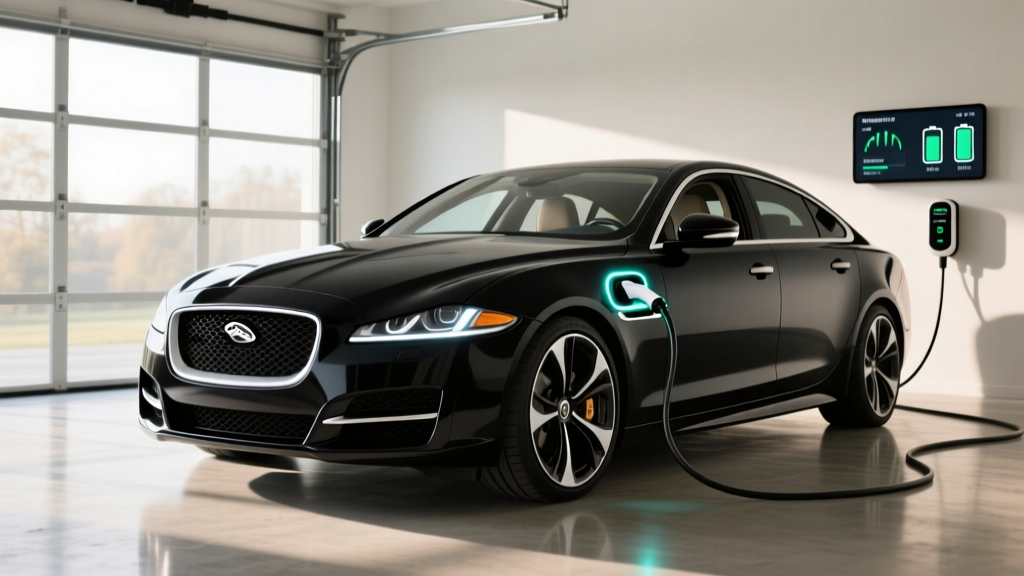
The 2016 Jaguar XJ and long-wheelbase XJL Supercharged shipped from the factory with a 5.0-liter supercharged V8 producing 470 horsepower and sipping (or gulping) fuel at roughly 15 city / 23 highway MPG, per fueleconomy.gov. But a growing niche of enthusiasts is pulling that AJ133 V8 and dropping in a Tesla Large Drive Unit or Cascadia Motion stack paired with a 60–100 kWh battery pack. The result: a 4,000-pound luxury sedan with silent, instant torque — and a completely different fueling paradigm.
If you're researching a 2016 Jaguar XJ/XJL Supercharged EV conversion, the charging side of the build is where most first-time converters stumble. Unlike a factory BEV with an integrated onboard charger, thermal management, and a CCS or NACS port engineered to spec, a conversion requires you to select and integrate every charging component yourself. This guide breaks down exactly what that means for your home electrical panel, your wallet, and your daily driving.
Charging Levels Explained: kW, Miles Per Hour, and What Your Conversion Can Accept
Before sizing equipment, let's nail down the three charging tiers. Remember: kW (kilowatts) measures power — how fast energy flows. kWh (kilowatt-hours) measures energy capacity — how much the battery holds. A 75 kWh battery charged at 7.2 kW takes roughly 10.4 hours from 0–100% in ideal conditions.
| Level | Voltage | Typical Power (kW) | Miles of Range Added Per Hour | Best Use Case |
|---|---|---|---|---|
| Level 1 | 120V AC | 1.0–1.4 kW | 3–5 mi/hr | Overnight trickle, emergencies |
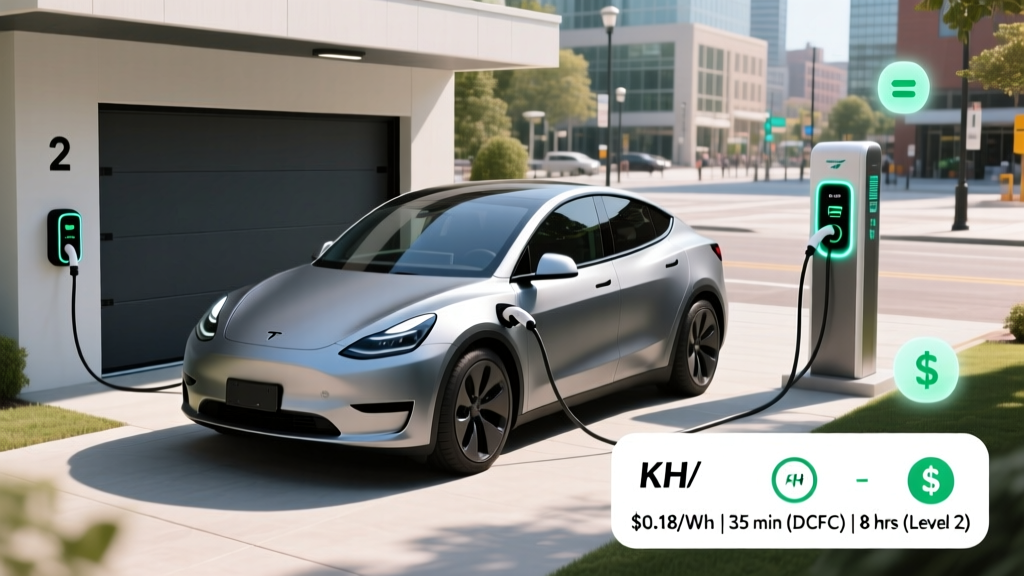
| Level 2 | 240V AC | 3.3–19.2 kW | 12–75 mi/hr | Daily home & destination charging |
| DC Fast Charge | 400–800V DC | 50–350 kW | 150–1,000+ mi/hr (peak) | Road trips, rapid top-ups |
Most EV conversions using a Tesla drive unit and Openinverter or EV West controller can accept Level 1 and Level 2 AC charging through an onboard charger module (commonly a Tesla Gen 2 or Gen 3 OBC, or an Elcon PFC 20). DC fast charging is possible but requires a CCS or NACS inlet, a compatible charge controller, and high-voltage contactor logic — adding $3,000–$8,000 and significant engineering complexity to a conversion build.
Home Charging Installation: Electrical Requirements and Real Costs
For a 2016 Jaguar XJ/XJL Supercharged conversion with a 75–100 kWh pack, a Level 2 home charger is essentially mandatory. Level 1 at 1.4 kW would take 53–71 hours to fill a depleted pack — impractical for daily use.
Electrical Specs You'll Need
A typical Level 2 home charger runs on a 240V dedicated circuit. Common amperage configurations:
- 40A circuit / 32A continuous (7.7 kW) — the most common residential setup
- 50A circuit / 40A continuous (9.6 kW) — faster, requires thicker wire
- 60A circuit / 48A continuous (11.5 kW) — for larger packs or shorter charge windows
The National Electrical Code (NEC) requires EV supply equipment to be on a dedicated circuit with a breaker rated 125% above the continuous load. A 40A charger therefore needs a 50A breaker. Your electrician will pull 6 AWG copper (or 4 AWG aluminum) for a 50A run, or 4 AWG copper for a 60A circuit.
Panel Upgrade: The Hidden Cost in Older Homes
The 2016 Jaguar XJ's likely owners often live in homes built between the 1970s and early 2000s, many with 100A or 150A main panels. Adding a 50A EV circuit to a 100A panel that's already near capacity (electric range, dryer, HVAC) may require a panel upgrade to 200A. This is the single biggest variable in your install cost.
| Component | Low-End Estimate | High-End Estimate | Notes |
|---|---|---|---|
| Level 2 Charger (hardware) | $350 | $750 | 32A–48A smart chargers |
| Electrician labor (standard install) | $500 | $1,500 | Run length, conduit, wall type |
| Permit & inspection | $50 | $250 | Varies by municipality |
| Panel upgrade (if needed) | $1,500 | $4,000 | 100A→200A service upgrade |
| Total (no panel upgrade) | $900 | $2,500 | |
| Total (with panel upgrade) | $2,400 | $6,500 |
Always get a load calculation from a licensed electrician before assuming your panel has headroom. The National Electrical Contractors Association recommends a formal NEC Article 220 load calculation rather than simply counting open breaker slots.
Connector Compatibility: NACS, CCS1, and What Your Conversion Needs
Factory EVs come with a fixed connector standard. Conversions don't — you choose. Here's the 2026 landscape:
| Connector | Type | Network Access | Conversion Suitability |
|---|---|---|---|
| NACS (Tesla) | AC + DC | Tesla Supercharger (20,000+ stalls), growing third-party adoption | Excellent — Tesla OBC modules integrate natively; J3400 standard as of 2025 |
| CCS1 | AC + DC | Electrify America, EVgo, ChargePoint DC | Good — requires CCS charge controller (e.g., Elcon or Openinverter CCS stack) |
| CHAdeMO | DC only | Declining network, mostly legacy Nissan/Leaf | Poor — avoid for new builds |
| J1772 | AC only | Universal Level 2 public stations | Baseline for any AC charging; NACS includes J1772-equivalent AC pins |
Adapter needs: If you build with a NACS inlet (the smartest choice in 2026 given Supercharger access), you'll want a NACS-to-J1772 adapter (~$150–$250) for public Level 2 stations that still use J1772 connectors. Tesla sells an official adapter, and Lectron offers a well-reviewed third-party option. If you build with CCS1, you'll need a CCS-to-NACS adapter ($200–$300) for Supercharger access, though compatibility depends on your charge controller firmware.
Cost to Charge: Per-Mile Economics vs. the Original Supercharged V8
The 2016 Jaguar XJ Supercharged with its 5.0L V8 averaged about 18 MPG combined. At $3.50/gallon (2026 national average), that's $0.194 per mile in fuel alone. Let's compare EV charging costs across scenarios, assuming a conversion efficiency of roughly 3.0 miles/kWh (realistic for a 4,200-lb sedan with a Tesla LDU):
| Charging Scenario | Cost per kWh | Cost per Mile | Annual Cost (12,000 mi) |
|---|---|---|---|
| Home Level 2 (off-peak utility rate) | $0.09–$0.13 | $0.030–$0.043 | $360–$520 |
| Home Level 2 (standard rate) | $0.14–$0.18 | $0.047–$0.060 | $560–$720 |
| Public Level 2 (ChargePoint, etc.) | $0.25–$0.40 | $0.083–$0.133 | $1,000–$1,600 |
| DC Fast Charge (Electrify America) | $0.40–$0.56 | $0.133–$0.187 | $1,600–$2,240 |
| Original 5.0L V8 (18 MPG, $3.50/gal) | — | $0.194 | $2,333 |
Even at public DC fast-charging rates, the EV conversion costs less per mile than the original supercharged V8. Home charging on an off-peak rate saves $1,800–$1,970 annually over gasoline. Over a 10-year ownership horizon, that's $18,000+ in fuel savings — enough to offset a significant portion of the conversion build cost.
Charging Time Examples for Common Conversion Battery Sizes
Here's what charge times look like for typical conversion battery pack sizes at various Level 2 power levels. Times reflect 10–80% State of Charge (the practical daily charging window; charging slows significantly above 80% to protect cell health):
- 60 kWh pack at 7.7 kW (32A/40A circuit): ~5.2 hours for 10–80% (~42 kWh replenished)
- 75 kWh pack at 7.7 kW: ~6.5 hours for 10–80%
- 85 kWh pack at 9.6 kW (40A/50A circuit): ~6.4 hours for 10–80%
- 100 kWh pack at 11.5 kW (48A/60A circuit): ~6.3 hours for 10–80%
- 100 kWh pack at 7.7 kW: ~9.4 hours for 10–80%
For a daily driver covering 40–60 miles, you'll typically replenish 15–20 kWh overnight — easily handled in 2–3 hours on any Level 2 circuit. The full 10–80% times matter mainly for road-trip planning or days with unusually high mileage.
Equipment Recommendations: Level 2 Chargers for Your Conversion
These chargers are proven in both factory-EV and conversion use. All support J1772 or NACS connectors and include smart features for scheduling, load management, and energy tracking:
ChargePoint Home Flex
- Power: Up to 12 kW (50A), configurable down to 16A
- Connector: J1772 (25-ft cable)
- Smart features: Wi-Fi, app scheduling, Alexa integration, energy reports
- Price: ~$549
- Best for: Flexible amperage if your panel is tight on capacity
Tesla Wall Connector (Gen 4)
- Power: Up to 11.5 kW (48A)
- Connector: NACS (24-ft cable), J1772 adapter included
- Smart features: Wi-Fi, load sharing (pair up to 6 units), OTA updates
- Price: ~$450
- Best for: NACS-equipped conversions; best value per kW
Emporia Vue Level 2 Charger
- Power: Up to 11.5 kW (48A)
- Connector: J1772 (24-ft cable)
- Smart features: Integrates with Emporia Vue energy monitor, solar-aware scheduling
- Price: ~$399
- Best for: Budget-conscious builds with solar panels
Grizzl-E Smart
- Power: Up to 10 kW (40A)
- Connector: J1772 or NACS (24-ft cable)
- Smart features: OCPP-compatible, works with Home Assistant, rugged outdoor build
- Price: ~$449
- Best for: Outdoor/garage installs in extreme climates (-40°F rated)
For a Jaguar XJ/XJL conversion with a NACS inlet, the Tesla Wall Connector is the default recommendation — native plug match, competitive pricing, and load-sharing capability if you add a second EV later. If your conversion uses J1772, the ChargePoint Home Flex offers the widest amperage range for panel-constrained homes.
Safety and Code Considerations
EV conversions draw serious current. Cutting corners on the charging install risks fire, equipment damage, or insurance claim denial. Non-negotiables:
- Dedicated circuit: Your Level 2 charger must have its own breaker — never share a circuit with other appliances.
- GFCI protection: NEC 2023 (Article 625.54) requires GFCI protection for all receptacles used for EV charging, including 240V outlets. Hardwired chargers are exempt in many jurisdictions and avoid nuisance GFCI trips — ask your electrician.
- Outdoor rating: If your charger is outside, it must carry a NEMA 4 or IP56 (minimum) enclosure rating. All four chargers above meet this.
- Permit and inspection: Most jurisdictions require an electrical permit for a new 240V circuit. Skipping the permit can void your homeowner's insurance if a fire originates from the circuit. Budget $50–$250 and 1–2 weeks for inspection.
- Wire gauge and run length: Long runs (over 50 feet) require upsizing wire to prevent voltage drop. Your electrician will calculate this — don't let anyone pull 6 AWG for a 100-foot 50A run.
Frequently Asked Questions
How much does it cost to install a home EV charger for a conversion?
Between $900 and $2,500 for a standard install (charger + electrician + permit) if your panel has capacity. If you need a 200A panel upgrade, expect $2,400–$6,500 total. Get three quotes from licensed electricians and insist on a formal load calculation.
How fast will each charging level add range to my XJ conversion?
Assuming 3.0 mi/kWh efficiency: Level 1 adds 3–5 miles per hour. Level 2 at 7.7 kW adds roughly 23 miles per hour. Level 2 at 11.5 kW adds roughly 35 miles per hour. DC fast charging (if equipped) can add 150+ miles in 20 minutes at peak rate, though conversion DC-charge engineering adds significant cost and complexity.
Which connector should I choose for my 2016 Jaguar XJ EV swap?
NACS (Tesla's J3400 connector) is the strongest choice in 2026. It gives you native access to the Tesla Supercharger network — the largest and most reliable DC fast-charging network in North America — plus J1772 public Level 2 stations with a simple adapter. CCS1 is viable but requires more complex charge-controller integration and offers a smaller network.
How much does charging cost per mile vs. the original supercharged V8?
Home Level 2 charging at off-peak rates costs roughly $0.03–$0.04 per mile — about 80% cheaper than the original V8 at $0.19/mile (18 MPG, $3.50/gal). Even public DC fast charging at $0.48/kWh comes in at ~$0.16/mile, still cheaper than gasoline. The IRS §30D clean vehicle credit does not apply to conversions, unfortunately — the credit requires a new, factory-manufactured qualifying vehicle.
What electrical upgrades might I need for a Level 2 charger?
The most common upgrade is a panel service increase from 100A or 150A to 200A, costing $1,500–$4,000. You may also need a new meter base, utility service drop upgrade (contact your utility — this is often free), or a sub-panel if the charger is far from the main panel (e.g., a detached garage). A licensed electrician's load calculation will reveal exactly what's needed before you buy equipment.
Can I use a standard 120V outlet for my conversion?
Technically yes, but practically no. At 1.4 kW, a 75 kWh pack takes over 50 hours for a full charge. Level 1 is only viable as a backup or for conversions driven fewer than 20 miles per day with overnight access. For any real daily use, budget for a proper 240V Level 2 circuit.