The Real Cost of Home Charging: Incentives Can Cut Your Bill in Half
Buying a home EV charger isn't just about picking a unit off Amazon. The total cost spans the charger itself, electrical panel capacity, wiring, permitting, and electrician labor — and it can range from a straightforward $600 job to a $3,000+ project requiring a panel upgrade. The good news? A layered stack of EV charger incentives — federal, state, utility, and even municipal — can offset 30% to 70% of that total.
This guide breaks down every incentive tier available in 2026, the charging hardware and electrical work you'll actually need, and the real-world cost per mile once you're plugged in. We'll keep the math honest: kilowatts (kW) measure charging power — how fast energy flows — while kilowatt-hours (kWh) measure energy capacity, what your battery holds. Confusing the two is the most common EV mistake, and we won't make it here.
Federal EV Charger Incentive: The §30C Alternative Fuel Refueling Property Credit
The primary federal incentive for home charging hardware is the IRS §30C Alternative Fuel Refueling Property Credit. This is distinct from the §30D new-vehicle tax credit. Here's how §30C works for residential installations in 2026:
- Credit amount: 30% of the cost of qualified charging equipment and installation, up to a maximum of $1,000 per tax year
- What qualifies: The charger hardware, wiring, conduit, labor, and permit fees directly related to installing EV supply equipment at your primary residence
- Location requirement: The property must be located in an eligible census tract — specifically, a non-urban area or a low-income community as defined by the IRS. The IRS provides a locator tool to check your address
- Nonrefundable credit: It reduces your tax liability dollar-for-dollar but won't generate a refund if your liability is below the credit amount
- Point-of-sale transfer: Unlike the §30D vehicle credit, §30C currently does not offer point-of-sale transfer — you claim it on your federal tax return using IRS Form 8911
State, Utility, and Local EV Charger Incentives
Federal credit is just one layer. The most substantial savings often come from state programs and your local electric utility. Here's what to look for:
State Rebate Programs
States like California, Colorado, Massachusetts, New York, and Maryland have historically offered rebates ranging from $250 to $1,500 for residential Level 2 charger installations. These programs often have income-based tiers — lower-income households may receive larger rebates. Check your state energy office or department of environmental quality for current availability, as funding windows open and close.
Utility Company Rebates
Many investor-owned utilities and municipal electric cooperatives offer direct rebates for purchasing and installing Level 2 chargers, particularly smart chargers that can participate in demand-response programs. Common structures include:
- Flat rebates of $250–$750 toward charger purchase
- Time-of-use (TOU) rate plans that reduce per-kWh costs during overnight hours
- Free or subsidized charger hardware in exchange for enrollment in managed-charging programs
- Panel-upgrade assistance (some utilities contribute $500–$1,000 toward a 200A service upgrade if it supports EV adoption)
Municipal and Air-District Incentives
Certain cities and air-quality management districts — particularly in California's San Joaquin Valley, South Coast, and Bay Area — offer additional rebates that stack on top of state and utility programs. These can push total incentive value well above $2,000 in some cases.
Your action step: Search "[your utility name] EV charger rebate" and visit the Alternative Fuels Data Center state laws database for a comprehensive list of active programs in your area.
Charging Levels Explained: Speeds, Power, and Range Added Per Hour
Understanding the three charging levels is essential before you buy equipment or hire an electrician.
| Level | Voltage | Power (kW) | Miles of Range Added Per Hour | Typical Use Case |
|---|---|---|---|---|
| Level 1 | 120V AC | 1.2–1.9 kW | 3–5 miles | Overnight trickle; PHEVs or low-mileage commutes |
| Level 2 | 240V AC | 3.3–19.2 kW | 12–75 miles | Home daily charging; the standard for BEV owners |
| DC Fast Charge | 400–900V DC | 50–350+ kW | 150–1,000+ miles/hr (peak) | Road trips; 10–80% in 18–45 min depending on vehicle |
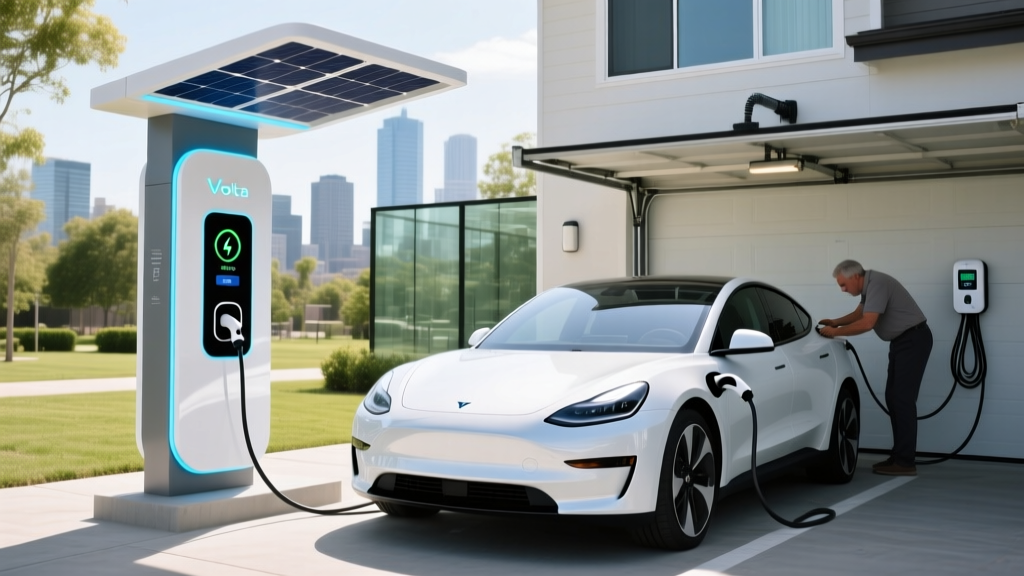
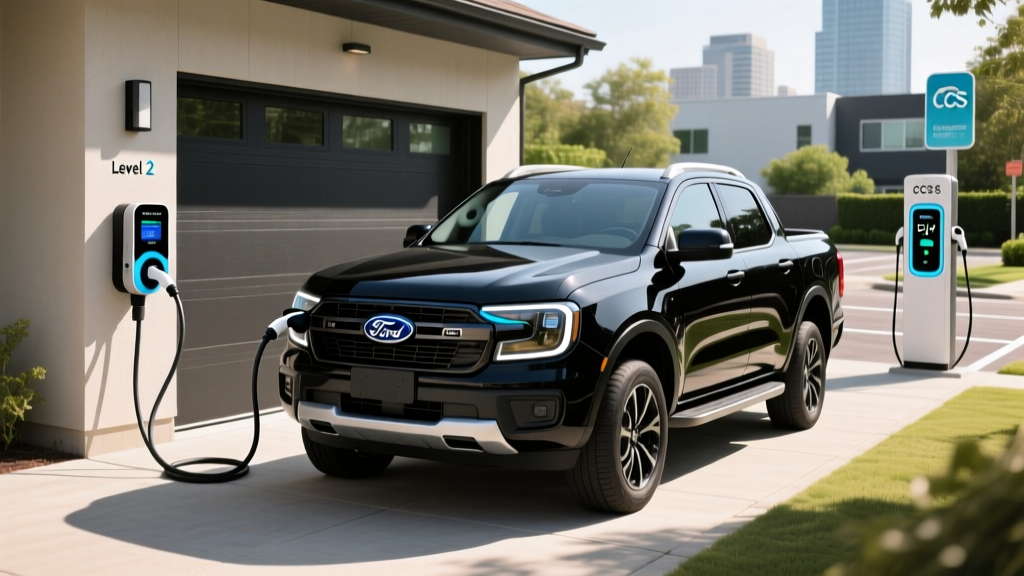
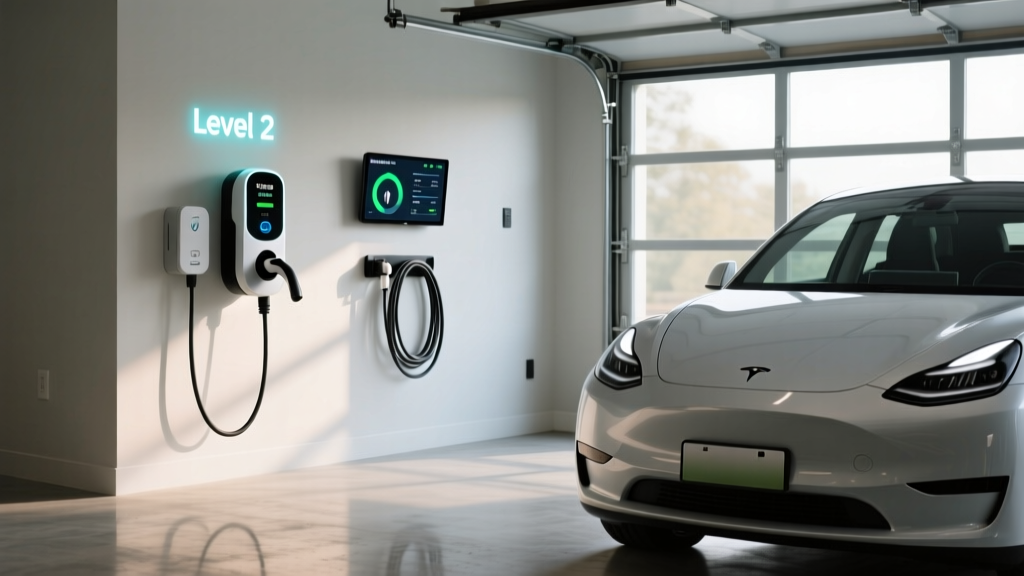
For most battery-electric vehicle (BEV) owners, Level 2 is the home standard. A typical 75–100 kWh battery charged overnight on a 48A (11.5 kW) Level 2 circuit will replenish 45–55 miles of range per hour of charging — enough to fully refill most EVs in 7–10 hours.
DC fast charging is for road trips and public infrastructure. You won't install DCFC at home — the electrical service requirements (480V three-phase, 100A+ dedicated circuits) are impractical for residential use. But you'll use networks like Tesla Supercharger, Electrify America, and EVgo for highway travel.
Real-World Charging Time Examples (10% to 80% State of Charge)
- Tesla Model Y (75 kWh battery, NMC): ~20 minutes on a 250 kW V3 Supercharger; ~7 hours on an 11.5 kW home Level 2
- Hyundai Ioniq 5 (77.4 kWh battery, NMC): ~18 minutes on a 350 kW charger (800V architecture); ~7.5 hours on 11.5 kW Level 2
- Ford F-150 Lightning Extended Range (131 kWh battery, NMC): ~41 minutes on a 150 kW DCFC; ~12 hours on 11.5 kW Level 2
- Chevrolet Equinox EV (85 kWh battery, NMC): ~30 minutes on 150 kW DCFC; ~8 hours on 11.5 kW Level 2
Home Installation: Electrical Requirements, Costs, and Panel Upgrades
This is where the real variable cost lives. A Level 2 home charger installation involves the charger hardware, a dedicated 240V circuit, wiring, a breaker, permit fees, and electrician labor. Here's the breakdown:
Electrical Requirements for Level 2 Charging
- Voltage: 240V (same as your electric dryer or oven)
- Amperage: 40A–60A dedicated circuit for most residential chargers (the charger itself typically draws 32A or 48A; the National Electrical Code requires the circuit breaker to be rated at 125% of continuous load, so a 48A charger needs a 60A breaker)
- Wire gauge: 6 AWG copper for 48A/60A circuits; 4 AWG for longer runs or higher amperage
- Outlet vs. hardwired: A NEMA 14-50 receptacle offers portability (take the charger when you move); hardwired installations are often cheaper and allow higher amperage without GFCI breaker requirements
Installation Cost Breakdown
| Component | Simple Install (Near Panel) | Complex Install (Long Run or Panel Upgrade) |
|---|---|---|
| Charger hardware (Level 2, 40A–48A) | $350–$650 | $350–$650 |
| Electrician labor (2–4 hrs simple; 6–12 hrs complex) | $300–$800 | $800–$2,000 |
| Materials (wire, conduit, breaker, junction box) | $100–$300 | $200–$600 |
| Permit and inspection | $50–$200 | $50–$200 |
| Electrical panel upgrade (100A → 200A, if needed) | N/A | $1,500–$3,500 |
| Total | $800–$1,950 | $2,900–$6,950 |
When Do You Need a Panel Upgrade?
Homes built before the 1990s often have 100A or even 60A electrical service. A modern home with central AC, an electric oven, a dryer, and a 48A EV charger may need 200A service. Your electrician will perform a load calculation (NEC Article 220) to determine if your panel has capacity. If your panel is already near its limit, adding a 60A EV circuit could trip the main breaker under peak load — or the inspector may deny the permit until you upgrade.
Some utilities offer panel-upgrade rebates specifically tied to EV adoption. Check with your utility before paying full price for a service upgrade.
Connector Compatibility: NACS, CCS, and CHAdeMO
The connector landscape shifted dramatically in 2024–2025 when nearly every major automaker adopted the North American Charging Standard (NACS), originally developed by Tesla. Here's where things stand for 2026 model-year vehicles:
| Connector | Brands Using It (Native) | Home Charger Availability |
|---|---|---|
| NACS (Tesla-style) | Tesla, Ford, GM, Rivian, Volvo, Polestar, Mercedes, Nissan (new models), Honda, BMW, Hyundai/Kia (2025+) | Tesla Wall Connector, Emporia, Autel, ChargePoint (NACS models) |
| CCS1 (Combo) | Remaining Stellantis models, some legacy VW/Audi, older Hyundai/Kia | ChargePoint, Emporia, JuiceBox (CCS models); most offer CCS-to-NACS adapters |
| CHAdeMO | Nissan Leaf (legacy, still sold), Mitsubishi Outlander PHEV | Limited; CHAdeMO home chargers are rare — most Leaf owners use J1772 adapters |
Adapter note: If you own a CCS-equipped EV but your home charger has a NACS plug (or vice versa), adapters from Lectron, Tesla (CCS-to-NACS), and A2Z EV Solutions are widely available for $100–$250. For DC fast charging on the road, Tesla Superchargers now accept CCS vehicles via the Magic Dock adapter at select stations, and Electrify America stations are adding NACS cables.
Cost to Charge: Home vs. Public vs. Gas
The economics of EV charging depend heavily on where and when you plug in. Here's a realistic cost comparison for 2026:
| Scenario | Rate | Cost Per Mile (at 3.5 mi/kWh efficiency) |
|---|---|---|
| Home charging, off-peak TOU rate | $0.08–$0.12/kWh | $0.023–$0.034/mile |
| Home charging, standard residential rate | $0.14–$0.18/kWh | $0.040–$0.051/mile |
| Public Level 2 (ChargePoint, workplace) | $0.20–$0.35/kWh | $0.057–$0.100/mile |
| DC fast charging (Electrify America, EVgo) | $0.35–$0.55/kWh | $0.100–$0.157/mile |
| Tesla Supercharger (member rate) | $0.25–$0.38/kWh | $0.071–$0.109/mile |
| Gasoline vehicle (25 MPG combined, $3.40/gal) | $3.40/gallon | $0.136/mile |
Home off-peak charging is the cheapest way to "fuel" any vehicle on the road. Even at standard residential rates, a BEV costs roughly one-third what a comparable gasoline car costs per mile. Public DC fast charging narrows the gap — and on some networks with idle fees or peak pricing, can briefly exceed gasoline cost per mile. This is why home charging infrastructure matters so much: it's the economic backbone of EV ownership.
Equipment Recommendations: Best Home Level 2 Chargers for 2026
We've selected chargers based on reliability, power output, cable length, smart features, connector options, and value. All units below are UL-listed or ETL-listed for safety compliance.
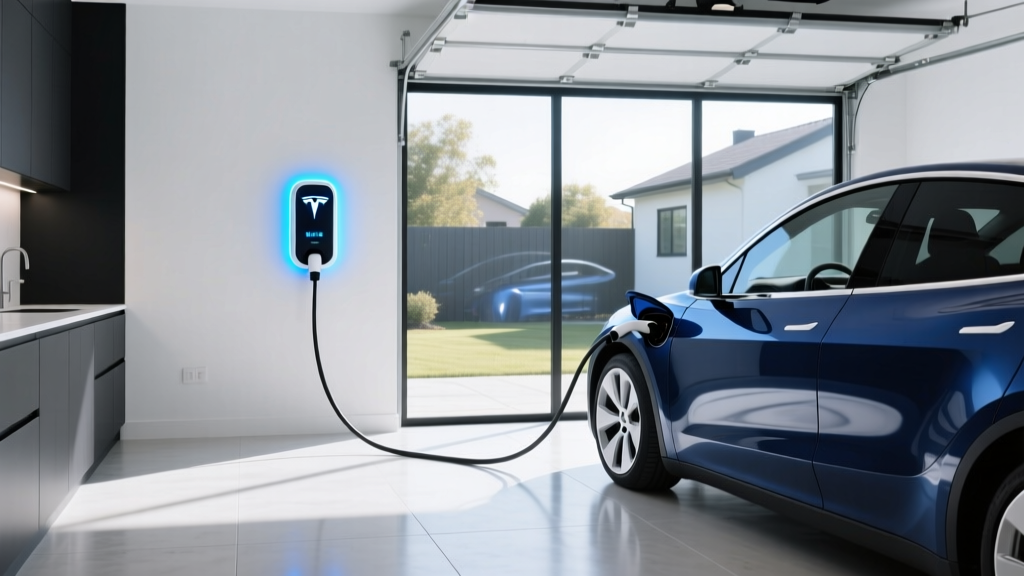
Tesla Wall Connector (NACS)
- Power: Up to 11.5 kW (48A)
- Connector: NACS native
- Cable: 24 ft
- Smart features: Wi-Fi, OTA updates, load sharing (pair multiple units on one circuit), Tesla app integration
- Price: ~$475
- Best for: Tesla owners and any NACS-equipped EV
Emporia Vue Smart EV Charger
- Power: Up to 11.5 kW (48A)
- Connector: NACS or J1772 (configurable)
- Cable: 24 ft
- Smart features: Energy monitoring, solar integration, scheduling, load management with Emporia Vue panel monitor
- Price: ~$399
- Best for: Solar homes, budget-conscious buyers, panel-load management
ChargePoint Home Flex
- Power: Up to 12 kW (50A) — adjustable down to match circuit
- Connector: NACS or J1772 (configurable)
- Cable: 23 ft
- Smart features: Alexa integration, scheduling, ChargePoint network access, flexible amperage settings
- Price: ~$699
- Best for: Flexibility across circuit sizes, smart-home integration
Autel MaxiCharger Home
- Power: Up to 12 kW (50A)
- Connector: NACS
- Cable: 25 ft
- Smart features: Wi-Fi + Bluetooth, Autel app, RFID access control, outdoor-rated (NEMA 4)
- Price: ~$549
- Best for: Outdoor installations, multi-driver households
Safety and Code Considerations
- Dedicated circuit: NEC requires EV chargers to be on a dedicated circuit — no sharing with other appliances
- GFCI protection: If you install a receptacle (NEMA 14-50) rather than hardwiring, NEC 2020+ requires a GFCI breaker for outdoor and garage outlets. GFCI breakers add $50–$120 and can occasionally nuisance-trip with some chargers — hardwiring avoids this requirement in many jurisdictions
- Outdoor rating: If your charger mounts outside, ensure it carries a NEMA 4 or IP65 rating for weather resistance
- Permit and inspection: Most jurisdictions require an electrical permit for new 240V circuits. The inspection ensures proper wire gauge, breaker sizing, grounding, and bonding — it's not optional and shouldn't be skipped
- UL/ETL listing: Only purchase chargers with UL or ETL certification. Uncertified chargers from marketplace sellers may lack overcurrent, overtemperature, or ground-fault protection — and your insurance company may deny a fire claim if unlisted equipment was involved
Stacking Your EV Charger Incentives: A Practical Example
Let's say you install a ChargePoint Home Flex ($699) with a 50A hardwired circuit. Your electrician quotes $1,200 for labor and materials, and your permit costs $100. Total: $1,999.
Here's how incentives might stack:
- Federal §30C credit (30% of $1,999, capped at $1,000): –$600 (if in eligible census tract)
- State rebate (example: Colorado): –$500
- Utility managed-charging rebate: –$250
- Net cost after incentives: $649
That same $649 investment saves you roughly $800–$1,200 per year in fuel costs versus a 25 MPG gasoline car at $3.40/gallon (assuming 12,000 miles/year). The charger pays for itself within the first year of ownership.
Frequently Asked Questions
How much does it cost to install a home EV charger?
A straightforward Level 2 installation near your electrical panel typically costs $800–$1,950 all-in (charger + electrician + materials + permit). Complex installations requiring long wire runs, trenching, or a panel upgrade from 100A to 200A can reach $2,900–$6,950. Federal, state, and utility incentives can offset 30–70% of this total.
How fast will each charging level add range?
Level 1 (120V) adds 3–5 miles of range per hour — adequate only for plug-in hybrids or very short commutes. Level 2 (240V, 48A/11.5 kW) adds roughly 35–45 miles per hour for most EVs, fully recharging overnight. DC fast charging adds 150–1,000+ miles per hour at peak rates, delivering a 10–80% charge in 18–45 minutes depending on the vehicle's charge-curve capability.
Which connector/charger is compatible with my EV?
For 2026 model-year vehicles, most new EVs from Ford, GM, Tesla, Rivian, Volvo, Hyundai, Kia, and others now use the NACS connector. Some carryover models still use CCS1. The Nissan Leaf continues with CHAdeMO. Check your vehicle's charge port or owner's manual, then select a home charger with the matching connector — or use an adapter ($100–$250).
How much does charging cost per mile vs. gas?
Home off-peak charging at $0.10/kWh costs roughly $0.029/mile for an EV averaging 3.5 mi/kWh. A comparable gasoline car at 25 MPG and $3.40/gallon costs $0.136/mile. Even public DC fast charging at $0.45/kWh ($0.129/mile) is competitive with gasoline. The savings widen further for EVs with higher efficiency (4+ mi/kWh).
What electrical upgrades might I need?
If your home has 100A service and already runs central AC, an electric dryer, and an electric range, you'll likely need a 200A panel upgrade ($1,500–$3,500) to add a 48A EV circuit safely. Homes with 200A service and gas appliances usually have ample capacity. Your electrician will perform an NEC Article 220 load calculation to determine this before pulling a permit.