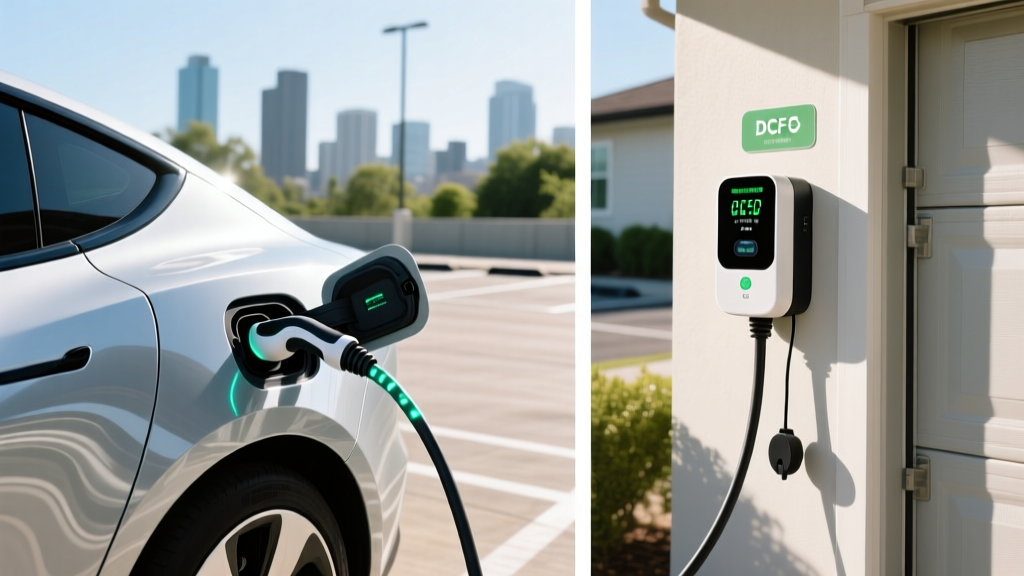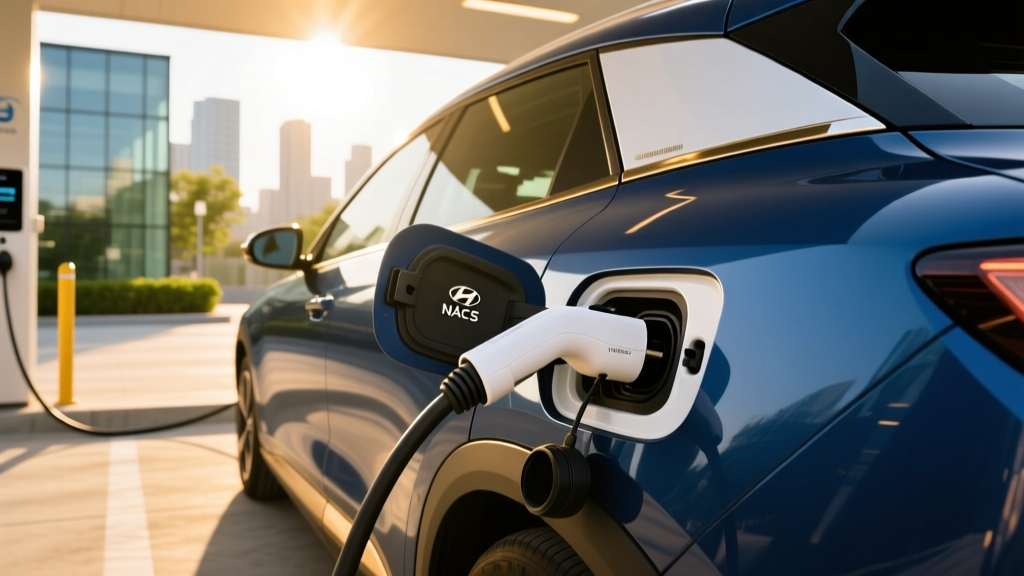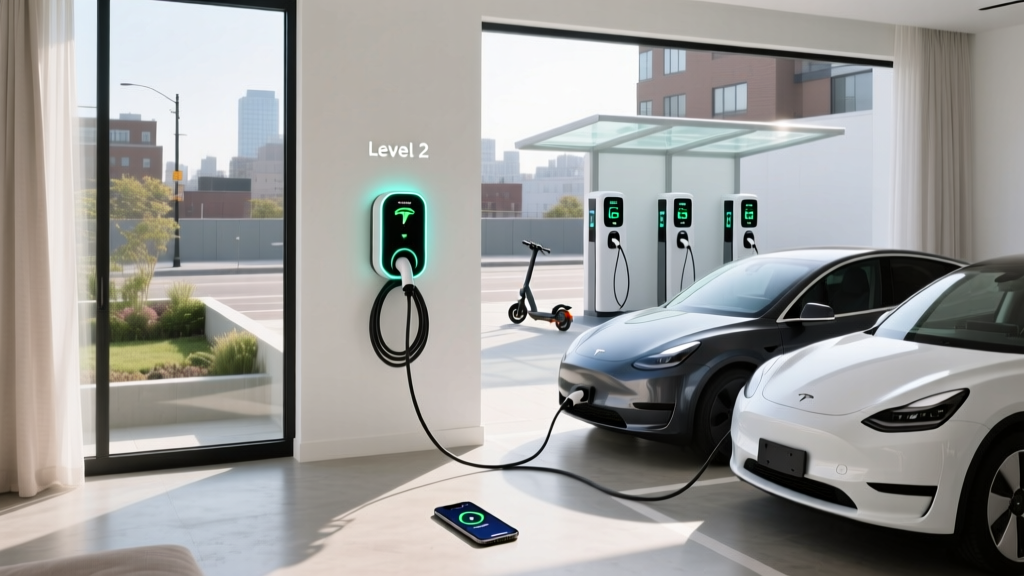
Buying an EV is only half the equation — the real financial story unfolds at the charger. Whether you plug in at home overnight or rely on public DC fast-charging networks, the dollars you spend (or save) per mile determine your true return on investment. We call this your charger expected win total: the net savings or cost premium you accumulate over a year of driving when you factor in equipment, installation, electricity rates, and public-charging expenses against what you would have paid for gasoline.
This guide walks through every variable — charging levels, home installation costs, connector compatibility, electricity pricing, and specific equipment recommendations — so you can model your own expected win total with real numbers.
Understanding Charging Levels: Speed, Power, and Range Added
Before calculating savings, you need to know what each charging tier actually delivers. Power is measured in kW (kilowatts), which represents the rate of energy flow. Energy stored in your battery is measured in kWh (kilowatt-hours) — the total capacity. A 75 kWh battery charged at 7.2 kW takes roughly 10 hours from empty; the same battery at 150 kW DC fast-charging can recover 80% in under 30 minutes.
| Level | Voltage | Power (kW) | Miles of Range Per Hour | Best Use Case |
|---|---|---|---|---|
| Level 1 | 120V AC | 1.2–1.9 kW | 3–5 mi/hr | Overnight top-ups, PHEVs, low-mileage drivers |
| Level 2 (Home) | 240V AC | 7.2–11.5 kW | 25–44 mi/hr | Daily home charging, full overnight replenishment |
| Level 2 (Public) | 208/240V AC | 6.6–19.2 kW | 22–70 mi/hr | Destination charging, workplaces, apartments |
| DC Fast (CCS/NACS) | 400–800V DC | 50–350 kW | 150–1,200+ mi/hr (peak) | Road trips, rapid top-ups, fleet depots |
A few real-world nuances: Level 2 miles-per-hour figures assume roughly 3–4 mi/kWh efficiency (typical for midsize crossovers like the Hyundai Ioniq 5 or Tesla Model Y). Larger vehicles like the Ford F-150 Lightning average closer to 2 mi/kWh, reducing range-added-per-hour proportionally. DC fast-charging speeds are peak rates — most vehicles taper significantly above 80% state of charge to protect battery longevity, so a "250 kW" peak may average 120–150 kW over a full 10–80% session.
How Much Does It Cost to Install a Home EV Charger?
Home charging is where your expected win total is won or lost. A Level 2 home charger delivers the lowest per-mile cost, but installation varies enormously based on your electrical panel's capacity, the distance from panel to charger location, and local permit requirements.
| Cost Component | Simple Install (Panel Adjacent) | Moderate Install (50–100 ft Run) | Complex Install (Panel Upgrade + Long Run) |
|---|---|---|---|
| Level 2 Charger Hardware | $350–$700 | $350–$700 | $350–$700 |
| Electrician Labor | $300–$600 | $600–$1,500 | $1,500–$3,000 |
| Electrical Permit | $50–$150 | $50–$200 | $100–$300 |
| Panel Upgrade (if needed) | $0 | $0 | $1,500–$3,500 |
| Conduit, Wiring, Misc. | $50–$150 | $200–$500 | $400–$1,000 |
| Total Estimated Cost | $750–$1,600 | $1,200–$2,900 | $3,850–$8,500 |
When Do You Need a Panel Upgrade?
Most modern homes have 200-amp electrical service. A 48-amp Level 2 charger draws roughly 11.5 kW — about 57 amps at 240V when accounting for the National Electrical Code's 80% continuous-load rule (requiring a 60-amp dedicated circuit). If your panel is already near capacity with HVAC, electric oven, dryer, and water heater loads, adding a 60A breaker may push you past safe limits. Homes with 100-amp service almost always need an upgrade.
An alternative: some utilities and electricians offer load-management devices (such as the Emporia Load Management Center or the Tesla Wall Connector load-sharing feature) that dynamically throttle charger draw when other circuits are in use, potentially avoiding a panel upgrade entirely.
Which Connector Is Compatible With Your EV?
The connector landscape has consolidated significantly since 2024, when Ford, GM, Rivian, Volvo, and most other major automakers committed to adopting Tesla's North American Charging Standard (NACS). By 2025–2026, nearly all new EVs sold in North America ship with a native NACS port. Legacy CCS1 vehicles remain on the road, and CHAdeMO persists on older Nissan Leafs and Mitsubishi Outlander PHEVs.
| Connector | Brands Using It (2025–2026 Models) | Home Charger Availability | Adapter Needed? |
|---|---|---|---|
| NACS (Tesla/J3400) | Tesla, Ford, GM, Rivian, Hyundai, Kia, Volvo, Polestar, BMW, Mercedes, Nissan (new models) | Tesla Wall Connector, Lectron, Emporia, Grizzl-E NACS models | CCS1-to-NACS adapters available (~$200–$350) |
| CCS1 (Combo) | Legacy: 2020–2024 Ford Mustang Mach-E, VW ID.4, Hyundai Ioniq 5 (pre-2025), Kia EV6 (pre-2025) | ChargePoint Home Flex, JuiceBox, Wallbox Pulsar Plus | NACS-to-CCS1 adapters from Tesla, Lectron (~$200–$300) |
| CHAdeMO | Nissan Leaf (all years), Mitsubishi Outlander PHEV | Limited home options; mostly public stations | No consumer adapter to NACS/CCS; use public CHAdeMO stations |
For home Level 2 charging, the J1772 connector (the round, five-pin plug) has been standard for over a decade. Most Level 2 chargers ship with a J1772 plug, and Tesla vehicles include a J1772-to-NACS adapter in the trunk. Newer NACS-native home chargers skip the adapter for Tesla and new NACS-equipped vehicles.
Cost to Charge: Home vs. Public vs. Gasoline
This is where the expected win total crystallizes. Electricity prices vary by state, time of day, and utility rate structure. Public DC fast-charging networks charge premiums for convenience. Let's model three common scenarios against a gasoline baseline.
| Scenario | Rate | Cost per kWh | Cost per Mile (3.5 mi/kWh EV) | Annual Cost (12,000 mi) |
|---|---|---|---|---|
| Home Off-Peak (national avg.) | $0.12/kWh | $0.12 | $0.034 | $411 |
| Home Peak / Standard Rate | $0.18/kWh | $0.18 | $0.051 | $617 |
| Public Level 2 (avg.) | $0.30/kWh | $0.30 | $0.086 | $1,029 |
| DC Fast Charging (avg.) | $0.40/kWh | $0.40 | $0.114 | $1,371 |
| Gasoline Vehicle (28 MPG, $3.40/gal) | — | — | $0.121 | $1,457 |
According to fueleconomy.gov, the average EV achieves 3–4 miles per kWh. A midsize crossover like the 2025 Tesla Model Y Long Range (EPA 122 MPGe, ~3.5 mi/kWh) driven 12,000 miles annually costs $411–$617 per year on home charging versus $1,457 for a comparable 28 MPG gasoline crossover. That's a $840–$1,046 annual win from home charging alone.
However, if you rely exclusively on DC fast charging at $0.40/kWh, your annual cost rises to $1,371 — nearly matching gasoline. This is why your charger expected win total hinges on home-charging access. Public charging is a convenience supplement, not a financial strategy.
Charging Time Examples for Common Battery Sizes
Charging speed matters for road trips and for sizing your home charger to your daily needs. Here are 10–80% times for representative battery capacities at various power levels:
- 60 kWh battery (e.g., base Tesla Model 3, Chevrolet Equinox EV): 7.2 kW home charger: ~6.5 hrs | 11.5 kW: ~4 hrs | 150 kW DC: ~22 min | 250 kW DC: ~16 min
- 82 kWh battery (e.g., Tesla Model Y LR, Hyundai Ioniq 5): 7.2 kW: ~9 hrs | 11.5 kW: ~5.5 hrs | 150 kW DC: ~28 min | 250 kW DC: ~18 min
- 100 kWh battery (e.g., GMC Sierra EV, Lucid Air): 7.2 kW: ~11 hrs | 11.5 kW: ~7 hrs | 150 kW DC: ~38 min | 350 kW DC: ~20 min
Remember: these are 10–80% times. Charging from 80–100% takes nearly as long as 10–80% due to the charge curve taper — lithium-ion batteries accept current rapidly at low state of charge, then slow dramatically to prevent lithium plating and heat damage. For daily driving, set your charge limit to 80% (or 100% for LFP chemistry batteries, which tolerate full charges better).
Equipment Recommendations: Best Home Chargers for 2025–2026
The market has matured enough that reliable, smart, UL-listed chargers are available across a wide price range. Here are four models that consistently deliver strong performance, safety, and value:
Tesla Wall Connector (NACS/J1772)
- Power: Up to 11.5 kW (48A) on a 60A circuit
- Connector: Native NACS; J1772 adapter included
- Cable: 24 ft
- Smart Features: Wi-Fi, load sharing, access control, OTA updates
- Price: ~$475
- Best For: Tesla owners and NACS-native EVs; multi-charger load sharing
ChargePoint Home Flex (J1772/NACS)
- Power: Up to 12 kW (50A) on a 60A circuit; adjustable down to 16A for smaller panels
- Connector: J1772 standard; NACS version available
- Cable: 23 ft
- Smart Features: Wi-Fi, Alexa integration, scheduling, energy tracking
- Price: ~$550–$650
- Best For: Non-Tesla EVs needing flexible amperage adjustment
Emporia Level 2 EV Charger
- Power: Up to 11.5 kW (48A)
- Connector: J1772 or NACS options
- Cable: 24 ft
- Smart Features: Wi-Fi, real-time energy monitoring via Emporia app, solar integration
- Price: ~$399–$450
- Best For: Budget-conscious buyers with solar panels; energy monitoring
Grizzl-E Smart (J1772/NACS)
- Power: Up to 10 kW (40A)
- Connector: J1772 or NACS
- Cable: 24 ft
- Smart Features: OCPP protocol, app scheduling, extreme cold rating (-40°C)
- Price: ~$450–$550
- Best For: Cold-climate installations; outdoor-mounted chargers
Safety, Code, and Electrical Requirements
EV chargers are classified as continuous loads under the National Electrical Code (NEC Article 625), meaning the circuit must be rated at 125% of the charger's maximum draw. A 48-amp charger requires a 60-amp breaker and 6 AWG copper wire (or 4 AWG aluminum). A 40-amp charger needs a 50-amp breaker with 6 AWG copper.
Key safety requirements your licensed electrician will address:
- Dedicated circuit: Your EV charger must have its own breaker — no shared circuits with other appliances.
- GFCI protection: NEC 2020 and later requires ground-fault circuit-interrupter protection for outdoor receptacles; hardwired chargers typically incorporate internal GFCI.
- Outdoor rating: If mounted outside, the charger must carry a NEMA 4 or NEMA 4X rating for weather resistance. All four chargers recommended above meet this standard.
- Permit and inspection: Virtually all jurisdictions require an electrical permit for new 240V circuits. Your electrician will pull this permit; the work must pass municipal inspection before energizing.
Never install a NEMA 14-50 receptacle for EV charging without consulting your electrician about the receptacle's duty cycle. Residential-grade 14-50 outlets are designed for intermittent loads (like a dryer running 45 minutes), not continuous 8–10 hour EV charging sessions. A hardwired connection is more reliable and eliminates the receptacle as a failure point — and is increasingly required by local code for EV circuits.
Federal Tax Credits and Incentives for Home Charging
The IRS §30D tax credit applies to the vehicle itself, but the Alternative Fuel Vehicle Refueling Property Credit (IRS §30C) can offset home charger costs. As of 2025, this credit covers up to 30% of hardware and installation costs, capped at $1,000 per year, for equipment installed at your primary residence. Eligibility requires that the installation be in a qualifying census tract (generally non-urban or low-income areas). Check the IRS §30C guidelines and consult a tax professional to confirm your eligibility.
Many utilities also offer rebates of $200–$500 for smart Level 2 charger installations, particularly when you enroll in a time-of-use rate plan that shifts charging to off-peak hours.
Modeling Your Charger Expected Win Total
Here's a practical framework to calculate your personal win total over a 5-year ownership horizon:
- Annual mileage: Start with your actual driving. The US average is ~13,500 miles, but your commute may differ significantly.
- Home vs. public split: Estimate what percentage of charging happens at home (off-peak rate) versus public Level 2 or DC fast stations.
- Installation amortization: Divide your total install cost by 5 years. A $2,000 installation adds $400/year to your charging cost.
- Gasoline baseline: Calculate what your current or comparable gas vehicle costs at your local fuel price and MPG.
Example: You drive 12,000 miles/year, charge 85% at home ($0.14/kWh) and 15% on DC fast chargers ($0.42/kWh), with a 3.5 mi/kWh EV. Your blended electricity cost is roughly $0.182/kWh, yielding $0.052/mile or $624/year. Add $400/year for a $2,000 install amortized over 5 years, and your total annual EV fueling cost is $1,024. A comparable 27 MPG gas vehicle at $3.50/gal costs $1,556/year. Your annual win: $532, or $2,660 over five years — after fully recovering your charger installation cost.
Frequently Asked Questions
How much does it cost to install a home EV charger?
A straightforward installation with the electrical panel near the charger location typically costs $750–$1,600 including hardware, labor, and permit. Longer wire runs push costs to $1,200–$2,900. If your home needs a panel upgrade from 100A to 200A service, total costs can reach $3,850–$8,500. Always get at least two quotes from licensed electricians.
How fast will each charging level add range?
Level 1 (120V) adds 3–5 miles of range per hour — adequate for PHEVs with 30–40 mile batteries but slow for full EVs. Level 2 (240V) adds 25–44 miles per hour, enough to replenish most EVs overnight. DC fast charging adds 150–1,200+ miles per hour at peak rates, enabling 10–80% charges in 16–38 minutes depending on battery size and peak kW acceptance.
Which connector/charger is compatible with my EV?
For 2025–2026 model-year vehicles, check whether your EV has a native NACS port (Tesla, new Ford, GM, Hyundai, Kia, and most others) or a legacy CCS1 port (2020–2024 models from VW, pre-refresh Hyundai/Kia). Home Level 2 chargers are available in both connector types. If you own a CCS1 vehicle but want access to Tesla Superchargers, a NACS-to-CCS adapter from Tesla or Lectron ($200–$300) enables compatibility.
How much does charging cost per mile vs gas?
Home off-peak charging averages $0.03–$0.05 per mile for a typical EV — roughly one-third the cost of gasoline at $3.40/gal in a 28 MPG vehicle ($0.12/mile). Public DC fast charging at $0.40/kWh rises to $0.11–$0.14 per mile, approaching gasoline parity. Your savings depend heavily on home-charging access and your local electricity rate.
What electrical upgrades might I need?
The most common upgrade is a panel capacity increase from 100A to 200A service ($1,500–$3,500). You may also need a new dedicated 60A breaker slot, upgraded service wire from the utility, or a load-management device if your panel is at capacity. Homes built after 2000 with 200A service rarely need a panel upgrade for a single Level 2 charger. Your electrician will perform a load calculation per NEC Article 220 to determine your panel's available capacity.