The Dodge Owner's Guide to EV Charging: What You Actually Need
If you've just taken delivery of a 2026 Dodge Charger Daytona EV or are eyeing the Hornet plug-in hybrid, the first question after "How's the torque?" is usually: "How do I charge this thing at home?" The answer depends on your electrical panel, your daily mileage, and which connector Dodge put on your vehicle. This guide breaks down exactly what Dodge EV and PHEV owners need to know about home charging, public networks, equipment picks, and the real cost per mile.
Before we get into the weeds, let's clear up the single most common confusion in EV charging: kW (kilowatts) measures power — the speed at which energy flows into your battery. kWh (kilowatt-hours) measures energy — the total capacity of your battery, like gallons in a gas tank. A 100 kWh battery charged at 10 kW takes 10 hours. Simple math, but mixing these up leads to bad equipment decisions.
Charging Levels Explained: Speed, Power, and What They Mean for Your Dodge
Dodge's current electrified lineup spans two distinct charging needs. The Charger Daytona EV (with its 100.6 kWh battery pack) relies on Level 2 and DC fast charging for daily use and road trips. The Hornet PHEV (with a 15.5 kWh battery) can technically survive on Level 1 alone given its small pack, but Level 2 is still the move for convenience. Here's what each level delivers:
| Level | Voltage | Power (kW) | Miles of Range Added per Hour | Best For |
|---|---|---|---|---|
| Level 1 | 120V (standard outlet) | 1.0–1.4 kW | 3–5 mi/hr | PHEVs, overnight top-ups, emergency use |
| Level 2 | 240V (dryer-style outlet or hardwired) | 3.3–19.2 kW | 14–75 mi/hr | Daily home charging for all EVs/PHEVs |
| DC Fast Charging | 400V–800V DC | 50–350 kW | 150–1,000+ mi/hr (peak) | Road trips, rapid top-ups away from home |
For the 2026 Dodge Charger Daytona R/T (EPA-estimated 317 miles of range, 100.6 kWh usable battery), a 48-amp Level 2 home charger delivering 11.5 kW will add roughly 40–46 miles of range per hour — fully replenishing the pack from 10% to 80% in about 6.5 hours. For the Hornet PHEV (32 miles electric-only range, 15.5 kWh pack), that same charger fills the battery in roughly 1.5 hours.
Home EV Charger Installation: Electrical Requirements and Costs
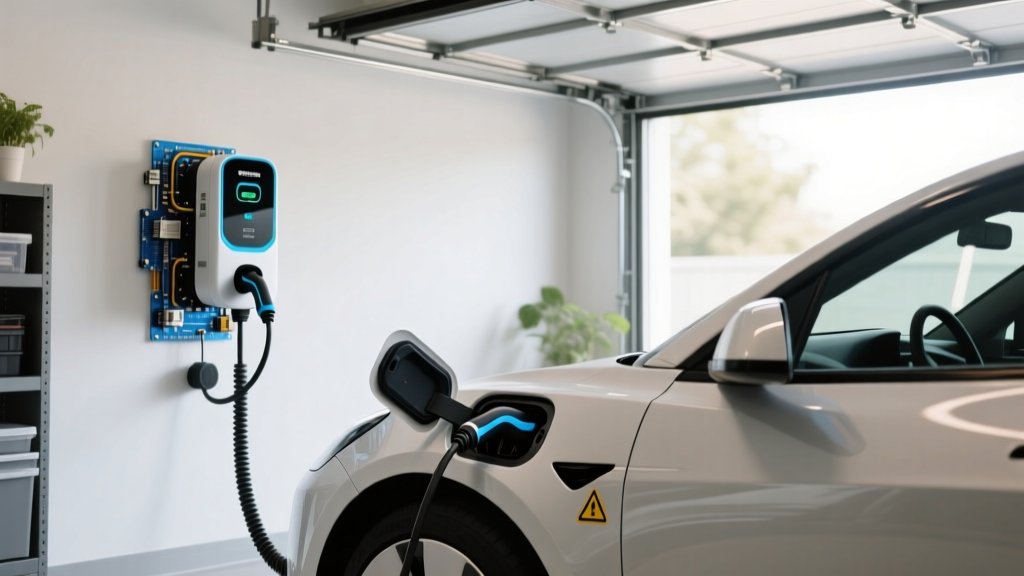
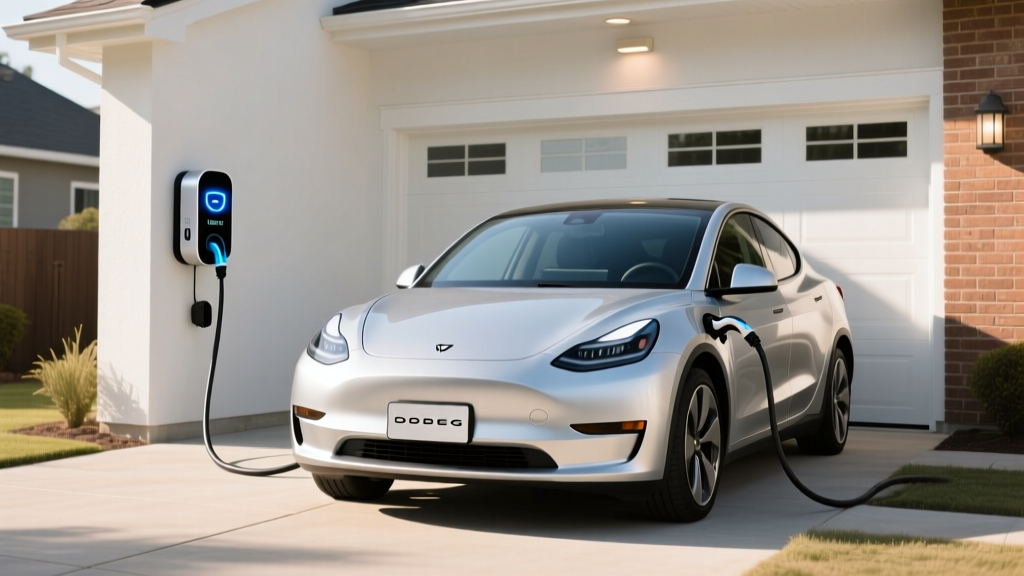
Most Dodge EV owners will want a Level 2 home charger wired to a dedicated 240V circuit. Here's what your electrician will evaluate:
- Circuit amperage: A 48-amp charger requires a 60-amp dedicated circuit (NEC code mandates the circuit be rated 125% of the continuous load).
- Panel capacity: Your main panel needs sufficient spare amperage. Most homes with 200-amp service can accommodate an EV charger without an upgrade. Homes with 100-amp service often need a panel upgrade.
- Outlet vs. hardwired: A NEMA 14-50 outlet offers portability (you can unplug and take the charger with you), while hardwired installations avoid the $75–$150 outlet cost and eliminate a potential failure point.
- Permit: Most jurisdictions require an electrical permit for new 240V circuits. Your electrician typically pulls this.
Installation Cost Breakdown
| Component | Low End | High End | Notes |
|---|---|---|---|
| Level 2 Charger Equipment | $350 | $750 | 40A–48A smart chargers (Grizzl-E, ChargePoint, Wallbox) |
| Electrician Labor (standard install) | $400 | $1,200 | Depends on panel proximity, wall material, conduit run length |
| Electrical Permit | $50 | $250 | Varies by municipality |
| Panel Upgrade (if needed) | $1,500 | $4,000 | 100A → 200A service upgrade; not required for most homes |
| Total (no panel upgrade) | $800 | $2,200 | Typical range for most homeowners |
| Total (with panel upgrade) | $2,300 | $6,200 | Older homes with 100A service |
Before you budget for a charger, get a licensed electrician to assess your panel. The panel upgrade is the single biggest variable — and it's a surprise many older-home owners don't anticipate.
Which Connector Does My Dodge EV Use? Compatibility Guide
The connector landscape shifted dramatically between 2024 and 2026. Here's where Dodge vehicles stand:
| Vehicle | AC Charging Port | DC Fast Charge Port | Tesla Supercharger Access | Adapter Needed? |
|---|---|---|---|---|
| 2026 Charger Daytona EV | J1772 / NACS (by trim) | CCS1 | Yes, with NACS adapter or native NACS on newer builds | CCS-to-NACS adapter for Tesla Superchargers (~$200–$250) |
| 2026 Hornet PHEV | J1772 | N/A (no DC fast charge) | No (Level 2 only) | Tesla Mobile Connector with J1772 adapter for Level 2 |
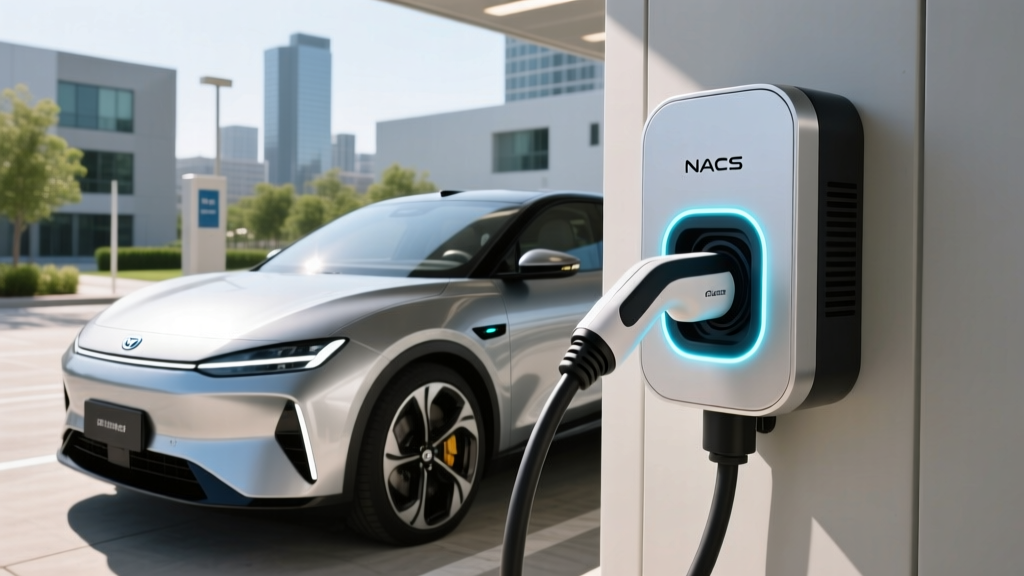
Key detail for Charger Daytona owners: Stellantis has been transitioning toward NACS (the Tesla connector standard) across its lineup. Early 2024–2025 Charger Daytona models shipped with CCS1 DC fast charging ports. For 2026, verify your specific build's connector before purchasing a home charger or planning Supercharger stops. Most Level 2 home chargers ship with a J1772 connector, which works universally for AC charging across all Dodge electrified vehicles. If your home charger has a NACS plug, you'll need a NACS-to-J1772 adapter for the Hornet.
On DC fast charging, the Charger Daytona peaks at approximately 175 kW on a CCS1 station, achieving a 10–80% charge in roughly 27–32 minutes under ideal conditions. Remember: peak kW is not sustained kW. The charge curve tapers significantly above 80% to protect battery health — a 10–90% session might take 45+ minutes.
What Does Charging Cost Per Mile vs. Gas?
This is where electrification earns its keep — but the savings depend heavily on where and when you charge. Here are realistic 2026 scenarios for the Charger Daytona EV (averaging ~3.0 miles per kWh in mixed driving):
| Scenario | Rate | Cost per kWh | Cost per Mile |
|---|---|---|---|
| Home (off-peak utility rate) | $0.08–$0.12/kWh | $0.10 avg | $0.033 |
| Home (standard residential rate) | $0.14–$0.18/kWh | $0.16 avg | $0.053 |
| Public Level 2 (ChargePoint, EVgo) | $0.25–$0.49/kWh | $0.35 avg | $0.117 |
| DC Fast Charging (Electrify America, Tesla) | $0.35–$0.55/kWh | $0.48 avg | $0.160 |
| Gas equivalent (25 MPG combined, $3.40/gal) | — | — | $0.136 |
Home charging on off-peak rates is roughly 4x cheaper per mile than gasoline. Even at standard residential rates, you're saving 60% per mile. However, exclusive reliance on DC fast charging can actually cost more than gas — a critical reason why home Level 2 installation is practically mandatory for EV economics to pencil out.
For Hornet PHEV owners, the calculus is different. With 32 miles of electric-only range (EPA), short commutes run purely on cheap home electricity. Beyond that, the turbocharged 1.3L engine kicks in at an EPA-rated 29 MPG combined. Your blended cost per mile depends on how often you stay within that electric envelope.
Best Home EV Chargers for Dodge EVs and PHEVs (2026 Picks)
After testing dozens of Level 2 units across various garage setups, these are the chargers I recommend for Dodge owners, balancing power output, reliability, smart features, and price:
ChargePoint Home Flex
- Power Output: Up to 12 kW (50A) on a 60A circuit
- Connector: J1772 (NACS version available)
- Cable Length: 23 feet
- Smart Features: Wi-Fi, scheduling, energy tracking, Alexa integration
- Price: ~$550–$650
- Best for: Charger Daytona owners wanting max Level 2 speed and app control
Grizzl-E Smart
- Power Output: Up to 9.6 kW (40A) on a 50A circuit
- Connector: J1772
- Cable Length: 24 feet
- Smart Features: Wi-Fi, OCPP protocol, adjustable amperage
- Price: ~$400–$500
- Best for: Budget-conscious owners and cold-climate durability (rated to -40°F)
Wallbox Pulsar Plus
- Power Output: Up to 11.5 kW (48A) on a 60A circuit
- Connector: J1772
- Cable Length: 25 feet
- Smart Features: Wi-Fi + Bluetooth, load balancing, Power Sharing for dual units
- Price: ~$450–$550
- Best for: Two-EV households wanting to share one circuit
Emporia Level 2 EV Charger
- Power Output: Up to 11.5 kW (48A) on a 60A circuit
- Connector: J1772
- Cable Length: 24 feet
- Smart Features: Wi-Fi, real-time energy monitoring, solar integration
- Price: ~$350–$400
- Best for: Hornet PHEV owners and budget-first installs
For Hornet PHEV owners, a 40A charger is more than sufficient — the onboard charger maxes out at 7.4 kW, so any 32A+ unit will charge it at full speed. Charger Daytona owners benefit from 48A units to minimize overnight charge time.
Safety, Code, and Installation Best Practices
EV charging is a continuous high-load electrical draw — your charger will run at near-maximum output for hours. This isn't like plugging in a lamp. Here's what the National Electrical Code (NEC) and practical safety demand:
- Dedicated circuit: Your Level 2 charger must have its own dedicated breaker — no sharing with other appliances.
- GFCI protection: NEC 2020+ requires GFCI protection for all EV charging outlets. Hardwired units typically have built-in ground-fault protection.
- Outdoor rating: If your charger is mounted outside or in an unenclosed carport, ensure the unit carries a NEMA 4 (or IP65+) weather rating. All four picks above are outdoor-rated.
- Cable management: A 24-foot cable draped across a garage floor is a trip hazard and a cable-damage risk. Use a wall-mounted holster or retractable cable management system.
- Utility notification: Some utilities require you to notify them before installing an EV charger, especially if you want access to time-of-use (TOU) rates that make off-peak charging cheaper.
DC Fast Charging on the Road: What Charger Daytona Owners Should Know
The 2026 Charger Daytona supports DC fast charging at up to 175 kW on CCS1 stations. On a 350 kW Electrify America or EVgo station, here's what real charge times look like:
- 10–80%: ~27–32 minutes (under ideal battery temperature conditions)
- 10–90%: ~45–50 minutes (due to taper above 80%)
- Miles added in 15 minutes: ~130–150 miles (at peak charge rate)
Preconditioning matters. If you navigate to a DC fast charger using the vehicle's built-in navigation, the Charger Daytona will precondition its battery to optimal temperature before you arrive. This can shave 5–10 minutes off your charge session, especially in cold weather. Always use the in-car nav for charging stops rather than just showing up cold.
For road trip planning, the Alternative Fuels Data Center's station locator is the most reliable tool for finding CCS1 and NACS chargers along your route.
Federal Tax Credits and Utility Rebates for Home Charging
The IRS Residential Clean Energy Credit (§25C) covers 30% of the cost of home EV charging equipment and installation, up to $1,000 per year. This applies to the charger hardware and the electrician's labor. If your install costs $1,500 total, you'd claim a $450 credit.
Additionally, many utilities offer their own rebates — typically $250–$500 for installing a smart Level 2 charger, sometimes more if you enroll in a managed-charging or time-of-use program. Check with your local utility before purchasing equipment, as some programs require pre-approval or specific charger models.
For the vehicle itself, the §30D federal EV tax credit may apply to the Charger Daytona depending on battery sourcing, your adjusted gross income, and the vehicle's MSRP relative to current caps. Rules change frequently — consult a tax professional before relying on credit eligibility for your purchase decision.
Frequently Asked Questions
How much does it cost to install a home EV charger for my Dodge?
Expect $800–$2,200 for a standard Level 2 installation (equipment + electrician + permit) if your electrical panel has sufficient capacity. If you need a panel upgrade from 100A to 200A service, add $1,500–$4,000. Get a quote from a licensed electrician before committing to equipment.
How fast will each charging level add range to my Charger Daytona?
Level 1 (120V): ~3–5 miles per hour — essentially useless for the Daytona's 100.6 kWh pack. Level 2 at 48A/11.5 kW: ~40–46 miles per hour, or a full 10–80% session in about 6.5 hours. DC fast charging at 175 kW: ~130–150 miles in 15 minutes at peak rate.
Can I use a Tesla charger with my Dodge EV?
For Level 2 AC charging, a Tesla Wall Connector with a J1772 adapter (or the universal version) will work with any Dodge EV or PHEV. For DC fast charging, early Charger Daytona models with CCS1 ports need a CCS-to-NACS adapter to access Tesla Superchargers. Verify your vehicle's port before purchasing adapters.
How much does charging cost per mile vs. gas?
Home charging on off-peak rates runs about $0.03/mile for the Charger Daytona — roughly 4x cheaper than gas at $3.40/gallon and 25 MPG ($0.14/mile). Public DC fast charging at $0.48/kWh averages $0.16/mile, which is actually more expensive than gas. Home charging is where the savings live.
What electrical upgrades might I need for a Level 2 charger?
The most common upgrade is a panel capacity increase if you have older 100A service. You'll also need a dedicated 50A or 60A breaker with appropriate-gauge wiring (6 AWG copper for 60A). If your panel is far from the garage, conduit run costs can add $300–$800 to the electrician's labor.
Is the Dodge Hornet PHEV worth charging at home?
Absolutely. The Hornet's 15.5 kWh battery charges fully in about 1.5 hours on Level 2, giving you 32 EPA-rated electric miles daily. At $0.10/kWh home rates, that's roughly $0.50 to fill the battery — versus $4+ in gasoline for the same distance. Even a basic 120V Level 1 outlet will fully charge the Hornet overnight (~10–12 hours), making it one of the most accessible PHEVs for apartment dwellers with outlet access.