Electrify America NACS: The Connector Shift Reshaping Public Charging
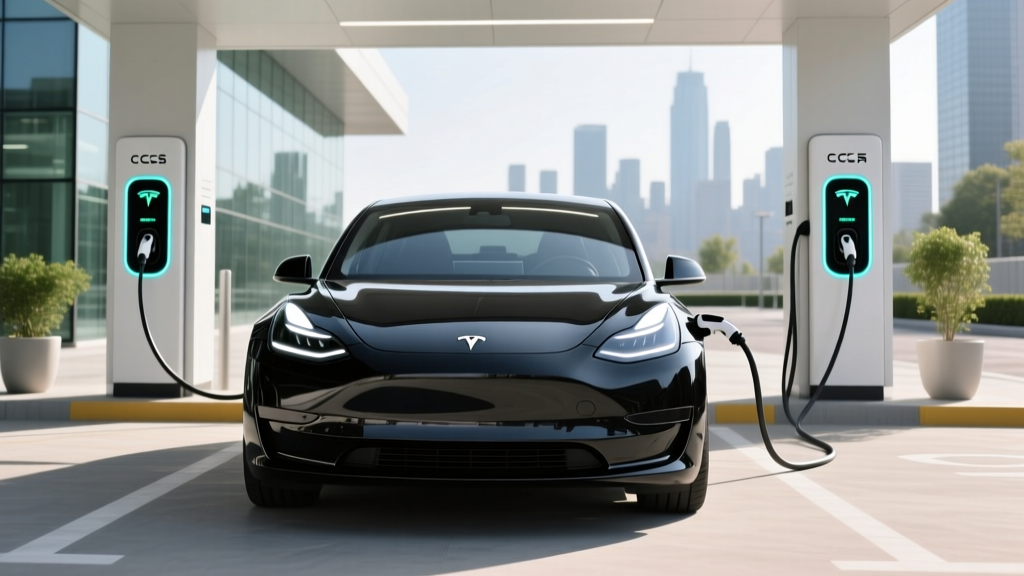
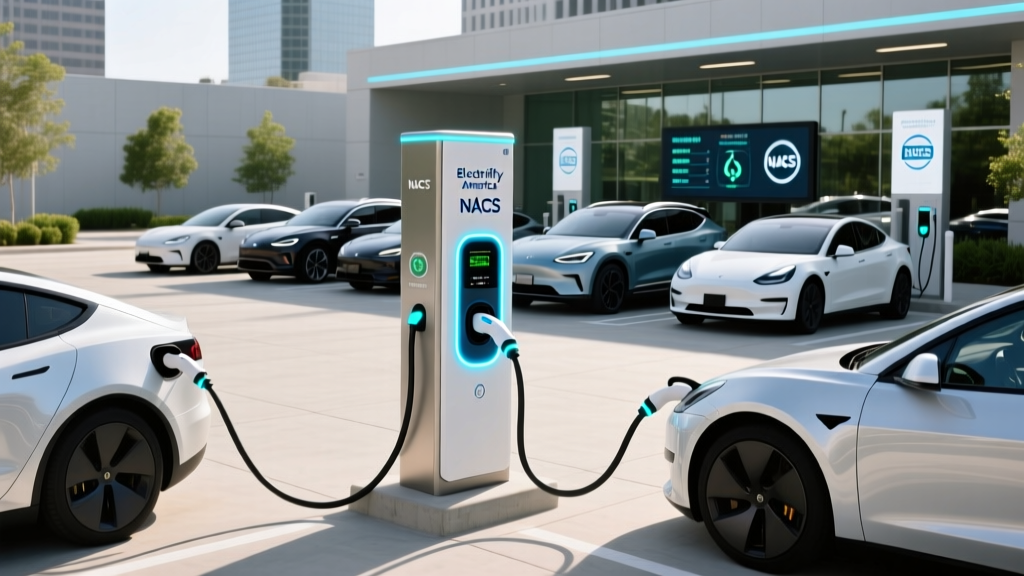
If you've pulled into an Electrify America (EA) station in 2026, you've likely noticed something new: native NACS (North American Charging Standard) cables sitting right next to the legacy CCS1 connectors. What began as a Tesla-exclusive plug has become the de facto North American EV charging standard, and Electrify America — the largest open DC fast-charging network in the U.S. outside Tesla — has been retrofitting stations aggressively to match.
This guide breaks down what the Electrify America NACS transition means for your charging routine, whether you drive a Tesla, a Ford F-150 Lightning, a Hyundai Ioniq 5, or a legacy CCS vehicle. We'll also cover home Level 2 installation realities, connector compatibility across brands, and the actual cost per mile when you plug in versus filling up with gas.
Charging Levels Explained: kW, Miles Per Hour, and What You Actually Get
Before we dig into Electrify America's network, let's anchor the fundamentals. The single most common EV confusion is mixing up kW (kilowatts) — the rate of power delivery — with kWh (kilowatt-hours) — the total energy stored in your battery. Think of kW as the width of the pipe and kWh as the size of the tank.
| Level | Voltage | Power (kW) | Miles of Range Added Per Hour | Typical Use Case |
|---|---|---|---|---|
| Level 1 | 120V AC | 1.0–1.4 kW | 3–5 mi/hr | Overnight top-up, PHEVs, emergencies |
| Level 2 | 240V AC | 7.2–19.2 kW | 20–75 mi/hr | Home daily charging, workplace, hotels |
| DC Fast Charging | 400–800V DC | 50–350 kW | 150–1,200+ mi/hr (peak) | Road trips, Electrify America, Tesla Superchargers |
- 60 kWh battery (e.g., Nissan Leaf, base Chevy Equinox EV) at a 150 kW EA charger: ~25–30 minutes, tapering above 80%.
- 84 kWh battery (e.g., Hyundai Ioniq 5, Kia EV6) at a 350 kW EA charger: ~18–22 minutes. The Ioniq 5's 800V architecture sustains higher power longer.
- 100 kWh battery (e.g., Ford F-150 Lightning Extended Range) at 150 kW: ~40–45 minutes. At 350 kW (where supported): ~30 minutes.
Note: Peak kW is never sustained across the full session. Charging curves taper significantly past 80% SoC to protect battery health. Plan your stops around 10–80% for the fastest sessions.
Connector Compatibility: NACS, CCS1, CHAdeMO, and What Your EV Needs
Electrify America's 2026 station rollout now includes native NACS cables (rated up to 350 kW on their latest Hyperchargers) alongside CCS1. CHAdeMO remains available at older stations but is effectively a legacy standard — no new mainstream EV sold in the U.S. uses it.
| Connector | Native EV Brands (No Adapter Needed) | Adapter Required For |
|---|---|---|
| NACS (Tesla standard) | Tesla (all), Ford (2025+), GM (2025+), Rivian (2025+), Volvo, Polestar, Fisker, Lucid | Older CCS vehicles using a NACS-to-CCS adapter (~$200–$300) |
| CCS1 | Hyundai, Kia, Volkswagen, BMW, Mercedes-Benz, Stellantis, Honda, Subaru, Toyota (bZ series) | NACS-equipped vehicles using a CCS-to-NACS adapter (often provided by OEM) |
| CHAdeMO | Nissan Leaf (legacy), Mitsubishi Outlander PHEV (legacy) | No viable adapter; use CCS/NACS stations with CHAdeMO availability |
How Much Does It Cost to Install a Home EV Charger?
Home Level 2 charging is where most EV owners do 80–90% of their charging. A proper 240V Level 2 installation delivers 7.2 kW to 19.2 kW, adding 20–75 miles of range per hour — more than enough to replenish a full day's driving overnight.
Here's what a realistic installation looks like in 2026:
| Component | Typical Cost Range | Notes |
|---|---|---|
| Level 2 Charger (hardware) | $350–$750 | 32A–48A smart chargers; Wi-Fi enabled for scheduling and utility TOU rates |
| Electrician labor | $400–$1,200 | Varies by run length from panel to garage; conduit, wiring, and mounting |
| Electrical permit | $50–$200 | Required in most jurisdictions; inspection included |
| Panel upgrade (if needed) | $1,500–$3,500 | Older homes with 100A service may need a 200A upgrade to support a 40A+ circuit |
| Total (no panel upgrade) | $800–$2,150 | Most homes with 200A service fall in this range |
| Total (with panel upgrade) | $2,300–$5,650 | Common in pre-1990 homes; get 2–3 quotes |
- Circuit: Dedicated 60A breaker (NEC requires circuits rated 125% above continuous load — 48A × 1.25 = 60A)
- Wire: 6 AWG copper (THHN in conduit) or 4 AWG aluminum
- Voltage: 240V single-phase
- GFCI: NEC 2020+ requires GFCI protection for EV outlets; hardwired chargers often have built-in ground-fault protection
- Outdoor rating: If mounted outside, ensure NEMA 4 (weatherproof) enclosure and an outdoor-rated charger (e.g., ChargePoint Home Flex, Emporia Level 2)
Always hire a licensed electrician familiar with EV charger installations. Your utility may offer rebates of $250–$500 for smart charger installation — check with your provider before starting work.
Level 2 Home Charger Recommendations for 2026
Based on power output, reliability, smart features, and value, here are the chargers we recommend for most EV owners:
ChargePoint Home Flex
- Power: Up to 12 kW (50A) on a 60A circuit; configurable down to 16A
- Connector: NACS or J1772 (select at purchase)
- Cable: 23 ft
- Smart features: Wi-Fi, app scheduling, utility TOU integration, Alexa
- Price: ~$550–$650
- Best for: Most EVs; flexible amperage for older panels
Emporia Vue Level 2
- Power: Up to 11.5 kW (48A) on a 60A circuit
- Connector: J1772 (NACS adapter included)
- Cable: 24 ft
- Smart features: Wi-Fi, energy monitoring, solar integration, load management
- Price: ~$400–$500
- Best for: Budget-conscious buyers; solar homes
Wall Connector (Tesla)
- Power: Up to 11.5 kW (48A) on 60A circuit
- Connector: Native NACS; J1772 adapter available
- Cable: 24 ft
- Smart features: Wi-Fi, OTA updates, power sharing (multiple units on one circuit)
- Price: ~$475
- Best for: Tesla owners; multi-Tesla households
Grizzl-E Smart
- Power: Up to 10 kW (40A) on a 50A circuit
- Connector: J1772 or NACS
- Cable: 24 ft
- Smart features: OCPP-compatible, app control, extreme cold rated (-40°F)
- Price: ~$450–$550
- Best for: Cold-climate garages; outdoor installs
Cost Per Mile: Home Charging vs. Electrify America vs. Gas
The economics of EV charging depend heavily on where you charge. Home charging on an off-peak utility rate is dramatically cheaper than public DC fast charging — and both are typically cheaper than gasoline.
| Charging Scenario | Cost per kWh | Cost per Mile | Annual Cost (12,000 mi) |
|---|---|---|---|
| Home (off-peak utility rate) | $0.08–$0.14 | $0.023–$0.040 | $275–$480 |
| Home (standard residential avg) | $0.16–$0.18 | $0.046–$0.051 | $550–$615 |
| Electrify America (DC fast, guest rate) | $0.43–$0.56 | $0.12–$0.16 | $1,440–$1,920 |
| Electrify America (Pass+ subscription) | $0.31–$0.39 | $0.089–$0.11 | $1,065–$1,335 |
| Gasoline (28 MPG avg, $3.40/gal) | — | $0.121 | $1,457 |
The takeaway is clear: home charging is where the savings live. An EV owner charging primarily at home on off-peak rates spends roughly $300–$500 per year on "fuel" — about a quarter of what a comparable gas car costs. Even Electrify America's Pass+ subscription rate is competitive with gasoline on a per-mile basis, making road trips economically viable.
According to fueleconomy.gov, the average EV achieves 3.0–4.0 miles per kWh, with efficient models like the Tesla Model 3 and Lucid Air reaching 4.0+ mi/kWh and larger vehicles like the F-150 Lightning closer to 2.0–2.5 mi/kWh. Adjust the table above based on your specific vehicle's efficiency.
Electrify America NACS Stations: What to Expect at the Plug
Electrify America operates over 1,000 stations and 5,000+ individual chargers across the U.S. as of early 2026. Their newest Hypercharger stalls deliver up to 350 kW via CCS1 and NACS, while older stations max out at 50–150 kW. Here's what to expect:
- NACS availability: EA has been retrofitting stations since late 2024. By mid-2026, roughly 60–70% of stations have at least two native NACS cables. Use the EA app or PlugShare to confirm NACS availability at your destination station before traveling.
- Plug & Charge: NACS-equipped vehicles from Ford, GM, Rivian, and Tesla support Plug & Charge on EA's network — authentication and billing happen automatically when you plug in, no app interaction needed.
- Charging curve reality: A 350 kW-rated stall does not deliver 350 kW for your entire session. Most EVs peak between 150–270 kW in the 10–40% SoC range and taper significantly past 60–70%. The Hyundai Ioniq 5 and Kia EV6 (800V architecture) sustain higher power longer than 400V vehicles.
- Idle fees: EA charges $0.40/minute idle fees if you remain plugged in after your session ends (with a 10-minute grace period). Unplug promptly.
Safety, Code, and Installation Considerations
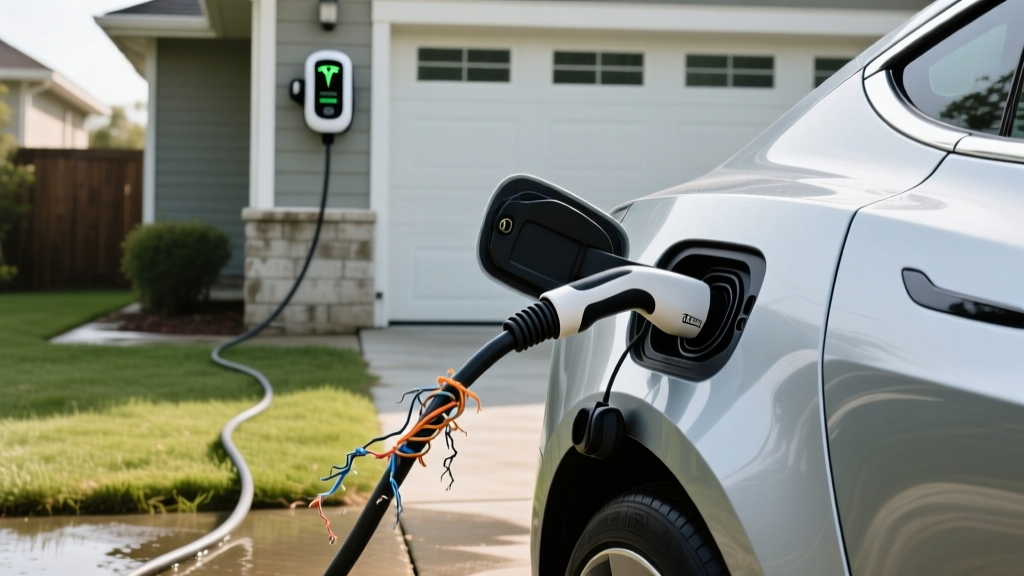
A Level 2 charger draws significant continuous current — often 32A to 48A for hours at a time. This is not a DIY project. Key safety and code requirements include:
- Dedicated circuit: Your EV charger must have its own dedicated breaker — never share a circuit with other high-draw appliances (dryer, oven, HVAC).
- NEC 125% rule: Continuous loads (defined as 3+ hours) require the circuit to be rated at 125% of the charger's max amperage. A 48A charger needs a 60A breaker.
- GFCI protection: The 2020 NEC requires GFCI protection for EV charging outlets (NEMA 14-50 receptacles). Hardwired chargers sidestep this requirement since most have integrated ground-fault protection — and hardwiring also eliminates the #1 cause of EV charging fires: loose or degraded receptacle connections.
- Outdoor installations: Use a NEMA 4-rated enclosure and an outdoor-rated charger. Conduit must be rated for wet locations. Consider a charger lock or RFID authentication if installed in an accessible area.
- Panel capacity: Your electrician will perform a load calculation on your panel. If your existing service (especially 100A panels in older homes) cannot accommodate the new circuit, a panel upgrade to 200A is required. This is the single biggest variable in installation cost.
For authoritative installation guidance, the U.S. Department of Energy's Alternative Fuels Data Center provides state-by-state resources and incentive information for home charging infrastructure.
Frequently Asked Questions
How much does it cost to install a home EV charger?
Most homes with a 200A electrical panel will spend $800–$2,150 total for a Level 2 charger installation, including the charger hardware ($350–$750), electrician labor ($400–$1,200), and permit fees ($50–$200). Homes with older 100A panels that need a service upgrade should budget $2,300–$5,650 total. Always get multiple quotes and check with your utility for rebates.
How fast will each charging level add range?
Level 1 (120V) adds 3–5 miles per hour — suitable only for PHEVs or emergency trickle charging. Level 2 (240V) adds 20–75 miles per hour depending on amperage (7.2 kW to 19.2 kW), easily replenishing a full day's driving overnight. DC fast charging at Electrify America adds 150–1,200+ miles per hour at peak rates, with a typical 10–80% session taking 18–45 minutes depending on battery size and vehicle architecture.
Which connector is compatible with my EV at Electrify America?
Electrify America stations in 2026 offer both NACS and CCS1 connectors. If your EV has a native NACS port (Tesla, Ford 2025+, GM 2025+, Rivian 2025+, Volvo, Polestar, Lucid), use the NACS cable directly. If your EV has a CCS1 port (Hyundai, Kia, VW, BMW, Mercedes, Honda, Subaru, Toyota bZ), use the CCS1 cable. Adapters are available for cross-compatibility — check your OEM's owner portal, as many provide adapters at no cost.
How much does charging cost per mile vs. gas?
Home charging on off-peak rates costs roughly $0.02–$0.04 per mile — about one-quarter the cost of gasoline at $3.40/gallon and 28 MPG ($0.12/mile). Even Electrify America's Pass+ subscription rate ($0.31–$0.39/kWh) works out to roughly $0.09–$0.11 per mile, still cheaper than gas. Guest rates at EA ($0.43–$0.56/kWh) are comparable to gasoline on a per-mile basis, which is why home charging access is critical for maximizing EV savings.
What electrical upgrades might I need for a home charger?
The most common upgrade is a panel service increase from 100A to 200A, required when your existing panel doesn't have enough spare capacity for a dedicated 60A EV circuit. This costs $1,500–$3,500 and is most common in homes built before 1990. Some homeowners also need a conduit run from the panel to the garage (if the panel is on the opposite side of the house), which adds to labor costs. A qualified electrician will perform a NEC Article 220 load calculation to determine your panel's available capacity before recommending upgrades.