The NACS Standard: What Changed for EV Charging in 2026
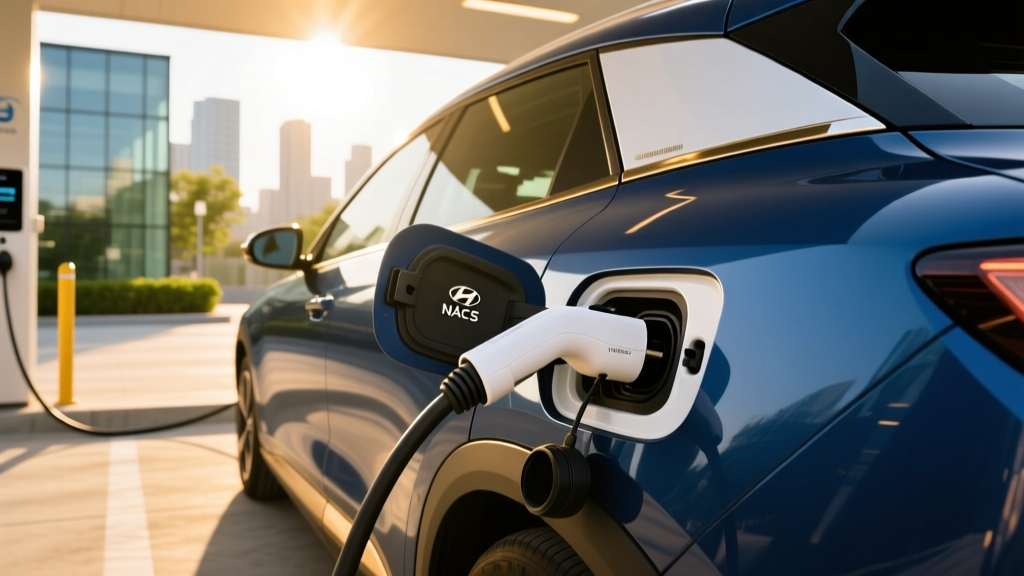
If you're shopping for electric vehicles with NACS (North American Charging Standard) connectors, you're joining the majority of the 2026 EV market. What began as Tesla's proprietary plug is now the dominant charging standard, adopted by Ford, GM, Hyundai, Kia, Rivian, BMW, and most major automakers starting with 2025–2026 model-year vehicles. The practical upshot: a single plug handles everything from overnight Level 2 home charging to 250+ kW DC fast charging on the Tesla Supercharger network and expanding third-party networks.
But owning a NACS-equipped EV doesn't automatically mean effortless charging. You still need the right home electrical infrastructure, a properly rated Level 2 charger, and a realistic understanding of what charging actually costs and how fast it happens in the real world. This guide breaks down every layer — from circuit breakers to cost-per-mile — with exact numbers.
Charging Levels Explained: kW, Speed, and Real-World Times
The most common mistake new EV buyers make is confusing kW (kilowatts — a measure of power, or how fast energy flows) with kWh (kilowatt-hours — a measure of energy, or how much the battery stores). Think of kW as the width of a hose and kWh as the size of the bucket. A wider hose fills the bucket faster, but the bucket size doesn't change.
Here's how the three charging levels translate to real range added:
| Level | Voltage / Phase | Power (kW) | Miles of Range Added per Hour | Typical Use Case |
|---|---|---|---|---|
| Level 1 | 120V AC, single-phase | 1.0 – 1.4 kW | 3 – 5 miles/hr | Emergency / trickle top-up |
| Level 2 (Home) | 240V AC, single-phase | 7.2 – 11.5 kW | 25 – 44 miles/hr | Daily overnight charging |
| DC Fast Charging | 400V–800V DC | 50 – 350 kW | 150 – 1,000+ miles/hr (peak) | Road trips, rapid top-ups |
Real-world charging time examples (10% to 80% State of Charge):
- Tesla Model Y (75 kWh usable, NACS native): ~25 minutes at a 250 kW V3 Supercharger, tapering significantly above 60%.
- Ford Mustang Mach-E (91 kWh usable, NACS on 2025+ models): ~28 minutes at a 150 kW DC fast charger; ~10 hours on a 9.6 kW Level 2 home unit.
- Hyundai Ioniq 5 (77.4 kWh usable, NACS adapter or native on 2026 models): ~18 minutes at a 350 kW charger thanks to its 800V architecture; ~8.5 hours on a 9.6 kW Level 2 unit.
A critical reality: DC fast charging speeds follow a charge curve. A vehicle rated at "250 kW peak" only sustains that rate at low states of charge (typically 10–30%). Above 50% SoC, power tapers sharply. Above 80%, it slows to a trickle to protect battery health. This is why manufacturers quote 10–80% times rather than 0–100%.
Home Charger Installation: Electrical Requirements and True Costs
Installing a Level 2 home charger is where most EV ownership planning meets electrical reality. Here's what's involved:
Electrical Requirements
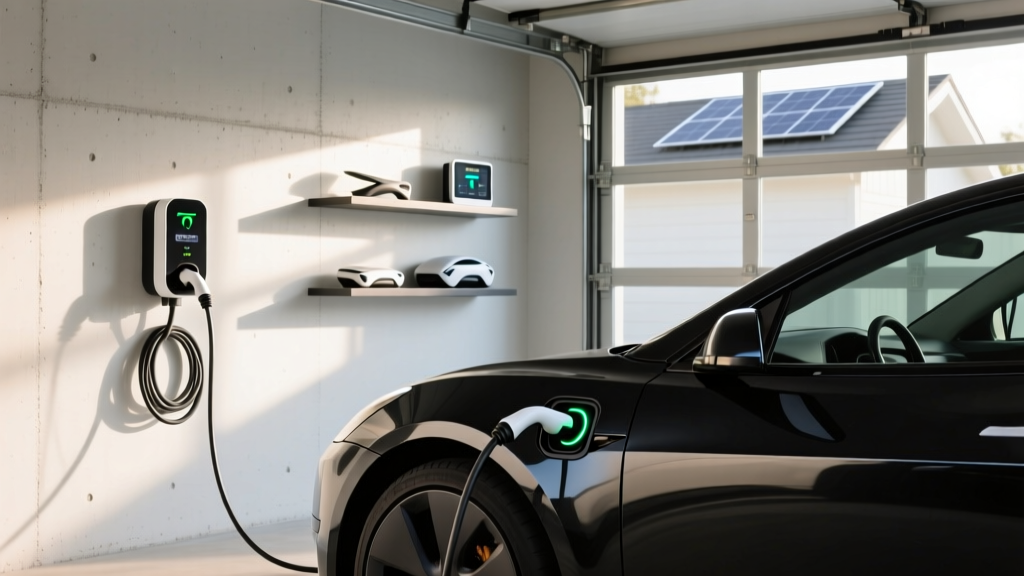
A typical Level 2 home charger requires a 240V dedicated circuit, similar to what powers an electric dryer or oven. The most common configurations:
- 40-amp circuit → delivers up to 32 amps continuous (7.7 kW) — adequate for most EVs overnight
- 50-amp circuit → delivers up to 40 amps continuous (9.6 kW) — the sweet spot for faster home charging
- 60-amp circuit → delivers up to 48 amps continuous (11.5 kW) — maximizes Level 2 speed for larger batteries
The National Electrical Code (NEC) requires that continuous loads (like EV charging, which runs for hours) use only 80% of a circuit's rated capacity. So a 50-amp breaker yields 40 amps of usable charging current.
Panel Upgrade: The Cost Variable Most Buyers Miss
Many homes built before 2000 have 100-amp or 150-amp main electrical panels. Adding a 50-amp EV circuit to an already loaded panel may require a panel upgrade to 200 amps, which typically costs $1,500–$3,500 depending on your region and utility. Some utilities offer rebates that offset this. A licensed electrician will perform a load calculation to determine if your panel can handle the addition.
| Component | Cost Range | Notes |
|---|---|---|
| Level 2 Charger (Equipment) | $350 – $750 | Hardwired or NEMA 14-50 plug; NACS connector models |
| Electrical Labor (Standard Install) | $400 – $1,200 | Running 240V line, mounting charger, 10–40 ft conduit run |
| Electrical Permit | $50 – $200 | Required by most jurisdictions; inspection included |
| Panel Upgrade (If Needed) | $1,500 – $3,500 | 100A → 200A service upgrade; not always required |
| Total (No Panel Upgrade) | $800 – $2,150 | Typical scenario for homes with 200A service |
| Total (With Panel Upgrade) | $2,300 – $5,650 | Older homes or heavily loaded panels |
Always hire a licensed electrician and pull a permit. Unpermitted EV charger installations can void home insurance claims and create fire risk, especially with sustained high-amperage loads running 6–10 hours nightly.
Connector Compatibility: NACS, CCS1, CHAdeMO, and Adapters
The 2026 EV market has largely consolidated around NACS, but legacy connectors remain in use. Here's the compatibility landscape:
| Connector | AC Level 2 Charging | DC Fast Charging | Vehicles Using It (2026) | Adapter Needed? |
|---|---|---|---|---|
| NACS (Tesla/J3400) | Yes — native on new non-Tesla EVs | Yes — Supercharger + third-party | Tesla (all), Ford, GM, Hyundai/Kia (2025+), Rivian, BMW, others | No for native NACS vehicles |
| CCS1 (Combo) | Via J1772 upper portion | Yes — Electrify America, EVgo, ChargePoint | Older VW ID.4, some 2024 and prior models | NACS-to-CCS adapter for Supercharger access |
| CHAdeMO | No (separate J1772 for AC) | Yes — declining network | Nissan Leaf (legacy); effectively discontinued for new vehicles | No direct NACS adapter widely available |
Adapter reality for 2026: Most automakers transitioning to NACS include a CCS1-to-NACS adapter with new vehicle purchases, or sell one for $150–$250. This adapter lets CCS-equipped vehicles access Tesla Superchargers that have been opened to non-Tesla vehicles. However, not all Supercharger stalls have been retrofitted with the longer cable reach needed for non-Tesla charge-port locations — check the Tesla app for station compatibility before relying on it.
Level 2 Home Charger Recommendations for NACS Vehicles
These are proven NACS-equipped (or NACS-compatible) Level 2 chargers available in 2026, selected for reliability, smart features, and real-world performance:
Tesla Wall Connector (Gen 4, NACS)
- Power Output: Up to 11.5 kW (48A on 60A circuit)
- Connector: Native NACS
- Cable Length: 24 feet
- Smart Features: Wi-Fi, OTA updates, Tesla app scheduling, load sharing between two units
- Price: ~$475
- Best For: Tesla owners and any NACS-native EV; excellent value-to-performance ratio
ChargePoint Home Flex (NACS Version)
- Power Output: Up to 12 kW (50A on 60A circuit); adjustable down to 16A
- Connector: NACS (2025+ model)
- Cable Length: 23 feet
- Smart Features: Wi-Fi, Alexa integration, detailed energy tracking, flexible amperage settings
- Price: ~$599
- Best For: Multi-EV households; adjustable amperage avoids panel upgrades
Emporia Vue Smart Charger (NACS)
- Power Output: Up to 11.5 kW (48A on 60A circuit)
- Connector: NACS
- Cable Length: 24 feet
- Smart Features: Solar integration, time-of-use scheduling, energy monitoring dashboard
- Price: ~$449
- Best For: Homes with solar panels; excellent energy visibility
All three chargers support hardwired installation (preferred for outdoor use and maximum amperage) or NEMA 14-50 plug connection. Hardwired installations eliminate the GFCI breaker requirement that plug-in setups need — a $100–$150 savings on breaker cost and fewer nuisance trips.
Cost to Charge: Per-Mile Economics vs. Gasoline
The financial case for EV charging hinges on your electricity rate and driving patterns. Here's the math using a $0.13/kWh national average home rate and a vehicle averaging 3.0 miles per kWh (typical for a midsize crossover like the Tesla Model Y or Ford Mach-E):
| Charging Scenario | Cost per kWh | Cost per Mile | Equivalent Gas MPG (at $3.50/gal) |
|---|---|---|---|
| Home — Off-Peak (TOU rate) | $0.08 – $0.10 | $0.027 – $0.033 | 106 – 130 MPGe |
| Home — Standard Rate | $0.13 – $0.16 | $0.043 – $0.053 | 66 – 81 MPGe |
| Public Level 2 (Workplace/Retail) | $0.20 – $0.30 | $0.067 – $0.100 | 35 – 52 MPGe |
| DC Fast Charging (Public) | $0.32 – $0.50 | $0.107 – $0.167 | 21 – 33 MPGe |
| Gasoline Baseline (28 MPG combined) | $3.50/gal | $0.125 | 28 MPG |
The takeaway: home charging is dramatically cheaper than gas — typically 3 to 5 cents per mile versus 12+ cents. But exclusive reliance on DC fast charging erases most of the cost advantage. For road trips, DC fast charging is a convenience premium you pay, not a savings strategy.
For a driver covering 12,000 miles per year with 80% home charging and 20% public DC fast charging, annual fuel cost lands around $480–$620 versus roughly $1,500 for a comparable 28 MPG gas vehicle — a savings of $900–$1,000 annually. Source: fueleconomy.gov.
Safety, Code, and Installation Best Practices
EV charging is a continuous high-draw electrical load — essentially running a second electric oven for 8 hours every night. Safety isn't optional:
- Dedicated circuit: Your charger must be on its own breaker — never shared with other appliances. This is a NEC requirement.
- GFCI protection: Required for plug-in (NEMA 14-50) installations. Hardwired chargers are exempt in most jurisdictions and avoid nuisance GFCI trips.
- Outdoor rating: If mounting outdoors, ensure the charger is NEMA 4 rated (weatherproof). All three recommended units above carry outdoor ratings.
- Cable management: A 24-foot cable drags on the ground. Wall-mounted cable organizers ($20–$40) prevent trip hazards and connector damage.
- Permit and inspection: Required in virtually all US jurisdictions. Unpermitted work can invalidate home insurance and create liability in the event of electrical fire.
Frequently Asked Questions
How much does it cost to install a home EV charger?
A standard Level 2 home charger installation (equipment + electrician + permit) costs $800–$2,150 if your electrical panel has sufficient capacity. If a panel upgrade from 100A to 200A service is needed, add $1,500–$3,500, bringing the total to $2,300–$5,650. Get at least two quotes from licensed electricians and confirm they have EV charger installation experience.
How fast will each charging level add range?
Level 1 (120V) adds 3–5 miles of range per hour — enough only for overnight top-ups on low-mileage days. Level 2 (240V, 40–50A) adds 25–44 miles per hour, fully replenishing most EV batteries in 8–12 hours. DC fast charging adds 150–1,000+ miles per hour at peak, but charge-curve taper means realistic 10–80% sessions take 18–35 minutes depending on the vehicle and charger power.
Which connector and charger is compatible with my EV?
If you own a 2025+ model-year electric vehicle with NACS from Tesla, Ford, GM, Hyundai, Kia, Rivian, or BMW, you need a NACS-equipped Level 2 home charger. Older CCS1-equipped EVs can use a CCS1 home charger or a NACS charger with a CCS-to-NACS adapter. Check your vehicle's charge port and your owner's manual for the definitive answer. For DC fast charging, NACS vehicles access both Tesla Superchargers and an expanding network of NACS-equipped third-party stations.
How much does charging cost per mile versus gas?
Home charging at the national average electricity rate costs approximately $0.04–$0.05 per mile — roughly one-third the cost of gasoline at $3.50/gallon for a 28 MPG vehicle ($0.125/mile). Off-peak time-of-use rates can drop this to under $0.03/mile. However, exclusive reliance on DC fast charging at $0.35–$0.50/kWh pushes cost-per-mile to $0.11–$0.17, approaching or exceeding gasoline costs.
What electrical upgrades might I need for a home charger?
The most common upgrade is running a new 240V circuit from your panel to the charger location. If your home has a 200-amp panel with available breaker slots and load capacity, this is straightforward ($400–$1,200 labor). If your panel is 100-amp or near capacity, a service upgrade to 200 amps ($1,500–$3,500) may be required. Homes with older wiring (knob-and-tube, aluminum) may need additional remediation. A licensed electrician's load calculation is the definitive answer — never skip this step.