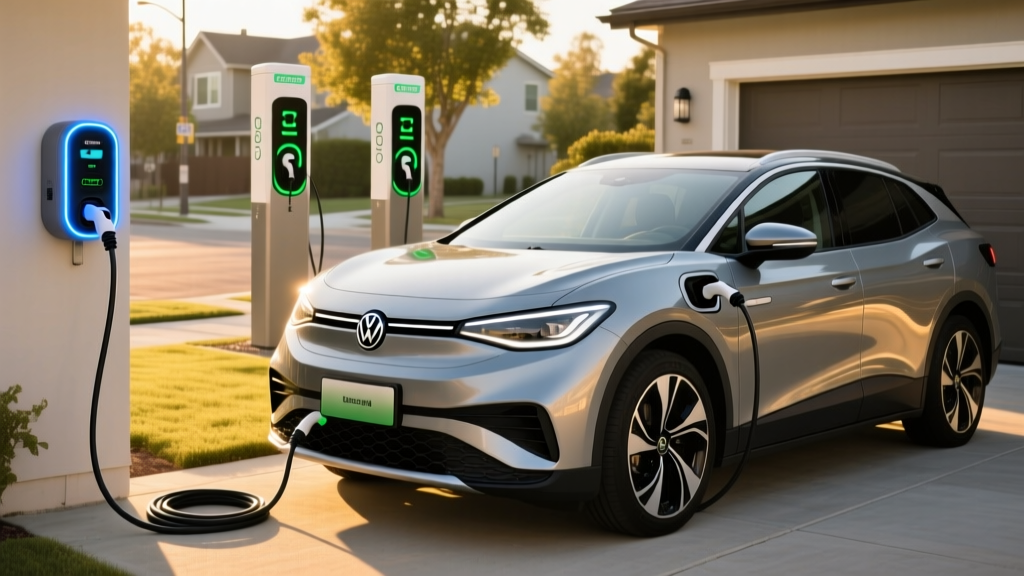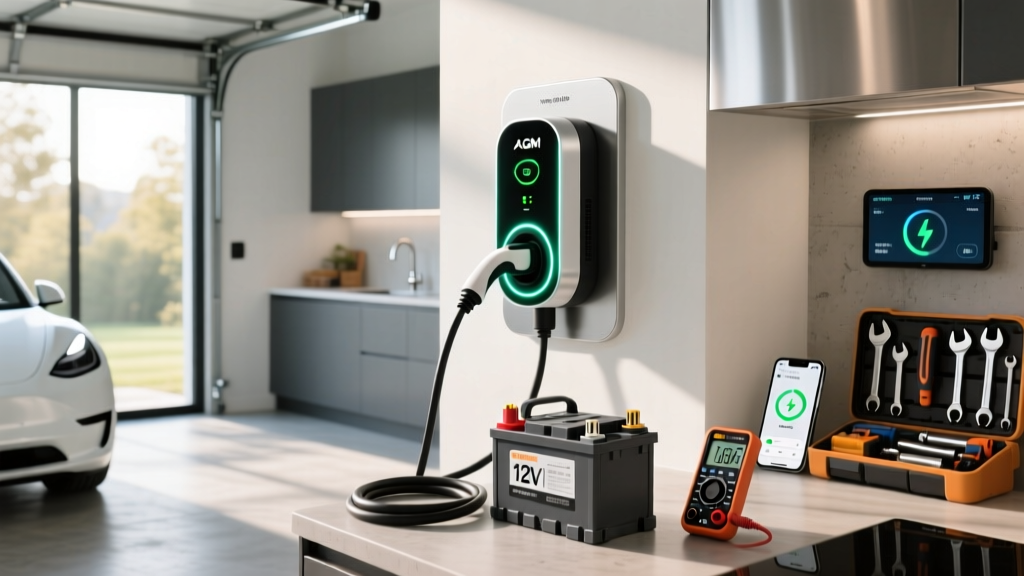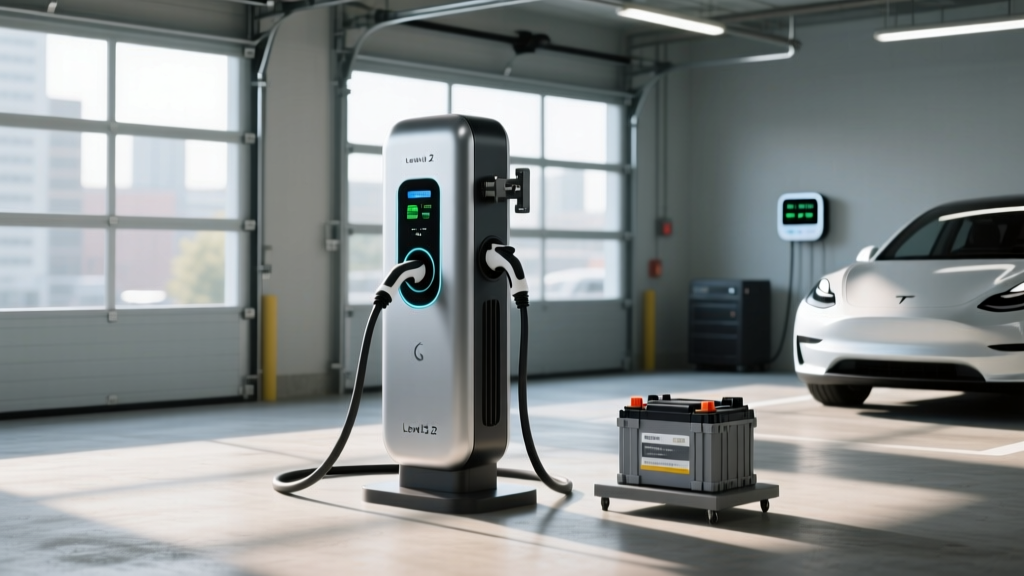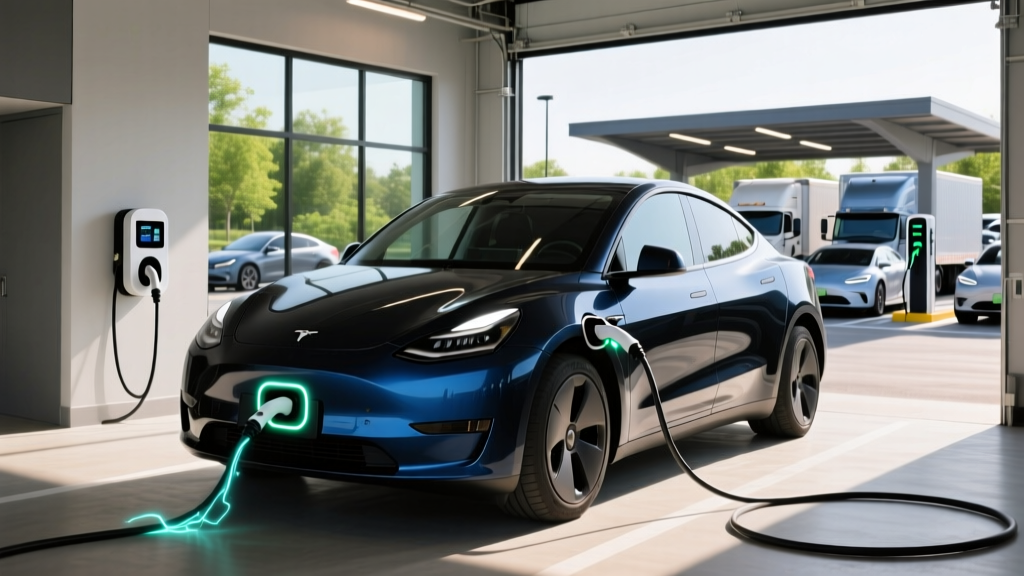
Electric trucks like the Ford F-150 Lightning, Rivian R1T, and Chevrolet Silverado EV have rewritten the rules for work and adventure — but their massive battery packs (often 100–200+ kWh) demand a charging strategy that smaller EVs simply don't require. If you're towing, hauling, or driving highway miles in cold weather, your real-world electric truck range can drop 20–40% below the EPA sticker. The right home and public charging setup isn't optional; it's how you keep a 5,000-pound truck usable every day.
This guide covers the exact charging speeds, home electrical requirements, connector standards, and equipment you need to keep an electric truck on the road — with real numbers, not marketing promises.
Charging Levels Explained: Speeds, kW, and Miles Added Per Hour
The single most common EV mistake is confusing kW (kilowatts) with kWh (kilowatt-hours). Here's the fix: kW is the rate of energy flow (like water pressure from a hose), while kWh is the total amount of energy stored in your battery (like gallons in a tank). A 130 kWh battery charged at 11 kW takes far longer than one charged at 150 kW.
Electric trucks have unusually large batteries — the F-150 Lightning Extended Range carries 131 kWh usable, the Silverado EV 4WT tops 200 kWh — so charging speed matters more here than for any other EV segment.
| Level | Voltage / Amps | Power (kW) | Miles of Range Per Hour | Best Use Case |
|---|---|---|---|---|
| Level 1 (120V) | 120V / 12A | ~1.4 kW | 3–5 mi/hr | Overnight trickle; emergency top-ups |
| Level 2 (240V) | 240V / 32–48A | 7.7–11.5 kW | 20–35 mi/hr | Daily home charging; overnight full charge |
| DC Fast Charging | 400–800V DC | 50–350 kW | 150–700+ mi/hr (peak) | Road trips; mid-day top-ups; fleet depots |
For a truck with a 130 kWh pack, Level 1 is impractical as a primary strategy — it would take over 90 hours for a full charge. A 48-amp Level 2 home charger delivering 11.5 kW can refill that pack in roughly 11–12 hours, which fits an overnight window. DC fast charging at a 150 kW station can take an F-150 Lightning from 15% to 80% in about 40 minutes, though sustained rates taper significantly above 80% due to the battery management system protecting cell health.
Real-World Electric Truck Range vs. EPA Stickers
The EPA combined range figure assumes mixed city/highway driving at moderate temperatures. For electric trucks, real-world range routinely falls short — especially under load or in cold weather.
| Truck (2026 Model Year) | Battery (kWh Usable) | EPA Range (mi) | Real-World Highway (mi) | Cold Weather / Towing (mi) |
|---|---|---|---|---|
| Ford F-150 Lightning Ext. Range | 131 kWh (NMC) | 320 | ~260–280 | ~180–220 (towing 5,000 lb) |
| Rivian R1T Dual Max | 149 kWh (NMC) | 352 | ~290–310 | ~200–240 (towing) |
| Chevrolet Silverado EV 4WT | ~200 kWh (NMC) | 450 | ~370–400 | ~260–310 (towing) |
| Tesla Cybertruck AWD | ~123 kWh (NMC) | 340 | ~280–300 | ~190–230 (towing) |
Data from fueleconomy.gov and real-world testing shows highway driving at 75 mph cuts range roughly 15–20% vs. EPA combined. Towing a 5,000-pound trailer can slash range by 35–50% because aerodynamic drag increases exponentially with speed and the truck is pushing a blunt wall of air. Cold weather below 32°F reduces range 20–30% as the battery heats itself and cabin demands increase.
This is why charging infrastructure matters so much for trucks: you need enough daily charge to cover your worst-case scenario, not just your average commute.
Home Charger Installation: Electrical Requirements and Costs
Installing a Level 2 home charger for an electric truck is the single highest-impact upgrade you can make. But the costs vary enormously depending on your home's electrical panel, the distance from panel to charger location, and local permit fees.
Electrical Requirements for a Truck-Sized Charger
Most electric trucks benefit from a 48-amp Level 2 charger, which requires a dedicated 240V / 60-amp circuit (the National Electrical Code requires circuits rated at 125% of continuous load, so a 48A charger needs a 60A breaker). Smaller 32-amp chargers need a 40A breaker, which may suffice for daily driving under 100 miles.
If your home has a 100-amp main electrical panel (common in homes built before the 1990s), adding a 60A EV circuit may require a panel upgrade to 200 amps — a significant expense. Homes with 200A panels usually have sufficient capacity, but a licensed electrician should perform a load calculation to confirm.
| Component | Typical Cost Range | Notes |
|---|---|---|
| Level 2 Charger (Equipment) | $400–$800 | 48A hardwired or NEMA 14-50 plug |
| Electrician Labor (standard install) | $600–$1,800 | Varies by run length from panel |
| Permit & Inspection | $50–$250 | Required in most jurisdictions |
| Panel Upgrade (if needed) | $1,500–$3,500 | 100A → 200A service upgrade |
| Total (no panel upgrade) | $1,050–$2,850 | Most homes with 200A panels |
| Total (with panel upgrade) | $2,550–$6,350 | Older homes with 100A service |
Always hire a licensed electrician and pull a permit. Unpermitted EV charger installations can void homeowner's insurance claims and create fire hazards. The NEC requires GFCI protection for outdoor receptacles, and many jurisdictions now mandate GFCI breakers for hardwired EV circuits as well.
Connector Compatibility: NACS, CCS, and CHAdeMO for Trucks
The connector landscape has consolidated rapidly since 2024, but your truck's native port still determines which public chargers you can use without an adapter.
| Truck | Native Connector | Tesla Supercharger Access | CCS Network Access |
|---|---|---|---|
| Ford F-150 Lightning | NACS (2025+ models) | Native — no adapter | CCS adapter included |
| Rivian R1T | NACS (2025+ models) | Native — no adapter | CCS adapter available |
| Chevrolet Silverado EV | NACS | Native — no adapter | CCS adapter available |
| Tesla Cybertruck | NACS | Native — no adapter | Tesla CCS adapter ($250) |
As of 2026, virtually all new electric trucks sold in the U.S. ship with NACS (North American Charging Standard), giving them native access to Tesla's Supercharger network — the most reliable DC fast-charging network in North America. Ford, Rivian, and GM provide or sell CCS1 adapters for accessing Electrify America, EVgo, and other CCS-based networks. The CHAdeMO connector is effectively dead for new vehicles; only older Nissan Leaf and Mitsubishi models still use it.
For home Level 2 charging, all trucks use the same J1772-standard connector (or NACS, which is backward-compatible with J1772 signaling via adapter). Any Level 2 home charger with a J1772 or NACS plug will work with any electric truck.
Charging Cost Per Mile: Electricity vs. Gasoline
One of the strongest arguments for electric trucks is fuel cost savings — but the math depends heavily on where and when you charge.
| Scenario | Cost per kWh | Cost Per Mile (EV Truck)* | Cost Per Mile (Gas Truck)** |
|---|---|---|---|
| Home (off-peak utility rate) | $0.08–$0.12 | $0.03–$0.04 | $0.17–$0.22 |
| Home (standard rate) | $0.14–$0.18 | $0.05–$0.06 | $0.17–$0.22 |
| Public Level 2 (ChargePoint, etc.) | $0.25–$0.40 | $0.08–$0.13 | $0.17–$0.22 |
| DC Fast Charging (Electrify America) | $0.40–$0.56 | $0.13–$0.18 | $0.17–$0.22 |
*Based on 3.0–3.5 kWh/mile (typical electric truck efficiency unloaded). **Based on 17 MPG combined at $3.40/gal (typical gas half-ton truck).
Home charging at off-peak rates delivers the most dramatic savings — roughly 80% less per mile than gasoline. Even public DC fast charging approaches cost parity with gas, which is why daily home charging is essential to the ownership economics of an electric truck. According to the IRS §30D guidelines, some homeowners can also claim up to $1,000 in tax credits for home charging equipment installation (subject to income and census-tract eligibility under the Alternative Fuel Vehicle Refueling Property Credit).
Best Level 2 Home Chargers for Electric Trucks (2026 Picks)
Trucks need chargers that deliver sustained high amperage, withstand outdoor conditions, and offer cable lengths sufficient to reach a truck bed or garage-side parking spot. Here are four chargers that meet those demands.
ChargePoint Home Flex
Power: Up to 11.5 kW (48A, 240V)
Connector: NACS or J1772 (configurable)
Cable Length: 23 feet
Smart Features: Wi-Fi, app scheduling, Alexa, load sharing
Price: ~$649
Best for: Flexible amperage adjustment to match your panel capacity; works on 40A or 60A circuits.
Tesla Wall Connector
Power: Up to 11.5 kW (48A, 240V)
Connector: NACS native
Cable Length: 24 feet
Smart Features: Wi-Fi, OTA updates, power sharing with multiple units
Price: ~$450
Best for: NACS-native trucks (Ford, Rivian, GM, Tesla) at the lowest equipment cost.
Emporia Level 2 Smart Charger
Power: Up to 11.5 kW (48A, 240V)
Connector: J1772 (NACS adapter available)
Cable Length: 24 feet
Smart Features: Wi-Fi, energy monitoring, solar integration, load management
Price: ~$399
Best for: Budget-conscious buyers with solar panels who want detailed energy tracking.
Grizzl-E Smart
Power: Up to 10 kW (40A, 240V)
Connector: J1772 or NACS
Cable Length: 24 feet
Smart Features: OCPP-compatible, app control, extreme weather rated (-40°F)
Price: ~$549
Best for: Cold-climate truck owners; built in Canada, tested to -40°F operation.
For trucks with 130+ kWh batteries, I recommend a 48A charger on a 60A circuit. The extra 1–2 hours of charge time you save vs. a 32A unit matters when you arrive home at 15% after a towing day and need a full battery by morning.
DC Fast Charging Times for Electric Trucks
Public DC fast charging is essential for road trips and towing routes, but truck batteries charge differently than sedan batteries. Larger packs can accept higher sustained power — but they also have more cells to fill, so the 10–80% window takes longer than you might expect.
| Truck | Peak DC Rate (kW) | 10–80% Time (min) | Sustained Avg (kW) |
|---|---|---|---|
| Ford F-150 Lightning Ext. | 150 kW | ~41 min | ~110 kW |
| Rivian R1T Max Pack | 220 kW (est.) | ~35 min | ~155 kW |
| Chevrolet Silverado EV | 350 kW (800V) | ~28 min | ~220 kW |
| Tesla Cybertruck AWD | 250 kW | ~30 min | ~170 kW |
Peak charge rates are headline numbers — your truck won't sustain them for long. The charge curve tapers as the battery fills, especially above 60% state of charge. The Silverado EV's 800-volt architecture gives it an advantage: higher voltage allows more power at lower current, reducing heat and sustaining faster rates deeper into the charge window. If you road-trip frequently, preconditioning your battery (navigating to a charger in the truck's nav system) warms the cells to optimal temperature and can shave 5–10 minutes off your stop.
Safety, Electrical Code, and Outdoor Installation
Electric truck chargers draw sustained high current for hours — a scenario that demands proper installation. Here are the non-negotiable safety requirements:
- Dedicated circuit: Your EV charger must be on its own breaker — no shared circuits with dryers, HVAC, or workshop equipment.
- GFCI protection: Required for all outdoor receptacles (NEC 625.40). Many jurisdictions now require GFCI for hardwired outdoor units as well.
- NEMA 4 rating: If your charger is outdoors, it must be rated for weather resistance (rain, dust, ice). All chargers listed above carry NEMA 4 or NEMA 4X ratings.
- Wire gauge: 6 AWG copper for 60A circuits; 8 AWG for 40A circuits. Aluminum wire requires upsizing. Your electrician will spec this correctly.
- Permit and inspection: Required in virtually all U.S. jurisdictions. Unpermitted work can void insurance and create resale issues.
- Cable management: For outdoor installs, plan for a cable holster or retractor to keep the cord off the ground and out of vehicle paths.
Frequently Asked Questions
How much does it cost to install a home EV charger for an electric truck?
Expect $1,050–$2,850 for a standard installation in a home with a 200-amp panel and a short wire run. If your home needs a panel upgrade from 100A to 200A, total costs can reach $2,550–$6,350. The equipment itself (a 48A Level 2 charger) typically costs $400–$800, with the rest going to electrician labor, wire, conduit, and permits.
How fast will each charging level add range to my electric truck?
Level 1 (120V) adds roughly 3–5 miles per hour — essentially useless for a truck with a 130+ kWh battery. Level 2 (240V, 48A) adds 20–35 miles per hour, enough to fully recharge overnight. DC fast charging at 150+ kW adds 150–700 miles per hour at peak, though sustained rates are lower due to charge-curve taper.
Which connector is compatible with my electric truck?
All 2026 electric trucks sold in the U.S. use the NACS connector, giving them native access to Tesla Superchargers. CCS1 adapters (included or available from the manufacturer) unlock Electrify America, EVgo, and other networks. For home Level 2 charging, any J1772 or NACS charger works with any truck.
How much does charging an electric truck cost per mile compared to gas?
Home charging at off-peak rates costs $0.03–$0.04 per mile — roughly 80% less than a comparable gas truck at $0.17–$0.22 per mile. Public DC fast charging at $0.40–$0.56/kWh costs $0.13–$0.18 per mile, approaching gas parity. The savings case for electric trucks depends heavily on consistent home charging access.
What electrical upgrades might I need for a home truck charger?
A 48A Level 2 charger requires a dedicated 240V/60A circuit. If your home has a 200-amp panel with available capacity, no upgrade is needed. Homes with 100-amp panels or panels near capacity will likely need a service upgrade ($1,500–$3,500). An electrician can perform a load calculation to determine your exact needs. Some utilities offer rebates for panel upgrades tied to EV adoption — check with your local provider.