Electric Charging Roads: Hype or the Future of EV Charging?
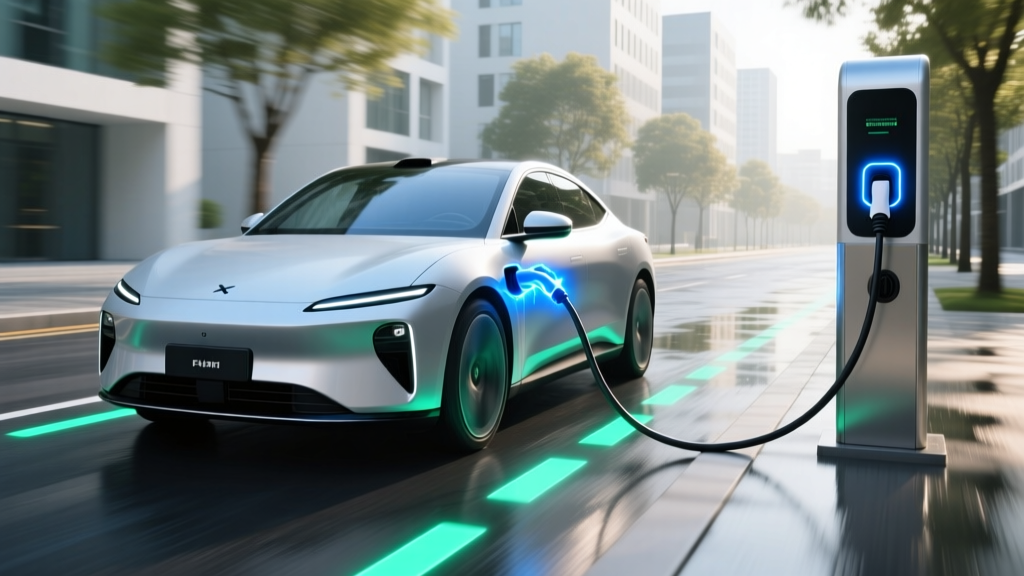
The idea of electric charging roads — highways and city streets that wirelessly charge your EV as you drive — has captivated headlines for years. Pilot projects from companies like Electreon have tested dynamic wireless power transfer (DWPT) in Detroit, Michigan, and on public roads in Sweden and Israel. But as of 2026, the reality for virtually every EV owner is this: plug-in charging at home and at public stations remains the only practical, scalable way to keep your vehicle powered.
This guide breaks down what electric charging roads actually are, where the technology stands, and — more importantly — gives you a comprehensive, numbers-driven look at the plug-in charging infrastructure that does work today: Level 1, Level 2, and DC fast charging, including home installation costs, equipment picks, connector compatibility, and cost-per-mile math.
Electric charging roads embed coils or conductive rails beneath the pavement to transfer energy to a vehicle equipped with a compatible receiver pad. Dynamic wireless charging means power transfers while the vehicle is moving. As of 2026, no public road in the U.S. offers continuous DWPT for consumer EVs. Pilot segments (like Detroit's one-mile stretch on 14th Street) are testing grounds, not public infrastructure. No production EV sold in the U.S. ships with a DWPT receiver.
How Fast Will Each Charging Level Add Range?
Understanding charging speed starts with one critical distinction: kW (kilowatts) measures power — how fast energy flows into your battery. kWh (kilowatt-hours) measures energy — how much your battery holds. Think of kW as the width of a hose and kWh as the size of the bucket.
| Level | Voltage | Max Power (kW) | Miles of Range Per Hour | Typical Use Case |
|---|---|---|---|---|
| Level 1 (120V) | 120V AC | 1.4 kW | 3–5 mi/hr | Overnight top-up; PHEV daily charging |
| Level 2 (240V) | 240V AC | 7.2–19.2 kW | 20–60 mi/hr | Home daily charging; workplace; public destinations |
| DC Fast Charge | 400–800V DC | 50–350 kW | 150–1,000+ mi/hr (peak) | Road trips; rapid top-ups on highways |
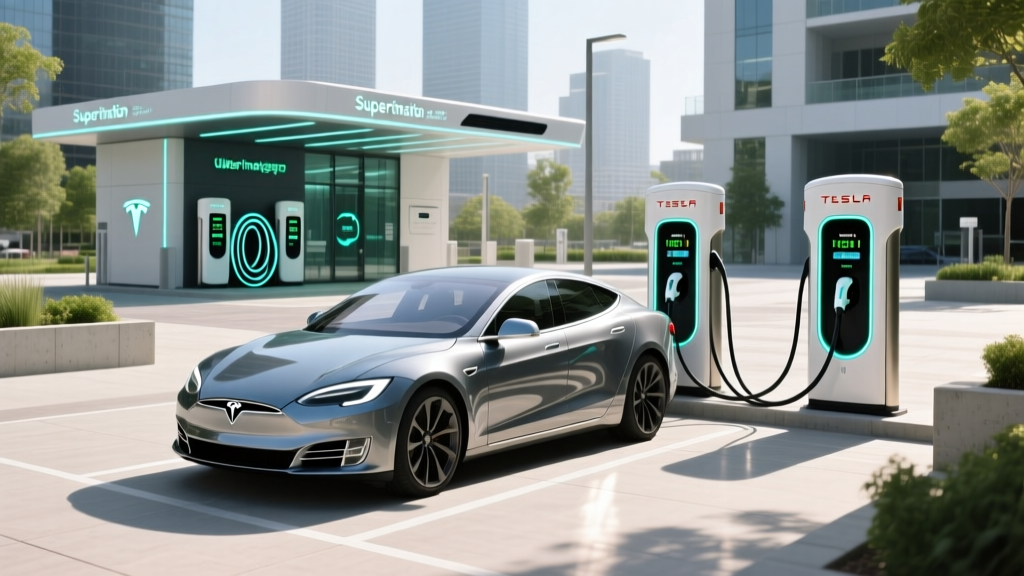
A few real-world caveats: DC fast charging speeds are peak rates, not sustained. A vehicle advertising 250 kW peak may only hold that rate from 10–30% State of Charge (SoC), then taper significantly. A typical 10–80% session on a 350 kW charger with a modern 800V architecture (like the Hyundai Ioniq 5 or Kia EV6) takes roughly 18 minutes. On a 400V vehicle like the Tesla Model Y, expect 10–80% in about 25–30 minutes at a 250 kW Supercharger, with the curve tapering sharply above 60% SoC.
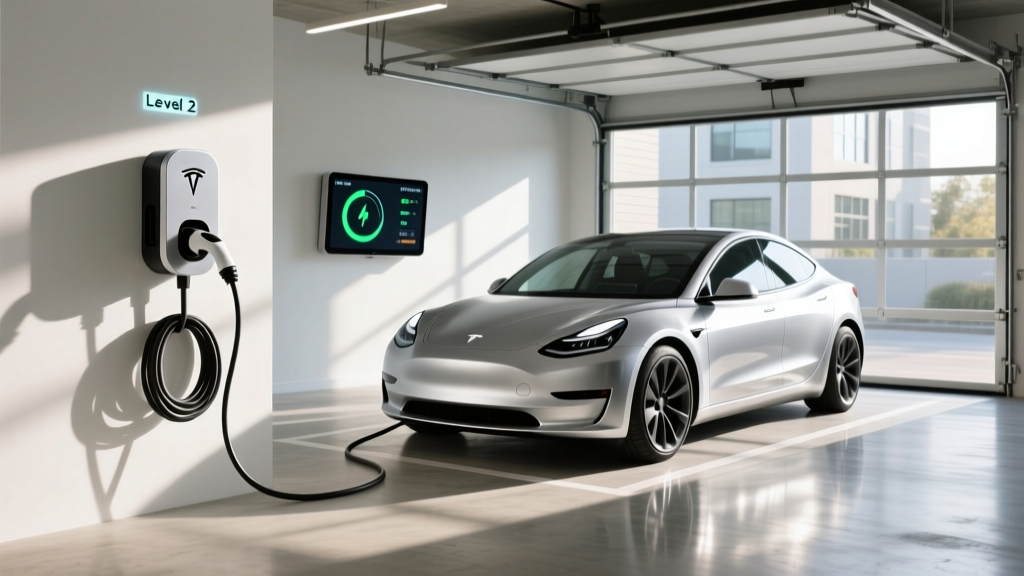
Level 2 is the workhorse of daily EV ownership. A 48-amp (11.5 kW) home charger will fully replenish a 75 kWh battery (Ford Mustang Mach-E Extended Range) in roughly 7 hours — perfect for overnight charging on a time-of-use electricity plan.
How Much Does It Cost to Install a Home EV Charger?
Home Level 2 charging is where 80%+ of all EV charging happens, according to the U.S. Department of Energy. But installation costs vary wildly depending on your electrical panel's capacity, the distance from panel to charger location, and local permit fees.
| Component | Cost Range | Notes |
|---|---|---|
| Level 2 EVSE (charger hardware) | $300–$750 | Smart Wi-Fi chargers, 32A–48A |
| Electrician labor | $500–$2,000 | Depends on run length, conduit, wall type |
| Electrical permit | $50–$200 | Varies by municipality |
| Panel upgrade (if needed) | $1,500–$4,000 | 100A → 200A service upgrade for older homes |
| Total (no panel upgrade) | $850–$2,950 | Typical for homes with 200A service |
| Total (with panel upgrade) | $2,350–$6,950 | Common for pre-1990 homes with 100A panels |
What Electrical Upgrades Might I Need?
A 48-amp Level 2 charger requires a dedicated 60-amp circuit on a 240V line (per NEC 80% continuous-load rule). If your home has a 200-amp electrical panel with spare capacity, installation is usually straightforward: the electrician runs conduit and 6 AWG copper wire from the panel to your garage or driveway.
If your panel is already near capacity — common in older homes with 100-amp service — you'll need a panel upgrade. Some utilities and state programs offer rebates for panel upgrades when paired with EV charger installation. A licensed electrician can perform a load calculation to determine if your current panel can handle the additional draw.
The IRS §30C tax credit may cover up to 30% of home charging equipment and installation costs (capped at $1,000), subject to income and census-tract eligibility. Consult a tax professional for your specific situation.
Which Connector and Charger Is Compatible with My EV?
The connector landscape in North America has consolidated significantly since Tesla opened its Supercharger network and the North American Charging Standard (NACS) was adopted by nearly every major automaker starting in 2025.
| Connector | Brands Using It (Native) | Notes |
|---|---|---|
| NACS (Tesla/J3400) | Tesla, Ford, GM, Rivian, Volvo, Polestar, Mercedes-Benz, Nissan, Fisker, Honda (2026+) | Now the dominant standard; works natively at Tesla Superchargers |
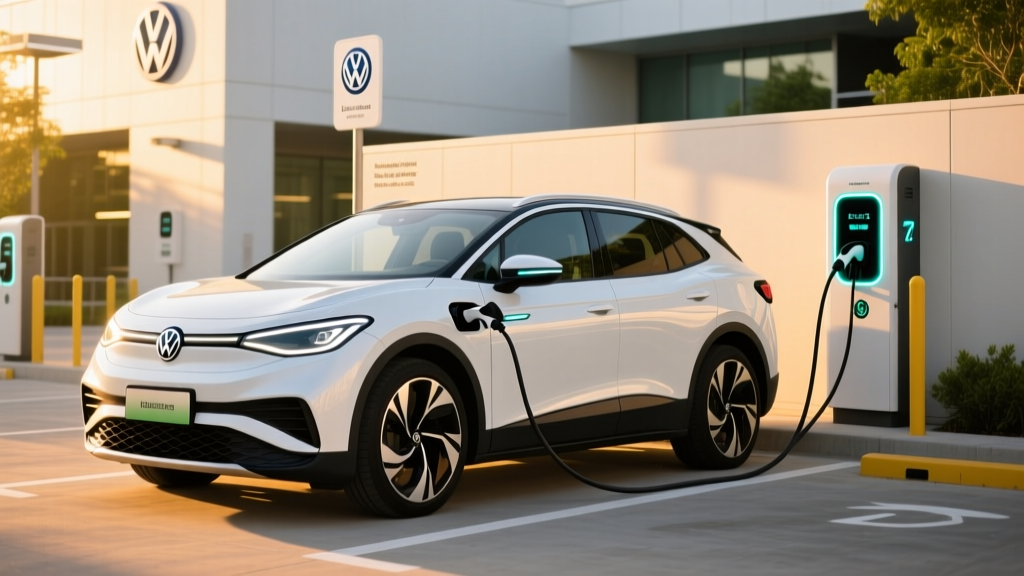
| CCS1 | Hyundai, Kia, BMW, VW, Audi, Porsche, Stellantis (some) | Still common; adapters to NACS widely available |
| CHAdeMO | Nissan Leaf (legacy) | Being phased out; very few new DC stations being built |
If you drive a CCS1-equipped EV (like a 2025 Hyundai Ioniq 5 built before the NACS transition), you'll need a CCS-to-NACS adapter (approximately $150–$250) to access Tesla Superchargers. Ford and GM shipped NACS adapters with 2025 model-year vehicles. For home Level 2 charging, most modern EVSE units ship with NACS connectors, but CCS1-compatible units and universal (J1772 with adapter) options remain available.
How Much Does Charging Cost Per Mile vs. Gas?
The cost advantage of electric charging over gasoline is one of the strongest ownership arguments — but the savings depend heavily on where and when you charge.
| Scenario | Cost per kWh | Cost per Mile* | Annual Cost (12,000 mi) |
|---|---|---|---|
| Home charging (off-peak, national avg) | $0.13/kWh | $0.04 | $480 |
| Home charging (peak rate, high-cost state) | $0.30/kWh | $0.09 | $1,080 |
| Public Level 2 (ChargePoint, EVgo) | $0.25–$0.49/kWh | $0.07–$0.15 | $840–$1,800 |
| DC Fast Charging (Electrify America, Tesla) | $0.35–$0.55/kWh | $0.10–$0.16 | $1,200–$1,920 |
| Gasoline (28 MPG avg, $3.40/gal) | — | $0.12 | $1,440 |
*Assumes an EV efficiency of 3.3 mi/kWh (roughly 100 MPGe combined), which is typical for a midsize crossover like the Tesla Model Y or Hyundai Ioniq 5. Source: fueleconomy.gov EPA data.
Home off-peak charging delivers the most dramatic savings — roughly one-third the cost per mile of gasoline. Even public DC fast charging at premium rates often matches or slightly undercuts gas on a per-mile basis. The key takeaway: installing a home Level 2 charger and charging on a time-of-use plan is the single highest-ROI decision an EV owner can make.
Equipment Recommendations: Best Home Level 2 Chargers (2026)
Here are three proven, widely recommended Level 2 chargers for home use, each with specific specs to match different needs and budgets.
ChargePoint Home Flex
- Power: Up to 11.5 kW (48A) on a 60A circuit; configurable down to 16A
- Connector: NACS (J3400) native; J1772 version available
- Cable length: 23 ft
- Smart features: Wi-Fi, app scheduling, Alexa integration, energy reports
- Price: ~$550–$650
- Best for: Most homeowners; flexible amperage fits older panels
Wall Connector (Tesla)
- Power: Up to 11.5 kW (48A) on a 60A circuit
- Connector: NACS native; built-in cable management
- Cable length: 24 ft
- Smart features: Wi-Fi, OTA updates, Power-Share (load balance two units on one circuit), Tesla app integration
- Price: ~$475
- Best for: Tesla owners and NACS-native EVs; cleanest aesthetic
Emporia Vue Level 2 EV Charger
- Power: Up to 11.5 kW (48A) on a 60A circuit
- Connector: J1772 (NACS adapter included)
- Cable length: 24 ft
- Smart features: Wi-Fi, app control, solar integration, real-time energy tracking, scheduled charging
- Price: ~$400–$500
- Best for: Budget-conscious buyers; solar-panel households
Charging Time Examples for Common Battery Sizes
Here's how long a 10–80% charge takes across common scenarios. We use 10–80% because charging slows dramatically above 80% SoC to protect battery health — this is the standard metric for road-trip planning.
| Vehicle (Battery Size) | Level 2 at 11.5 kW | DC Fast at 150 kW | DC Fast at 250+ kW |
|---|---|---|---|
| Tesla Model Y LR (75 kWh usable) | ~5.5 hours (0–100%) | ~28 min (10–80%) | ~25 min (10–80%) |
| Hyundai Ioniq 5 (77.4 kWh, 800V) | ~6 hours (0–100%) | ~22 min (10–80%) | ~18 min (10–80%) |
| Ford F-150 Lightning Ext. (131 kWh) | ~10 hours (0–100%) | ~45 min (10–80%) | ~38 min (10–80%) |
| Chevy Equinox EV (85 kWh) | ~6.5 hours (0–100%) | ~30 min (10–80%) | ~25 min (10–80%) |
The 800V architectures in vehicles like the Ioniq 5 and Porsche Taycan allow them to sustain higher charge rates for longer, making them meaningfully faster on road trips even when peak kW numbers look similar on paper.
Safety, Code, and Installation Best Practices
EV charger installation is electrical work governed by the National Electrical Code (NEC) and your local building authority. Key requirements:
- Dedicated circuit: Your Level 2 charger must be on its own dedicated breaker — no sharing with other appliances.
- GFCI protection: NEC 2020 and later requires Ground Fault Circuit Interrupter protection for outdoor receptacles and many indoor EV installations. Most hardwired EVSE units have built-in GFCI.
- Outdoor rating: If your charger is mounted outside (driveway, carport), it must carry a NEMA 4 or NEMA 4X weatherproof rating. All chargers listed above meet this standard.
- Permit and inspection: Most jurisdictions require an electrical permit and a post-installation inspection. Your electrician typically handles the permit filing. Skipping this step can void home insurance coverage for electrical fires.
- Wire gauge: A 60A circuit requires 6 AWG copper wire (THHN in conduit or NM-B cable depending on local code). Do not undersize wire — this is a fire hazard.
Always hire a licensed electrician. The NHTSA and electrical safety organizations consistently warn against DIY high-voltage installations.
Where Do Electric Charging Roads Actually Stand in 2026?
To return to our opening question: electric charging roads remain a research-stage technology, not a consumer-ready charging solution. Here's the current state of play:
- Detroit, Michigan (Electreon pilot): A roughly one-mile segment of road with embedded wireless charging coils was installed for testing. No consumer EVs can currently use it without a retrofitted receiver.
- Sweden: The Swedish Transport Administration tested an electrified road segment on Gotland. A permanent e-road corridor (E20 between Örebro and Hallsberg) was planned but has faced delays and funding reviews as of 2026.
- Cost barrier: Estimates for DWPT road infrastructure range from $1.5 million to $3+ million per mile — orders of magnitude more expensive than deploying DC fast chargers at highway rest stops.
- Vehicle compatibility: No production EV sold in the U.S. in 2026 includes a dynamic wireless charging receiver. Retrofitting one would add cost, weight, and complexity with no public infrastructure to use it on.
For the foreseeable future, your best "charging road" is a well-planned route through the Tesla Supercharger, Electrify America, or EVgo networks, paired with a reliable home Level 2 setup.
Frequently Asked Questions
Can I charge my EV from a standard 120V household outlet?
Yes — this is Level 1 charging, and it delivers about 1.4 kW, adding roughly 3–5 miles of range per hour. For a plug-in hybrid with 30 miles of electric range, overnight Level 1 charging is often sufficient. For a full BEV with a 75+ kWh battery, Level 1 would take 50+ hours for a full charge and is only practical as an emergency or supplemental option.
Do I need a smart charger, or will a basic unit work?
A basic (non-connected) Level 2 charger will charge your EV just fine. Smart features — app-based scheduling, energy monitoring, utility demand-response integration — are conveniences that can save money on time-of-use plans but aren't required. If your utility offers off-peak EV rates, a smart charger's scheduling feature can automate charging during the cheapest hours.
Will charging at home increase my electric bill significantly?
Adding an EV typically increases household electricity consumption by 2,000–4,000 kWh per year (depending on mileage and vehicle efficiency). At the national average of ~$0.16/kWh, that's roughly $320–$640 annually — far less than the $1,400+ you'd spend on gasoline for the same miles. Time-of-use plans can push charging costs even lower by concentrating consumption during off-peak overnight hours.
Is it safe to charge an EV in the rain or snow?
Yes. All UL-listed EVSE units rated for outdoor use (NEMA 4/4X) are designed to operate safely in rain, snow, and extreme temperatures. The connector and vehicle inlet are engineered to prevent arcing and water ingress. Never use a damaged cable or an indoor-rated charger outdoors.
Will electric charging roads ever replace plug-in charging?
Not in any foreseeable timeline. DWPT infrastructure is extraordinarily expensive per mile, requires vehicle hardware that no production EV carries, and solves a problem that home Level 2 + highway DC fast charging already addresses at a fraction of the cost. Electric charging roads may eventually serve specific use cases — like dedicated bus lanes or trucking corridors — but personal EV charging will remain plug-in-based for decades.