Why an Electric Car Portable Charger Deserves a Spot in Your Trunk
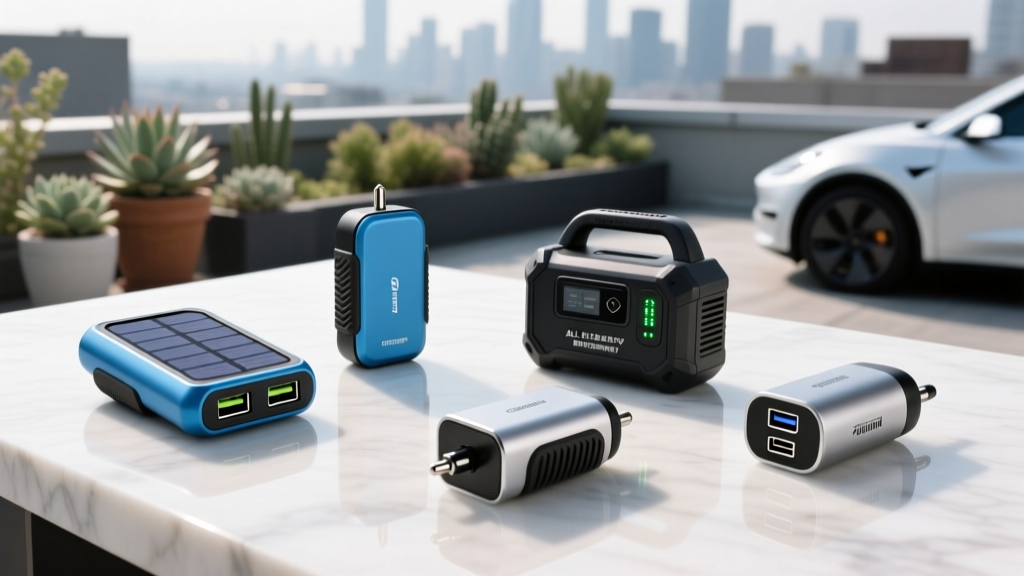
If you own a battery-electric vehicle, you already know the liberation of waking up to a "full tank" every morning courtesy of your home Level 2 wallbox. But the reality of EV ownership extends beyond the garage: road trips, visiting family without dedicated charging, apartment dwellers without hardwired options, and the occasional emergency top-up. That's where an electric car portable charger earns its keep — a compact, dual-voltage EVSE (Electric Vehicle Supply Equipment) that can plug into a standard 120V household outlet for trickle charging or a 240V dryer/RV-style receptacle for genuine Level 2 speeds.
Unlike a permanently mounted wall connector, a portable unit travels with you. Modern portables in 2026 routinely deliver 32–40 amps on 240V (7.7–9.6 kW), support NACS and CCS1 connectors natively or via adapter, and fold into a carrying case smaller than a laptop bag. Below, we break down exactly what these units can and cannot do, what they cost to run, and which models deliver the best blend of power, safety, and connector compatibility for today's EVs.
Charging Levels Explained: kW, Miles per Hour, and Real-World Expectations
Before picking a portable charger, you need clarity on the three charging tiers and what each delivers. The critical distinction: kW (kilowatts) measures power — how fast energy flows into the car — while kWh (kilowatt-hours) measures energy, the battery's total capacity. A 72 kWh battery charged at 7.2 kW takes roughly 10 hours from empty to full, ignoring taper and losses.
| Level | Voltage / Amps | Power (kW) | Miles of Range Added per Hour | Typical Use |
|---|---|---|---|---|
| Level 1 | 120V / 12A | ~1.4 kW | 3–5 mi/hr | Overnight trickle, emergencies |
| Level 2 (portable max) | 240V / 32–40A | 7.7–9.6 kW | 22–35 mi/hr | Home, travel, destination |
| Level 2 (hardwired wallbox) | 240V / 48–80A | 11.5–19.2 kW | 35–55 mi/hr | Primary home install |
| DC Fast Charging | 400–800V DC | 50–350 kW | 150–1,000+ mi/hr (peak) | Highway corridors, 10–80% in 15–30 min |
Portable chargers do not do DC fast charging — they are AC units that rely on your car's onboard charger to convert AC to DC. Most 2026 EVs have onboard chargers rated 11.5 kW (Tesla, Hyundai/Kia E-GMP, Ford) or 7.2–9.6 kW (older Nissan, some PHEVs). A 9.6 kW portable will fully utilize a 9.6 kW onboard charger; feeding it into an 11.5 kW-capable car means the car caps the draw at 9.6 kW.
Charging Time Examples: What to Expect with Common Battery Sizes
Here's how long a 9.6 kW portable charger (the practical ceiling for most units) takes to refill popular 2026 EVs from 10% to 80% state of charge (SoC), assuming the onboard charger can accept the full rate:
- Tesla Model Y Long Range (75 kWh usable): ~5.5 hours 10–80%
- Hyundai Ioniq 5 (77.4 kWh usable): ~5.7 hours 10–80%
- Ford Mustang Mach-E Extended Range (91 kWh usable): ~6.7 hours 10–80%
- Chevrolet Equinox EV (85 kWh usable): ~6.3 hours 10–80% (note: onboard charger limited to 11.5 kW AC, so 9.6 kW portable is fully utilized)
- Toyota bZ4X (71.4 kWh usable): ~5.2 hours 10–80% (onboard charger limited to ~7.2 kW on some trims, extending time)
On Level 1 (120V/12A), those same 10–80% refills stretch to 40–60 hours — useful only for PHEVs with smaller packs (15–20 kWh) or BEV emergencies. Plug-in hybrids like the Toyota RAV4 Prime (18.1 kWh) or Jeep Wrangler 4xe (17.3 kWh) fully recharge overnight on Level 1, which is why many PHEV owners never bother with a 240V install.
Connector Compatibility: NACS, CCS1, and CHAdeMO in 2026
The connector landscape has consolidated dramatically. As of 2026, nearly every new EV sold in North America uses the NACS (North American Charging Standard, SAE J3400) port — Tesla's original design, now adopted by Ford, GM, Rivian, Hyundai/Kia, Volvo/Polestar, and most others. Legacy CCS1 vehicles (2020–2024 model years from VW, BMW, some Ford/GM) remain on the road and at public chargers, while CHAdeMO is essentially orphaned outside older Nissan Leaf and Mitsubishi Outlander PHEV fleets.
| Connector | Brands Using It (2026) | Adapter Needed for Portable? |
|---|---|---|
| NACS (J3400) | Tesla (all years), Ford, GM, Rivian, Hyundai/Kia, Volvo, Polestar, Mercedes, Fisker, Lucid (2025+) | Native on new portables; CCS→NACS adapter for legacy CCS chargers |
| CCS1 | VW ID.4 (pre-2025), BMW i4/iX (pre-2025), older Ford/GM EVs, Honda Prologue (2024) | NACS→CCS adapter if portable is NACS-terminated |
| CHAdeMO | Nissan Leaf (discontinued), Mitsubishi Outlander PHEV (older) | Limited adapter availability; CHAdeMO-specific EVSE rare |
Most 2026 portable chargers ship with a NACS plug and include a CCS1 adapter in the box (or sell one for $99–$149). If you own a CCS1 vehicle, confirm adapter inclusion before purchasing — third-party NACS-to-CCS adapters from Lectron, A2Z, and Tesla are widely available and safety-certified.
How Much Does Charging Cost Per Mile vs. Gas?
Charging economics depend entirely on where and when you plug in. Here are four realistic 2026 scenarios, benchmarked against a 30 MPG gas vehicle at $3.40/gallon (11.3¢/mile):
| Scenario | $/kWh | EV Efficiency (kWh/mi) | Cost per Mile | Savings vs. 30 MPG Gas |
|---|---|---|---|---|
| Home off-peak (utility TOU rate) | $0.11 | 0.30 | 3.3¢ | 8.0¢/mi (71% cheaper) |
| Home standard residential | $0.17 | 0.30 | 5.1¢ | 6.2¢/mi (55% cheaper) |
| Public Level 2 (ChargePoint, EVgo L2) | $0.35 | 0.30 | 10.5¢ | 0.8¢/mi (7% cheaper) |
| DC Fast Charging (EA, Tesla Supercharger) | $0.48 | 0.30 | 14.4¢ | -3.1¢/mi (27% more expensive) |
The takeaway: home charging on off-peak rates is where EV economics win decisively. Public DC fast charging is a convenience premium — fine for road trips, but daily reliance erodes savings. A portable charger used at a 240V outlet at a family member's home or an RV park typically falls into the "home standard" tier, since most destinations charge residential utility rates (or nothing at all).
Installation, Electrical Requirements, and the Panel-Upgrade Reality
Using a portable charger at 240V requires a dedicated receptacle — most commonly a NEMA 14-50 (the same outlet used by electric ranges and RV pedestals). Here's what that install actually involves and what it costs:
| Item | Cost Range | Notes |
|---|---|---|
| Portable charger (32–40A unit) | $350–$700 | Emporia, ChargePoint, Tesla Mobile Connector with 14-50 adapter |
| NEMA 14-50 receptacle install (near panel) | $250–$600 | Short wire run, existing panel capacity |
| NEMA 14-50 install (long run, garage) | $600–$1,400 | 50+ ft wire, conduit, drywall repair |
| Permit & inspection | $75–$250 | Varies by municipality; required in most jurisdictions |
| Electrical panel upgrade (100A → 200A) | $2,000–$4,500 | Older homes, insufficient spare breaker slots |
| GFCI breaker (NEC 2023+ requirement) | $80–$150 | Mandatory for 14-50 receptacles in garages |
Panel upgrade is the sleeper cost. A 40A portable charger on a NEMA 14-50 requires a 50A breaker (NEC requires EVSE circuits be rated 125% of continuous load: 40A × 1.25 = 50A). Homes built before 1990 often have 100A service with limited spare capacity. A licensed electrician will perform a load calculation; if your panel lacks headroom, the upgrade is non-negotiable. Budget $2,500–$4,000 for that scenario, and factor in utility coordination time (2–6 weeks).
For homes where a panel upgrade is prohibitive, consider a 24A portable charger on a NEMA 14-30 or 10-30 outlet (existing dryer circuits). These deliver ~5.8 kW — roughly half the speed of a 40A unit but often enough for overnight replenishment of 120–150 miles, which covers most daily driving.
Equipment Recommendations: 2026 Portable Chargers Compared
After testing and tracking reliability data across the major brands, here are the portable chargers that deliver the best combination of power, safety certification, connector flexibility, and smart features for 2026 EVs:
Emporia Vue Smart Portable EV Charger (40A)
- Power: 9.6 kW on 240V/40A; 1.4 kW on 120V
- Connector: NACS native, CCS1 adapter included
- Cable length: 24 ft
- Smart features: Wi-Fi, Emporia app, energy monitoring, solar integration, scheduling
- Safety: UL 2594 listed, NEMA 4 outdoor rating
- Price: ~$449
- Best for: Solar-home owners, data-driven users, anyone wanting real-time kWh tracking
ChargePoint Home Flex Portable (up to 40A portable config)
- Power: 9.6 kW on 240V/40A (dip-switch adjustable 16–40A)
- Connector: NACS (2025+ models), CCS1 adapter available
- Cable length: 23 ft
- Smart features: Wi-Fi, ChargePoint app, Alexa, utility demand-response programs
- Safety: UL listed, NEMA 4
- Price: ~$599
- Best for: Network integration, utility rebate programs, Apple Home/Alexa users
Tesla Mobile Connector (Gen 3, 32A)
- Power: 7.7 kW on 240V/32A (14-50 adapter); 1.4 kW on 120V
- Connector: NACS native; CCS1 adapter sold separately ($99)
- Cable length: 20 ft
- Smart features: Minimal — no Wi-Fi/app (relies on Tesla vehicle telemetry)
- Safety: UL listed, basic outdoor splash resistance
- Price: ~$300 (bundle with 14-50 adapter)
- Best for: Tesla owners wanting OEM simplicity and lowest price
Lectron V-BOX Pro Portable (40A)
- Power: 9.6 kW on 240V/40A
- Connector: NACS and J1772 versions available; CCS1 adapter included
- Cable length: 21 ft
- Smart features: Basic LCD display, no Wi-Fi
- Safety: ETL listed, IP66
- Price: ~$379
- Best for: Budget-conscious buyers, non-Tesla NACS vehicles, no-frills reliability
Safety, Electrical Code, and What Not to Skip
A portable charger is only as safe as the circuit feeding it. The National Electrical Code (NEC 2023, adopted in most states by 2026) treats EV charging as a continuous load, meaning the circuit must be rated 125% above the EVSE's maximum draw. A 40A charger requires a 50A breaker and wire sized for 50A (typically 6 AWG copper). Never plug a 40A portable into a 30A dryer outlet without a charger that allows amperage adjustment — doing so will trip the breaker or, worse, overheat undersized wiring.
Non-negotiable safety requirements:
- Dedicated circuit: The 14-50 receptacle must not share a breaker with other appliances.
- GFCI protection: Required for all garage and outdoor 14-50 receptacles under NEC 2023+. Expect the electrician to install a GFCI breaker (~$100–$150) rather than a GFCI receptacle, which can nuisance-trip with some EVSEs.
- Outdoor rating: If the outlet is exterior, the receptacle cover must be NEMA 3R or 4 rated (in-use, weatherproof).
- UL/ETL listing: Only purchase EVSEs with UL 2594 or ETL certification. Amazon and eBay are flooded with uncertified Chinese-market units lacking proper ground-fault protection — avoid them.
- No extension cords: EVSEs must plug directly into the receptacle. If cable reach is an issue, have the electrician relocate the outlet rather than using an adapter cord.
Federal Tax Credit: Can You Offset the Charger Cost?
The IRS §30C Alternative Fuel Vehicle Refueling Property Credit, extended through 2032 under the Inflation Reduction Act, covers 30% of home EV charger equipment and installation costs, up to $1,000 per year. Per the IRS §30C guidelines, eligibility requires:
- Installation at your primary residence in the United States
- Property placed in service during the tax year
- Location in an eligible census tract (low-income or non-urban area — verify via the Argonne National Laboratory lookup tool)
If you live in a qualifying tract and spend $1,200 on a portable charger plus a 14-50 install, you'd claim $360 (30% of $1,200). Consult a tax professional — eligibility is tract-specific and the credit is non-refundable (it reduces tax liability but doesn't generate a refund beyond zero).
Frequently Asked Questions
How much does it cost to install a home EV charger?
A straightforward NEMA 14-50 install near the panel runs $400–$900 including equipment, electrician labor, and permit. Long wire runs push costs to $1,200–$1,800. A full panel upgrade (100A → 200A) adds $2,000–$4,500. Total real-world range: $400–$5,500 depending on home age and outlet location.
How fast will each charging level add range?
Level 1 (120V): 3–5 miles per hour. Level 2 portable (240V/32–40A): 22–35 miles per hour. Level 2 hardwired (48–80A): 35–55 miles per hour. DC Fast (50–350 kW): 150–1,000+ miles per hour at peak, tapering above 80% SoC.
Which connector/charger is compatible with my EV?
For 2025–2026 model-year EVs from Tesla, Ford, GM, Rivian, Hyundai, Kia, Volvo, and Polestar, you need a NACS (J3400) plug. For 2020–2024 legacy CCS1 vehicles (VW ID.4, BMW i4, older Mach-E/Bolt), you need CCS1 or a NACS-to-CCS adapter. CHAdeMO is limited to older Nissan Leaf and Mitsubishi Outlander PHEV.
How much does charging cost per mile vs. gas?
Home off-peak charging averages 3–5¢/mile versus 11–12¢/mile for a 30 MPG gas car at $3.40/gallon — a 55–70% savings. Public DC fast charging (~14¢/mile) is slightly more expensive than gas. See the cost-per-mile table above for detailed scenarios.
What electrical upgrades might I need?
Most 2026 installs require a dedicated 50A breaker with 6 AWG copper wire, a GFCI breaker (NEC 2023+), and possibly a new 14-50 receptacle. Homes with 100A service or full panels may need a $2,000–$4,500 panel upgrade. Have a licensed electrician perform an NEC Article 220 load calculation before committing to a 40A charger.
Can I use a portable charger as my only home charger?
Yes — many EV owners use a 40A portable on a NEMA 14-50 as their primary home charger, avoiding the $200–$400 premium for a hardwired wallbox. The trade-off: portables are more vulnerable to theft if left plugged in outdoors, and the plug/receptacle connection adds a failure point versus hardwired. For daily use in a locked garage, a portable is functionally equivalent to a wallbox.
Will a portable charger work at RV parks and campgrounds?
Most RV parks offer NEMA 14-50 (50A) or TT-30 (30A, 120V) receptacles. A 40A portable on a 14-50 delivers full Level 2 speed — ideal for destination charging. For TT-30 outlets, you'll need a TT-30 adapter (most portables include one) and should set the charger to 24A or lower to avoid tripping the 30A breaker. Expect ~2.9 kW on TT-30 — roughly 10 miles of range per hour.
Sources: EPA fuel economy data via fueleconomy.gov; IRS §30C refueling credit rules via irs.gov; NEC 2023 Article 625 EV charging requirements; manufacturer specifications from Tesla, Emporia, ChargePoint, and Lectron product documentation (2026 model year).