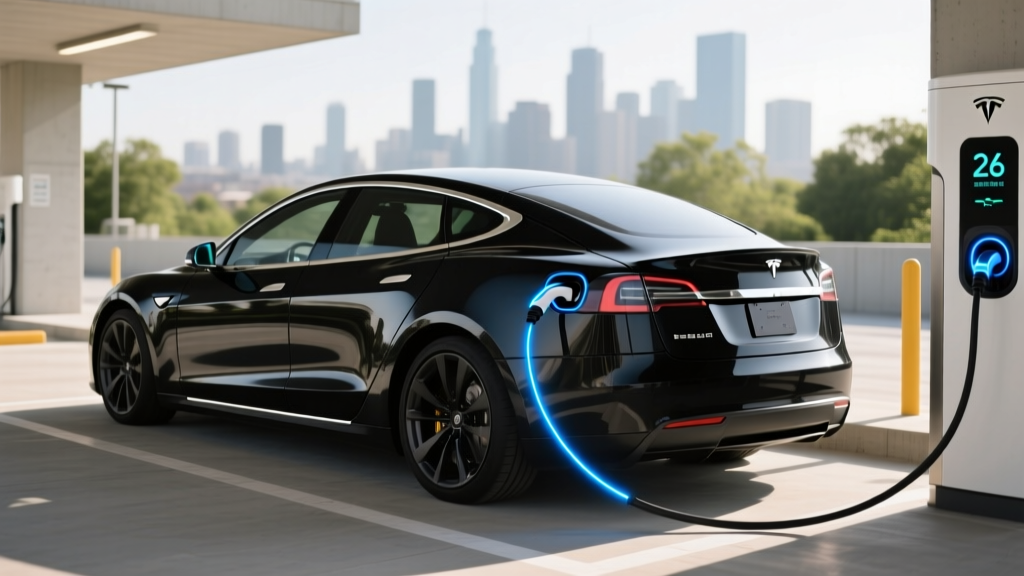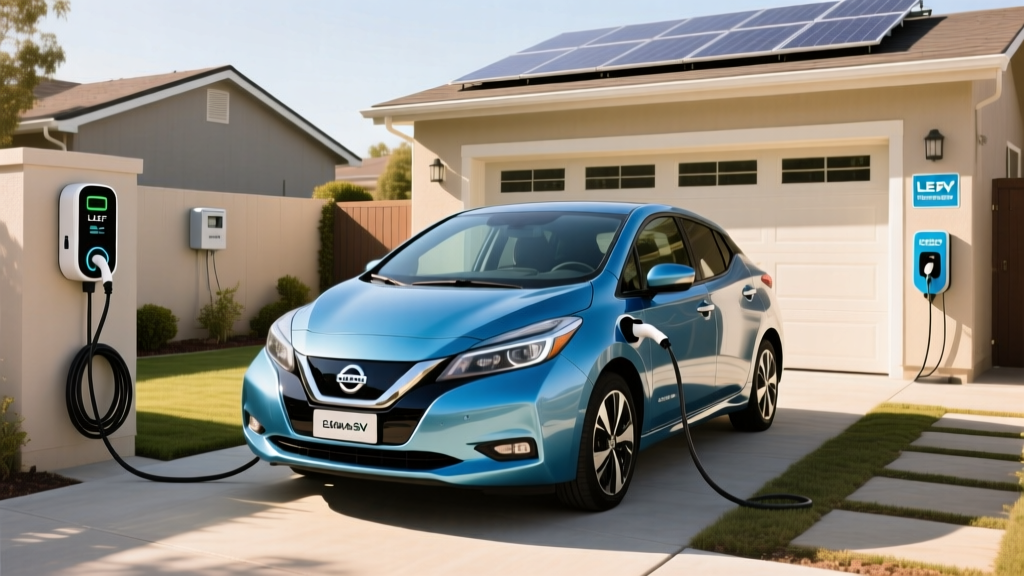
Achieving the electric car greatest range possible isn't just about the EPA sticker on the window. It's about how you replenish that battery. Whether you drive a 400-mile Lucid Air or a 250-mile Chevy Equinox EV, your charging strategy dictates your real-world usability, your monthly budget, and the long-term health of your battery pack.
This guide covers the exact charging speeds, home installation costs, and connector standards you need to know in 2026. We'll break down the critical difference between kW (power) and kWh (energy), show you what a home charger install actually costs, and explain how to keep your battery healthy for the long haul.
Charging Levels: Speeds, Power, and Range Added
The single most common confusion in EV ownership is the difference between kW (kilowatts) and kWh (kilowatt-hours). Think of it like plumbing: kW is the width of the pipe (how fast energy flows), and kWh is the size of the bucket (how much energy your battery holds). A 100 kWh battery charged at 10 kW takes 10 hours. That same battery charged at 100 kW takes one hour (theoretically—charge curves complicate this, which we'll cover later).
| Level | Voltage / Amps | Power Output (kW) | Miles of Range Added Per Hour | Best Use Case |
|---|---|---|---|---|
| Level 1 | 120V / 12A | ~1.4 kW | 3–5 miles | Overnight top-ups for PHEVs or low-mileage commuters |
| Level 2 (Home/Public) | 240V / 32A–48A | 7.7 kW – 11.5 kW | 25–45 miles | Daily home charging; destination charging |
| DC Fast Charging | 400V–800V DC | 50 kW – 350 kW | 150–1,000+ miles (per hour equivalent) | Road trips; rapid replenishment (10–80% in 18–40 min) |
How Much Does It Cost to Install a Home EV Charger?
Installing a Level 2 home charger is the single best upgrade for daily EV ownership. But the price varies wildly depending on your electrical panel's capacity and the distance from your panel to your garage or driveway.
Electrical Requirements: Most Level 2 chargers require a dedicated 240V circuit. A 48-amp charger (delivering 11.5 kW) requires a 60-amp breaker per the National Electrical Code (NEC), which mandates that continuous loads not exceed 80% of a circuit's rating.
| Component | Cost Range | Notes |
|---|---|---|
| Level 2 Charger Equipment | $350 – $750 | Smart Wi-Fi chargers (ChargePoint, Emporia, Wallbox) |
| Electrician Labor & Materials | $600 – $2,500 | Depends on conduit run length and wall type |
| Permit & Inspection | $100 – $300 | Required by most local jurisdictions |
| Electrical Panel Upgrade | $1,500 – $4,000 | Needed if moving from 100A to 200A service (common in pre-1990 homes) |
| Total (No Panel Upgrade) | $1,050 – $3,550 | Typical for modern homes with 200A service |
| Total (With Panel Upgrade) | $2,550 – $7,550 | Older homes or those adding multiple high-draw appliances |
Safety & Code: Your installation must include a dedicated circuit. Outdoor installations require NEMA 4-rated (weatherproof) enclosures and GFCI (Ground Fault Circuit Interrupter) protection. Always pull a permit; unpermitted work can void home insurance claims and complicate future home sales.
Connector Compatibility: NACS, CCS1, and CHAdeMO
The connector landscape has consolidated significantly by 2026, but you still need to know what fits your vehicle.
- NACS (North American Charging Standard): Originally Tesla's proprietary connector, now adopted by Ford, GM, Rivian, Volvo, Hyundai, and others. Compact and reliable.
- CCS1 (Combined Charging System): The former standard for most non-Tesla EVs. Still found on older models and some 2024-2025 vehicles.
- CHAdeMO: Legacy standard used primarily by Nissan (Leaf) and Mitsubishi. Being phased out.
| Connector | Compatible Brands | Adapter Needed? |
|---|---|---|
| NACS | Tesla, Ford, GM, Rivian, Hyundai, Kia, Volvo | CCS-to-NACS adapter for older public CCS stations |
| CCS1 | Older VW ID.4, BMW i4, some Stellantis models | Tesla Mobile Connector adapter for Supercharger access |
| CHAdeMO | Nissan Leaf, Mitsubishi Outlander PHEV (legacy) | Limited DCFC access; plan routes carefully |
Charging Time Examples: 10-80% State of Charge
EV charging isn't linear. The "charge curve" means you'll hit peak kW only at low states of charge (SoC). Above 80%, charging slows dramatically to protect the battery. Here's what to expect for common battery sizes:
- Standard Range (60 kWh battery, e.g., Tesla Model 3 RWD):
- Level 2 (11.5 kW): ~5.5 hours (0-100%)
- DC Fast (170 kW peak): ~25 minutes (10-80%)
- Long Range (84 kWh battery, e.g., Hyundai Ioniq 5):
- Level 2 (11.5 kW): ~7.5 hours (0-100%)
- DC Fast (240 kW peak): ~18 minutes (10-80%)
- Large Pack (112 kWh battery, e.g., Ford F-150 Lightning Extended):
- Level 2 (11.5 kW): ~10 hours (0-100%)
- DC Fast (150 kW sustained): ~40 minutes (10-80%)
Equipment Recommendations: Best Level 2 Chargers for Home
When selecting a charger, prioritize amperage, cable length, and smart features (load balancing, scheduling, energy tracking).
Emporia Vue Level 2 EV Charger
Power: 48A (11.5 kW) | Cable: 24 ft | Price: ~$400
Best for energy monitoring. Integrates with the Emporia home energy system to track solar production and grid consumption. NACS and J1772 versions available.
ChargePoint Home Flex
Power: Up to 50A (12 kW) configurable | Cable: 23 ft | Price: ~$550
Flexible amperage lets you dial down to 32A if your panel can't support 60A breaker. Excellent app and Alexa integration.
Wallbox Pulsar Plus
Power: 40A (9.6 kW) | Cable: 25 ft | Price: ~$450
Compact, sleek design with Power Sharing feature for two chargers on one circuit. Good for multi-EV households.
Cost to Charge: Per Mile vs. Gas
Electricity prices vary by region and time of day. Here's a realistic cost comparison for 2026:
| Scenario | Price per kWh / Gallon | Vehicle Efficiency | Cost Per Mile |
|---|---|---|---|
| Home Charging (Off-Peak) | $0.14 / kWh | 3.5 miles/kWh (285 Wh/mi) | $0.04 |
| Home Charging (Peak) | $0.28 / kWh | 3.5 miles/kWh | $0.08 |
| Public Level 2 (Workplace/Mall) | $0.25 / kWh | 3.5 miles/kWh | $0.07 |
| DC Fast Charging (Road Trip) | $0.45 / kWh | 3.0 miles/kWh (highway speeds) | $0.15 |
| Gas Vehicle (30 MPG Combined) | $3.50 / gallon | 30 miles/gallon | $0.12 |
Key Insight: Home charging is consistently cheaper than gas. But frequent DC fast charging on road trips can exceed gas costs per mile. This is why home Level 2 access is critical for EV economics.
Frequently Asked Questions
What electrical upgrades might I need?
If your home has a 100-amp main panel (common in homes built before 1990), you'll likely need a 200-amp service upgrade ($1,500-$4,000). Alternatively, some smart chargers offer "load management" that monitors your home's total draw and throttles the charger to avoid tripping the main breaker—this can sometimes avoid a panel upgrade.
How fast will each charging level add range?
Level 1 adds 3-5 miles per hour (overnight charging only). Level 2 adds 25-45 miles per hour (fully replenishes most EVs overnight). DC fast charging adds 150-1,000+ miles per hour equivalent, but you'll only use it for 20-40 minutes at a time (10-80% SoC).
Which connector/charger is compatible with my EV?
Check your vehicle's charge port. If you have a 2025+ Ford, GM, Rivian, or Tesla, you have NACS. If you have a 2024 or older non-Tesla EV, you likely have CCS1. Adapters are available to cross-charge, but native connectors are always preferred for reliability.
How much does charging cost per mile vs gas?
Home charging averages $0.04-$0.08 per mile. Gas vehicles at 30 MPG and $3.50/gallon cost $0.12 per mile. DC fast charging can reach $0.15 per mile, making it more expensive than gas—but most EV owners do 80-90% of charging at home.
How much does it cost to install a home EV charger?
Expect $1,050-$3,550 if your electrical panel has capacity. If you need a panel upgrade, budget $2,550-$7,550. Always get 3 quotes from licensed electricians and verify they pull permits.
For official efficiency data, consult fueleconomy.gov. For tax credit eligibility on EV purchases and charger installations, see IRS.gov §30D.