Why Your Charging App Matters as Much as Your Charger
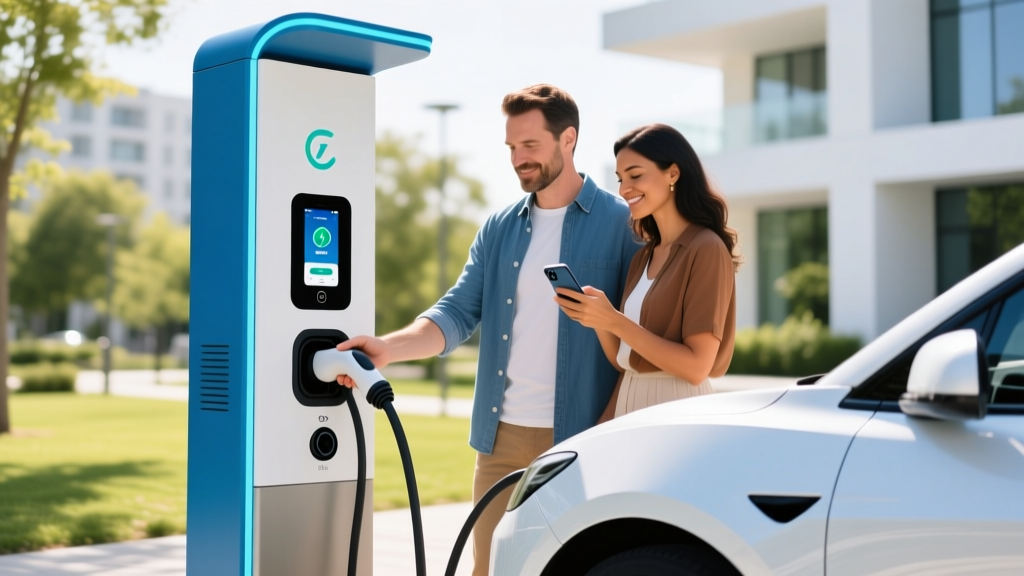
The EV charging experience lives or dies by the software you use. While home Level 2 charging is mostly plug-and-forget, public charging demands a reliable electric car charging stations app to locate available stalls, check real-time pricing, initiate sessions, and monitor your charge curve. In 2026, the charging landscape has consolidated around a few dominant networks, but app quality, pricing transparency, and connector compatibility still vary wildly.
This guide cuts through the noise. We'll map out exactly what each major app delivers, break down charging speeds from Level 1 through DC fast charging, explain home installation costs and electrical requirements, and give you the per-mile cost math to compare against gasoline. Whether you're a new EV owner or optimizing an existing setup, these are the numbers that matter.
Charging Levels Explained: kW, Miles Per Hour, and 10–80% Times
Before comparing apps, you need to understand what you're plugging into. EV charging is measured in kW (kilowatts), which is the rate of power delivery — think of it as the speed of water flowing through a hose. Your battery capacity is measured in kWh (kilowatt-hours), which is the total energy stored — the size of the tank. Confusing these two is the single most common EV literacy mistake.
| Level | Voltage | Power (kW) | Miles of Range Added Per Hour | Typical Use Case |
|---|---|---|---|---|
| Level 1 | 120V AC | 1.0–1.4 kW | 3–5 mi/hr | Overnight trickle, PHEVs, emergencies |
| Level 2 | 240V AC | 3.3–19.2 kW | 12–70 mi/hr | Home daily charging, workplace, hotels |
| DC Fast Charge | 400–800V DC | 50–350 kW | 150–1,200+ mi/hr (peak) | Road trips, highway corridors |
Real-world charging time examples (10–80% SoC):
- 60 kWh battery (e.g., base Nissan Leaf, Chevrolet Equinox EV): ~26 min on a 150 kW DCFC, ~8.5 hours on a 7.2 kW Level 2 home charger.
- 82 kWh battery (e.g., Tesla Model Y Long Range, Hyundai Ioniq 5): ~22 min on a 250 kW DCFC (Ioniq 5 peaks at 240 kW), ~11 hours on a 7.7 kW Level 2.
- 100 kWh battery (e.g., Ford F-150 Lightning Extended Range, Rivian R1S): ~32 min on a 175 kW DCFC, ~13 hours on a 7.7 kW Level 2.
Critical caveat: DC fast charging follows a charge curve. A stall rated at 250 kW may only deliver peak power between 10–40% SoC, then taper significantly. Above 80%, speeds often drop below 50 kW to protect battery health. This is why manufacturers quote 10–80% times rather than 0–100%.
Major Electric Car Charging Stations Apps Compared
Not every app covers every network, and pricing varies by location, time of day, and membership tier. Here's how the major players stack up in 2026:
Tesla / Supercharger App
Access to the largest and most reliable DC fast-charging network in North America, now with over 25,000 Supercharger stalls. Since 2024, Tesla has progressively opened Superchargers to non-Tesla EVs via the built-in Magic Dock (CCS1 adapter) or the vehicle's native NACS port. Pricing averages $0.25–$0.35/kWh for members, with idle fees of $1.00/minute if you remain plugged in after reaching your charge limit. The app shows real-time stall availability, kW output, and amenities.
Electrify America
EA operates 4,000+ DC fast chargers across the U.S., many rated at 150–350 kW. The app supports Plug & Charge on compatible vehicles (no card tap needed). Pricing: $0.36–$0.48/kWh for Guest users, reduced to $0.31–$0.43/kWh with a $4/month Pass+ subscription. Reliability has improved but still lags Tesla in uptime.
EVgo
Over 1,100 public fast-charging stations, concentrated in metro areas and along highways. The app integrates with Apple CarPlay/Android Auto for navigation. Pricing: $0.34–$0.43/kWh on-demand, or $0.27–$0.36/kWh with EVgo Plus subscription ($4.99/month). Many stalls feature both NACS and CCS1 connectors.
ChargePoint
The largest Level 2 network in North America with 30,000+ ports, plus a growing DCFC presence. Common at workplaces, retail centers, and parking garages. Pricing is set by the station owner, typically $0.12–$0.30/kWh for Level 2. The app is solid for finding slower destination chargers but less useful for road-trip DCFC planning.
PlugShare / A Better Routeplanner (ABRP)
These aren't networks — they're aggregator apps. PlugShare crowdsources station reviews, photos, and status reports across all networks, making it invaluable for trip planning. ABRP uses your specific vehicle's battery model, charge curve, and real-time conditions (temperature, elevation, speed) to predict exactly where and how long you'll need to charge on a road trip. Serious EV road-trippers use ABRP alongside their network-specific app.
Connector Compatibility: NACS, CCS1, and CHAdeMO in 2026
The connector wars have largely resolved. The North American Charging Standard (NACS), originally developed by Tesla, is now the dominant connector for new EVs sold in the U.S. starting with 2025 model-year vehicles from Ford, GM, Rivian, Volvo, and others. Here's where things stand:
| Connector | Brands Using It (2026) | Adapter Needed? |
|---|---|---|
| NACS (native) | Tesla (all), Ford (2025+), GM/Cadillac (2025+), Rivian (2025+), Volvo/Polestar (2025+), Hyundai/Kia (2026+) | None for Superchargers; CCS adapter for legacy EA/EVgo stalls |
| CCS1 | Hyundai/Kia (pre-2026), BMW, VW/ID.4, Mercedes, Stellantis, legacy Nissan Ariya | NACS-to-CCS adapter ($150–$250) for Tesla Superchargers |
| CHAdeMO | Nissan Leaf (discontinued 2025), Mitsubishi Outlander PHEV (legacy) | Limited network support; consider CCS adapter for new chargers |
Key takeaway for app users: Before you drive to a station found on any electric car charging stations app, verify that the connector listed matches your vehicle. Apps like PlugShare and ABRP let you filter by connector type. If your EV has CCS1 and you want to use Tesla Superchargers, you'll need a NACS-to-CCS adapter — Tesla sells one for ~$200, and third-party options from Lectron and A2Z are available for $150–$180.
How Much Does It Cost to Install a Home EV Charger?
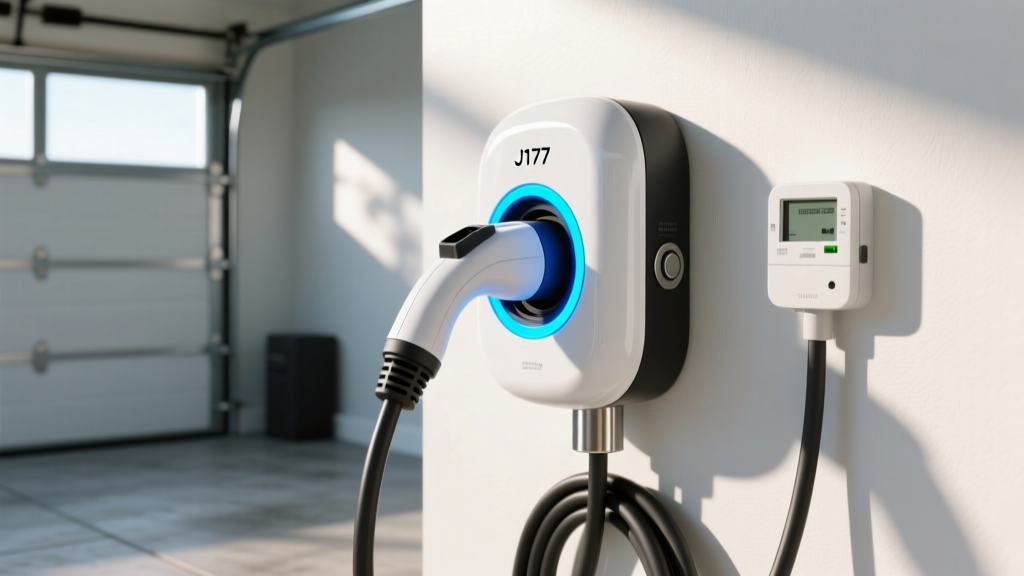
Home Level 2 charging is where 80–90% of EV charging happens for most owners. A proper installation requires a dedicated 240V circuit, a hardwired or plug-in Level 2 EVSE (Electric Vehicle Supply Equipment), and potentially an electrical panel upgrade. Here's the realistic cost breakdown:
| Component | Typical Cost Range | Notes |
|---|---|---|
| Level 2 EVSE (equipment) | $300–$750 | 32A–48A smart chargers; see recommendations below |
| Electrician labor (standard install) | $400–$1,200 | Run 6 AWG wire, install NEMA 14-50 outlet or hardwire; varies by distance from panel |
| Permit & inspection | $50–$250 | Required in most jurisdictions; some utilities bundle this |
| Electrical panel upgrade (if needed) | $1,500–$3,500 | Older 100A panels often need upgrade to 200A to support a 40A+ EV circuit |
| Total (no panel upgrade) | $750–$2,200 | Most homes built after 2000 with 200A service |
| Total (with panel upgrade) | $2,250–$5,700 | Common in pre-1990 homes or those with existing high-load appliances |
Electrical requirements for a typical 48A Level 2 charger:
- Circuit: Dedicated 60A breaker (NEC requires circuits rated at 125% of continuous load — a 48A charger needs a 60A circuit)
- Wire: 6 AWG copper (THHN in conduit or NM-B/Romex for short indoor runs)
- Outlet (if plug-in): NEMA 14-50, properly installed with correct torque specifications — loose connections are a fire risk
- GFCI protection: NEC 2020+ requires GFCI breakers for outdoor receptacles; hardwired installations may not require GFCI depending on local code
- Outdoor rating: If your charger is outside, ensure the EVSE carries a NEMA 4 or NEMA 4X weather rating
Panel upgrade reality check: If your home has a 100A main panel and you already run central AC, an electric dryer, and an electric range, adding a 48A EV circuit will likely exceed your panel's capacity. A licensed electrician will perform a load calculation per NEC Article 220. Don't skip this step — overloaded panels are a genuine fire hazard, and your insurance company may deny claims if unpermitted work is found. Some utilities offer rebates of $200–$500 for panel upgrades tied to EV adoption; check with your local provider.
Cost to Charge: Per-Mile Math vs. Gasoline
The economics of EV charging depend heavily on where and when you charge. Electricity rates vary by utility, time of day, and state. Here's a data-driven comparison:
| Scenario | Cost per kWh | Vehicle Efficiency (kWh/mi) | Cost Per Mile |
|---|---|---|---|
| Home, off-peak (national avg) | $0.13/kWh | 0.30 kWh/mi (typical midsize EV) | $0.039/mi |
| Home, peak / TOU high | $0.28/kWh | 0.30 kWh/mi | $0.084/mi |
| Public Level 2 (ChargePoint avg) | $0.20/kWh | 0.30 kWh/mi | $0.060/mi |
| DC Fast Charge (Tesla Supercharger) | $0.30/kWh | 0.30 kWh/mi | $0.090/mi |
| DC Fast Charge (EA/EVgo) | $0.40/kWh | 0.30 kWh/mi | $0.120/mi |
| Gasoline baseline: 28 MPG combined at $3.40/gal | $0.121/mi | ||
| Gasoline baseline: 22 MPG combined at $3.40/gal (truck/SUV) | $0.155/mi | ||
What this means in practice: An EV driver who charges primarily at home on off-peak rates spends roughly $450–$550/year on electricity for 12,000 miles of driving. A comparable gas car at 28 MPG spends about $1,455/year on fuel. That's a savings of $900–$1,000 annually — but only if you have reliable home charging access.
If you rely exclusively on DC fast charging at $0.40/kWh, your cost per mile essentially matches a fuel-efficient gas car. The economic advantage of EVs is heavily tied to home charging. Use your electric car charging stations app to filter for free or low-cost Level 2 chargers at workplaces, grocery stores, and libraries to maximize savings.
Recommended Home Level 2 Chargers (2026 Picks)
These are the chargers we recommend based on real-world use, reliability data, and feature sets. Every recommendation includes power output, connector type, and cable length — because those details determine whether a charger actually works for your setup.
Emporia Vue Level 2 EV Charger
- Power: 48A (11.5 kW on 240V)
- Connector: NACS (J3400) native; CCS1 adapter available
- Cable length: 24 ft
- Smart features: Wi-Fi, app scheduling, energy monitoring, solar integration with Emporia Vue panel monitor
- Price: ~$399
- Best for: Budget-conscious buyers wanting full smart features and energy tracking
ChargePoint Home Flex
- Power: Up to 50A (12 kW) — configurable via DIP switch
- Connector: NACS or CCS1 (select at purchase)
- Cable length: 23 ft
- Smart features: Wi-Fi, Alexa integration, scheduled charging, detailed session history
- Price: ~$599
- Best for: Flexibility across amperages; solid app ecosystem
Tesla Wall Connector
- Power: 48A (11.5 kW on 240V)
- Connector: NACS native; includes J1772 adapter for non-Tesla EVs
- Cable length: 24 ft
- Smart features: Wi-Fi, over-the-air updates, power sharing between two units, access control
- Price: ~$450
- Best for: Tesla owners and NACS-equipped EVs; cleanest hardware design
Grizzl-E Smart
- Power: 40A (9.6 kW)
- Connector: NACS or J1772 (select at purchase)
- Cable length: 24 ft
- Smart features: Wi-Fi, OCPP compatibility, extreme cold rated to -40°F
- Price: ~$499
- Best for: Cold-climate owners; built in Canada with rugged aluminum enclosure
Pro tip on amperage selection: Match your charger to your electrical panel capacity. A 48A charger requires a 60A circuit, which means 6 AWG wire and a panel with enough headroom. If your panel is tight, a 32A charger (requiring only a 40A circuit with 8 AWG wire) still delivers ~25 miles of range per hour — plenty for overnight replenishment of a daily commute. According to fueleconomy.gov, the average American drives 37 miles per day, meaning a 32A Level 2 charger fully replenishes a typical daily commute in under two hours.
Safety, Code Compliance, and Common Installation Mistakes
EV charging draws significant continuous current — often for 6–10 hours at a stretch. This is fundamentally different from briefly running a microwave or hair dryer. Here are the non-negotiable safety considerations:
- Dedicated circuit only. Never share an EV charger circuit with other appliances. A 48A charger on a shared 60A circuit with a dryer is a fire waiting to happen.
- Hardwire vs. plug-in. Hardwired installations eliminate the NEMA 14-50 receptacle as a failure point. Multiple NHTSA-adjacent fire investigations have traced EV charging fires to improperly installed 14-50 outlets (reversed polarity, insufficient torque, residential-grade receptacles not rated for continuous duty). If you go plug-in, use an industrial-grade Hubbell or Bryant 14-50 receptacle (~$75 vs. $12 for a residential unit).
- Permit and inspection. Skipping the permit saves $50–$250 but can void your homeowner's insurance in the event of an electrical fire. Most jurisdictions require a permit for any new 240V circuit.
- Cable management. A 24-foot charging cable left on a garage floor is a tripping hazard and can be damaged by vehicles. Install a cable holster or retractable reel ($30–$60).
- Surge protection. If your area experiences frequent lightning or grid surges, a whole-panel surge protector ($150–$300 installed) protects your EVSE and vehicle onboard charger.
Frequently Asked Questions
How much does it cost to install a home EV charger?
A standard Level 2 home charger installation costs $750–$2,200 if your electrical panel has sufficient capacity (200A service with available breaker slots). If a panel upgrade from 100A to 200A is required, total costs range from $2,250–$5,700. Equipment alone (the EVSE) runs $300–$750. Always get at least two quotes from licensed electricians and verify they pull a permit.
How fast will each charging level add range?
Level 1 (120V) adds 3–5 miles per hour — suitable for plug-in hybrids with small batteries but impractical for full EVs. Level 2 (240V, 48A) adds roughly 35–45 miles per hour for a typical midsize EV, easily replenishing a full day's driving overnight. DC fast charging adds 150–1,200+ miles per hour at peak rates, with 10–80% charges taking 18–35 minutes depending on battery size and peak kW acceptance.
Which connector and charger is compatible with my EV?
For 2026 model-year vehicles: Tesla, Ford, GM, Rivian, Volvo, and Hyundai/Kia now use the NACS (J3400) connector natively. Pre-2025 models from Hyundai, Kia, BMW, VW, and Mercedes use CCS1. The Nissan Leaf (now discontinued) used CHAdeMO. Check your vehicle's charge port or owner's manual, then filter your charging app by connector type. Adapters are available for cross-compatibility but add $150–$250 to your cost.
How much does EV charging cost per mile vs. gas?
Home off-peak charging costs approximately $0.04 per mile — roughly one-third the cost of gasoline at $3.40/gallon in a 28 MPG vehicle ($0.12/mile). Public DC fast charging at $0.40/kWh costs about $0.12/mile, essentially matching gasoline. The economic advantage of EVs is maximized with consistent home charging access. Refer to the IRS clean vehicle credit page for additional ownership cost offsets.
What electrical upgrades might I need for a home charger?
The most common upgrade is a panel capacity increase from 100A to 200A service ($1,500–$3,500), needed in older homes with high electrical loads. You may also need to replace a Federal Pacific or Zinsco panel (known fire hazards, common in 1960s–1980s construction) — budget $2,500–$4,000 for this. A licensed electrician will perform a NEC Article 220 load calculation to determine if your existing panel can support an EV circuit.
Can I use one app for all charging networks?
No single app covers every network for session initiation and payment, but aggregator apps like PlugShare and A Better Routeplanner (ABRP) let you find and plan across all networks. For actual payment, you'll typically need the Tesla app for Superchargers, the Electrify America app for EA stations, and so on. Apple Maps and Google Maps increasingly show real-time stall availability, but you still need the network's native app or an RFID card to initiate charging at most non-Tesla stations.