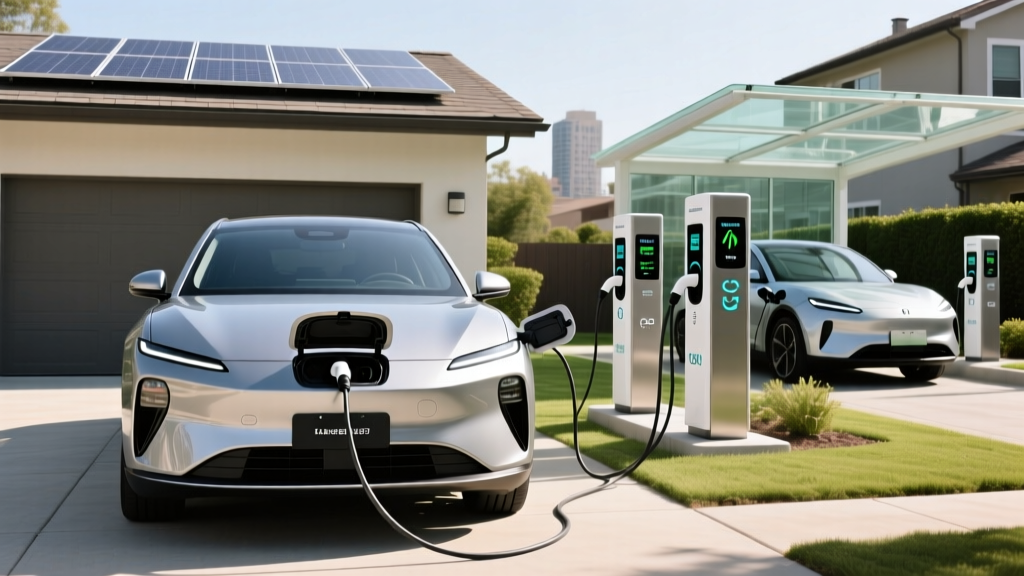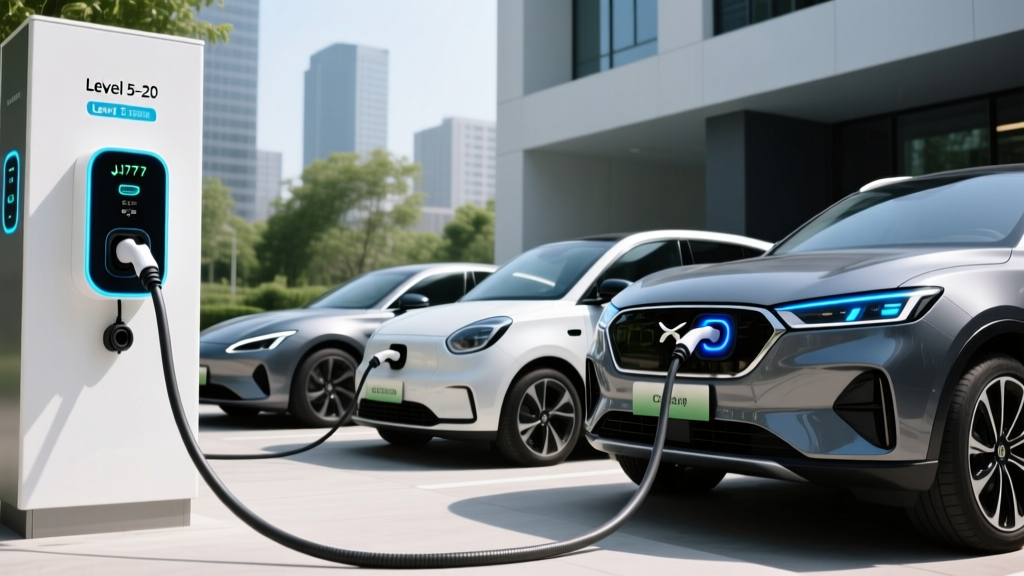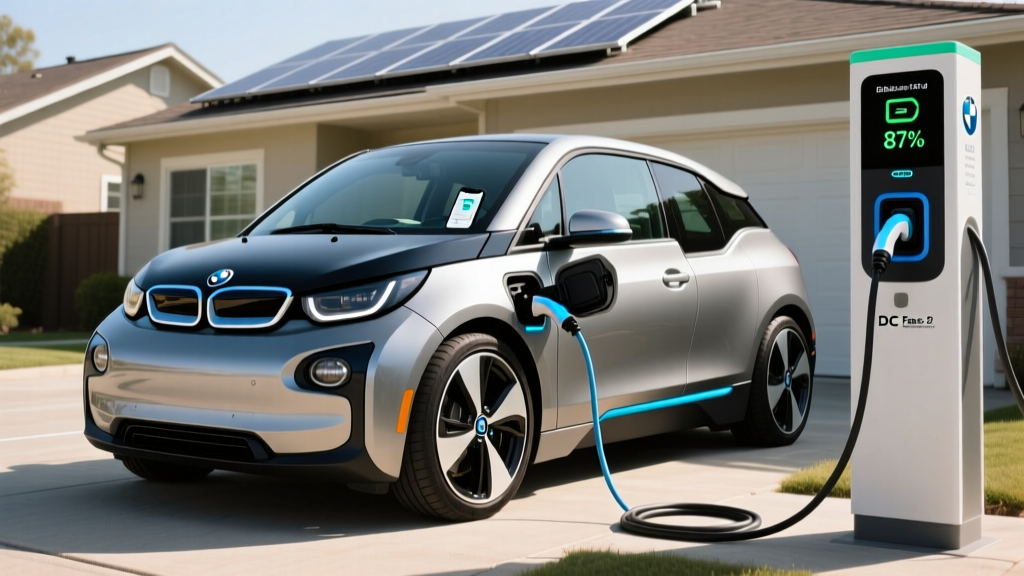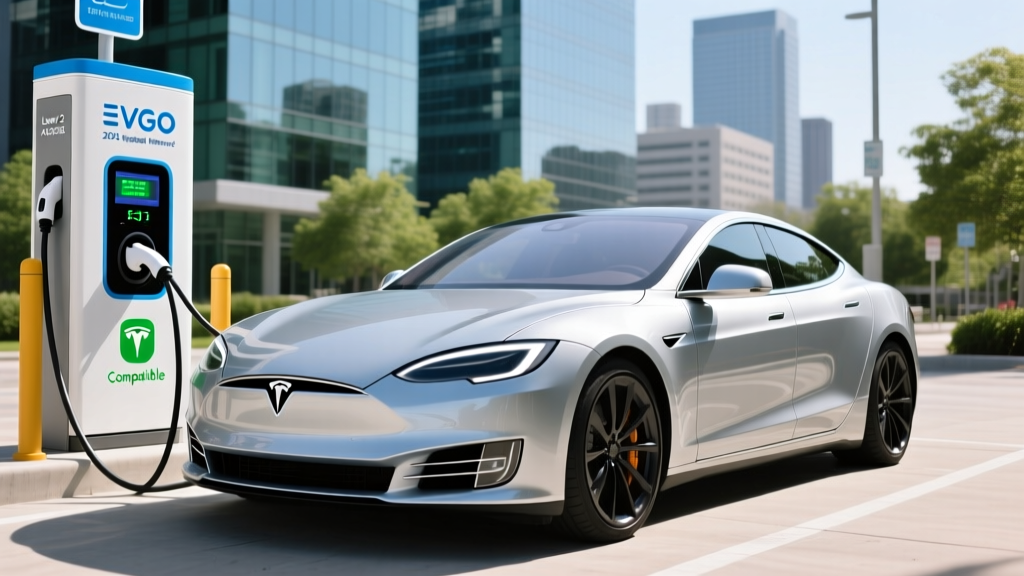
If you own a Tesla—or are about to buy one—and rely on public DC fast charging, you've likely asked: does EVgo charge Tesla? The short answer in 2026 is yes, but the details around connectors, adapters, and pricing matter enormously for your wallet and your road-trip planning. This guide covers exactly how Tesla vehicles connect to EVgo's network, what hardware you need, and how public DC fast charging compares to Level 2 home charging in both speed and cost.
The Connector Question: NACS, CCS, and Tesla at EVgo
Historically, Tesla used its proprietary connector (now officially designated NACS — North American Charging Standard) while the rest of the industry used CCS1 (Combined Charging System). That divide has largely collapsed. By 2026, virtually every major automaker selling EVs in North America has adopted NACS as the standard charge port, and networks like EVgo have retrofitted or replaced stall hardware to serve both connector types natively.
| Vehicle Brand | Native Connector | EVgo Native Support | Adapter Needed? |
|---|---|---|---|
| Tesla (Model 3/Y/S/X, Cybertruck) | NACS | Yes — NACS-equipped stalls at most locations | No (at NACS stalls); CCS-to-NACS adapter at legacy CCS-only stalls |
| Ford (F-150 Lightning, Mustang Mach-E) | NACS (2025+) | Yes | No |
| Hyundai / Kia (Ioniq 5, EV6, EV9) | NACS (2025+ models); CCS1 (2024 and earlier) | Yes (both) | CCS1 vehicles: no adapter needed at CCS stalls |
| GM (Equinox EV, Blazer EV, Silverado EV) | NACS (2025+) | Yes | No |
| Rivian (R1T, R1S) | NACS | Yes | No |
| Nissan (Leaf, Ariya) | CHAdeMO (Leaf); NACS (Ariya 2025+) | Limited CHAdeMO; NACS for Ariya | Leaf: CHAdeMO stalls increasingly rare |
Bottom line for Tesla owners: Most EVgo locations in major metro areas now have NACS-native cables. Before you drive to a specific station, check the EVgo app—it lists connector types per stall. If you arrive at a station with only CCS1 cables, Tesla sells a CCS-to-NACS adapter (roughly $175) that works on non-Tesla networks, though you won't need it at most updated EVgo sites.
Charging Levels Explained: kW, Speeds, and What They Mean
Before comparing costs, you need clarity on the three charging levels and the critical distinction between kW (kilowatts — the rate of power delivery) and kWh (kilowatt-hours — the total energy stored in your battery). Think of kW as how fast water flows from a hose; kWh is the total volume in the bucket.
| Level | Voltage / Power | Typical kW Output | Miles of Range Added per Hour | Best Use Case |
|---|---|---|---|---|
| Level 1 | 120V AC | 1.0–1.4 kW | 3–5 miles/hr | Overnight top-up, PHEVs, emergency |
| Level 2 | 240V AC | 7.2–19.2 kW | 25–70 miles/hr | Daily home charging, workplace |
| DC Fast Charging | 400–800V DC | 50–350 kW | 150–1,000+ miles/hr (peak) | Road trips, rapid top-ups |
A Tesla Model Y Long Range has a usable battery of roughly 75 kWh. On a Level 2 charger delivering 11.5 kW (48A), you'd add about 44 miles of range per hour, filling from 10% to 80% in roughly 5 hours. On an EVgo DC fast charger delivering a peak of 150 kW, that same 10–80% session takes approximately 25–30 minutes—though peak speed isn't sustained across the entire session due to the charge curve tapering above 60–70% state of charge.
Does EVgo Charge Tesla? Pricing and Network Access
Yes, EVgo charges Tesla vehicles directly at NACS-equipped stalls. As of early 2026, EVgo's pricing structure for DC fast charging typically falls in these ranges:
- EVgo Plus membership ($4.99/month): approximately $0.31–$0.43/kWh depending on market
- Guest (non-member) rate: approximately $0.36–$0.48/kWh
- Idle fees: $0.30/minute if you remain plugged in after reaching your charge limit
Tesla's own Supercharger network averages $0.25–$0.35/kWh in most markets (varying by time-of-use and location), so EVgo tends to run slightly higher. However, EVgo's advantage is urban placement—many stations sit in grocery-store parking lots and downtown garages where Superchargers are scarce. For a Tesla Model Y with a 75 kWh battery charging from 20% to 80% (45 kWh added), expect to pay roughly $14–$19 on EVgo versus $11–$16 on a Supercharger.
Access is straightforward: open the EVgo app, select the stall, plug in with the NACS connector, and the session starts. Tesla vehicles do not require a separate authentication handshake beyond the app or an RFID card.
Cost to Charge Per Mile: EVgo vs Home vs Gas
The real comparison buyers need is cost per mile. Let's run the numbers for a Tesla Model Y Long Range (EPA efficiency approximately 28 kWh/100 miles) against a comparable gas SUV averaging 26 MPG combined.
| Charging/Fuel Method | Rate | Cost per kWh or Gallon | Cost Per Mile (Model Y or Gas SUV) |
|---|---|---|---|
| Home Level 2 (national avg electricity) | $0.16/kWh | $0.16/kWh | $0.045 |
| Home Level 2 (off-peak TOU rate) | $0.09/kWh | $0.09/kWh | $0.025 |
| EVgo DC Fast (member rate avg) | $0.37/kWh | $0.37/kWh | $0.104 |
| Tesla Supercharger (avg) | $0.30/kWh | $0.30/kWh | $0.084 |
| Gasoline (avg $3.35/gal, 26 MPG SUV) | $3.35/gal | $3.35/gal | $0.129 |
Even at EVgo's public DC fast charging rates, you're paying roughly 20% less per mile than the gas equivalent. At home on an off-peak utility rate, the savings jump to 80% less per mile. The takeaway: public fast charging is a road-trip convenience premium, not your daily fueling strategy. Home Level 2 is where the economics shine.
Home Level 2 Charger Installation: Costs, Electrical Requirements, and Panel Upgrades
Installing a Level 2 home charger is the single highest-impact upgrade for EV ownership. Here's what the process actually involves and what it costs in 2026.
Electrical Requirements
A standard Level 2 home charger requires a 240V dedicated circuit, typically rated at 40A, 48A, or 60A depending on the charger's maximum output. The National Electrical Code (NEC) requires that continuous loads (like EV charging) use no more than 80% of the circuit's rated capacity—so a 48A charger needs a 60A circuit.
Panel Upgrade Considerations
Homes built before 2000 often have 100A or 150A electrical panels. Adding a 60A EV circuit to an already-loaded 100A panel may require a panel upgrade to 200A, which is one of the most expensive variables in the installation process. A licensed electrician will perform a load calculation to determine if your existing panel can handle the additional draw.
| Component | Low Estimate | High Estimate | Notes |
|---|---|---|---|
| Level 2 charger (equipment) | $350 | $750 | Varies by brand, power output, smart features |
| Electrician labor (simple install, panel nearby) | $400 | $800 | Short wire run, same wall as panel |
| Electrician labor (complex install, long run) | $800 | $2,000 | Wire through attic/crawlspace, conduit, garage opposite from panel |
| Permit and inspection | $50 | $250 | Varies by municipality; some jurisdictions waive for EV |
| Panel upgrade (if needed: 100A → 200A) | $1,500 | $3,500 | Major cost driver for older homes; not always required |
| Total (no panel upgrade) | $800 | $3,550 | Most homes fall in the $1,200–$2,200 range |
| Total (with panel upgrade) | $2,300 | $7,050 | Older homes with 100A service |
The IRS §30C alternative fuel vehicle refueling property credit covers up to 30% of home charger equipment and installation costs (capped at $1,000), provided you live in an eligible census tract. Consult a tax professional to confirm eligibility—rules vary by location and are subject to change.
Recommended Home Level 2 Chargers for Tesla and NACS Vehicles
Not all Level 2 chargers are equal. Below are three proven units for 2026, selected for reliability, power output, and NACS compatibility.
Tesla Wall Connector (NACS)
- Power output: up to 11.5 kW (48A on a 60A circuit)
- Connector: Native NACS — no adapter needed for Tesla vehicles
- Cable length: 24 feet
- Smart features: Wi-Fi connectivity, over-the-air updates, power sharing between two units, access control
- Price: ~$475
- Best for: Tesla-only households wanting maximum simplicity
ChargePoint Home Flex (NACS version)
- Power output: up to 12.0 kW (50A, configurable from 16A–50A)
- Connector: NACS (2025+ model); earlier versions ship with J1772/NACS adapter
- Cable length: 23 feet
- Smart features: Alexa integration, scheduling, detailed energy reporting via app, adjustable amperage to match your circuit
- Price: ~$599
- Best for: Multi-EV households or those wanting granular app control
Grizzl-E Smart (NACS)
- Power output: up to 11.5 kW (48A on a 60A circuit)
- Connector: NACS available; also J1772 with adapter
- Cable length: 24 feet
- Smart features: OCPP-compatible, works with multiple energy-management platforms, extreme cold-rated (-40°F)
- Price: ~$449
- Best for: Cold-climate owners and those wanting open-protocol flexibility
Real-World Charging Times: 10–80% Examples
Charging speed isn't a single number—it's a curve. DC fast chargers deliver peak kW only at low states of charge, then taper as the battery fills to protect cell health and manage heat. Here are realistic 10–80% times for popular battery sizes:
| Battery Size (usable kWh) | Example Vehicle | Level 2 at 11.5 kW | DC Fast at 150 kW (peak) | DC Fast at 250 kW (peak) |
|---|---|---|---|---|
| 60 kWh | Tesla Model 3 RWD | ~3.6 hours | ~28 min | ~22 min |
| 75 kWh | Tesla Model Y Long Range | ~4.6 hours | ~32 min | ~25 min |
| 84 kWh | Ford F-150 Lightning Extended | ~5.1 hours | ~38 min | ~28 min |
| 100 kWh | Tesla Model S Plaid | ~6.1 hours | ~42 min | ~30 min |
Charge curve reality check: That "150 kW peak" on EVgo's signage means the charger can deliver 150 kW—but your Tesla Model Y may only sustain that rate between roughly 10–35% SoC. From 50–80%, the rate tapers to 60–90 kW. This is normal battery physics, not a charger defect. Plan your road-trip stops around 10–80% sessions; charging past 80% at a DC fast station is both slow and expensive.
Safety, Code, and Installation Best Practices
EV charging draws sustained high current for hours—far longer than most household appliances. This makes proper installation non-negotiable.
- Dedicated circuit: Your Level 2 charger must have its own dedicated breaker. Never share the circuit with other high-draw appliances (dryers, HVAC).
- GFCI protection: NEC 2020 and later requires GFCI (ground-fault circuit interrupter) protection for EV outlets. Hardwired chargers typically have GFCI built into the unit; receptacle-based installs need a GFCI breaker.
- Outdoor rating: If your charger is mounted outside or in an exposed garage bay, confirm the unit carries a NEMA 4 rating (weather and dust resistant). All three units recommended above meet this standard.
- Permit and inspection: Most jurisdictions require an electrical permit for a new 240V circuit. The inspection ensures wire gauge, breaker sizing, and grounding meet code. Skipping this step can void your homeowner's insurance in the event of an electrical fire.
- Wire gauge: A 60A circuit typically requires 6 AWG copper wire (THHN in conduit) or 4 AWG NM-B (Romex) depending on installation method. Your electrician will spec this based on run length and local code.
Frequently Asked Questions
Does EVgo charge Tesla vehicles without an adapter?
At EVgo stations equipped with NACS cables—increasingly the majority in metro areas—you can plug directly into a Tesla with no adapter. At older stations with only CCS1 cables, you'll need a CCS-to-NACS adapter (available from Tesla for ~$175). Always check the EVgo app for connector availability at your specific station before driving there.
How much does it cost to install a home EV charger?
Most homeowners spend between $1,200 and $2,200 for a Level 2 charger installation when no panel upgrade is needed. If your home has a 100A panel that needs upgrading to 200A, total costs can reach $3,500–$7,000. The IRS §30C credit may offset up to $1,000 of equipment and installation costs if you're in an eligible census tract.
How fast will each charging level add range to my Tesla?
Level 1 (120V) adds roughly 3–5 miles per hour. Level 2 (240V, 11.5 kW) adds approximately 44 miles per hour for a Model Y. DC fast charging at 150 kW peak can add up to 200+ miles in 15 minutes at low states of charge, though the rate tapers significantly above 60–70% SoC.
Is it cheaper to charge on EVgo or at a Tesla Supercharger?
Tesla Superchargers typically cost $0.25–$0.35/kWh, while EVgo DC fast charging runs $0.31–$0.48/kWh depending on membership and market. Superchargers are generally cheaper per kWh, but EVgo stations are often more accessible in dense urban areas where Superchargers are limited. For lowest cost, home Level 2 charging at $0.09–$0.16/kWh beats both.
What electrical upgrades might I need for a home charger?
The most common upgrade is a panel capacity increase from 100A to 200A, needed when your existing panel doesn't have headroom for a 60A dedicated EV circuit. Other potential upgrades include adding a sub-panel closer to the garage, upgrading service entrance wiring, or replacing an outdated fuse box with a modern breaker panel. A licensed electrician's load calculation will determine exactly what's required.
Can I use a Tesla Supercharger if I don't own a Tesla?
Yes. As of 2026, Tesla has opened a growing portion of its Supercharger network to non-Tesla NACS-equipped vehicles (Ford, GM, Rivian, Hyundai, and others). Vehicles with CCS1 ports can access select Supercharger locations using a Tesla-provided CCS adapter. Availability varies by station—check the Tesla app's "Charge Your Non-Tesla" feature for specific locations.
Whether you're pulling into an EVgo stall with your Model Y or wiring up a Wall Connector at home, the numbers are clear: NACS compatibility in 2026 means Tesla owners have more public charging options than ever, and home Level 2 remains the cheapest, most convenient fueling strategy by a wide margin. Verify your specific station's connectors in the app, budget realistically for installation, and always respect the charge curve on road trips.