Does Costco Have EV Charging Stations in 2026?
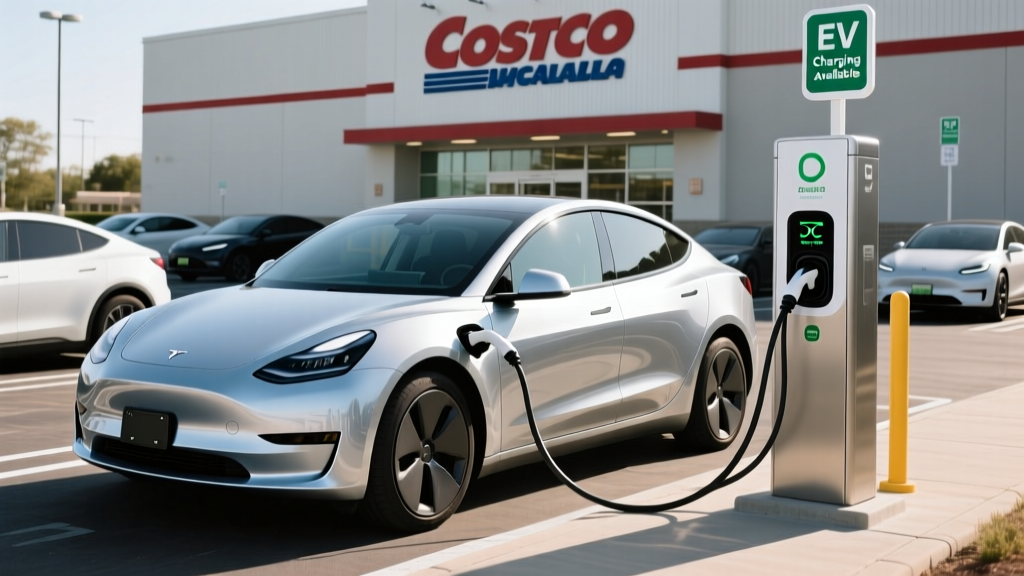
The short answer: most Costco warehouses do not have dedicated EV charging stations on their premises as of early 2026. Unlike retailers such as Target, Walmart, or IKEA — which have partnered with networks like ChargePoint, Electrify America, or EVgo to install chargers in their parking lots — Costco has not rolled out a company-wide EV charging program.
That said, there are exceptions. A small number of Costco locations share shopping centers or mixed-use developments where third-party charging networks have installed Level 2 or DC fast chargers nearby. In these cases, the chargers aren't "Costco chargers" — they belong to the property management or a charging network, and Costco shoppers can use them like any other customer in the plaza.
If you're planning a Costco run and want to charge while you shop, here's what you need to know about finding chargers near Costco locations, what to expect from public charging, and how to build a reliable charging routine that doesn't depend on a single retailer.
How to Find EV Chargers Near Any Costco
Since Costco doesn't operate its own charging network, your best strategy is to use charger-finder apps to scout locations before you go. Here's the most reliable approach:
- PlugShare (plugshare.com): The most comprehensive public charger database. Search the Costco address and filter by connector type (NACS, CCS1, CHAdeMO), charging speed (Level 2 or DC fast), and network. User reviews flag broken or occupied chargers.
- A Better Routeplanner (ABRP): Excellent for trip planning. Enter your vehicle model and the Costco destination — it'll show compatible chargers along the route and at your destination.
- Network-specific apps: If you know the shopping center has Electrify America, EVgo, or ChargePoint stations, check those apps directly for real-time availability and pricing.
- Tesla app / Supercharger map: Tesla owners can check if a Supercharger or Destination Charger exists near the Costco. Some newer Supercharger stations with the Magic Dock adapter serve non-Tesla NACS and CCS1 vehicles as well.
Pro tip: Costco warehouses are typically located in high-traffic retail corridors. Even if the Costco parking lot itself lacks chargers, there's a strong chance a neighboring strip mall, grocery store, or big-box retailer within a half-mile has public charging. Plan to charge at a nearby location and walk over, or charge first and shop second.
Public Charging Levels Explained: Speeds, Connectors & Costs
Whether you're charging near a Costco or anywhere else in public, understanding the three charging levels is essential. Here's a breakdown of what each delivers in real-world terms:
| Charging Level | Power (kW) | Voltage | Miles of Range Added Per Hour | Typical Use Case |
|---|---|---|---|---|
| Level 1 (standard outlet) | 1.2–1.9 kW | 120V AC | 3–5 miles | Overnight home trickle; emergencies |
| Level 2 (home/public AC) | 3.3–19.2 kW | 208–240V AC | 12–75 miles | Daily home charging; destination charging (shopping, work) |
| DC Fast Charging | 50–350+ kW | 400–800V DC | 150–1,200+ miles (theoretical peak) | Road trips; rapid top-ups; 10–80% in 15–40 min |
Critical distinction — kW vs kWh: kW (kilowatts) measures the rate of energy delivery — think of it as how fast water flows through a hose. kWh (kilowatt-hours) measures the total energy stored in your battery — the size of the bucket. A 150 kW charger fills your 75 kWh battery much faster than a 7 kW Level 2 unit, but the total energy (kWh) your battery holds doesn't change.
Real-World DC Fast Charging Times (10–80% SoC)
Charging speed isn't linear. Your EV accepts peak kW only in the lower portion of the battery (roughly 10–50% SoC), then the rate tapers significantly above 80% to protect battery health. Here's what to expect from common battery sizes on different DC fast charger tiers:
| Battery Size (kWh usable) | 50 kW Charger | 150 kW Charger | 250 kW Charger | 350 kW Charger |
|---|---|---|---|---|
| 60 kWh (e.g., base Leaf, Bolt-size) | ~65 min | ~28 min | ~22 min* | ~20 min* |
| 75–80 kWh (e.g., Model Y, Ioniq 5) | ~85 min | ~32 min | ~18 min | ~16 min |
| 90–100 kWh (e.g., F-150 Lightning ext, EQS) | ~105 min | ~40 min | ~25 min | ~20 min |
*Vehicles with smaller batteries may not accept the full peak kW of a 250/350 kW charger — the vehicle's onboard charge acceptance rate is the bottleneck, not the station.
For a Costco shopping trip lasting 45–90 minutes, a nearby Level 2 public charger (7–19 kW) can add 15–50 miles of range — useful for topping up but not transformative. A DC fast charger is the better play if you need a meaningful charge: you'll recover 100–200+ miles in the time it takes to load up on bulk groceries.
Connector Compatibility: Will the Charger Fit Your EV?
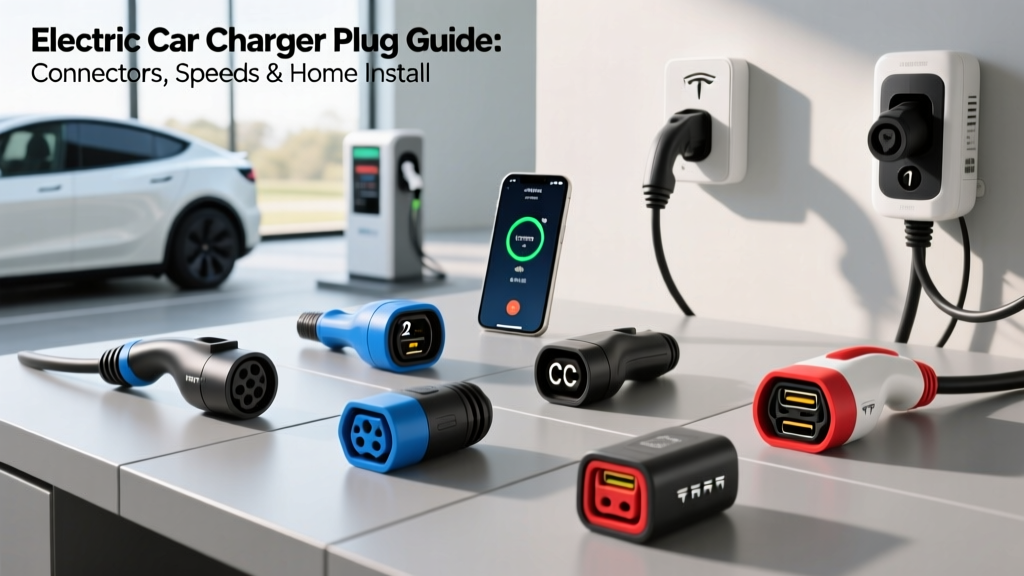
Not all public chargers use the same plug. The North American market has three main connector standards in 2026, and knowing which one your EV uses is non-negotiable before driving to any public station:
| Connector | Used By | Level 2 (AC) | DC Fast | Notes |
|---|---|---|---|---|
| NACS (North American Charging Standard) | Tesla (all models); Ford, GM, Rivian, Volvo, Polestar, and others starting 2025–2026 model years | Yes | Yes | Compact plug; access to Tesla Supercharger network (17,000+ stalls). Non-Tesla EVs with native NACS or CCS-to-NACS adapter. |
| CCS1 (Combined Charging System) | Most legacy non-Tesla EVs (Hyundai, Kia, VW, BMW, Mercedes pre-2025) | Yes (J1772 portion) | Yes | Being phased out on new models in favor of NACS, but widely available at Electrify America, EVgo stations. |
| CHAdeMO | Nissan Leaf (legacy), Mitsubishi Outlander PHEV | No (uses J1772 for AC) | Yes | Declining availability. Most new DC fast stations no longer install CHAdeMO connectors. |
Adapter reality check: If you drive a CCS1-equipped EV but want access to Tesla Superchargers (which now serve non-Tesla vehicles at many locations via the Magic Dock), you'll need a CCS-to-NACS adapter. Ford and GM shipped these adapters to existing owners; aftermarket adapters from brands like Lectron and A2Z cost $150–$300. Always verify your adapter is rated for the DC fast charge power your vehicle can accept.
How Much Does Public Charging Cost vs. Gas?
Public charging pricing varies widely by network, location, and time of day. Here's what you'll actually pay per kWh and per mile in 2026:
| Charging Scenario | Typical $/kWh | Cost Per Mile (at 3 mi/kWh efficiency) | Notes |
|---|---|---|---|
| Home Level 2 (off-peak utility rate) | $0.08–$0.15 | $0.03–$0.05 | Cheapest option; most EV owners charge here 80%+ of the time |
| Home Level 2 (standard residential rate) | $0.13–$0.20 | $0.04–$0.07 | Still significantly cheaper than gas |
| Public Level 2 (network pricing) | $0.20–$0.40 | $0.07–$0.13 | ChargePoint, EVgo, Blink; varies by city and site host |
| DC Fast Charging (Electrify America, EVgo, Tesla) | $0.30–$0.55 | $0.10–$0.18 | Some networks charge idle fees; subscription plans reduce per-kWh cost |
| Gasoline (30 MPG combined at $3.40/gal) | — | $0.11 | Baseline for comparison |
The takeaway: Home charging is almost always cheaper than gasoline on a per-mile basis. Public DC fast charging can approach or slightly exceed gas costs depending on local electricity pricing and network fees — but you're paying for speed and convenience on the road, not daily commuting. For Costco-trip charging, a nearby Level 2 station at $0.25/kWh adds roughly $0.08/mile — still a bargain versus gas.
Many networks offer subscription plans that reduce per-kWh costs by 15–25%. Electrify America's Pass+ ($4/month) and EVgo's Autocharge+ are worth considering if you rely on public DC fast charging more than a few times per month.
Home Charger Installation: Costs, Electrical Requirements & Equipment
If you're depending on public chargers near Costco or other retailers, you're paying a premium and wasting time you could spend at home. Installing a Level 2 home charger is the single biggest quality-of-life upgrade an EV owner can make. Here's what's involved:
Electrical Requirements for a Home Level 2 Charger
- Voltage: 240V (same as a clothes dryer or electric oven)
- Circuit amperage: 40A circuit for a 32A charger (NEC requires circuits rated at 125% of continuous load); 50A circuit for a 40A charger; 60A circuit for a 48A charger
- Panel capacity: Most modern 200A home electrical panels can accommodate a 40–60A EV circuit. Older homes with 100A panels may need a panel upgrade to 200A — a significant added cost.
- Dedicated circuit: The EV charger must have its own dedicated breaker — it cannot share a circuit with other appliances.
- GFCI protection: The 2023 NEC (National Electrical Code) requires GFCI protection for EV charging outlets. Many hardwired chargers have built-in GFCI, but if you install a NEMA 14-50 receptacle, you'll need a GFCI breaker (~$50–$120 extra).
- Permit: Most jurisdictions require an electrical permit for EV charger installation ($50–$200 depending on your city/county). The installation must pass inspection.
Home Charger Installation Cost Breakdown
| Component | Simple Install (panel nearby, no upgrade) | Complex Install (long wire run, subpanel) | Panel Upgrade Required (100A → 200A) |
|---|---|---|---|
| Level 2 charger (equipment) | $350–$700 | $350–$700 | $350–$700 |
| Electrician labor | $300–$600 | $800–$2,000 | $500–$1,000 (plus panel cost) |
| Electrical permit | $50–$150 | $50–$200 | $100–$250 |
| Panel upgrade (if needed) | — | — | $1,500–$3,500 |
| Conduit, wiring, misc. materials | $50–$150 | $200–$600 | $100–$300 |
| Total estimated cost | $750–$1,600 | $1,400–$3,500 | $2,550–$5,750 |
Federal tax credit for home charging: The IRS Alternative Fuel Vehicle Refueling Property Credit covers 30% of home EV charger equipment and installation costs, up to $1,000. This credit is subject to income limitations and census-tract eligibility requirements (the home must be in a qualifying non-urban or low-income area). Check the latest IRS guidance or consult a tax professional to confirm eligibility before filing.
Recommended Home Level 2 Chargers (2026)
ChargePoint Home Flex
- Power output: Up to 12 kW (50A circuit) — adjustable down to 16A/24A/32A/40A/48A
- Connector: J1772 (NACS adapter available for Tesla/NACS-equipped vehicles)
- Cable length: 18 ft or 23 ft options
- Smart features: Wi-Fi connected; ChargePoint app scheduling, energy tracking, Alexa integration
- Price: $599–$699 (equipment only)
- Best for: Flexible amperage lets you match your panel's available capacity without overspending on a panel upgrade
Wall Connector (Tesla, Gen 3 with J1772/NACS)
- Power output: Up to 11.5 kW (48A on a 60A circuit)
- Connector: Native NACS (Tesla plug); J1772 adapter included for non-Tesla EVs
- Cable length: 24 ft
- Smart features: Wi-Fi updates, Tesla app integration, power sharing between two units on one circuit
- Price: $475 (equipment only)
- Best for: Tesla owners or households with a mix of NACS and CCS1 vehicles (using the included adapter)
Emporia Level 2 EV Charger
- Power output: Up to 11.5 kW (48A)
- Connector: J1772
- Cable length: 24 ft
- Smart features: Wi-Fi; energy monitoring pairs with Emporia Vue home energy monitor; solar integration for charging off rooftop panels
- Price: $399–$449 (equipment only)
- Best for: Budget-conscious buyers who want smart energy monitoring without a premium price
Safety & Code Considerations for Home EV Charging
EV charging draws sustained high current for hours — it's the most demanding continuous load in most homes. Cutting corners on installation is a fire risk. Here's what to verify:
- Always hire a licensed electrician. DIY EV charger installs violate code in most jurisdictions and may void your homeowner's insurance if a fire occurs.
- Dedicated circuit is mandatory. Never share the EV circuit with a dryer, HVAC, or other appliance.
- Hardwired vs. plug-in (NEMA 14-50): Hardwired installations avoid the GFCI breaker requirement (the charger has internal GFCI) and eliminate the risk of a loose receptacle connection. Plug-in 14-50 outlets offer portability but require a GFCI breaker and a quality industrial-grade receptacle (Hubbell or Bryant — not cheap big-box store versions, which have caused overheating incidents).
- Outdoor rating: If your charger is mounted outside (garage-less homes, carports), ensure the unit is NEMA 4 rated for weather resistance. All three chargers recommended above are outdoor-rated.
- Wire gauge: Your electrician will size wire to the circuit — typically 6 AWG copper for 50A or 4 AWG for 60A. Aluminum wire is cheaper but requires larger gauge and proper termination.
- Load calculation: A qualified electrician will perform a NEC Article 220 load calculation to confirm your panel can handle the EV circuit alongside existing loads. If it can't, options include a panel upgrade, a smart load-management device (like the Emporia VUE with auto-throttle), or reducing the charger's amperage setting.
Building a Reliable Charging Strategy Beyond Costco
Relying on any single retailer for EV charging is a fragile strategy. Here's how experienced EV owners structure their charging lives:
- Home Level 2 is your foundation. 80–90% of all EV charging happens at home. A 7–12 kW home charger replenishes 30–50 miles per hour of charging — more than enough to start every morning with a full battery regardless of where you shopped the day before.
- Map your regular routes. Identify DC fast chargers along your commute, near your gym, and in the shopping corridors you frequent. Apps like PlugShare and ABRP make this trivial.
- Precondition for fast charging. When navigating to a DC fast charger, most EVs (Tesla, Hyundai/Kia, Ford, GM) will precondition the battery — warming it to optimal temperature so it accepts peak kW upon arrival. Skip preconditioning and your 10–80% time could double, especially in cold weather.
- Keep a backup network account. Don't rely on a single charging network. Have accounts (and payment methods) set up on at least two networks — e.g., Tesla Supercharger + Electrify America, or EVgo + ChargePoint — so you're never stranded by a network outage or a broken stall.
- Cold-weather reality: Battery efficiency drops 15–30% in freezing temperatures, and DC fast charging speeds slow dramatically without preconditioning. Factor this into your winter charging plan.
The absence of chargers at Costco is a minor inconvenience, not a dealbreaker. With a home Level 2 charger and a well-planned public charging routine, you'll spend far less time and money "fueling" than any gas-car driver — regardless of where you buy your bulk paper towels.
Frequently Asked Questions
Does Costco have EV charging stations at any locations?
Costco does not operate its own EV charging network. A handful of Costco locations are situated in shopping centers where third-party chargers (ChargePoint, EVgo, etc.) are available in the same parking area, but these are not Costco-owned or Costco-specific. Use PlugShare to check for chargers near your local Costco.
How much does it cost to install a home EV charger?
A straightforward Level 2 home charger installation (panel nearby, 240V/40–50A circuit, no panel upgrade) typically costs $750–$1,600 including equipment, electrician labor, and permit. Complex installs with long wire runs or subpanel additions run $1,400–$3,500. If your home needs a 100A-to-200A panel upgrade, total costs can reach $2,500–$5,750. The federal Alternative Fuel Vehicle Refueling Property Credit may cover 30% of costs up to $1,000, subject to eligibility.
How fast will each charging level add range?
Level 1 (120V) adds roughly 3–5 miles per hour. Level 2 (240V, 32–48A) adds 20–45 miles per hour depending on your vehicle's efficiency and the charger's power output. DC fast charging can add 100–250+ miles in 15–30 minutes, depending on the charger's kW rating, your vehicle's charge acceptance rate, and battery size. Peak speeds occur between 10–50% SoC and taper above 80%.
Which connector/charger is compatible with my EV?
Check your vehicle's charge port. Tesla vehicles and 2025+ Ford, GM, Rivian, Volvo, and Polestar models use the NACS connector. Most 2024 and earlier non-Tesla EVs use CCS1. The Nissan Leaf uses CHAdeMO for DC fast charging. Adapters exist to bridge standards — most notably CCS-to-NACS adapters for accessing Tesla Superchargers with non-Tesla vehicles.
How much does charging cost per mile vs gas?
Home Level 2 charging at typical residential rates ($0.13–$0.20/kWh) costs roughly $0.04–$0.07 per mile for an EV averaging 3 miles per kWh. A comparable gas car at 30 MPG and $3.40/gallon costs about $0.11 per mile. Public DC fast charging ($0.30–$0.55/kWh) costs $0.10–$0.18 per mile — closer to gas but used infrequently for road trips.
What electrical upgrades might I need for a home charger?
Homes with a 200A electrical panel usually have sufficient capacity for a 40–60A EV circuit without upgrades. Homes with older 100A panels often require a panel upgrade to 200A ($1,500–$3,500). Alternatives include installing a lower-amperage charger (16A or 24A), which still provides adequate overnight charging for most drivers, or using a smart load-management system that throttles the charger when other high-draw appliances are running.